A refined buyer’s guide to evaluating wine galleries in South Florida penthouses, with emphasis on climate control, engineering, service access, sunlight, entertaining, and long-term value.
A wine gallery in a South Florida penthouse is not a decorative afterthought. It is a controlled environment, a hospitality gesture, a design statement, and, for serious collectors, a risk-management decision. The best examples feel effortless: glass, stone, low light, precise joinery, and a bottle wall that becomes part of the architecture. Behind that calm surface, however, are technical questions every buyer should ask before being seduced by the view.
Penthouse living adds complexity. Higher floors often bring stronger light, broader exposure, longer mechanical runs, and more dramatic temperature shifts near glass. South Florida adds humidity, salt air, storms, and a lifestyle that moves fluidly between indoor entertaining and outdoor living. A successful wine gallery must be designed for all of it.
For buyers comparing towers in Brickell, Miami Beach, Sunny Isles, Surfside, Fort Lauderdale, or Palm Beach, the conversation should begin before contract, not after closing. In a residence such as The Residences at 1428 Brickell, the essential question is not simply where the wine will go. It is whether the architecture, mechanical strategy, and daily circulation can support how the collection will actually be used.
The first decision is philosophical. Is the wine gallery intended for active collecting, dinner-party service, visual drama, or a combination of all three? A display wall for favorite vintages asks different things of a penthouse than a true cellar designed for long-term storage. A tasting room off the main salon has different requirements than a discreet gallery near a catering kitchen.
Buyers should define four categories before reviewing plans: storage, presentation, service, and security. Storage is about stability. Presentation is about light and proportion. Service is about how bottles move to the dining table, terrace, or bar. Security is about access, inventory, and privacy.
This is where many attractive concepts become impractical. A glass gallery in the center of a great room may look cinematic, but it must also manage heat, glare, vibration, condensation, and noise. The stronger buyer move is to ask for the performance brief behind the rendering.
Wine dislikes fluctuation. In South Florida, a penthouse wine gallery must be evaluated as a microclimate within a larger conditioned residence. That means dedicated cooling, humidity management, proper insulation, door seals, and a clear plan for service.
Ask whether the gallery has independent environmental controls or relies on the residence’s general air-conditioning. Ask where equipment is located, how condensate is handled, and whether the system can be accessed without disturbing finished interiors. Ask how noise is isolated from living areas. In a quiet penthouse, mechanical hum can become surprisingly intrusive.
Humidity deserves equal attention. Too little can compromise corks. Too much can invite condensation, label damage, or mildew in surrounding cabinetry. A serious design team should be able to explain how the gallery remains stable without making adjacent rooms uncomfortable.
A large wine installation can be heavier than it appears. Bottles, racking, glass, stone, refrigeration equipment, and millwork all add load. In a penthouse, where owners often customize layouts, that load should be understood early.
Buyers should request confirmation that the intended location is suitable for the proposed installation. This is especially important when the gallery is planned near stairs, floating walls, large-format stone, or terrace thresholds. Vibration is another subtle concern. Elevators, mechanical rooms, speakers, and high-traffic entertaining zones can all affect the quiet environment collectors prefer.
The checklist is simple: load, vibration, access, waterproofing, and serviceability. If any of those answers are vague, the gallery should be reconsidered before the residence is committed to a final design.
The dream of a penthouse is often tied to glass and horizon. The dream of wine preservation is tied to restraint. Reconciling the two is the art.
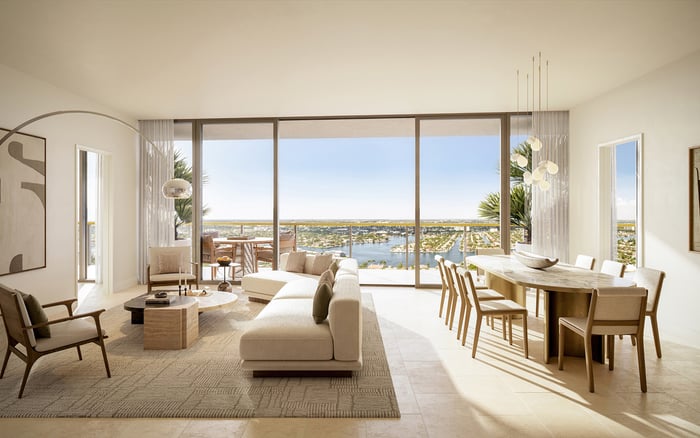
Oceanfront exposure, western sunsets, and wraparound glazing can all introduce heat and light. A wine gallery positioned near dramatic windows needs careful glass specification, shading strategy, and lighting discipline. Decorative illumination should flatter labels without warming bottles. Natural light should be filtered, not celebrated inside the gallery.
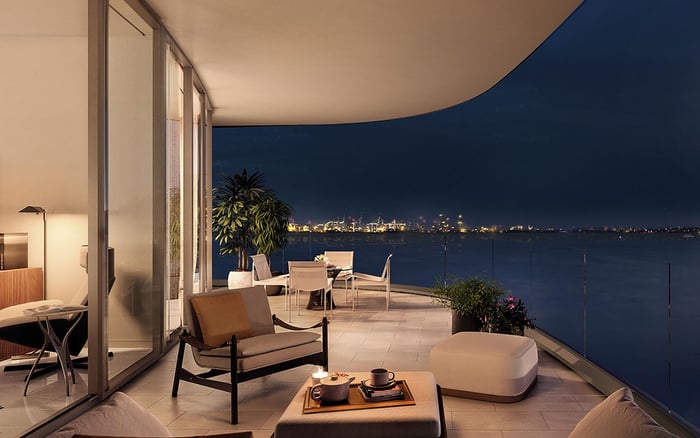
Terrace access also matters. If owners entertain outside, bottles may move frequently between the wine gallery, bar, dining area, and outdoor lounge. That circulation should feel graceful. At The Perigon Miami Beach or Bentley Residences Sunny Isles, buyers thinking about a wine program should imagine not only the evening view, but the path of service during a full table, a chef-prepared dinner, or a late-afternoon tasting.
A wine gallery should belong to the residence. In South Florida’s best penthouses, the most successful installations avoid theme. They do not feel like a restaurant cellar transplanted into a private home. They are quieter, more architectural, and more personal.
Consider whether the gallery should be transparent or concealed. Transparent designs create theater but demand impeccable organization. Concealed rooms offer privacy and stronger environmental discipline. Hybrid solutions, such as a visible display wall backed by deeper storage elsewhere, can serve both aesthetics and collecting needs.
Materials matter. Metal, stone, treated wood, low-iron glass, and integrated lighting can be beautiful, but each must be chosen for the climate and maintenance realities of coastal living. Door hardware, seals, and flooring transitions should be considered as carefully as the racking itself.
Luxury is not the absence of machinery. It is the ability to maintain machinery without disrupting life. Before approving a penthouse wine gallery, ask who services the cooling system, how often filters or components may need attention, and whether access panels are hidden but reachable.
Also consider delivery. How will cases enter the residence? Is there a service elevator protocol? Where will boxes be opened, checked, entered into inventory, and stored if they are not immediately placed in the gallery? A wine program that looks elegant on opening night can become frustrating if every delivery interrupts the main living room.
For buyers considering boutique-scale residences in Surfside, such as The Delmore Surfside, privacy and arrival choreography may be especially important. The more personal the building, the more a buyer should understand how staff, deliveries, and service providers move discreetly.
Investment value is not created by simply adding a glass box of bottles. It is created when the wine gallery feels inevitable within the residence, technically sound, and adaptable for a future owner. Overly specific themes, fragile finishes, or systems that are difficult to maintain can narrow appeal.
A buyer should ask whether the gallery can evolve. Can racking be adjusted? Can lighting be replaced? Can the space become a bar, art wall, or display library if a future owner is not a collector? The best wine galleries enhance the penthouse even for someone who does not share the same cellar philosophy.
For resale, restraint often outperforms spectacle. A beautifully integrated gallery near the dining sequence may read as a permanent asset. An oversized installation that consumes valuable living space may read as a personal indulgence.
Before moving forward, ask for a written description of the intended wine environment. Confirm whether cooling is dedicated, where equipment sits, how humidity is managed, and how service access works. Review the proposed location for sunlight, heat gain, vibration, drainage, and circulation.
Then ask lifestyle questions. Will the gallery support seated dinners, casual tastings, chef events, or quiet collecting? Will staff need access when owners are absent? Will the collection be insured, inventoried, and secured? Will the space still make sense if the owner’s drinking habits change?
Finally, evaluate the gallery in relation to the full penthouse. A wine feature should not compromise art walls, furniture plans, views, or terrace flow. It should enrich the residence’s rhythm. When the technical and emotional answers align, the result feels less like an amenity and more like a private ritual.
Should a penthouse wine gallery have dedicated cooling? Yes. A dedicated system is generally preferred because wine storage needs more stability than ordinary residential air-conditioning.
Is a glass wine gallery practical in South Florida? It can be, but only with careful attention to heat, sunlight, seals, humidity, and mechanical performance.
Where should a wine gallery be placed in a penthouse? The best location balances service convenience, low light exposure, structural suitability, and visual connection to entertaining spaces.
Can a wine gallery sit near a terrace? It may, but buyers should study heat gain, door traffic, humidity, and the service route between indoor and outdoor areas.
What should I ask before buying a penthouse with an existing wine room? Ask about cooling history, service records, humidity control, equipment access, drainage, and any prior condensation issues.
Does a wine gallery improve resale value? It can enhance appeal when it is elegant, technically sound, and proportionate to the residence rather than overly personalized.
How important is vibration control? It is important for serious collectors, especially near mechanical rooms, elevators, speakers, or heavily used entertainment zones.
Should the gallery be visible from the main living area? Visibility can be beautiful, but it requires excellent organization, disciplined lighting, and stronger environmental planning.
What is the most overlooked detail? Service access is often overlooked, yet it determines how easily the system can be maintained after the residence is finished.
When should the wine consultant or designer be involved? Ideally before finalizing the contract or customization plan, so technical requirements can be coordinated with architecture.
For a tailored shortlist and next-step guidance, connect with MILLION.
If branded residences are on your mind — as a home or as an allocation — we would be glad to share what we are seeing, privately.
Begin a quiet conversation