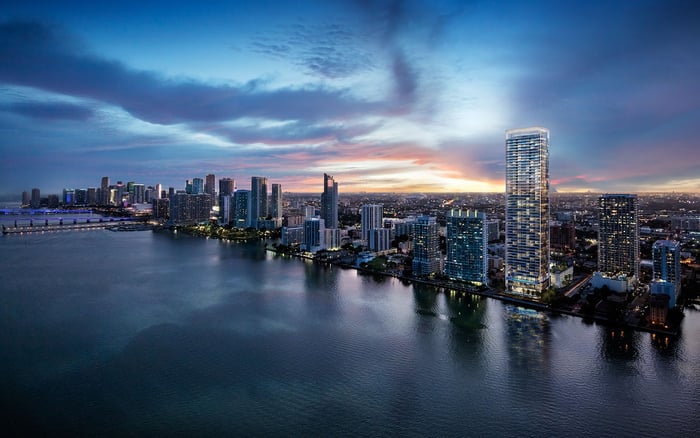
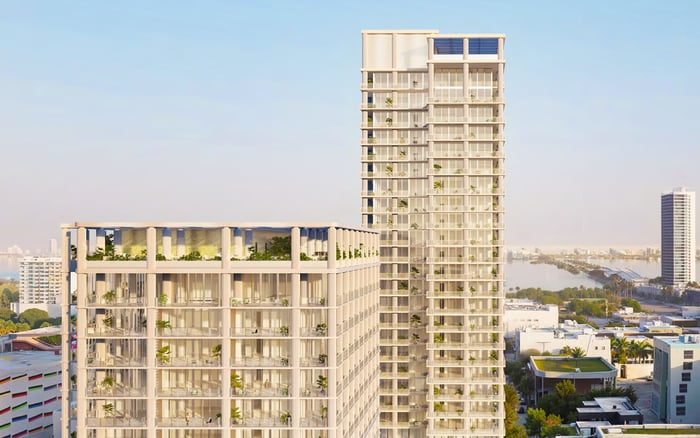
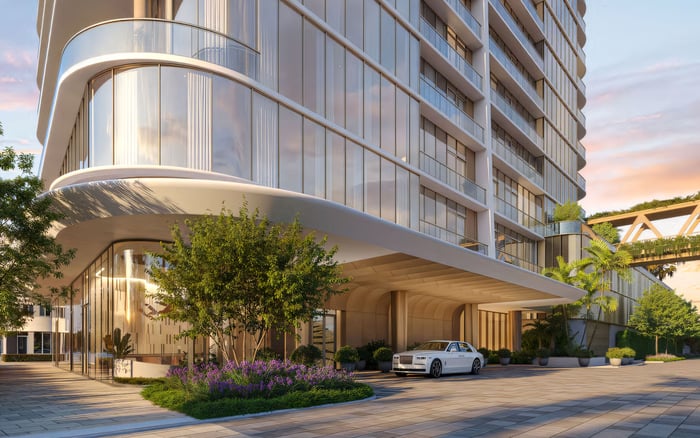
A buyer-oriented view of Miami Design District as a quiet luxury anchor for new-development optionality across nearby Miami enclaves.

Quiet luxury in Miami is not always defined by the tallest tower, the loudest arrival court, or the most recognizable brand name. For a certain buyer, it is about being close to taste without needing to perform it. That is the quiet luxury case for the Miami Design District: a lifestyle thesis built around design fluency, cultural proximity, and the ability to choose from a wider field of new-development possibilities rather than a single waterfront script.
When new-development optionality matters, the Design District becomes less a conventional neighborhood search than a strategic anchor. It allows a buyer to think in concentric circles. One circle may prioritize immediate access to design, dining, and a refined urban rhythm. Another may extend toward Edgewater, Wynwood, Midtown, or Brickell for views, services, and building typology. A third may weigh Miami’s urban energy against more resort-driven coastal choices.
This is not mass-market logic. It is private-client logic. The buyer is not simply asking, “Where is the newest building?” The better question is, “Which new residence lets me live near the parts of Miami I actually use?”
In a mature luxury market, optionality can be as valuable as a private pool deck or a branded lobby. It means having several credible choices before committing capital: different delivery timelines, different design languages, different levels of service, and different relationships to the city.
For buyers focused on the Miami Design District, that optionality is especially useful because the neighborhood’s appeal is not confined to a single housing format. Some purchasers want proximity and a low-friction urban base. Others want a larger residence nearby with a more resort-like building experience. Some want new-construction readiness, while others are comfortable evaluating pre-construction when the design, team, and location logic are sufficiently persuasive.
That is where a project such as Kempinski Residences Miami Design District becomes part of the conversation. It gives the buyer a project explicitly tied to the Design District search, while still leaving room to compare alternatives in adjacent micro-markets. The point is not to rush toward the nearest address. It is to understand what kind of residential life best complements the Design District itself.
The quiet luxury buyer is often highly specific. They may care more about ceiling feel than ceiling height as a statistic. They may be less persuaded by a crowded amenity roster than by a floor plan that lives elegantly. They may want the convenience of a staffed residence without a lobby experience that feels theatrical every time they come home.
This is why the Design District lens works. It attracts people who already have an eye. They understand materials, proportion, food, art, fashion, and architecture as part of daily life rather than occasional indulgence. For that buyer, a residence does not need to announce status. It needs to support a rhythm.
The word boutique also matters here, not as a size claim, but as a sensibility. A boutique-minded buyer may prefer privacy, controlled scale, and design coherence. Another may want the full services of a larger tower, but only if the building maintains restraint. Both can be valid. The distinction is not price alone. It is temperament.
A Design District search should not be constrained by map boundaries. Miami buyers increasingly think in lifestyle corridors, especially when comparing new residences. The relevant question is how easily a home connects to the places the owner actually frequents.
For some, Midtown is the most intuitive extension of the Design District conversation. Miami Design Residences Midtown Miami can be evaluated through that lens: a project name that aligns directly with the design-oriented buyer and the Midtown adjacency many Miami clients already understand.
Edgewater offers a different proposition. It can place the buyer in a more vertical, bay-oriented residential context while keeping the broader city within reach. A project such as The Cove Residences Edgewater belongs in the same strategic comparison when the buyer wants a more residential waterfront mood without abandoning the urban Miami orbit.
Wynwood brings another layer. It is useful for buyers who want creative energy in the broader neighborhood mix, even if their final residence lands elsewhere. The best search does not treat Wynwood, Edgewater, Midtown, and the Design District as isolated silos. It studies how they work together in a real week.
Brickell is the natural counterweight in many Miami new-development searches. It offers a more established high-rise luxury vocabulary, a strong urban identity, and a deeper field of residential choices. For the Design District buyer, Brickell is not necessarily a competitor. It is a control group.
If the buyer is considering service intensity, vertical living, and a more formal city-center rhythm, 2200 Brickell may sit on the comparison sheet. If the buyer is more drawn to hospitality, culinary identity, and a branded residential mood, 619 Residences by Foster + Partners + Nobu Hospitality can also become part of the discussion.
The reason to include Brickell is not to dilute the Design District thesis. It is to clarify it. Some buyers will discover that they want the density and polish of Brickell. Others will realize they prefer to be closer to a design-led, less corporate rhythm. Either outcome is useful. A disciplined comparison sharpens conviction.
The best Design District-oriented search begins with behavior, not inventory. Start with how often you will be in Miami. A primary resident may value daily convenience differently from a seasonal owner. A second-home buyer may focus more on lock-and-leave ease, building services, guest comfort, and the emotional pleasure of arrival.
Next, define your tolerance for timeline. New-construction may appeal to those who want clarity and immediacy. Pre-construction may suit buyers who are comfortable underwriting a future lifestyle and want earlier access to a preferred line or concept. Neither is inherently better. The right answer depends on the buyer’s planning horizon and appetite for decision-making before completion.
Then consider building personality. Some towers are social. Some are serene. Some are design-forward. Some are hospitality-led. The mistake is to buy the feature list while ignoring the daily atmosphere. Quiet luxury is not created by marble alone. It is created by proportion, service culture, privacy, access, and the absence of friction.
The Design District case is not purely emotional, but it should not be reduced to a spreadsheet either. In the luxury segment, taste can influence resilience. Residences that feel well-conceived, well-located, and aligned with a durable lifestyle narrative often have a clearer audience when it is time to resell or lease.
For the buyer, that means avoiding novelty for its own sake. The more refined move is to choose a home that will still make sense after the launch moment has passed. Does the floor plan work without explanation? Does the location match how affluent Miami residents and visitors actually move through the city? Does the building’s identity feel specific rather than generic?
The Miami Design District helps answer those questions because it attracts a buyer who values curation. When a residence fits that mindset, the result can feel less like a transaction and more like a long-term alignment between place, architecture, and personal life.
The quiet luxury strategy is simple: use the Miami Design District as the center of gravity, then compare outward with discipline. Do not overbuy spectacle if what you really want is ease. Do not chase a view if your daily life is grounded in restaurants, galleries, showrooms, fitness, and friends. Do not assume the most famous name is the best fit.
Instead, build a shortlist around rhythm. One option should test proximity. One should test service. One should test views or outdoor living. One should test the strongest alternative neighborhood. From there, the choice becomes less emotional and more precise.
That is the real advantage of optionality. It gives the buyer time to identify not only what is impressive, but what is correct.
Is the Miami Design District a good fit for quiet luxury buyers? Yes. It suits buyers who value design proximity, discretion, and a curated urban lifestyle rather than overt display.
Should I only consider residences inside the Design District? Not necessarily. Many buyers use the Design District as an anchor while comparing nearby options in Midtown, Edgewater, Wynwood, and Brickell.
How should I compare new-construction and pre-construction options? Focus on timeline, confidence in the concept, residence layout, and how the building will support your daily use of Miami.
Why does Brickell matter in a Design District search? Brickell provides a useful comparison for buyers who want a more formal high-rise setting with a strong urban identity.
Is Edgewater a practical alternative? Edgewater can be practical for buyers who want a residential tower environment while remaining connected to central Miami neighborhoods.
Where does Wynwood fit into the decision? Wynwood adds creative energy to the broader lifestyle map and can influence how buyers evaluate nearby residential choices.
What does boutique mean in this context? Boutique refers to a preference for discretion, coherence, and privacy rather than a specific building size or price point.
Is this search better for a primary home or second home? It can work for either. The key is matching the building’s services, location, and atmosphere to the owner’s actual Miami routine.
What is the biggest mistake buyers make? Buyers often focus on spectacle before understanding how the residence will feel during ordinary days, arrivals, and evenings at home.
How should I begin a serious shortlist? Start with lifestyle rhythm, then compare proximity, service level, timeline, privacy, and neighborhood fit before discussing pricing strategy.
If you'd like a private walkthrough and a curated shortlist, connect with MILLION.
If branded residences are on your mind — as a home or as an allocation — we would be glad to share what we are seeing, privately.
Begin a quiet conversation