A practical Palm Beach buyer’s guide to interpreting protected view corridors, verifying documents, and pricing view durability before a luxury purchase.
In Palm Beach, a view is not merely scenery. It is part of the residence’s architecture, daily rhythm, privacy profile, and long-term resale language. Buyers often hear phrases such as protected view corridor, unobstructed water view, forever view, or preserved exposure. The terms sound similar, but they can imply very different levels of certainty.
The essential question is not whether a residence has a beautiful view today. It is whether that view is supported by a legal, physical, planning, or site-condition advantage likely to endure. A balcony facing open water may feel secure. A high floor may look over rooftops. A garden exposure may depend on neighboring parcels remaining low. Each scenario calls for a different level of review.
For Palm Beach buyers, especially those comparing island addresses with select West Palm Beach opportunities, view diligence belongs alongside structural review, financial review, insurance review, and association review. A water-view premium can be meaningful, but it should be paid with clarity.
Begin by asking the seller, developer, or listing representative to define the word protected in writing. Does it mean a recorded easement, a setback condition, a public right-of-way, a neighboring landmark condition, a park, a waterway, or simply the current absence of a taller building nearby? These are not interchangeable.
A recorded easement or covenant can be materially different from a marketing description. A view across water is different from a view across a private lot. A view over a road, promenade, golf course, marina, or civic space carries its own questions. The buyer’s counsel should review whether any claimed protection runs with the land, benefits the specific parcel, or is merely descriptive language in sales materials.
This is where refined buyers slow the process down. If a residence is being priced for a particular ocean, Intracoastal, lake, garden, or skyline exposure, the documentation should support the premium.
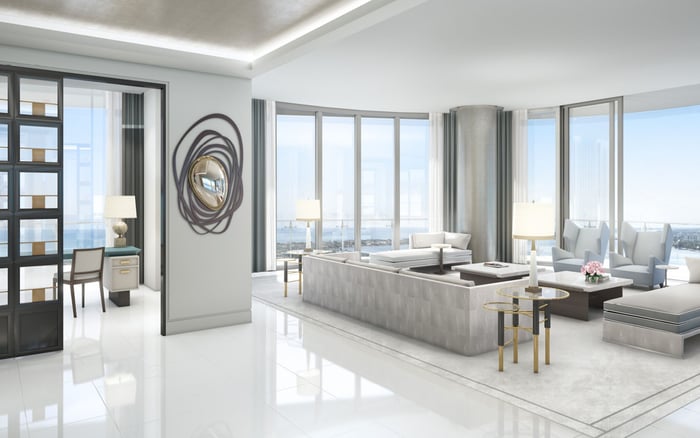
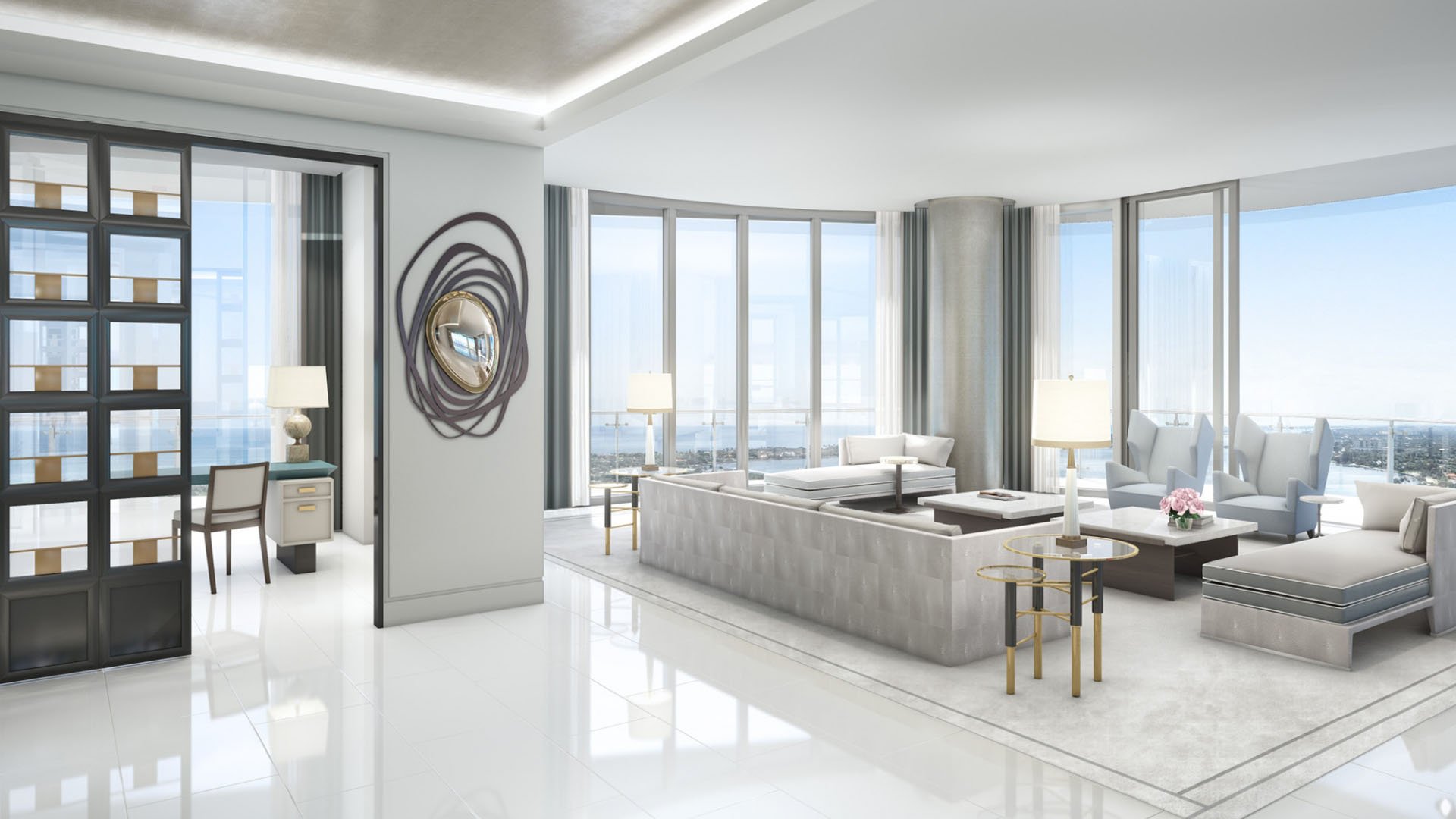
View corridors are three-dimensional. A line on a survey does not tell a buyer how the living room, primary suite, terrace, kitchen, and arrival sequence will actually feel. Visit the residence at different times of day if possible. Stand, sit, and move through the rooms as you would live in them. The best view from one corner of a balcony may not be the view from the dining table.
Buyers should also distinguish between a panoramic view and a framed view. A broad waterfront exposure may feel effortless from multiple rooms. A narrow corridor may be lovely but fragile, especially if it depends on a precise angle between neighboring structures. Higher floors can widen the angle, yet they do not automatically eliminate risk from future changes around the property.
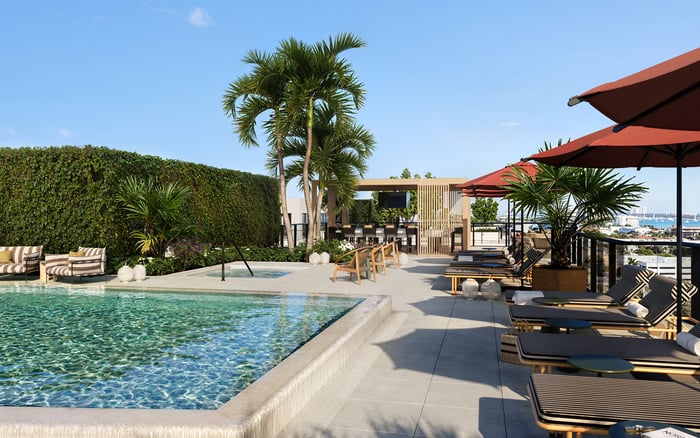
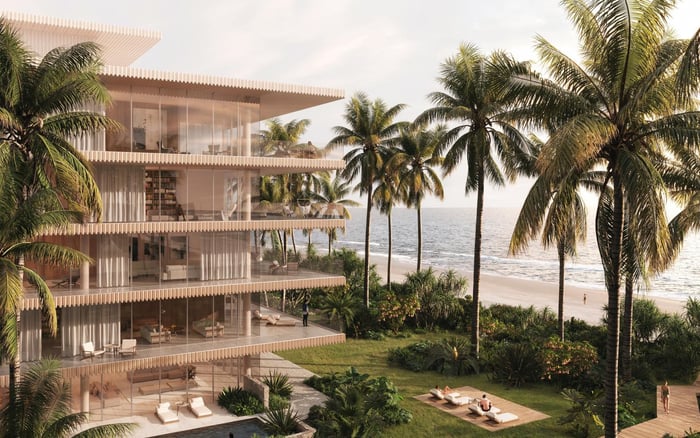
For new development or recently completed residences, compare renderings, model views, field conditions, and any available site information. The discipline applies whether touring Palm Beach Residences or evaluating an established building with mature landscaping and neighboring estates.
Palm Beach buyers often consider a broader lifestyle map that includes the island, the Intracoastal edge, and key West Palm Beach addresses. The view questions are related, but not identical. On the island, privacy, orientation, ocean proximity, garden depth, and the relationship to neighboring estates may be central. Across the water, skyline, marina, and Intracoastal exposures may create a more urban composition.
A buyer considering The Bristol Palm Beach, for example, should evaluate how a residence addresses water, skyline, and approach views from daily living spaces. A buyer looking at Alba West Palm Beach should ask a related but distinct set of questions about vertical exposure, neighboring parcels, and the durability of the view angle.
This is not a matter of one side being superior. It is a matter of understanding what creates the view, what could interrupt it, and what documentation confirms the buyer’s assumptions.
The most important view risk is often not inside the building being purchased. It is in front of it, beside it, or diagonally across from it. Buyers should identify the parcels that influence the sightline and have advisers review ownership, zoning context, recorded restrictions, easements, and any available public planning information.
The question is practical: what would have to change for the view to be reduced, reframed, or lost? Sometimes the answer is unlikely. Sometimes it is uncertain. Sometimes the current view exists because a neighboring structure is low, a lot is underused, or landscaping has not matured. None of those conditions should be mistaken for permanent protection without further review.
Buyer’s guides often focus on finishes, amenities, and service culture, but the parcel map may matter more than the marble selection when a view premium is part of the price.
A protected view can justify a premium when the supporting facts are strong. An unverified view should be priced differently. Buyers should ask their adviser to separate the value of the residence into components: location, building quality, floor height, condition, amenity program, privacy, outdoor space, and view.
If the view is central to the price, negotiate around it before contract. That can mean requesting documents, adding review periods, clarifying representations, or adjusting price expectations. It may also mean choosing a residence with a slightly less dramatic but more durable exposure.
This calculus is especially important when comparing a boutique Palm Beach address with newer offerings nearby, such as South Flagler House West Palm Beach or The Ritz-Carlton Residences® Palm Beach Gardens. Service, architecture, and amenities matter, but a view premium should always be inspected on its own terms.
The ideal review team is small, discreet, and specific: real estate counsel, an experienced local adviser, a survey or land-use professional where appropriate, and an architect when sightline interpretation is complex. Their task is not to complicate the purchase. It is to prevent a beautiful assumption from becoming an expensive misunderstanding.
Ask for plain-language answers. What is protected? By whom? For whose benefit? For how long? What could change? What is merely probable rather than guaranteed? The strongest acquisitions are often the ones where the buyer understands both the romance of the view and the mechanics behind it.
What is a protected view corridor? It is a claimed or documented line of sight that may be supported by legal, planning, physical, or site conditions. Buyers should confirm which type applies.
Is an ocean view always protected in Palm Beach? No. An ocean view may feel secure, but the exact sightline should still be checked against parcels, setbacks, landscaping, and building position.
Should I rely on marketing language about forever views? No. Treat marketing language as a prompt for diligence, then ask for documents and professional review.
What documents should a buyer request? Ask counsel about surveys, recorded easements, declarations, plats, association documents, and any materials tied to the claimed protection.
Do higher floors always solve view-risk concerns? Not always. Higher floors may improve exposure, but adjacent development, angles, and distance can still affect the view.
How should I evaluate a garden or estate view? Identify who controls the land in the sightline and whether any recorded conditions preserve the open character.
Can landscaping affect a protected view? Yes. Trees and hedges can mature, be replaced, or be maintained differently, so landscape conditions should be considered.
When should view diligence happen? It should happen before the buyer becomes firmly committed, ideally during contract review or any applicable diligence period.
Can a view premium be negotiated? Yes. If protection is uncertain or undocumented, the uncertainty can become part of the price conversation.
What is the best way to shortlist comparable options for touring? Start with location fit, delivery status, and daily lifestyle priorities, then compare stacks and elevations to validate views and privacy.
For a discreet conversation and a curated building-by-building shortlist, connect with MILLION.
If branded residences are on your mind — as a home or as an allocation — we would be glad to share what we are seeing, privately.
Begin a quiet conversation