Foreign nationals can buy Florida real estate, but luxury financing often requires higher down payments, deeper documentation, and early planning for compliance and closing logistics.
South Florida remains unusually accessible to international capital. Florida generally permits foreign nationals to buy and own real estate, and the purchase itself is often straightforward. The nuance arrives with financing: lenders typically apply heightened scrutiny to documentation, identity verification, and the path your funds take to the closing table.
In the ultra-prime segment, the objective is rarely to simply “get approved.” It is to engineer certainty: predictable timing, clean compliance, and a structure that reflects how you hold assets and earn income across borders. That requires choosing the right lending lane early, aligning ownership and banking decisions with lender requirements, and anticipating condo-specific details that can complicate a deal.
Non-U.S. residents commonly finance luxury purchases through a handful of routes, each suited to a different profile.
Foreign national mortgage programs are designed for buyers who live abroad and may not have a U.S. credit file. Underwriting can rely on alternative evidence-such as bank reference letters, international asset documentation, and other measures of creditworthiness-instead of a U.S. credit score.
DSCR loans, often used by investors, qualify primarily on the property’s income relative to debt obligations rather than personal income documentation. The core measurement is the debt service coverage ratio, and lenders set minimum thresholds that vary by scenario.
ITIN mortgages can broaden eligibility for buyers who do not have a Social Security number but obtain an IRS Individual Taxpayer Identification Number. If an ITIN will be part of your financing or longer-term rental plan, start early-processing can take time.
Private banking and relationship loans, bridge loans, and portfolio jumbo or super-jumbo products are also common in the luxury tier. These loans are often held on a lender’s books rather than sold into agency channels, which can create flexibility but typically comes with deeper review.
In Brickell, for example, a buyer weighing a primary residence versus a pied-à-terre might compare building-specific acceptance and loan structure while touring 2200 Brickell and Una Residences Brickell, then coordinate the financing approach around how the home will actually be used.
International buyers should calibrate leverage expectations before selecting a property.
Many foreign-buyer programs center around lower loan-to-value levels than typical domestic lending, with a common range around 60 to 70 percent depending on documentation and property type. In practice, this often translates to larger down payments than U.S. borrowers-commonly in the 25 to 35 percent range and frequently higher for investment properties or projects viewed as higher risk.
Reserves can be the second surprise. Many lenders require substantial liquid reserves after closing, often expressed as months of principal, interest, taxes, and insurance. In luxury scenarios, those reserve requirements can shape the entire capital plan, especially if you are simultaneously furnishing, renovating, or maintaining liquidity for business commitments.
The strategic takeaway is simple: treat reserves and down payment as one cash-management conversation. The “headline down payment” is rarely the full liquidity story.
South Florida’s luxury identity is deeply tied to condominiums, and condo finance is its own discipline.
Some buildings are considered non-warrantable, meaning they do not meet certain criteria many standard lenders prefer. Non-warrantable condominiums can be harder to finance and may require specialized condo lending programs with stricter terms. Even when a buyer is exceptionally strong, a building’s profile can influence lender availability, documentation burden, and the economics of the loan.
This is where discreet pre-approval becomes a real advantage. Before you negotiate, confirm the property type and building acceptance with your lender and team. It protects your timeline and reduces renegotiation risk later.
In Miami Beach, the decision between oceanfront lifestyle and pure investment logic often intersects with condo-finance realities. Touring residences at 57 Ocean Miami Beach can be a good moment to discuss how building type and intended use affect financing options, particularly if you anticipate renting the home when not in residence.
International transactions are routinely subject to KYC and AML compliance steps. Buyers should expect identity verification and source-of-funds documentation designed to trace the money used at closing.
For sophisticated buyers, this is less a burden than a planning item. The cleanest closings are the ones where compliance is anticipated: bank statements and letters are gathered early, transfers are staged thoughtfully, and the title and lending teams are aligned on what will be requested.
If you plan to vest title in an entity for liability management or planning, address it at the start. Ownership via entities such as LLCs is common, but entity choice can introduce added tax filings and cross-border complexity that requires professional advice. Confirm early that your title insurer and lender will accept the intended vesting entity to avoid last-minute friction.
South Florida’s luxury market is designed for international lifestyles, and closing logistics increasingly reflect that.
Florida permits Remote Online Notarization, enabling remote closings for buyers abroad when properly executed. When travel schedules are unpredictable, remote closing capability can be the difference between a smooth completion and a missed contract deadline.
At the same time, wire transfers remain a major fraud target in real estate transactions. Verify wiring instructions using independently confirmed phone numbers and secure channels. In practice, do not rely on a forwarded email thread for final instructions, and confirm details through a known, trusted contact path.
Luxury buyers often arrive focused on lifestyle and asset allocation, then realize late in the process that tax and compliance details can influence the transaction.
Florida has no state personal income tax, which is frequently viewed as a structural advantage compared with many other states. For investors, rental income also matters: foreign owners receiving U.S.-source rental income can face U.S. tax rules that differ depending on elections and how the rental activity is treated.
FIRPTA is another key concept to understand. When purchasing U.S. real property from a foreign seller, the buyer generally has withholding obligations. The standard withholding rate is generally 15 percent of the gross sales price, unless an exception or reduced withholding applies. This does not mean a buyer “owes” that amount as tax, but it can affect cash flow and closing mechanics, particularly on resale transactions.
Because these items interact with ownership structure, align legal and tax advice early-especially if you are balancing personal use with investment goals.
Different neighborhoods tend to reward different financing choices, largely because intent varies.
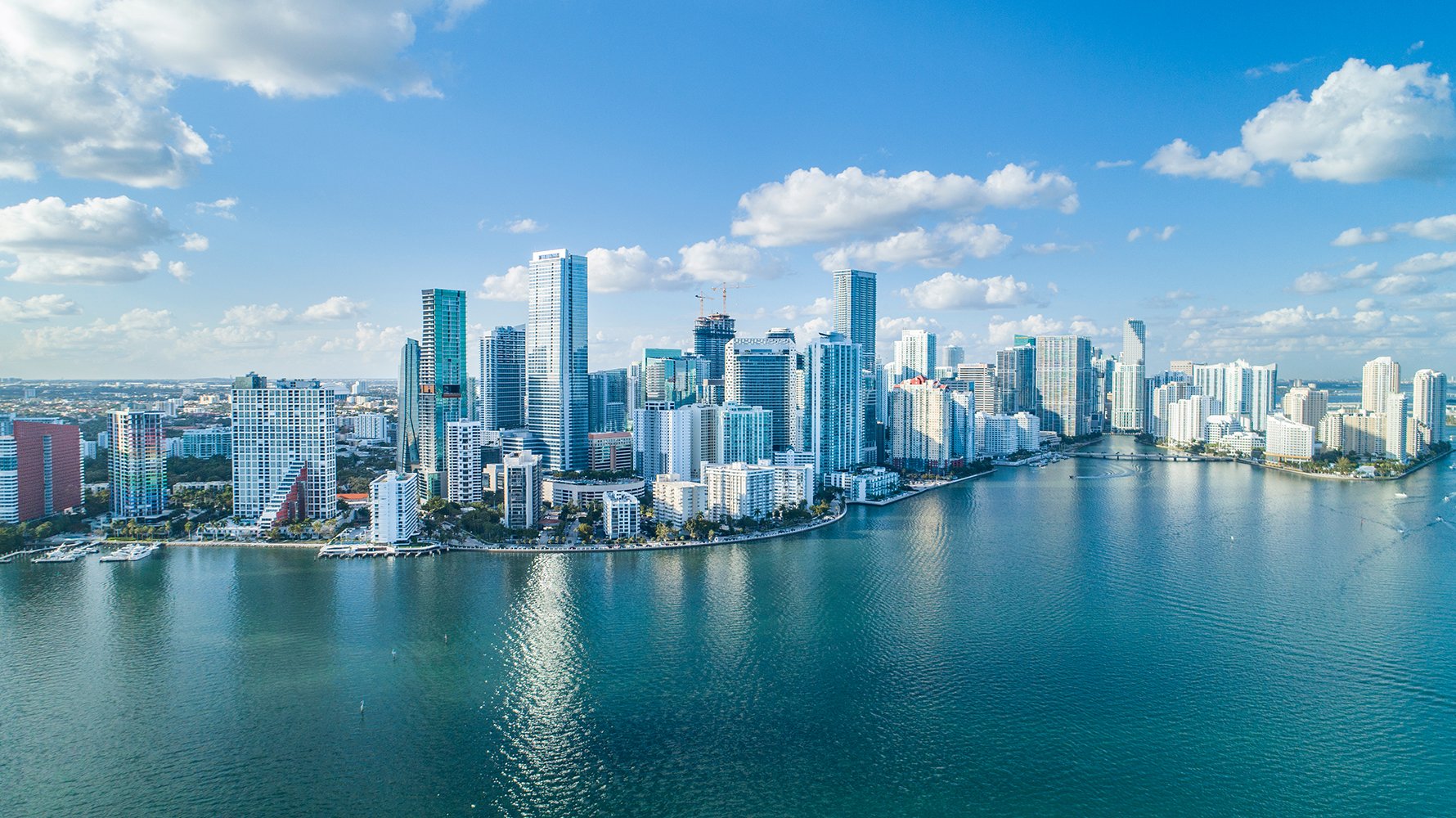
Brickell is often a base for business, with buyers who prioritize efficient access, security, and building services. Portfolio jumbo or relationship-driven structures can align well here, especially when a buyer’s global balance sheet is substantial but U.S. income documentation is limited.
Miami Beach and Surfside skew toward lifestyle, privacy, and “use value” that is difficult to quantify. Buyers who intend to occupy more than they rent may choose a more traditional structure, while those building an investment portfolio may lean toward DSCR options when personal documentation is inconvenient.
North-of-the-core enclaves such as Bay Harbor Islands can feel more residential and discreet, and they often appeal to buyers who are deliberate about long-term holding and liability planning. A wellness-forward, design-led building like The Well Bay Harbor Islands can be a natural fit for a buyer thinking in decades rather than seasons.
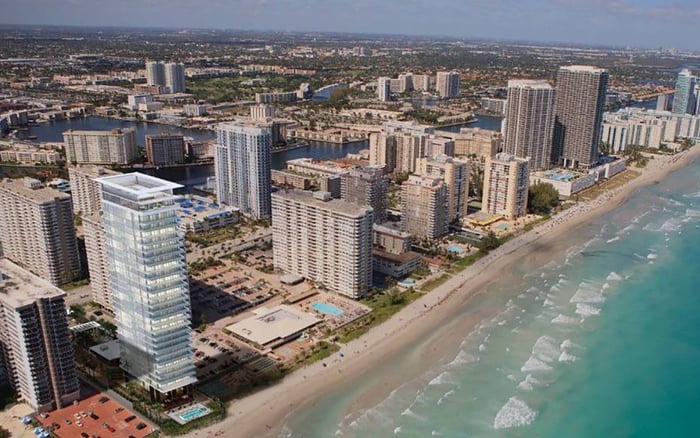
On the oceanfront in Broward, the financing conversation frequently includes a second-home mindset, longer holding periods, and careful reserve planning for a property that may be used intermittently. Homes like 2000 Ocean Hallandale Beach illustrate how international buyers often pair coastal lifestyle with a conservative liquidity posture.
In the highest tier, speed is not the objective. Certainty is.
First, choose your lending lane based on your true profile: personal income visibility, asset documentation, intended use, and whether rental income will be part of the plan.
Second, assemble documentation as if you are preparing for an audit: identity documents, bank letters, statements, and a clear, consistent narrative for source of funds.
Third, align your title vesting strategy with lender acceptance. If an entity will hold title, confirm it early and coordinate tax advice.
Finally, operationalize wire safety and remote-closing logistics well before you are under contract. In a market where timing can determine negotiating leverage, these “back office” details are often the quiet differentiators.
Can a foreign national legally buy real estate in Florida? Yes. Florida generally permits foreign nationals to buy and own real property.
Do foreign buyers usually need a U.S. credit score? Not always. Some foreign national programs rely on alternative credit evidence instead.
What down payment should an international buyer expect? Many scenarios require higher down payments, commonly around 25 to 35 percent, and sometimes more.
What loan-to-value is typical for foreign national mortgages? Many programs are structured around lower leverage, often roughly 60 to 70 percent LTV depending on the case.
What is a DSCR loan and why is it popular with foreign investors? It qualifies primarily on rental income versus debt obligations, which can help buyers without U.S. tax returns.
Do I need an ITIN to get a mortgage? Not in every case, but some mortgage options are designed for buyers who obtain an ITIN instead of an SSN.
Why do lenders ask for source-of-funds documentation? International transactions commonly involve KYC and AML compliance, including tracing funds used at closing.
Can I close on a Florida property while I’m overseas? Often, yes. Florida allows Remote Online Notarization when properly executed.
What is FIRPTA and when does it matter to a buyer? If you buy from a foreign seller, the buyer side generally has withholding obligations at closing.
Are condominium buildings harder to finance than single-family homes? They can be, especially if a condo is considered non-warrantable and requires specialized lending.
When you're ready to tour or underwrite the options, connect with MILLION Luxury.
If branded residences are on your mind — as a home or as an allocation — we would be glad to share what we are seeing, privately.
Begin a quiet conversation