A softer U.S. dollar is reshaping the math for international buyers in South Florida luxury real estate in 2026. With foreign purchasing power rising, cash-heavy deal structures gaining influence, and a pipeline of design-forward new construction, the opportunity is real, but so are carrying costs, HOA dynamics, and valuation risk. This MILLION Luxury editorial frames what currency shifts may mean across Miami Beach, Brickell, Edgewater, and beyond, and how sophisticated buyers can underwrite with discipline.

In luxury real estate, the sticker price is only part of the story. For internationally mobile buyers, currency can act as a quiet discount-or an added premium-shifting what a South Florida residence effectively costs in a buyer’s home currency.
After a meaningful U.S. dollar decline in 2025, the base case for 2026 remains softer. Forecasts point to a trade-weighted dollar that could linger in the mid-90s for stretches, with the strongest tailwind potentially concentrated in the first half of the year before conditions normalize later on. For buyers funded in stronger foreign currencies, that shift can expand budgets, tighten negotiation timelines, and raise comfort levels in best-in-class buildings where price per square foot is less forgiving.
For sellers and developers, the takeaway is just as clear: in 2026, the global buyer may not be reacting to Miami pricing alone. They may be reacting to Miami pricing multiplied by FX.
South Florida is unusually sensitive to international demand. In 2025, foreign buyers purchased $4.4 billion of South Florida residential property-up sharply from the prior year-and represented 15% of local residential transactions by dollar volume. By count, international purchases rose to 5,300 properties. Foreign buyers were also especially prominent in the development cycle, accounting for 52% of new-construction, pre-construction, and condo-conversion sales over a 22-month stretch through November 2025.
Those shares matter because they shape market microstructure. When a meaningful slice of demand is global, South Florida effectively imports global capital conditions. In 2026, that can look like faster absorption in select towers, tighter competition for turnkey inventory, and more aggressive pursuit of scarce waterfront product.
It also means the market can move in bursts. If FX tailwinds are strongest early in 2026, a disproportionate share of the year’s momentum may arrive sooner than many domestic observers expect.
International luxury in South Florida is often less rate-sensitive than many assume. In 2025, 51% of foreign buyers purchased all-cash. That is not a footnote-it is a structural feature that can keep the market moving even when financing conditions are uneven.
Cash also reshapes negotiation dynamics. A buyer who can close quickly may secure opportunities a financed buyer cannot, particularly in boutique waterfront buildings with limited inventory and sellers who value certainty.
At the same time, cash does not imply indifference to price. In 2026, sophisticated purchasers are more likely to express discipline through terms: inspection scope, timing, reserves review, and a more exacting view of carrying costs.
Luxury buyers are increasingly comfortable transacting with limited on-the-ground time. In 2025, 65% of Miami foreign buyers visited Florida two times or fewer before buying, and 11% purchased without visiting at all.
That reality favors buildings and neighborhoods that “read” well from afar: transparent governance, clear amenity programs, predictable service levels, and reputational clarity. It also raises the stakes for digital diligence-building financials, reserve posture, insurance strategy, and a clean history of maintenance and assessment decisions.
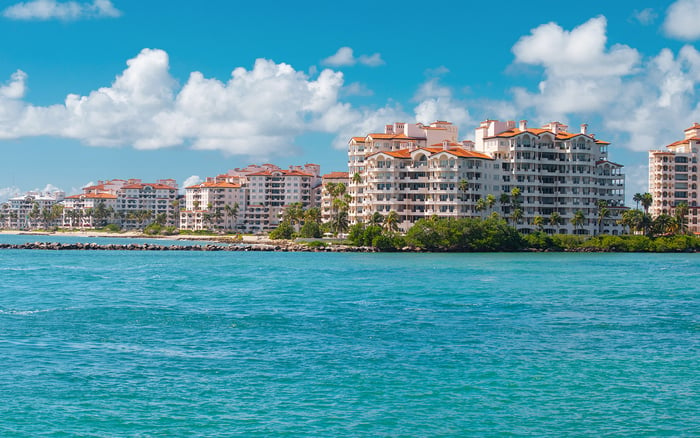
For buyers targeting Miami Beach, the story often becomes curated lifestyle with low operational friction. A modern oceanfront building such as 57 Ocean Miami Beach fits that preference set, especially for those who want a coastal address that performs as a residence first, not a project.
In 2025, the most commonly cited motivations for foreign buyers in Miami clustered around security, profitability, and location. That blend is revealing: demand is not purely lifestyle-driven; it is also strategy-driven.
In 2026, security is likely to remain central, but expressed in more nuanced ways. Some buyers will prioritize physical security and privacy; others will prioritize legal clarity, asset diversification, and a property they can hold long-term with confidence.
Profitability, meanwhile, is not limited to short-term appreciation. For many global buyers, it is about preserving purchasing power and holding real assets in a market they can access and understand.
Location is the constant. But in South Florida, “location” is not only geography-it is also building selection: the right developer, the right management culture, and a community where the rules align with the owner’s lifestyle.
Currency effects are not evenly distributed. They tend to show up first where (1) international demand is already high and (2) inventory is either scarce or highly differentiated.
Brickell trades like a global neighborhood. In 2026, a softer dollar may register first in pre-construction decision-making, where buyers commit early to secure layouts, views, and pricing ladders.
For those who want design-forward product with a statement-making identity, 888 Brickell by Dolce & Gabbana is emblematic of globally legible luxury-often a natural fit for international demand. In this segment, FX can influence not only whether someone buys, but which stack they choose and how quickly they reserve it.
Edgewater continues to evolve as a luxury corridor with a meaningful development pipeline and ongoing high-rise construction activity. That matters in 2026 because new supply creates choice-and clarifies the pecking order. Buyers increasingly differentiate between views, amenity depth, and long-term maintenance expectations.
A large-scale waterfront offering such as Aria Reserve Miami belongs in this conversation. In a softer-dollar environment, the competition is less about whether Edgewater is “discovered” and more about which buildings will be perceived as enduring holdings.
Miami Beach’s luxury market is defined by limited land, lifestyle gravity, and the premium placed on walkability and the ocean. FX tailwinds can intensify competition for the slice of inventory that aligns with international preferences: newer construction, full-service operations, and a clean ownership experience.
In 2026, currency moves may matter less here in percentage terms, but they can still influence timing and conviction. Buyers at this level often underwrite privacy, seclusion, and permanence as much as they underwrite the asset.
A softer dollar can tempt buyers to focus on headline price alone. In 2026, that’s a mistake.
In Miami, HOA fees have been rising, with a cited median increase from $125 per month in 2024 to $135 per month in 2025. The directional point is what matters: post-Surfside realities, reserve expectations, and insurance dynamics have made monthly operating costs a more prominent line item.
For luxury buyers, HOA is not simply a recurring fee. It is a proxy for governance quality and building stewardship. The best-run buildings tend to be more transparent about reserves, capital planning, and insurance strategy-precisely what remote and international buyers need.
Statewide home insurance costs flattened in 2025, with an average premium of $3,748 as of September 2025 and only modest growth since January. Separately, state leadership has pointed to major insurance rate relief based on market changes.
For 2026 underwriting, the right posture is balanced: acknowledge the improving trend, but model conservatively. Ask how the building’s insurance is structured, how deductibles are handled, and whether special assessments are plausible under stress scenarios.
Miami has been flagged as the highest bubble-risk city among those assessed in a widely followed global index. That does not make a collapse inevitable; it does signal that buyers should separate emotional conviction from financial underwriting.
In a bubble-risk frame, the most resilient luxury purchases tend to share three traits: scarcity, enduring desirability, and operational quality. In other words, the property should be hard to replicate, easy to understand, and well managed.
Currency can open the door, but the deal still has to work.
Underwrite the full carry, not just the purchase price. HOA, insurance, reserves, and taxes should be modeled with the same rigor as the acquisition.
Treat FX as a tailwind, not a guarantee. If the dollar’s strongest softness is early in 2026, view that window as an execution opportunity-not a promise of perpetual advantage.
Prioritize buildings that travel well. For buyers visiting infrequently, clarity is value: strong governance, consistent service, and predictable maintenance.
Separate luxury as lifestyle from luxury as asset. Some residences are bought for joy and ease; others for balance-sheet logic. The best outcomes occur when buyers are explicit about which one they’re buying.
Watch rate context even if you pay cash. The 30-year fixed mortgage benchmark remains a useful barometer of broader market sentiment, affecting marginal buyers and, by extension, liquidity.
Miami’s count of $1 million-plus listings has surpassed New York’s, underscoring how large the luxury universe has become. For 2026, that scale has two implications. First, buyers have real choice across neighborhoods, building styles, and amenity ecosystems. Second, not every luxury listing is equally liquid. When the field is deep, selection becomes the edge.
In practice, this is where discreet differentiation matters: a well-positioned new development in Brickell, a service-forward oceanfront building in Miami Beach, or a waterfront tower in Edgewater with lasting views. The nuance is not whether South Florida is “hot.” The nuance is what remains coveted when the currency cycle turns.
Will a weaker U.S. dollar make South Florida luxury cheaper for international buyers? Potentially, because foreign-currency purchasing power can rise when the dollar declines.
Is the FX advantage likely to be strongest at a particular time in 2026? Many forecasts suggest the tailwind could be most pronounced in the first half of 2026.
How significant is international demand in South Florida? Foreign buyers represented 15% of South Florida residential dollar volume in 2025.
Do foreign buyers typically finance or pay cash? A majority paid all-cash in 2025, which can support faster, more certain closings.
Are buyers really purchasing without visiting in person? Yes, a meaningful share bought with limited visits, and some purchased without visiting.
What are the biggest non-price costs to watch in 2026? HOA fees, insurance strategy, and reserve requirements can materially affect total cost.
Are HOA fees rising in Miami? Recent data shows a modest median HOA increase year over year, reflecting cost pressure.
Is Florida home insurance improving? Statewide averages flattened in 2025, and officials have signaled additional relief.
Should buyers worry about bubble risk in Miami? It is a reason to underwrite carefully and prioritize scarcity and building quality.
What neighborhoods may feel currency-driven demand first? Global hubs like Brickell and Miami Beach often register FX-driven demand quickly.
For a confidential assessment and a building-by-building shortlist, connect with MILLION Luxury.
If branded residences are on your mind — as a home or as an allocation — we would be glad to share what we are seeing, privately.
Begin a quiet conversation