A discreet, buyer-oriented look at the five forces pulling UHNW households toward Miami, Fort Lauderdale, and Palm Beach in 2026, from tax structure to real estate liquidity and lifestyle infrastructure.
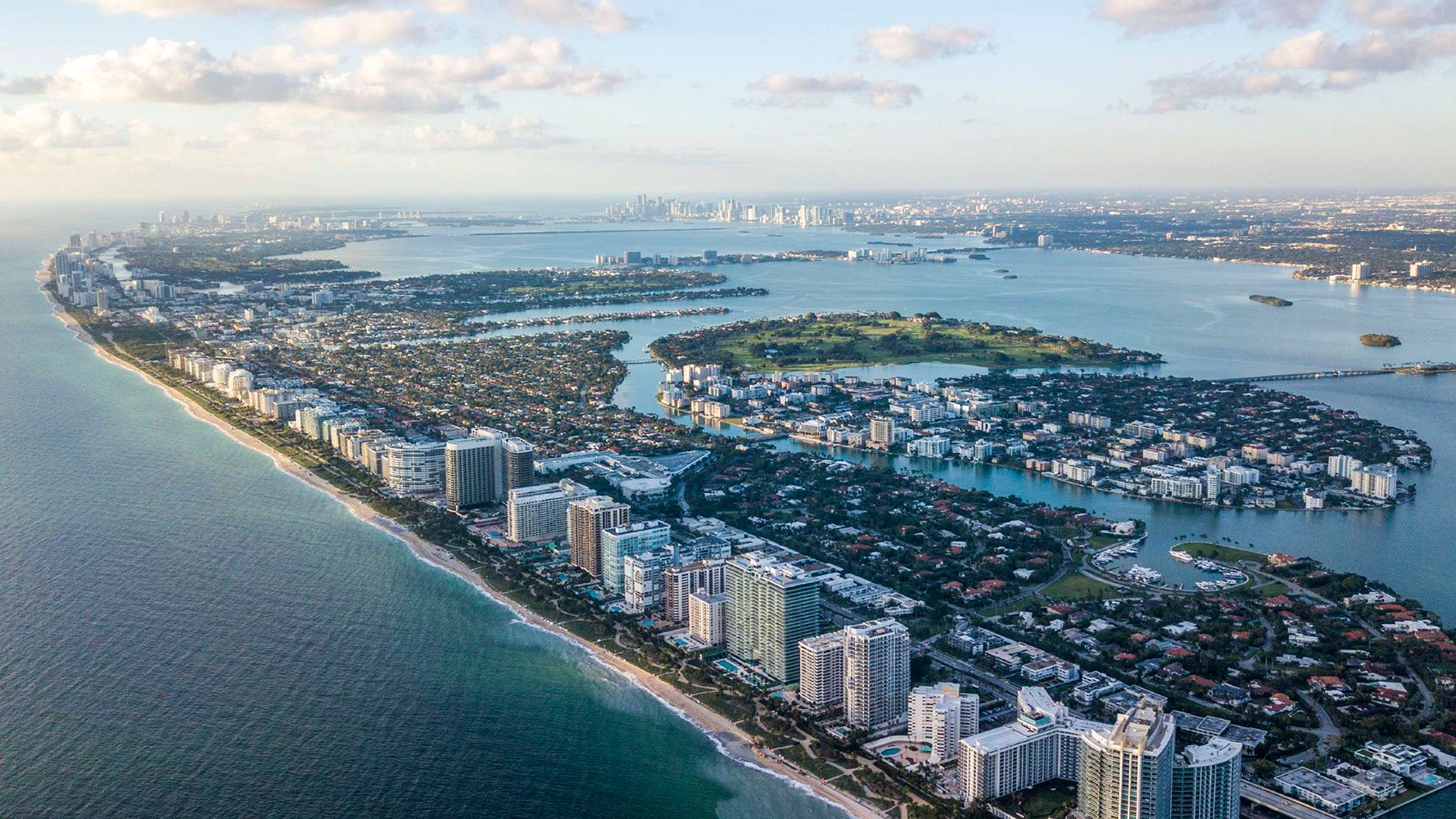
Perspective still matters. Migration narratives can become overly neat when they hinge on a single political moment or a headline tax debate. In practice, affluent households move for a portfolio of reasons, and 2026 decision-making looks less like impulse and more like risk management.
What follows is MILLION Luxury’s ranked view of the five most consistent drivers shaping the current wave.
1. No state income tax + homeowner tax benefits (Florida statewide; impacts South Florida metros) Florida’s lack of state personal income tax remains a primary motivator, particularly for earners with equity-heavy compensation, bonus-driven income, or investment-linked returns. At a time when many families are reassessing where they want to pay taxes over the next decade, this structural difference can materially change the residency math.
For primary residences, Florida’s Homestead Exemption can reduce a home’s taxable assessed value by up to $50,000, lowering property tax bills for eligible homeowners. In parallel, Florida’s homestead protection is embedded in the state constitution and can protect a primary residence from most creditor claims with no dollar cap, subject to eligibility rules. For many buyers, this pairing of tax planning and asset-protection posture is not a side benefit-it’s a core allocation decision.
2. Ultra-luxury real estate liquidity and buyer depth (Miami-Fort Lauderdale-Palm Beach region) In 2025, South Florida recorded 361 ultra-luxury home closings at $10 million-plus, the second-highest annual total on record behind 2021’s 444. That level of activity matters because the ultra-luxury segment is not expected to behave like a high-volume market. When it does, it signals real buyer depth, faster deal velocity, and durable confidence.
Notably, 81% of $10 million-plus transactions closed all-cash, underscoring a buyer base that can execute quickly and selectively. For sellers, this reduces financing fragility. For buyers, it defines a competitive landscape where certainty and timing can matter as much as price.
3. Second-home capital for the ultra-rich (Miami) Miami has become a leading destination for the ultra-wealthy’s second homes, with 13,211 ultra-high-net-worth individuals reported to have secondary residences there. The implication is subtle but consequential: second-home markets are often where global capital tests a city’s brand before committing to deeper roots.
In 2026, that second-home “bench” functions like a built-in demand reservoir for trophy inventory, particularly in locations offering direct ocean access, a strong service culture, and privacy-forward living. When a market is widely used as a second-home base, it can also create long-term resilience, because demand is diversified across domestic movers, international families, and business travelers.
4. Education as an amenity (Palm Beach County) for relocating families For affluent households moving with children, education planning often becomes the pacing item for everything else: where to buy, when to close, and how quickly to establish residency. In Palm Beach County, private schools have seen surging applications and years-long waitlists tied to in-migration of affluent families.
The real estate consequence is straightforward: family-friendly neighborhoods and buildings near preferred school corridors can experience sustained demand. In practice, many parents treat the home purchase as the anchor that stabilizes the school plan-not the other way around.
5. Governance, safety, and business climate as relocation factors (Miami; exemplified by Citadel move) Taxes alone rarely explain a major corporate or family relocation. Governance priorities-including public safety and education-have been described as influential factors in high-profile moves to Miami. In 2026, the same theme surfaces in boardrooms and family offices: buyers want predictability, functional infrastructure, and a business climate that supports growth.
This driver is also psychological. For high-visibility principals, the feeling of security, the reliability of day-to-day operations, and the long-term narrative of a city matter. South Florida’s ascent as a wealth center has been powered by inflows of finance, tech, and international capital-and that momentum reinforces the perception of durability.
South Florida is not a single luxury market. It is a connected set of micro-markets with different meanings for different buyers.
Brickell and the urban core appeal to principals who want proximity to offices, airports, and a cosmopolitan social calendar. Residences that deliver service, discretion, and modern architecture tend to be favored, especially when they support lock-and-leave ownership. In that context, 2200 Brickell speaks to buyers who want a refined, residential feel while staying close to Miami’s business spine.
Miami Beach remains a stronghold for lifestyle-first second homes, especially for households that live seasonally and want ocean adjacency paired with a strong design sensibility. For those buyers, a property like 57 Ocean Miami Beach can serve as both a personal sanctuary and a social address, without requiring the scale of a single-family compound.
Farther north, Fort Lauderdale and surrounding coastal communities often resonate with boaters and families seeking a quieter rhythm while staying connected to the region’s airports and cultural scene. A waterfront-oriented, resort-caliber proposition such as Auberge Beach Residences & Spa Fort Lauderdale reflects how the luxury condo buyer is increasingly prioritizing turnkey ease paired with meaningful amenities.
Ultra-luxury buyers already think in terms of downside protection, even when a purchase is made in cash. That is why market liquidity is more than a statistic-it is a feature.
A region capable of producing hundreds of $10 million-plus closings in a single year is signaling buyer depth and an ability to transact at the top of the market. When 81% of those deals are all-cash, it also suggests a market that can function through credit-tight cycles. In a world where interest-rate narratives can shift quickly, the appeal of a market that does not rely on leverage to clear high-end inventory becomes more pronounced.
For owners, liquidity also shapes renovation decisions and holding strategy. If you believe you can re-enter the market efficiently, you are more willing to curate a home to your taste. If you fear being stranded, you design for the broadest buyer pool. South Florida’s recent volume profile has pushed many owners toward the former.
For many ultra-wealthy households, the “move” is really a governance project: establishing residency, aligning business operations, and optimizing estate and asset-protection strategies. Florida’s lack of state personal income tax is widely understood, but the finer points matter in practice.
The Homestead Exemption can lower property tax burdens for eligible primary residences, and Florida’s constitutionally embedded homestead protections can be a meaningful component of a broader asset-protection approach, subject to eligibility rules and planning considerations. These are not one-size-fits-all benefits, but they help explain why so many families begin their South Florida journey by identifying a clear primary residence.
In this lane, the built environment is not just about aesthetics. It is about certainty. Buyers often gravitate toward residences that make year-round living effortless: privacy, security, reliable building management, and a layout that supports both family life and hosting.
The idea of South Florida as a “temporary” lifestyle outpost has weakened. Two practical signals reinforce that sense of permanence.
First, premium healthcare is now part of the luxury equation. Cleveland Clinic Weston Hospital was named the highest-ranked hospital in South Florida in a 2025 ranking announcement-a detail that matters when buyers are selecting a primary base for parents, children, or multigenerational living.
Second, population growth continues to apply pressure to housing and services, with Florida’s growth in 2024 driven heavily by international migration. That mix tends to expand the region’s cultural and commercial ecosystem, and it can also deepen the buyer pool that supports second homes and trophy assets.
For buyers seeking a residence aligned with wellness-forward living and long-term daily comfort, newer concepts such as The Well Bay Harbor Islands reflect how design and lifestyle programming are being positioned within a broader “live well” thesis.
In 2026, the most sophisticated buyers are not asking, “Is South Florida hot?” They are asking, “Does South Florida solve multiple problems at once?”
The consistent answer is yes: a tax structure that can materially improve after-tax outcomes, a real estate market that demonstrates $10 million-plus liquidity with predominantly all-cash execution, and an increasingly complete lifestyle infrastructure spanning education, governance priorities, and healthcare quality.
Even so, the best outcomes still come from precision. Neighborhood selection, residency planning, and the choice between an urban condominium, an oceanfront pied-à-terre, or a family-centered primary base should be integrated into one coherent plan.
Is Florida’s no state income tax the main reason people relocate? It is a major driver for many high earners, but most relocations reflect multiple priorities.
How meaningful is the Homestead Exemption for a primary residence? It can reduce a home’s taxable assessed value by up to $50,000 for eligible homeowners.
What is Florida’s homestead protection in simple terms? It can protect a qualifying primary residence from most creditor claims with no dollar cap.
Is South Florida still seeing real liquidity at the very top of the market? Yes, 2025 saw 361 closings at $10 million-plus across the region.
Are ultra-luxury purchases commonly financed in South Florida? Many are not; 81% of $10 million-plus transactions were all-cash.
Why does Miami’s second-home status matter to buyers? A deep second-home base can support demand resilience across different buyer types.
How many ultra-high-net-worth individuals reportedly keep second homes in Miami? 13,211 ultra-high-net-worth individuals have been reported to have secondary residences there.
Why is Palm Beach County often mentioned for families? Private schools there have seen surging demand and years-long waitlists tied to in-migration.
Are safety and education really part of the relocation decision? Yes, governance priorities like public safety and education have been cited in major moves.
Does healthcare quality factor into luxury home decisions in 2026? Increasingly yes, especially for primary residences and multigenerational households.
When you're ready to tour or underwrite the options, connect with MILLION Luxury.
If branded residences are on your mind — as a home or as an allocation — we would be glad to share what we are seeing, privately.
Begin a quiet conversation