A discreet buyer’s guide to evaluating South Florida waterfront homes through the practical lens of deep-water access, docking, bridge clearance, service, and lifestyle fit.
A home in Aspen teaches discipline. Access matters. Weather matters. Storage matters. Even the most beautiful property can be compromised by a single overlooked logistical detail. The South Florida waterfront buyer faces a similar equation, only the variables shift from grade, snow load, and ski-room flow to draft, bridge clearance, tide, seawall condition, and the quiet choreography of moving a vessel in and out without friction.
For an Aspen owner considering Fort Lauderdale, Boca Raton, Pompano Beach, Bay Harbor Islands, or other South Florida waterfront enclaves, the first question should not be whether a home is glamorous. At this level, many are. The more useful question is whether the residence functions around the boat you own now, the boat you may buy next, and the lifestyle you intend to live when family, crew, guests, and service providers are all moving through the property.
This is where luxury becomes practical. Deep-water docking is less a decorative feature than a private operating platform. When it works, it feels effortless. When it does not, every outing becomes a negotiation.
Many buyers begin with the terrace, the pool, or the sunset orientation. For a yacht-focused search, begin with the vessel profile. The relevant questions are simple, but consequential: What are the vessel’s length, beam, draft, height, and maneuvering requirements? Will you keep a tender, personal watercraft, or chase boat? Does the captain need direct access? Is shore power sufficient for the way the boat is used? Is the approach comfortable in ordinary conditions, not only on a perfect day?
A property may be waterfront and still be poorly suited to a serious boating life. Canal width, turning basin, current, wind exposure, and nearby fixed bridges can matter as much as the dock itself. A wide water view can be seductive, but a narrow approach or awkward piling configuration can erode the value of that view for a buyer whose weekends are organized around departure times.
For condominium buyers, the distinction is even sharper. A residence can offer luminous water exposure while its boating solution depends on separate marina access, assigned slips, waitlists, association rules, or third-party arrangements. In other words, do not equate blue water outside the glass with effortless docking beneath it.
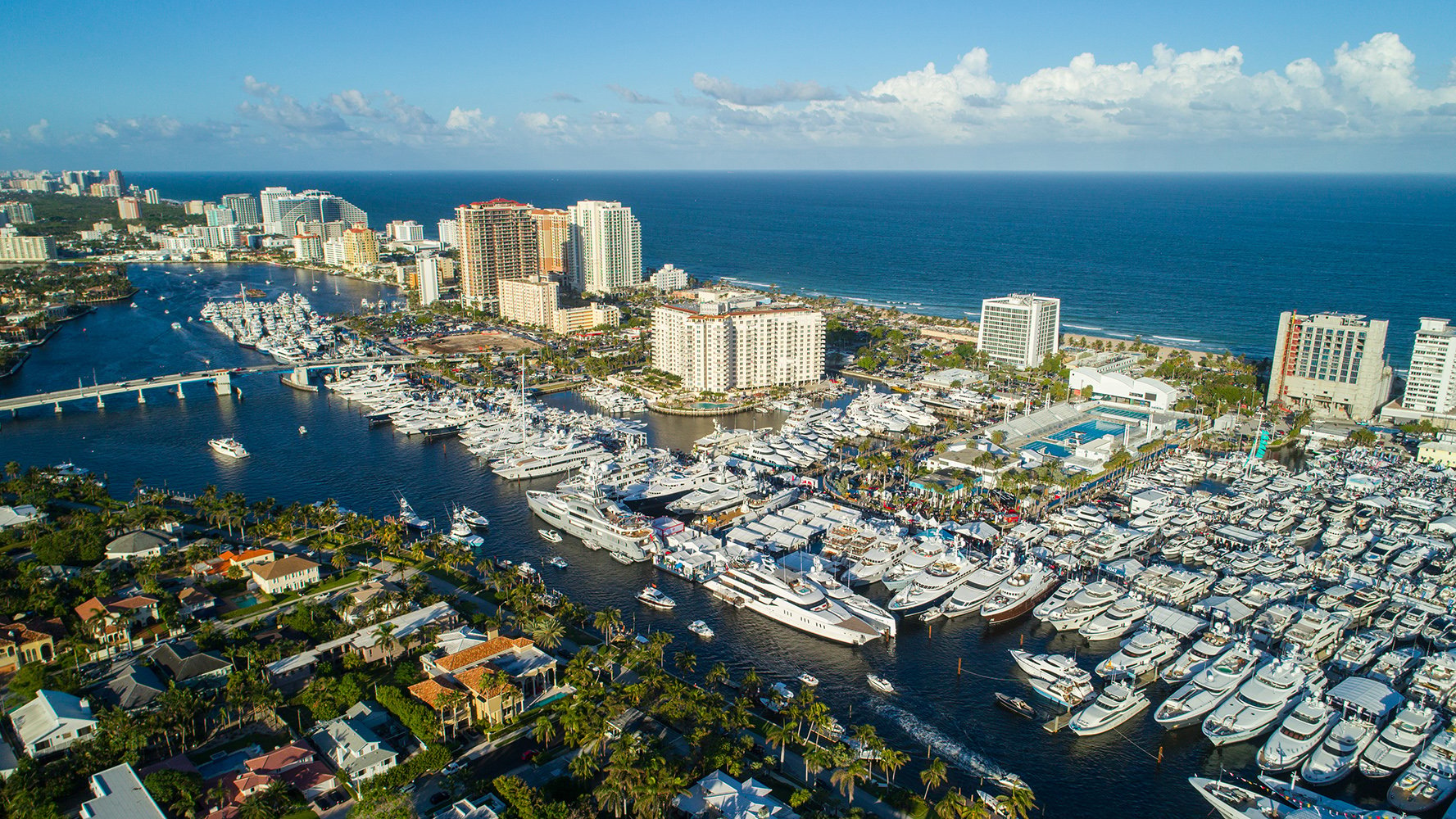
Fort Lauderdale remains one of South Florida’s most intuitive markets for yacht-oriented buyers because the city’s identity is inseparable from canals, inlets, and marine service culture. Still, the best choice is not always the largest house or the most dramatic façade. It is the property whose water access matches the owner’s actual use pattern.
A buyer considering Fort Lauderdale Beach may compare full-service residential living near the sand, including St. Regis® Residences Bahia Mar Fort Lauderdale, with quieter inland waterfront addresses where a private dock may be the central amenity. Another buyer may prefer a river-oriented urban setting, weighing walkability, privacy, and boat access around properties such as Riva Residenze Fort Lauderdale. In each case, the architecture is only part of the conversation. Docking practicality determines how naturally the residence supports the rhythm of ownership.
Fort Lauderdale also asks buyers to think about service. A magnificent home becomes easier to live with when marine professionals, provisioning, detailing, fueling logistics, and maintenance can be handled without theatrical disruption. For owners arriving from seasonal mountain markets, this is the marine equivalent of asking how easily skis, vehicles, staff, and guests move through the property during peak winter weeks.
The word marina can suggest polished convenience, but every arrangement deserves scrutiny. Is the slip deeded, assigned, licensed, leased, or accessed through a separate membership? Are there restrictions on vessel size, liveaboard use, crew access, lifts, generators, fueling, or commercial activity? How are hurricanes, insurance requirements, and evacuation protocols handled? Who maintains the dock, pilings, seawall, utilities, and common marine infrastructure?
For a single-family home, the due diligence shifts to ownership and condition. A dock may look pristine from the pool deck, yet the seawall, cap, pilings, electrical systems, lighting, and lift equipment still require professional review. Depth at low tide matters. So do siltation, neighboring encroachments, and the practical ability to dock without relying on heroic maneuvering.
The phrase boat slip should be treated as the beginning of the inquiry, not the answer. A slip that fits the boat on paper may not fit the way the owner entertains, travels, stores equipment, or uses crew. A slip that is ideal for a center console may be insufficient for a yacht with a different beam or draft. The most successful buyers test the property against everyday routines, not brochure language.
South Florida’s boating map is not one market. It is a sequence of micro-lifestyles. Fort Lauderdale often appeals to owners who want immediate marine fluency, strong service proximity, and a city that understands the boating calendar. Pompano Beach can appeal to buyers who want oceanfront residential energy with a more residential cadence; projects such as The Ritz-Carlton Residences® Pompano Beach may enter the conversation for buyers balancing beach living with nearby boating considerations.
Boca Raton brings a different sensibility: polished, established, club-oriented, and residential. A buyer studying The Residences at Mandarin Oriental Boca Raton may be prioritizing service, dining, and lock-and-leave elegance, while separately evaluating how boating will be handled. That separation is important. A superb residence and a superb yacht solution may be the same property, but they do not have to be.
Bay Harbor Islands, Miami Beach, Fisher Island, Coconut Grove, and Palm Beach County each bring their own tradeoffs around privacy, water depth, access, traffic, service, and social rhythm. The right answer depends on whether the boat is central to daily life, used seasonally, managed by crew, or treated as one piece of a larger South Florida lifestyle.
Single-family waterfront homes offer control. The owner can often shape dock use, service access, storage, landscaping, and arrival sequence with fewer shared constraints. They also inherit more responsibility: seawall diligence, storm preparation, dock maintenance, security, and the visual relationship between the home and the working side of boating.
Condominiums offer service, discretion, and ease, but the dock conversation becomes more contractual. Buyers should understand association documents, guest policies, slip transferability, waiting procedures, insurance obligations, and whether the boating arrangement will continue to suit a future vessel. A beautifully staffed building may be ideal for an owner who charters, day-boats, or keeps the yacht elsewhere. It may be less ideal for an owner who expects the vessel to function as an extension of the residence.
This is why docking practicality should be treated as a lifestyle filter, not a specialty footnote. It belongs in the same category as privacy, security, arrival experience, wellness spaces, school access, and airport convenience. In practical buyer’s guides, the dock is not separate from the home. It is part of the home’s performance.
Before falling in love with a waterfront address, inspect the water side with the same seriousness usually reserved for interiors. Confirm bridge exposure, controlling depths, turning comfort, dock configuration, utilities, seawall condition, wake exposure, and service access. Ask how the property behaves at low tide, during busy weekends, and in unsettled weather. Consider where guests board, where crew parks, where provisions arrive, and how the boat is secured when the owner is away.
Also consider resale. The next buyer may own a larger vessel, require different clearance, or prefer a more professionally managed marine environment. A property that solves these questions elegantly can be more resilient than one whose boating appeal is mostly visual.
For Aspen-to-Florida buyers, the best South Florida home is not simply warmer, larger, or closer to the water. It is a residence that converts a complex coastal lifestyle into quiet ease. The right dock, slip, or marina strategy should disappear into daily life, leaving only the pleasure of arrival, departure, and return.
What does deep-water docking really mean for a buyer? It means the water access, depth, clearance, and maneuvering conditions suit the intended vessel in real use, not just in marketing language.
Is Fort Lauderdale always the best choice for yacht owners? Fort Lauderdale is highly practical for many boating buyers, but the best location depends on vessel size, lifestyle, privacy needs, and service expectations.
Should I choose a condo or a single-family waterfront home? Choose a condo for service and simplicity, and a single-family home for greater control, while reviewing all dock and slip obligations carefully.
Can a waterfront condo guarantee boating convenience? Not necessarily. Waterfront views and boating rights are different issues, so slip access, rules, and availability must be reviewed separately.
What is the most overlooked docking issue? Buyers often focus on length and forget draft, beam, turning room, bridge clearance, and how the boat behaves at low tide.
How should Aspen buyers think about South Florida waterfront homes? Use the same discipline applied to mountain logistics: access, storage, service, weather planning, and how the home performs during peak use.
Does a larger dock always add more value? Not if the approach, depth, utilities, or legal rights are compromised. Function usually matters more than size alone.
What should be reviewed before closing? Review dock condition, seawall condition, permitted use, association rules if applicable, utilities, insurance requirements, and storm protocols.
Are marina arrangements easier than private docks? They can be easier, especially for service, but they may involve rules, fees, availability limits, and restrictions that affect ownership.
How early should boating diligence begin? It should begin before shortlisting homes, because the vessel may eliminate properties that otherwise appear ideal.
If you'd like a private walkthrough and a curated shortlist, connect with MILLION.
If branded residences are on your mind — as a home or as an allocation — we would be glad to share what we are seeing, privately.
Begin a quiet conversation