A founder-focused guide to choosing between Pre-Construction flexibility and Move-In Ready certainty when relocating leadership teams to South Florida.
For founders relocating leadership teams to South Florida, the question is not simply whether Pre-Construction feels more compelling than a completed residence. It is whether the housing decision can support a transition already carrying pressure: executive continuity, family logistics, board expectations, privacy, schooling rhythms, travel patterns, and the tone a founder wants to set for a new regional base.
A residence can become a strategic asset when it reduces friction. It can also become a distraction if timing, customization, financing, or closing logistics compete with the real work of moving a leadership group. The sharper question is practical: which path gives the founder more control over the variables that matter most?
This is why a Buyer's Guides approach is essential. A founder may want architectural choice, privacy, and long-term positioning. A chief operating officer may need certainty within a defined arrival window. A family office may be coordinating multiple principals, children, staff, pets, cars, and seasonal travel. Each use case points to a different answer.
Pre-Construction can be compelling when the move is planned, phased, and not dependent on immediate occupancy. It allows a buyer to look beyond the next closing and define what the residence should do for the next chapter of leadership life. That may include preferred exposure, a particular floor range, a more tailored interior direction, or a location aligned with where the company expects to concentrate its South Florida presence.
For founders still sequencing a move, flexibility can be worth more than instant possession. If the leadership team will arrive in waves, the founder may have time to select around future needs rather than today’s urgency. The residence becomes part of a broader relocation design, not a rushed solution.
In Brickell, for example, a founder comparing urban proximity and future optionality may consider conversations around 2200 Brickell as part of a larger decision about how close the home base should be to the office, dining, advisors, and the daily rhythm of executive life. The value is not merely the address. It is the ability to choose deliberately before the most desirable configurations are no longer available.
Pre-Construction also suits founders who view the residence as a long-duration hold. The emphasis is less on solving this month’s calendar and more on securing a setting that reflects where the family, the company, and the executive team are headed.
Move-In Ready certainty becomes more important when the leadership relocation has a fixed start date. If the founder needs to be present for hiring, investor meetings, product reviews, or team integration, uncertainty around delivery can become costly in non-financial ways. A completed building allows the buyer to walk the halls and understand light, noise, approach, views, service culture, parking movement, and the everyday feel of the property before committing.
For executives arriving with spouses, children, caregivers, or household staff, certainty can be a form of luxury. The ability to plan furniture, security, school commutes, airport routines, and private entertaining around a known residence can outweigh the creative appeal of customization.
In Miami Beach, completed or near-term options can serve buyers who want a more immediate translation from decision to daily use. A project such as The Ritz-Carlton Residences® Miami Beach may enter the discussion when the priority is evaluating a residence through livability, service expectations, and the daily experience of being there rather than waiting for future delivery.
Certainty also helps when multiple executives are moving at once. A founder may tolerate ambiguity personally, but a chief financial officer, general counsel, or operating partner may not want residential risk layered onto a corporate transition. In that case, the smartest real estate decision is the one that removes variables.
First, ask how soon the home must function. If the residence is needed for immediate executive performance, Move-In Ready should carry serious weight. If the founder can bridge with a temporary solution, Pre-Construction may provide more room for selection.
Second, ask who is actually relocating. A single founder, a couple, a household with young children, and a multi-generational family each define certainty differently. The more people affected by the move, the more valuable predictability becomes.
Third, ask whether the property is a headquarters for living or a strategic foothold. A founder who expects to host advisors, partners, or board members may care deeply about arrival sequence, privacy, entertaining flow, and service. A founder who travels frequently may prioritize lock-and-leave simplicity and staff coordination.
Fourth, ask whether optionality has a deadline. Pre-Construction flexibility is most useful before a buyer’s preferred choices narrow. Move-In Ready certainty is most powerful when the relocation calendar is already set. The right answer often depends on which deadline is less negotiable.
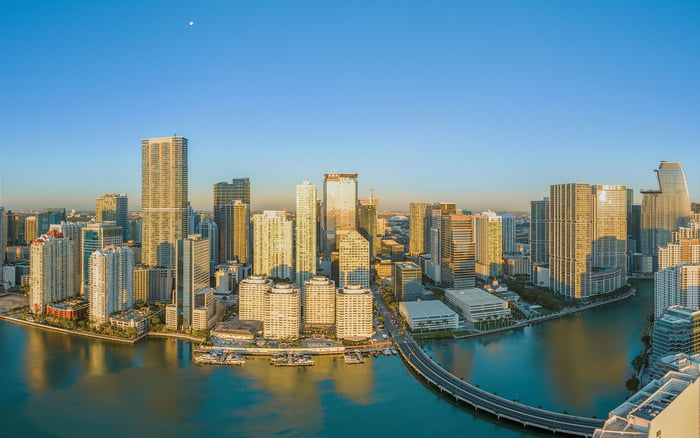
South Florida is not one monolithic relocation market. Brickell speaks to founders who want urban intensity, fast access to meetings, and a polished vertical lifestyle. Miami Beach offers a different equation, where privacy, water, hospitality, and design culture shape the day. Coconut Grove is often considered by buyers who want a softer residential rhythm while remaining connected to the city’s executive and cultural orbit.
That distinction is why project selection should follow lifestyle mapping, not the other way around. A founder may be drawn to the architectural statement of The Residences at 1428 Brickell, while another may find the setting of Four Seasons Residences Coconut Grove better aligned with family cadence, privacy preferences, and daily composure.
The most effective search begins with a clear operating brief. Where will the founder work most often? Who needs airport access? How often will the residence host private meetings? Is the priority walkability, water, schools, club life, dining, or discretion? Once those answers are clear, the choice between Pre-Construction and Move-In Ready becomes far less abstract.
Many founders do not need to choose one philosophy forever. The strongest relocation plan can combine immediate certainty with future optionality. A completed residence or high-quality rental can stabilize the first phase of the move, while a Pre-Construction purchase secures the longer-term home base.
This approach is especially useful when a company is relocating leadership before its South Florida identity is fully formed. The founder may learn that the right daily base is closer to Brickell, Miami Beach, Coconut Grove, Boca Raton, Fort Lauderdale, or Palm Beach only after living the rhythm. Buying too quickly for certainty can create regret. Waiting too long for perfect flexibility can create drift.
A blended plan keeps the founder in motion without forcing a premature conclusion. It also allows the leadership team to settle operationally while the principal makes a more considered residential decision.
For founders relocating leadership teams, completed-building certainty matters most when people, performance, and calendar cannot absorb risk. Pre-Construction flexibility matters most when the founder has time, conviction, and a long-term point of view.
The best answer is rarely ideological. It is situational. If the residence must work immediately, choose certainty. If the residence is meant to define the next decade and timing is manageable, preserve flexibility. If both are true, separate the relocation solution from the legacy purchase.
Luxury, in this context, is not excess. It is control. The right residence should make the move quieter, smarter, and easier to govern.
Is Pre-Construction better for founders relocating to South Florida? It can be better when timing is flexible and the founder wants more choice. It is less ideal when immediate occupancy is essential.
When does Move-In Ready become the safer choice? Move-In Ready is often safer when a leadership team has a fixed arrival date. It reduces uncertainty around daily living and logistics.
Should a founder buy before the entire leadership team relocates? Only if the founder has clarity on location, household needs, and work patterns. Otherwise, a phased approach may be more prudent.
Does Brickell suit every relocating executive? No. Brickell can be compelling for urban access, but some executives may prefer quieter residential settings elsewhere.
Why consider Miami Beach during a corporate relocation? Miami Beach can appeal to buyers prioritizing lifestyle, design, privacy, and hospitality-driven living. It may not suit every commute pattern.
How should Coconut Grove be evaluated? Coconut Grove should be considered through daily rhythm, family needs, and a more residential atmosphere. It is not purely an office-proximity decision.
Can a founder use a temporary residence first? Yes. A temporary solution can protect the relocation timeline while preserving time for a more strategic purchase.
What is the biggest risk of waiting for Pre-Construction? The main risk is timing mismatch. If delivery does not align with the move, the founder may need an interim housing plan.
What is the biggest risk of buying Move-In Ready too quickly? The risk is choosing certainty before understanding the right neighborhood rhythm. Speed should not replace fit.
What should guide the final decision? The final decision should balance timing, household complexity, executive obligations, and long-term intent. The right choice is the one that reduces friction.
For a tailored shortlist and next-step guidance, connect with MILLION.
If branded residences are on your mind — as a home or as an allocation — we would be glad to share what we are seeing, privately.
Begin a quiet conversation