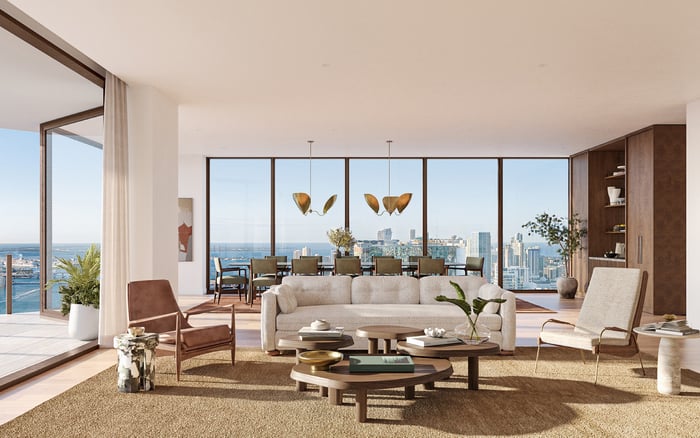
A buyer-focused look at why terrace drainage, surface detailing and maintenance access can reshape the true ownership cost of a South Florida lock-and-leave residence.
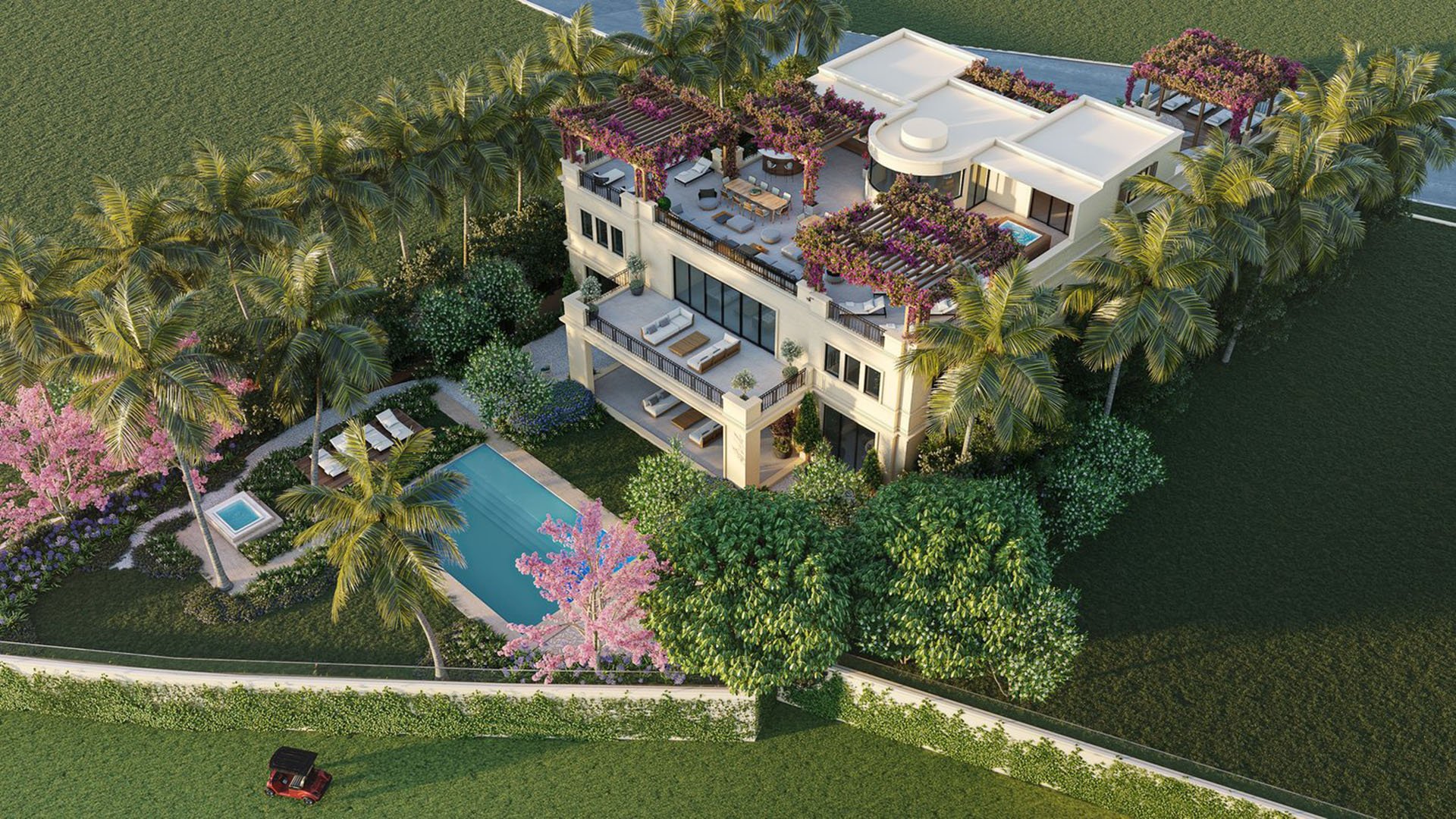
For many South Florida buyers, the lock-and-leave ideal is clear: arrive to a serene residence, open the glass, step onto a private outdoor room and let the water view reset the week. The terrace is central to that promise. It extends the living room, frames the skyline and gives a condominium the feeling of a house in the air. Yet the quiet detail that can determine whether that terrace feels effortless is often underfoot.
Drainage is not glamorous. It is rarely the first subject raised in a sales gallery or showing. But for a buyer who may be away for weeks at a time, the way a terrace receives, moves and releases water can shape maintenance routines, service calls, finish longevity and peace of mind. A residence can be visually immaculate and still ask more of its owner if water lingers, stains, backs up or depends on constant attention.
The real cost of ownership is not only the purchase price, monthly carrying cost and furnishing plan. It is also the friction embedded in the home. In a lock-and-leave property, a poorly understood terrace can turn convenience into coordination.
A primary residence forgives small annoyances because someone is usually present to notice them. A lock-and-leave home does not. If a drain clogs, if planter runoff leaves marks, or if water collects near thresholds, the issue may sit until the next visit, house manager inspection or building walk-through.
That is why terrace diligence should focus on absence. Ask what the terrace is like after heavy rain, not only on a dry afternoon. Consider whether the outdoor furniture plan will block access to drains. Look at whether planters, outdoor kitchens, decorative screens or storage pieces could interrupt the intended water path. A beautiful arrangement can become expensive if it hides the components that require periodic attention.
This is especially relevant in South Florida’s higher-end condominium market, where outdoor rooms are a major part of the lifestyle proposition. In Brickell, buyers comparing vertical urban living at 2200 Brickell may think first about convenience and design. The same buyer should also ask how each private exterior area is intended to be maintained when the owner is not in residence.
A terrace is not merely a larger balcony in purchase diligence. Scale changes behavior. A compact balcony may have a simpler surface area, fewer furnishing zones and easier access for cleaning. A broad terrace can introduce multiple drainage points, larger spans, planters, shade systems and more places for debris to collect.
Larger outdoor rooms also invite heavier use. Owners may add lounge groupings, dining tables, sculptural planters, outdoor rugs and occasional service pieces. Each layer can change how water moves. The question is not whether the terrace can be furnished beautifully. It is whether the furnishing plan respects the drainage plan.
The most refined residences solve this quietly. Water disappears without drama. Thresholds feel protected. Drain covers remain accessible but discreet. Maintenance does not require dismantling the lifestyle the terrace was designed to support. When that balance is missing, the terrace can create recurring costs that do not appear in glossy renderings or first impressions.
Waterfront ownership in South Florida is often about openness: long sightlines, larger glass, wind, exposure and a closer relationship with the elements. That exposure is part of the appeal, but it also makes exterior detailing more important. A terrace facing open water may feel spectacular, yet it deserves a more careful conversation about runoff, residue, hardware, surface performance and maintenance cadence.
In Miami Beach, where the outdoor room is a defining part of luxury living, buyers touring The Perigon Miami Beach should think beyond view orientation. A lock-and-leave buyer should understand how water is expected to move across the private exterior space, who maintains the visible and concealed components, and what owner responsibilities remain between building services.
The same principle applies north along the coast. A residence such as The Ritz-Carlton Residences® Pompano Beach may attract buyers seeking a coastal rhythm with less daily upkeep than a single-family home. Terrace performance becomes part of that equation because the exterior room is both a luxury feature and a weather-facing surface.
One of the most important questions is jurisdiction. In many condominium settings, the building may control structural elements and exterior systems, while owners remain responsible for keeping certain areas clean, accessible or unobstructed. The distinction can matter when a terrace drain needs service or when finishes are affected by repeated standing water.
Buyers should ask plain questions before contract deadlines. Who clears the drains? How often are terrace areas inspected? Are planters owner-installed or part of the delivered condition? Are outdoor rugs permitted? Can furniture sit over drain locations? If a drain is concealed by decking or design features, how is it accessed?
These are not adversarial questions. They are ownership questions. In the ultra-premium market, discretion includes prevention. The smoother the operating plan, the more the home behaves like a true second residence rather than a project requiring attention.
Pre-construction buyers sometimes focus on finish selections, views, floor height and deposit structure. Those matter, but terrace detailing deserves a place in the same conversation. Early questions can clarify what is fixed, what is optional and what should not be altered after delivery.
At St. Regis® Residences Brickell, as with any significant urban luxury residence, buyers may be drawn to service, location and brand environment. Yet the lock-and-leave experience ultimately depends on how private and shared systems work when no one is watching them. Drainage is one of those systems. It should be understood before an owner commits to elaborate outdoor furniture, planting schemes or decorative flooring overlays.
A key point is reversibility. If a design choice makes drains harder to reach, the owner may be adding future inconvenience. A terrace should be curated, but not to the point that its basic function is disguised beyond practical use.
For resale buyers, the terrace can reveal how a home has lived. Surface discoloration, uneven wear, residue near walls or repeated marks around thresholds may warrant closer inspection. None of these signals automatically indicates a major problem, but each invites questions.
A careful buyer should move through the exterior space slowly. Look at corners, low points and drain covers. Ask whether any repairs have been made to terrace finishes. Ask whether water has ever entered interior areas. Ask who last serviced the drainage points and when they are normally checked. If the residence is furnished, consider whether the current layout is masking access.
In a second-home purchase, small maintenance ambiguities can become magnified because the owner is not present every day. The goal is not to find perfection. It is to understand the operating reality before the terrace becomes part of the carrying cost.
A South Florida terrace can be one of the most valuable spaces in a residence. It can host quiet mornings, winter dinners, art-week cocktails and long family weekends. But the better buying question is not only how it looks. It is how it performs, how it is maintained and how easily it returns to order after weather.
The most expensive terrace is not always the largest. It is the one whose maintenance plan is unclear, whose drains are inconvenient, or whose design choices create avoidable service needs. For the lock-and-leave buyer, elegance is operational. A terrace should give time back, not take it away.
Why does terrace drainage matter for a lock-and-leave home? Because the owner may be away when water issues appear. Good drainage helps reduce surprise maintenance and preserves the ease that defines this style of ownership.
Is a larger terrace always harder to maintain? Not always, but larger terraces can introduce more surfaces, furnishings and drainage points. The maintenance plan should scale with the size and complexity of the outdoor room.
What should buyers ask before closing? Ask who maintains the drains, how access is handled and whether furniture or planters may obstruct water flow. Clarify owner responsibilities in writing where possible.
Can outdoor furniture affect drainage? Yes, furniture, rugs and planters can block access or alter the intended path of water. A strong terrace plan keeps drainage points reachable.
Should pre-construction buyers discuss terrace drainage? Yes. Early questions can help buyers understand delivered conditions, limits on alterations and the practical impact of outdoor design choices.
What signs should resale buyers notice? Look for staining, residue, uneven surface wear or marks near thresholds. These signs do not prove a defect, but they justify closer review.
Does waterfront exposure make drainage more important? It can. More exposed outdoor spaces deserve careful attention to water movement, surface care and maintenance access.
Is a balcony evaluated differently from a terrace? Often, yes. A balcony may be smaller and simpler, while a terrace can involve multiple zones and more complicated furnishing decisions.
Who usually pays for terrace drainage maintenance? Responsibility depends on the condominium documents and building policies. Buyers should confirm the division between association and owner obligations.
What is the best way to judge the real cost? Evaluate the terrace as a lifecycle asset, not just a view platform. The lowest-friction outdoor space is often the one with the clearest maintenance logic.
For a tailored shortlist and next-step guidance, connect with MILLION.
If branded residences are on your mind — as a home or as an allocation — we would be glad to share what we are seeing, privately.
Begin a quiet conversation