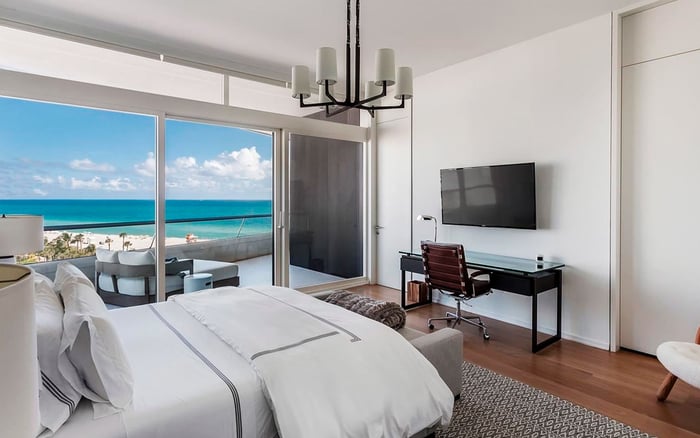
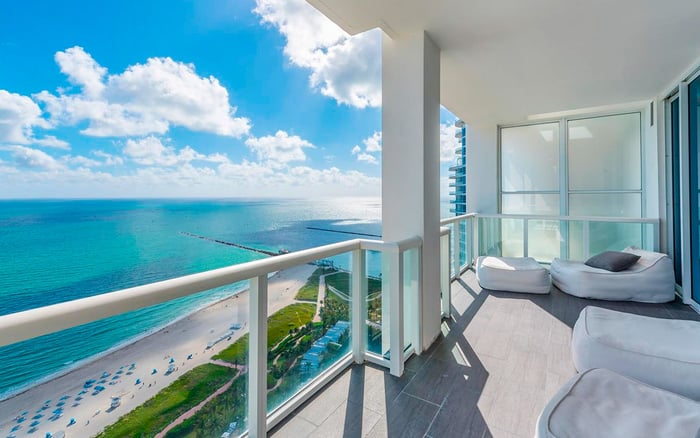
A practical MILLION guide to reviewing wine storage, backup cooling, humidity control, alarms, and condo rules before buying a luxury residence in Miami Beach.

For the Miami Beach buyer, wine storage is often presented as a lifestyle detail: a glass room glowing beside the dining salon, a temperature-controlled wall off the kitchen, or a cellar concealed behind millwork. The more valuable the collection, the more that presentation must be translated into mechanical reality. A wine room is not simply cabinetry. It is a compact climate system, and in a coastal luxury residence, it deserves the same scrutiny as air conditioning, waterproofing, lighting control, and security.
That discipline is especially important for seasonal owners, frequent travelers, and collectors who expect the home to perform quietly while they are elsewhere. In Miami Beach, the conversation should begin before contract, not after closing. Whether touring a new waterfront condominium, a renovated penthouse, or a private residence near the sand, buyers should ask how the wine storage was designed, how it is cooled, what happens during an interruption, and who is responsible when systems require service.
That mindset applies across the high end of the market. When comparing residences such as The Perigon Miami Beach or Shore Club Private Collections Miami Beach, the question is not simply whether a home can display wine beautifully. It is whether the storage environment can protect the bottles with discipline.
The first distinction is between display storage and preservation storage. Display storage may suit bottles intended for near-term enjoyment, particularly when it is integrated into entertaining areas. Preservation storage requires more rigor. It should be treated as a dedicated environment with intentional temperature management, humidity consideration, proper insulation, a sealed enclosure, and equipment that can be accessed without dismantling the room.
Buyers should ask whether the wine area has a dedicated cooling system or depends on the residence’s general air conditioning. A beautiful glass enclosure that borrows comfort cooling from the apartment may not provide the stability expected for meaningful collections. The sharper question is how the space is engineered when the residence is unoccupied, when doors are opened frequently, and when adjacent rooms experience solar gain or heavy entertaining use.
The enclosure matters as much as the equipment. Ask about insulated walls, ceiling treatment, door seals, glass specifications, vapor control, lighting heat, and whether the system was designed for the actual room volume. A wine wall exposed to direct sun, kitchen heat, or a warm mechanical chase warrants closer review. If the seller cannot explain the system, request documentation and bring in a specialist during the inspection period.
Backup cooling is not only about storms or outages. It is about continuity. If the wine system fails on a weekend, while the owner is abroad, or during a service delay, how quickly will anyone know? Is there an alarm? Is it local only, or can it notify the owner, property manager, or building staff? Is there remote monitoring? Who has access to respond?
A buyer should understand whether the wine cooling equipment is connected to any backup power source, whether it has a dedicated circuit, and whether a supplemental power solution is realistic under building rules. In a condominium, the answer may depend on what the association permits, where equipment is located, and how electrical loads are allocated. In a single-family home, there may be more flexibility, but the design still needs to be confirmed rather than assumed.
Backup does not always mean the wine room remains perfect under every condition. It may mean the buyer has enough warning, enough equipment resilience, and enough service access to prevent a manageable issue from becoming a loss. For serious collectors, that distinction belongs on the diligence checklist.
In a condominium, wine storage is partly a private amenity and partly a building systems question. Buyers should confirm where condensers, drains, lines, and ventilation are allowed. They should ask whether modifications require association approval, whether penetrations are permitted, whether service technicians must follow specific access procedures, and whether equipment noise is regulated.
This is where oceanfront living can be especially nuanced. Residences may offer remarkable views, terraces, and entertaining spaces, yet the practical routing of mechanical equipment may be tightly controlled. A balcony may be visually convenient, but it is not automatically an approved or appropriate place for wine equipment. Buyers should avoid assuming that a future upgrade will be simple because an interior wall looks available.
When reviewing established luxury properties such as Faena House Miami Beach or The Ritz-Carlton Residences® Miami Beach, the same principle applies: the architecture may be exceptional, but the operating rules of the residence and building determine what can actually be installed, serviced, and maintained.
A disciplined buyer should ask direct, practical questions. What brand and type of cooling unit serves the wine storage? When was it installed? Who maintains it? Are there service records? What is the target temperature range? Is humidity monitored? Is there a drain, pump, or condensate management system? What happens if the system alarms? Is the alarm audible, app-based, or tied to a broader home automation system?
For resale homes, look beyond the polished presentation. Open and close the wine room door. Listen for equipment noise. Ask whether the system runs constantly. Look for condensation, fogging, musty odors, warped millwork, staining, or labels that appear compromised. These are not automatic reasons to reject a property, but they are reasons to investigate.
For new construction or pre-completion purchases, ask what is included versus what is merely shown in renderings. A wine feature may be delivered as a finished amenity, offered as an upgrade, or left for owner customization. Buyers should confirm the scope in writing, including equipment, controls, cabinetry, glass, electrical requirements, and commissioning.
At the highest level, luxury is not only the presence of a wine room. It is the confidence that the residence can protect a collection without constant owner intervention. Documentation should include equipment manuals, warranties if applicable, service contacts, design specifications, and operating instructions. The response plan should identify who receives alerts, who may enter the residence, and who can authorize emergency service.
This is why wine storage belongs in buyer’s guides for Miami Beach real estate. It sits at the intersection of design, engineering, insurance, and lifestyle. A well-conceived wine environment can enhance daily living and entertaining. A poorly understood one can become an expensive blind spot behind beautiful glass.
The ideal outcome is simple: the buyer knows what exists, what is supported, what can be upgraded, and what responsibilities transfer at closing. That knowledge turns a glamorous amenity into a dependable asset.
Should every Miami Beach luxury residence have dedicated wine cooling? Not every buyer needs it, but serious collectors should favor dedicated systems over decorative storage that relies on general air conditioning.
Is a glass wine room a risk? It can perform well if properly specified, sealed, insulated, and cooled. Buyers should verify the engineering behind the visual design.
What is the most important backup cooling question? Ask what happens when the primary wine cooling system fails and who receives the alert quickly enough to act.
Can condo owners add wine cooling after closing? Sometimes, but building rules, equipment location, electrical capacity, and association approvals can shape what is feasible.
Should wine storage be inspected separately? For valuable collections, yes. A specialist can review equipment, enclosure design, monitoring, and service access.
Do alarms matter if the home has smart-home controls? Yes. Confirm the wine system is actually connected to alerts and that someone can respond when the owner is away.
What should resale buyers request from the seller? Ask for service records, equipment manuals, warranty information if available, and any documentation on installation or modifications.
Are decorative wine walls suitable for long-term storage? They may be suitable for short-term display, but preservation storage requires more stable environmental control.
Why does equipment access matter? If technicians cannot reach the cooling unit easily, routine maintenance and urgent repairs become more complicated.
Should backup power be assumed in luxury buildings? No. Buyers should confirm exactly what is supported, what is private versus building-managed, and what applies to the wine system.
For a confidential assessment and a building-by-building shortlist, connect with MILLION.
If branded residences are on your mind — as a home or as an allocation — we would be glad to share what we are seeing, privately.
Begin a quiet conversation