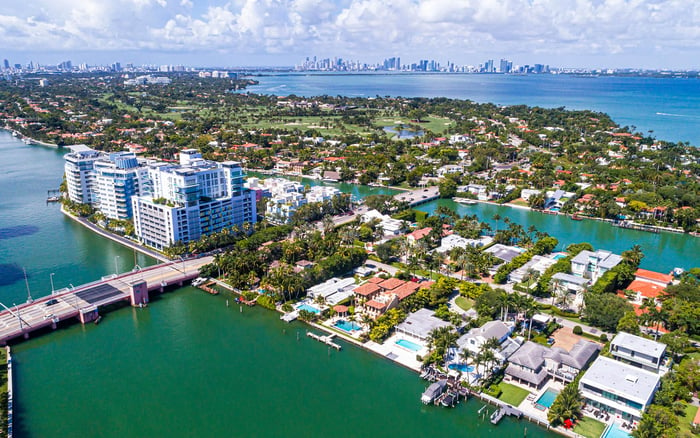
A discreet buyer’s guide for London-based purchasers considering Coconut Grove, with practical FIRPTA planning themes for acquisition, ownership structure, and resale readiness.

For a London buyer, Coconut Grove can feel immediately legible: mature canopy, bay air, nearby private schools, a village atmosphere, and a quieter rhythm than the glass corridors of Brickell or the ceremonial glamour of Miami Beach. Yet the most sophisticated acquisition conversations are rarely confined to architecture and views. They begin with structure.
FIRPTA planning belongs in that early conversation. For international owners, the eventual sale of U.S. real estate can involve tax withholding mechanics, documentation, and timing considerations that shape how a closing is managed. The issue is not whether Coconut Grove is appealing. It is whether the purchase is being arranged with the same discipline that a family office would apply to art, operating companies, or multi-jurisdictional wealth.
That is why FIRPTA should be discussed before a contract is signed, not when a resale is already in motion. The planning lens can influence ownership vehicle, financing, estate considerations, cash management, and the calendar around a future exit.
Many London-based purchasers approach South Florida with a clear lifestyle thesis: a second home, a seasonal base, a family relocation option, or a long-horizon investment. Coconut Grove is especially well suited to buyers who value privacy and neighborhood texture over spectacle. The area offers a sense of permanence that appeals to those who do not want every residence to feel like a hotel.
That discretion does not remove complexity. A buyer who expects to hold for many years may still refinance, transfer ownership, lease the property, or sell earlier than planned. FIRPTA planning is therefore not a prediction of when one will sell. It is a readiness discipline.
At the high end, the most elegant transactions are usually the least improvised. Before committing to a residence, a buyer should coordinate a U.S. tax advisor, legal counsel, and any UK-side wealth advisors. The objective is not to make the property feel less romantic. It is to ensure that the romance is not later interrupted by avoidable administrative friction.
In luxury real estate, buyers often obsess over floor plans, ceiling heights, terraces, and water orientation. They should bring similar attention to ownership structure. The name that appears on the contract, the entity that owns the residence, and the family members connected to the purchase may all matter for future planning.
This is especially relevant in Coconut Grove, where buyers may compare boutique residences, waterfront homes, and amenity-rich new development. A residence at Four Seasons Residences Coconut Grove may attract a buyer seeking service, brand trust, and lock-and-leave ease. A more wellness-oriented buyer may consider The Well Coconut Grove for a different lifestyle brief. In either case, the purchase decision should include the eventual resale path.
The key question is simple: if this asset were sold in five, seven, or ten years, would the ownership structure help or hinder the closing? That is the conversation to have while leverage, deposits, title, and estate intentions are still flexible.
FIRPTA planning is often misunderstood as a closing-day issue. In practice, it is better treated as a resale calendar issue. A seller who waits until a buyer is already identified may have fewer options and less time to prepare.
The strongest approach is to maintain clean records from the beginning: acquisition documents, capital improvement records, closing statements, entity documentation, and advisor correspondence. These materials can become important when determining how a future sale is handled. For a London owner who may be traveling, delegating locally, or coordinating across time zones, document discipline is not clerical. It is strategic.
This matters in a market where buyer quality, timing, and presentation can influence negotiating strength. If a seller is organized before listing, the property can be marketed with greater confidence. If planning is delayed, the sale process may become more cumbersome precisely when discretion is most valuable.
Coconut Grove rewards buyers who think in layers. There is the daily experience: school runs, yacht clubs, restaurants, tropical shade, bay breezes, and a pace that feels more residential than transactional. Then there is the asset layer: scarcity, design, waterfront proximity, privacy, and long-term desirability.
Waterfront and waterview residences deserve particular attention because emotional appeal can be powerful. At Vita at Grove Isle, the island setting speaks to buyers who want separation without leaving the city. At Park Grove Coconut Grove, the conversation often centers on architecture, bay orientation, and established prestige.
Yet even the most beautiful residence should be reviewed through the lens of exit mechanics. If the owner is foreign for U.S. tax purposes at the time of sale, the process may require careful coordination. The more valuable the property, the more important it becomes to avoid last-minute uncertainty.
A London buyer does not need to become a U.S. tax expert. The buyer does need to ask better questions. Who should own the property? How will the purchase be funded? What records should be retained? How would a future sale be handled? Would the chosen structure still make sense if the family later relocates, rents the property, or transfers it to the next generation?
These questions belong alongside the usual due diligence on building reserves, house rules, insurance, rental policies, and closing costs. They are not separate from the acquisition. They are part of acquiring well.
The practical advice is consistent: begin with the end in mind. A well-advised buyer can still move quickly when the right residence appears, but speed should not require improvisation. In a prime Coconut Grove transaction, preparedness is a form of leverage.
The best advisors do not make a purchase feel burdened by tax. They make it feel orderly. For international buyers, early coordination can align the contract, title approach, financing, estate considerations, and future sale documentation.
It can also clarify responsibilities among the buyer, attorney, accountant, lender, and closing team. That clarity is particularly useful when decisions are being made from London while inspections, association approvals, and closing logistics unfold in Miami.
Coconut Grove will continue to attract buyers who want a softer, more residential version of Miami luxury. FIRPTA planning does not diminish that appeal. It protects it by ensuring that the eventual exit is considered with the same care as the arrival.
What is the main FIRPTA issue for a London buyer? The main issue is how a future sale may be handled if the owner is treated as foreign for U.S. tax purposes. Buyers should discuss this before purchasing.
Should FIRPTA planning happen before or after closing? It is best addressed before closing, while ownership structure, funding, and documentation choices are still flexible.
Does FIRPTA apply only to Coconut Grove property? No. FIRPTA is a U.S. real estate planning issue, but Coconut Grove buyers should consider it because transaction values can be significant.
Can the right ownership structure remove all tax concerns? No structure should be assumed to solve every issue. The goal is to align the structure with the buyer’s facts and long-term intentions.
Is this only relevant for investors? No. A second-home buyer may also need planning if the property is later sold, transferred, refinanced, or rented.
What records should a buyer keep? Buyers should keep purchase documents, closing statements, improvement records, entity paperwork, and advisor guidance in an organized file.
Can FIRPTA planning affect negotiation strategy? Yes. A prepared seller may be able to move through diligence and closing with fewer administrative delays.
Should UK advisors be involved? Often, yes. Cross-border coordination can help align U.S. property decisions with broader family wealth planning.
Do project amenities change FIRPTA exposure? Amenities do not determine FIRPTA planning. The key questions involve tax status, ownership, transaction structure, and future sale mechanics.
What is the first step for a London buyer considering Coconut Grove? Assemble U.S. and UK advisors before signing, then evaluate the residence, contract, and ownership structure together.
If you'd like a private walkthrough and a curated shortlist, connect with MILLION.
If branded residences are on your mind — as a home or as an allocation — we would be glad to share what we are seeing, privately.
Begin a quiet conversation