For collectors with staff in South Florida, the better address is not always the closest to the club. Privacy, service flow, access control, and daily household logistics often matter as much as the social calendar.

For South Florida collectors, the question is rarely whether a residence is beautiful enough. At the highest level, beauty is assumed. The more consequential decision is whether daily life should orbit a club, marina, beach, golf course, or dining room, or whether the home should function as a private compound with its own rhythm, staff protocol, and controlled access.
Club adjacency has clear appeal. It compresses the day. A morning court time, lunch reservation, dockside drink, or board dinner becomes easier when the club is minutes away. For owners who entertain often, maintain memberships as part of their social architecture, or use South Florida seasonally, proximity can translate into a more effortless lifestyle.
True residential privacy offers a different kind of luxury. It protects the household from visibility. It allows staff to move without crossing guest spaces, supports discreet vendor arrivals, and gives the owner greater control over who sees what, when, and how. For collectors with art, cars, wine, jewelry, boats, family offices, or rotating domestic teams, that control may matter more than being nearest to the table everyone wants.
The best club-adjacent residence is not simply close. It is close in a way that reduces friction. The owner should be able to move between residence and club without turning every outing into a production. Staff should be able to coordinate wardrobe, transportation, guest arrivals, and meal timing without navigating a maze of elevators, valet points, or public-facing lobbies.
This is why club adjacency works best for households with predictable social patterns. If the owner plays golf several times a week, docks a boat nearby, regularly hosts visiting friends, or treats the club as a second living room, proximity has real value. It creates tempo. It also reduces the burden on drivers, assistants, and house managers because the calendar is concentrated around fewer points.
In markets such as Hallandale Beach, the appeal can be especially strong when private recreation and residential life are conceived together. Shell Bay by Auberge Hallandale is the kind of reference point buyers discuss when weighing a club-centered residential experience against a more withdrawn estate setting.
The tradeoff is exposure. A club is social by design. It invites movement, conversation, staff interaction, valet recognition, and repeated sightings. For some collectors, that is part of the charm. For others, it is precisely the concern.
Privacy is often misunderstood as distance. In practice, it is choreography. A private residence should let the owner decide how many thresholds exist between the public world and the personal one. It should separate household operations from family life, guest arrival from staff arrival, and leisure from logistics.
For staffed households, the most important rooms may not be the ones guests photograph. Service corridors, back-of-house storage, package handling, catering access, housekeeping zones, staff parking, security posts, elevator control, and delivery protocol can determine whether a home feels serene or constantly interrupted.
Estates and single-family properties often have an advantage because they can separate movements horizontally. A driver can arrive without entering the entertaining sequence. A chef can receive provisions without crossing the foyer. A house manager can coordinate maintenance without making the residence feel occupied by logistics. In a gated community, the additional perimeter can support a more predictable sense of arrival, although the quality of privacy still depends on the individual home, street, lot position, and operating discipline.
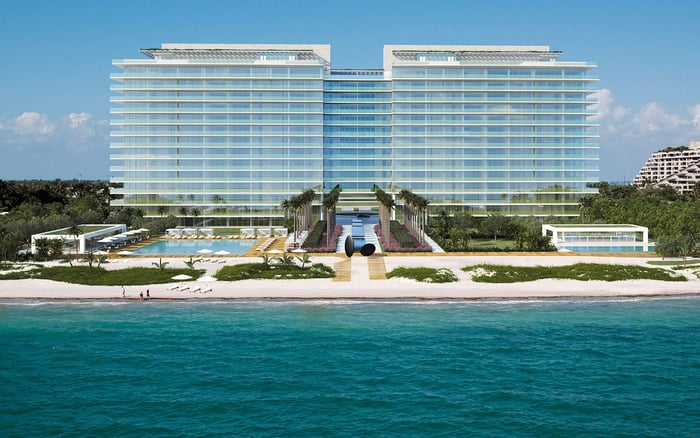
The same logic can exist vertically in the right condominium, especially where elevator access, staff areas, resident-only circulation, and arrival sequences are carefully considered. In Bal Harbour, for example, Rivage Bal Harbour gives privacy-minded buyers a reason to compare the controlled experience of a boutique oceanfront building with the autonomy of a private estate.
Collectors should evaluate residences before the glamorous hour. The more revealing test is 7 a.m. on a weekday. Who arrives first? Where do they park? How do groceries, flowers, security personnel, trainers, dog walkers, marine crew, art handlers, and maintenance teams enter and exit? Does the household feel calm, or does every movement touch the owner’s personal space?
A club-adjacent residence may simplify transport, but it can complicate staging if the building or neighborhood has limited service flexibility. A secluded residence may offer privacy, but it can place more responsibility on the owner’s team for transportation, maintenance oversight, and guest coordination.
This is where the house manager’s opinion is invaluable. Staff often understand the property more precisely than the buyer after a showing. They notice where uniforms can be stored, how long deliveries take, whether service elevators are practical, whether large-format entertaining can be supported, and whether the residence can absorb daily work quietly.
For collectors who keep boats, cars, or sporting equipment, the staff test becomes even more important. The question is not simply where the asset is displayed. It is how it is moved, serviced, insured, documented, and protected without making the residence feel like a showroom under constant preparation.
South Florida’s luxury housing is not divided neatly between public towers and private estates. The better lens is a spectrum of control.
At one end, a private waterfront estate may offer the most autonomy. The owner controls staffing patterns, exterior security, guest arrival, storage, and entertaining sequences. The cost is operational responsibility. Everything must be managed, from landscaping and systems to vendor access and storm preparation.
At the other end, a highly serviced condominium can absorb many burdens. Valet, security, maintenance coordination, amenity management, and concierge support can reduce the household’s staffing load. The cost is shared infrastructure. Even in a discreet building, the owner participates in a community.
Island and enclave settings can sit between those poles. Fisher Island remains a shorthand in many buyer conversations for separation, controlled access, and a residential experience removed from the pace of the mainland. For buyers considering that level of retreat, The Links Estates at Fisher Island naturally enters the privacy discussion because the estate format aligns with staff-heavy living and collector priorities.
Palm Beach presents another version of the same question. The draw is not only the address, but the ability to combine established social rituals with intensely private residential life. Palm Beach Residences may suit buyers who want the area’s polish while still evaluating how much daily exposure they are willing to accept.
For collectors with staff, true residential privacy usually matters more as the household becomes more complex. The more assets, guests, vendors, security concerns, storage needs, and scheduling layers involved, the more valuable it becomes to control the environment. Privacy is not anti-social. It is what allows social life to be chosen rather than endured.
Club adjacency matters more when the owner’s life is intentionally centered around membership, sport, dining, boating, and a familiar social circle. For a seasonal household with a lean staff and a club-driven calendar, proximity can be the more elegant answer. It minimizes transit and turns the club into an extension of the residence.
The best purchase often blends both. Seek enough adjacency to keep the owner’s routine fluid, but not so much visibility that the household loses its privacy. The winning property is the one where staff can operate invisibly, guests arrive gracefully, assets remain protected, and the owner decides when to be seen.
Is club adjacency always better for resale? Not always. It can broaden appeal for socially active buyers, but privacy, views, design, and operational quality may matter more at the top of the market.
Do staffed households generally prefer estates? Many do, because estates can separate staff, guest, and family movements. Select condominiums can also work well when service circulation is thoughtfully planned.
What is the biggest mistake collectors make when choosing a residence? They focus on presentation more than operations. A home that shows beautifully may still be difficult for staff to run discreetly.
How should buyers evaluate privacy during a showing? Walk the service path, not only the entertaining path. Study parking, deliveries, elevators, sightlines, staff storage, and vendor access.
Can a club-adjacent home still feel private? Yes, if access is controlled and the residence has strong separation between public, guest, and service areas. The details matter more than the distance.
Are branded residences appropriate for collectors with staff? They can be, especially when service standards and building operations reduce daily management burdens. Buyers should still review staff logistics carefully.
Why does staff parking matter so much? It affects punctuality, discretion, and household flow. Poor parking can turn even a luxurious residence into an operational compromise.
Should art and car collectors prioritize security over club proximity? Often, yes. Valuable collections tend to require controlled access, careful movement, and privacy around vendors, handlers, and maintenance teams.
Is Palm Beach more privacy-driven than Miami? The answer depends on the property, not only the market. Both can offer privacy, but the surrounding rhythm and social exposure differ.
What is the ideal balance for a seasonal buyer? Choose enough proximity to enjoy the season easily, while preserving the service flow and privacy needed for the household to operate calmly.
For a confidential assessment and a building-by-building shortlist, connect with MILLION.
If branded residences are on your mind — as a home or as an allocation — we would be glad to share what we are seeing, privately.
Begin a quiet conversation