A discreet buyer’s guide to evaluating wine storage, backup cooling, access, serviceability, and resale considerations before committing to a Brickell residence.
In Brickell, the most compelling residences are often assessed through views, floor height, arrival sequence, privacy, and finish quality. For a buyer who collects wine, one quieter question can be just as important: what happens to the collection when the cooling system is stressed, unavailable, or poorly maintained?
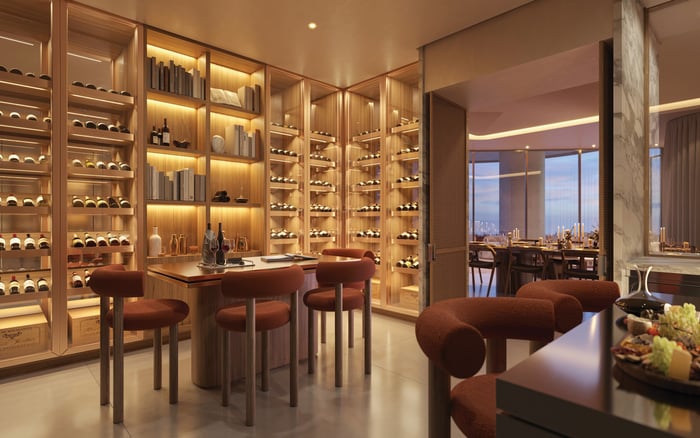
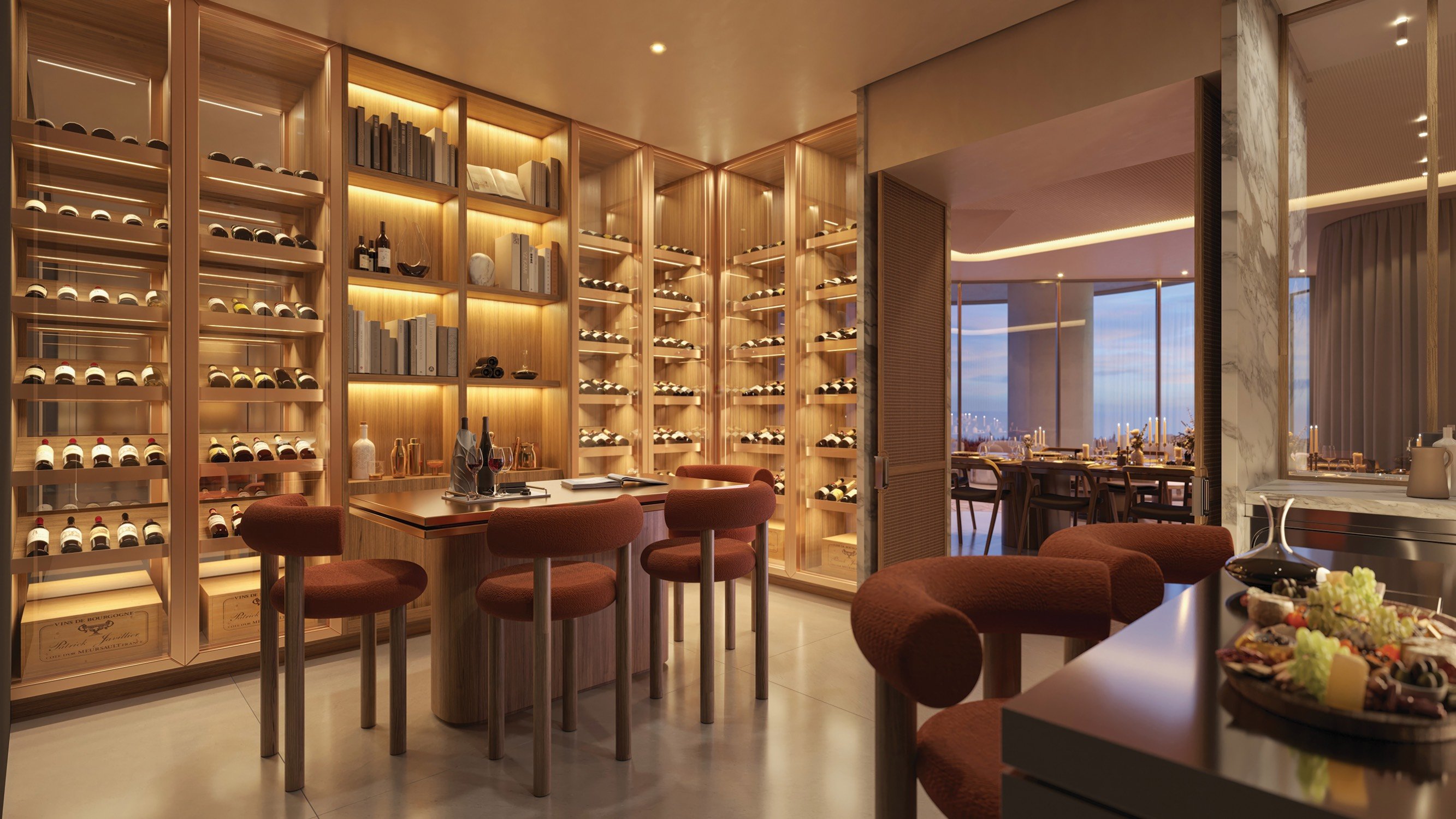
Wine storage should not be treated as an afterthought or a decorative millwork moment. It is a living environment shaped by temperature, humidity, vibration, light, airflow, drainage, service access, and electrical dependencies. A handsome glass cellar may photograph beautifully, yet still require careful review before closing. This is especially true in a vertical neighborhood where many residences rely on shared infrastructure, association rules, and specialized service coordination.
The right lens is not fear. It is control. Buyers comparing properties such as Baccarat Residences Brickell, Cipriani Residences Brickell, or a private resale opportunity should understand where the wine system ends, where the building begins, and who is responsible if conditions drift.
A buyer’s first mistake is often asking, “How many bottles does it hold?” Capacity matters, but it is secondary. The sharper question is, “What kind of collection will live here?” A residence intended for near-term entertaining can support a different strategy than one holding rare, long-cellared bottles. Display storage, daily-drink inventory, and investment-grade wine should not automatically share the same assumptions.
Before purchase, ask for a clear description of the storage environment. Is it a passive display wall, a conditioned cabinet, a walk-in wine room, or a fully integrated cellar? Does the system operate independently from the residence’s main air conditioning, or does it depend on broader comfort cooling? If the owner or developer cannot distinguish between wine display and wine preservation, further review is warranted.
For new construction, request the planned equipment specifications, access panel locations, ventilation path, condensate handling, and control interface. For resale, ask for maintenance records, repair history, equipment age, any prior leaks, and whether conditions have been monitored over time. The most elegant installation is still a mechanical asset.
Backup cooling is not simply a generator conversation. A buyer needs to know what is actually protected. Does emergency power serve the wine cooling equipment, only the residence’s essential circuits, or neither? If a system is connected to backup power, how long can it operate and under what load assumptions? If the building has emergency systems, do they support private wine equipment or only common-area and life-safety functions?
This is where buyers should slow down. Sales language can blur the distinction between building resilience and unit-level protection. A residence may feel exceptionally secure while still leaving a private cellar dependent on its own circuit, controller, condenser, or service availability. When touring a residence such as The Residences at 1428 Brickell or St. Regis® Residences Brickell, the correct inquiry is specific: what equipment cools the wine storage, what powers it, what alerts the owner, and who can access it if the owner is away?
A robust setup often includes layered thinking. The system should be independently controllable, monitorable, and serviceable. It should have a defined response plan if temperature rises, a way to notify the owner or property team, and a clear understanding of whether staff may enter the residence under pre-authorized conditions. Buyers should confirm these items in writing before closing, not during the first service event.
The best buyer’s guides reduce glamour to practical questions. For wine storage in Brickell, begin with documentation. Ask for equipment make and model, installation drawings if available, service records, warranty status, and any maintenance agreements. If the property is unfinished or pre-construction, ask what is included, what is upgradeable, and what is merely shown in renderings or design concepts.
Then review the room itself. How is heat rejected from the cooling system? Where does condensation go? Can a technician reach the equipment without dismantling finished surfaces? Is there adequate clearance for replacement, not merely repair? If glass is used, has the enclosure been designed for thermal performance and sealed operation, or is it primarily aesthetic?
Controls matter as much as equipment. Ask whether the system can be monitored remotely, whether alerts are sent by text, email, app, or building staff notification, and whether there is a history log. A buyer who travels frequently should also ask who receives alerts if the owner is unreachable. Lifestyle convenience is valuable only when supported by protocols.
Wine storage intersects with condominium governance in subtle ways. A buyer should confirm whether a cellar installation, modification, added condenser, plumbing connection, or electrical change requires association approval. If the wine room already exists, confirm that any prior work was permitted or approved as required by the building’s rules. This is not a cosmetic issue. Unauthorized modifications can complicate future sales, repairs, and insurance questions.
Insurance should be discussed before closing. A collector should understand whether wine inventory requires separate scheduling, what documentation is needed, and how temperature-related loss is treated under the relevant coverage. The residence, the cellar equipment, and the wine itself may not be viewed the same way by an insurer.
Access is equally important. Many Brickell owners travel regularly, split time between homes, or use their residence seasonally. If a cooling alert occurs while the owner is away, can building management, a property manager, or a designated technician enter? Are keys, elevator access, parking, and service scheduling already arranged? The answer should not depend on improvisation.
Not every buyer needs a large in-unit wine room. Some will prefer a smaller conditioned cabinet for ready-to-serve bottles, paired with professional off-site storage for long-term holdings. Others want the immediacy and theatre of a visible cellar within the dining or entertainment area. The right choice depends on collection value, drinking habits, entertaining style, and tolerance for maintenance.
In-unit storage offers convenience and visual pleasure, but it places responsibility close to the owner. Building-level wine amenities, when available, may reduce some private maintenance burdens, but buyers still need to understand allocation, access, labeling, security, and temperature accountability. Off-site storage can be highly practical for deep collections, yet it does not replace the desire for a curated selection at home.
From an investment perspective, the strongest wine installations are integrated without becoming idiosyncratic. A future buyer should see quality, flexibility, and serviceability rather than an expensive custom feature that is difficult to understand or maintain. In Brickell, where buyers often compare multiple luxury towers within a narrow geography, disciplined mechanical planning can help a residence feel more complete.
Before purchasing, treat wine storage as a system to be tested, documented, and assigned. Who owns the equipment? Who services it? What happens if it fails? What is backed up, what is merely monitored, and what remains the owner’s responsibility? These questions are not unromantic. They protect the very pleasures that make a cellar worth having.
The most successful Brickell buyers pair taste with technical diligence. They look past the glow of backlit bottles and ask how the space performs at night, during travel, during service delays, and through ownership transitions. A wine room should enrich a residence, not become a silent vulnerability behind glass.
Should wine storage be inspected separately from the residence? Yes. A wine room or cabinet should be reviewed as a dedicated mechanical environment, not simply as cabinetry or décor.
Is backup power the same as backup cooling? No. Backup power may not automatically serve private wine equipment, so buyers should confirm exactly what circuits and systems are protected.
What is the most important document to request? Ask for equipment specifications, service records, and any installation or approval documents available for the wine system.
Can a glass wine room be suitable for serious storage? It can be, but buyers should verify sealing, cooling design, heat rejection, and service access rather than relying on appearance.
Should seasonal owners handle wine storage differently? Yes. Remote monitoring, alert routing, authorized access, and service protocols become especially important when the owner is away.
Do condominium rules matter for wine rooms? Yes. Electrical, plumbing, condenser, ventilation, and renovation issues may require review under building rules.
Is off-site storage still useful if the residence has a cellar? Often, yes. Many collectors keep daily selections at home and reserve long-term or higher-value holdings for specialized storage.
What should buyers ask about maintenance? Ask who services the system, how often it is maintained, how technicians access it, and whether replacement can be handled cleanly.
Can wine storage affect resale? Yes. A well-documented, serviceable installation can support buyer confidence, while unclear work can raise due diligence concerns.
What is the best way to shortlist comparable options for touring? Start with location fit, delivery status, and daily lifestyle priorities, then compare stacks and elevations to validate views and privacy.
For a tailored shortlist and next-step guidance, connect with MILLION.
If branded residences are on your mind — as a home or as an allocation — we would be glad to share what we are seeing, privately.
Begin a quiet conversation