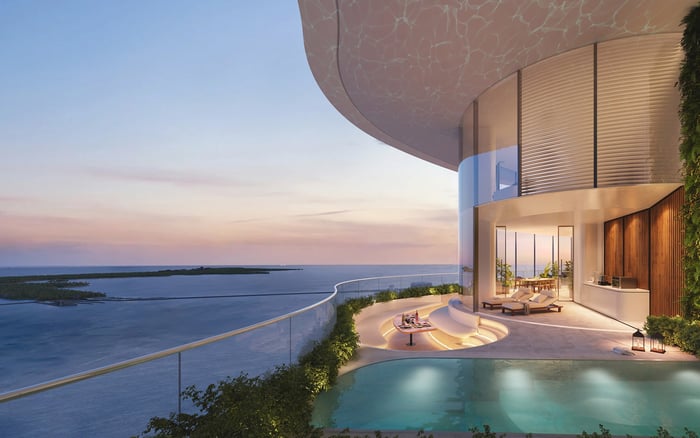
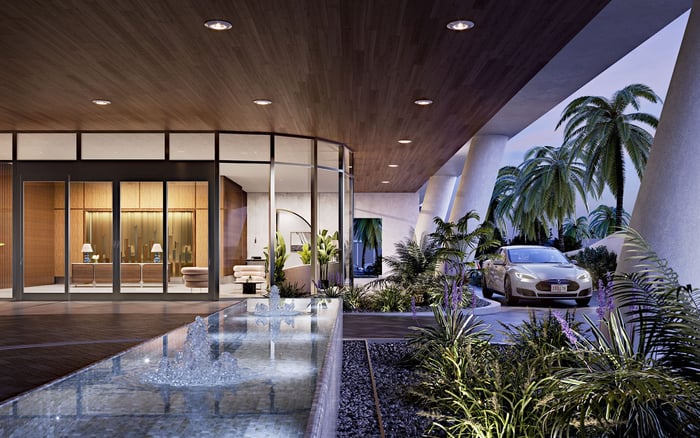
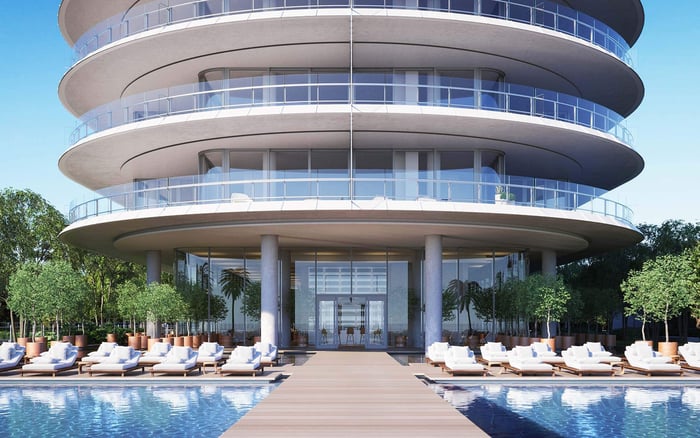
Miami Tropic Residences is positioned around a calmer residential rhythm, where architecture, service culture, acoustic thinking, and wellness programming work together to reduce sensory overload in daily life.
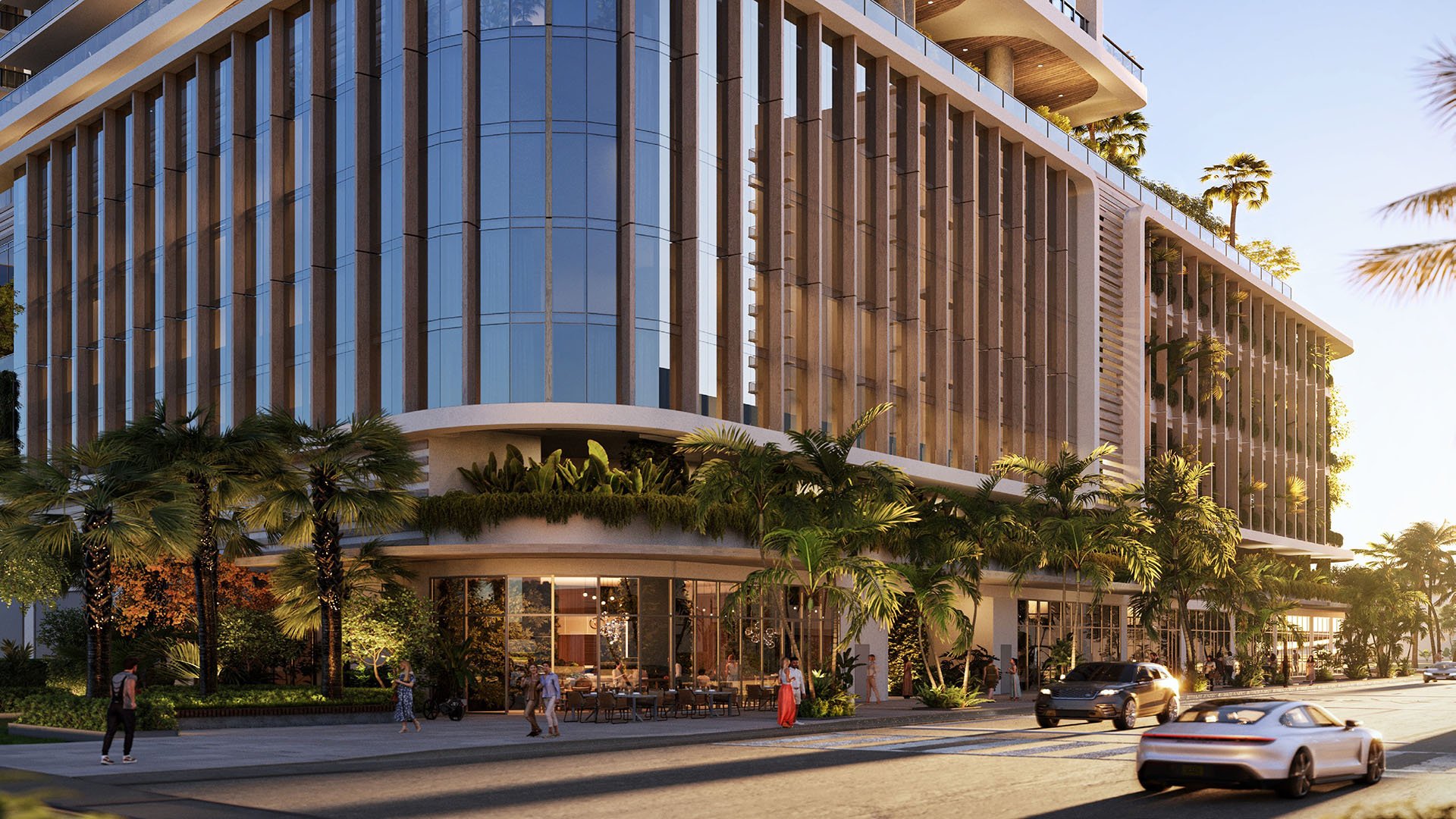
In South Florida, luxury has long been fluent in spectacle. The market knows how to deliver skyline views, ocean proximity, dramatic arrival moments, and resort-style amenity decks. Yet the most discerning buyers are increasingly asking a more private question: how does a building feel at 7 a.m., at 3 p.m. during a work call, or at night, when the city is still moving outside?
That is the lens through which Miami Tropic Residences becomes especially relevant. Its positioning is not simply about what can be seen from a residence, but about how daily life can be made quieter, smoother, and more controlled. The project is framed around a residential routine that reduces friction, softens sensory overload, and treats calm as a defining luxury feature.
This marks a meaningful shift for Miami. Traffic, nightlife, tourism surges, dense urban activity, and the constant movement of service economies create a market where serenity cannot be assumed. It has to be shaped through site selection, massing, acoustic thinking, spatial planning, wellness programming, and the service culture inside the building.
The strongest quiet-luxury buildings do not rely on a single gesture. They operate as systems. Miami Tropic Residences is best understood this way: as an attempt to align architecture and operations so the resident experiences fewer interruptions throughout the day.
That begins with external-noise buffering. In an active urban environment, glass, massing, setbacks, orientation, and building-envelope decisions influence whether the city feels energizing or intrusive. While buyers often focus first on view corridors, a quieter residential routine depends just as much on how the building mediates sound, traffic, and light.
Spatial planning matters as well. Public-private separation is central to making a residence feel composed. A calm home is not only about silence; it is about sequence. The path from elevator to entry, from social rooms to private rooms, and from service interactions to family life shapes how much of the outside world follows a resident indoors.
This is where Miami Tropic Residences aligns with a broader design and architecture conversation in the region. The next generation of luxury is less interested in theatrical excess and more interested in choreography. Buyers want buildings that support concentration, recovery, family routines, and discretion without requiring constant negotiation with the surrounding city.
The quiet-routine concept becomes most persuasive when applied to ordinary moments. A morning should not feel like a lobby performance. A professional workday should not be interrupted by avoidable mechanical sound or poorly managed service movement. Family life should have zones that allow energy and rest to coexist. Evening recovery should feel intentionally removed from the pace outside.
Miami Tropic Residences is positioned around these practical scenarios. Its promise is not that residents will be disconnected from Miami, but that they can choose their level of exposure. That distinction matters. The best urban residences allow owners to enjoy restaurants, culture, waterfront access, and social life while preserving a private interior rhythm.
This same buyer psychology appears in other South Florida residential choices. In Brickell, 2200 Brickell speaks to residents who want urban access with a more residential scale of daily living. In Coconut Grove, wellness-oriented thinking at The Well Coconut Grove reflects a similar desire for homes that feel restorative rather than merely impressive. Miami Tropic Residences sits within that larger lifestyle shift, where the question is not only where one lives, but how much control the building gives back.
Amenity design is another place where quiet luxury separates itself from conventional resort language. Not every buyer wants the most visible pool deck, the busiest lounge, or a social program that turns home into a semi-public stage. For many ultra-premium residents, the more valuable amenity is one that supports recovery without demanding attention.
Miami Tropic Residences is framed with amenity programming that is more intimate and wellness-focused than nightlife-driven. That approach fits a larger mood in Miami, where high-net-worth buyers are no longer measuring luxury only by the number of amenity categories. They are evaluating whether spaces will actually be used, whether they feel private enough, and whether the building’s service culture is calibrated to reduce friction rather than amplify activity.
The comparison is not about one model being better than another. South Florida still has demand for glamorous branded environments, oceanfront social energy, and highly serviced resort living. Projects such as The Perigon Miami Beach and The Residences at Mandarin Oriental, Miami speak to distinct versions of prestige. What makes Miami Tropic Residences notable is its quieter argument: that the most valuable luxury may be the ability to move through a day with less noise, less exposure, and fewer interruptions.
For years, the premium conversation centered on address, views, finishes, brand, and amenity depth. Those factors still matter. But in South Florida, quiet, control, and wellness are increasingly moving from secondary preferences to central criteria.
This evolution is partly emotional and partly practical. Many buyers now use their residences as hybrid workplaces, family bases, recovery environments, and second homes that must function immediately upon arrival. If a building cannot manage sound, light, circulation, service interactions, and privacy, even beautiful design can feel incomplete.
Miami Tropic Residences offers a case study in that changing hierarchy. It suggests that luxury is not simply a collection of visible features, but a condition created through many small forms of control. When the service experience is discreet, when mechanical and service-related sounds are considered, when public and private zones are separated, and when wellness spaces feel personal rather than performative, the building begins to support a more composed daily life.
That is the quiet promise: not isolation, but ease. Not retreat from Miami, but a more selective relationship with its intensity. For buyers weighing Miami Tropic Residences against more extroverted offerings in Miami Beach, Brickell, or Coconut Grove, the distinction may come down to temperament. Some buildings are designed to announce arrival. Others are designed to improve the hours after one arrives.
What makes Miami Tropic Residences a quiet-luxury story? It is framed around calm, control, and daily routine rather than luxury defined only by views or resort-style amenities.
Is the concept mainly about acoustic comfort? Acoustic thinking is central, but the broader strategy also involves spatial planning, light, service flow, wellness programming, and operations.
Why does quiet matter so much in South Florida luxury living? Traffic, nightlife, tourism, and dense urban activity can create sensory pressure, making controlled residential environments more valuable.
How does public-private separation support calmer living? It helps organize movement through the building so social, service, and private areas feel more clearly defined.
Are the amenities positioned as social or wellness-driven? The amenity approach is described as more intimate and recovery-focused rather than performative or nightlife-oriented.
Does Miami Tropic Residences reject urban living? No. The concept is about enjoying Miami while giving residents more control over when and how the city enters daily life.
Who is likely to respond to this type of building? Buyers who value privacy, workday focus, family rhythm, wellness, and a quieter home environment may find the concept especially relevant.
How does this compare with more dramatic luxury towers? More extroverted buildings may emphasize spectacle, while Miami Tropic Residences is positioned around a calmer residential experience.
Is quiet luxury only an aesthetic style? No. In this context, it is a practical operating philosophy involving sound, circulation, service, privacy, and recovery.
Why is Miami Tropic Residences important for the market? It reflects a wider shift in which quiet, wellness, and control are becoming as important as address, views, and brand.
For a tailored shortlist and next-step guidance, connect with MILLION.
If branded residences are on your mind — as a home or as an allocation — we would be glad to share what we are seeing, privately.
Begin a quiet conversation