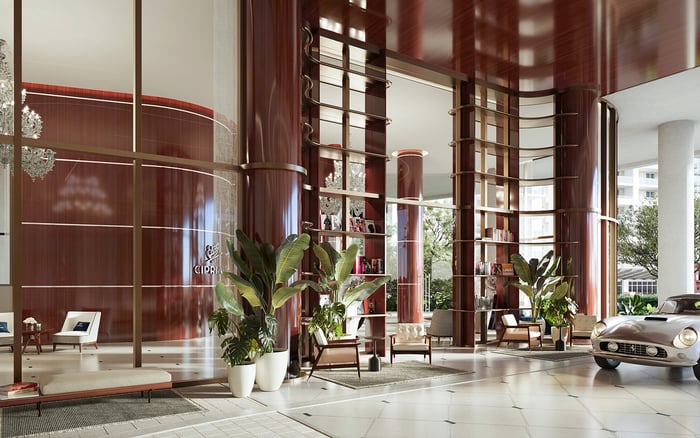
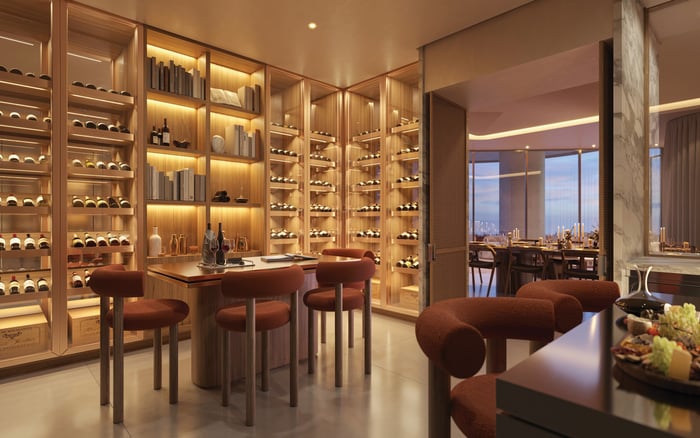
A buyer-focused due-diligence guide to ORA by Casa Tua Brickell, including the Casa Tua lifestyle premise, legal documents, operating costs, rental rules, timeline risk, and comparable Brickell inventory.

For a certain Brickell buyer, ORA by Casa Tua Brickell is not simply another high-rise reservation opportunity. It is a planned luxury residential project centered on Casa Tua’s hospitality, dining, design, and club-style lifestyle concept. That distinction is precisely why the reservation stage requires a more rigorous lens.
The appeal is clear: an urban address, a hospitality-forward atmosphere, and a residential experience intended to feel more curated than conventional condominium living. Yet for buyers accustomed to private clubs, branded service, and polished amenity environments, the central question is not whether the renderings are persuasive. It is whether the lifestyle promise is carried through the documents, budgets, rules, service protocols, and long-term operations.
A reservation should be treated as the beginning of due diligence, not as a symbolic hold on a preferred line. Before committing, buyers should understand what is aspirational, what is contractually binding, and what could change as the project advances through design, sales, construction, and condominium governance.
The Casa Tua association gives ORA much of its emotional power. It also creates the most important diligence issue: how the brand’s hospitality, food-and-beverage programming, design language, and club-style access are embedded in the condominium framework.
In branded residences, buyers often focus on the name first. Sophisticated purchasers go further. They ask how service standards will be defined, who controls programming, which amenities are reserved for residents, whether guests or members may have access, and how costs are shared. If the value proposition depends on a special atmosphere, the operating documents should clarify how that atmosphere is protected.
This is not skepticism. It is value preservation. A hospitality-heavy building can feel extraordinary when programming, staffing, and management are aligned. It can also carry higher recurring costs, especially when the service model is more ambitious than a typical residential-only condominium. The most elegant question a buyer can ask is also the most practical: who pays for the experience, and under what rules?
The pre-reservation checklist should include unit layouts, building systems, association budgets, service protocols, rental restrictions, and the condominium legal framework. These are not administrative details. They are the architecture of ownership.
Start with the residence itself. Review the line, floor position, exposure, terrace logic, privacy, elevator access, storage assumptions, and how the plan supports actual use. A pied-à-terre buyer may prioritize lock-and-leave convenience and amenity access, while a primary resident may care more about daily circulation, acoustics, service elevators, and building rhythm.
Then turn to the documents. Buyers should review how brand-related promises are described, whether amenity access is subject to change, what food-and-beverage obligations exist, and how service levels may be modified over time. If a feature is central to the purchase decision, it should be visible in the legal and operating structure, not only in presentation materials.
Finally, evaluate the developer’s execution capacity. Branding and renderings can establish desire, but construction, delivery, staffing, and long-term management determine the lived reality. In pre-construction, confidence should be earned through documentation, not assumed through presentation.
Projected operating expenses and association dues deserve particular scrutiny at ORA because the building’s premise is hospitality-forward. Buyers should ask how staffing, amenity programming, maintenance, insurance, food-and-beverage spaces, reserves, and management costs are modeled. The goal is not merely to estimate monthly dues, but to understand the level of service those dues are designed to support.
Construction timeline risk also matters. Delivery timing can affect financing, occupancy plans, tax planning, resale assumptions, and rental strategy. A buyer reserving for investment reasons may model one outcome if the project delivers on a certain schedule and another if timing shifts. A buyer planning a primary move may need even more precision around interim housing and liquidity.
Rental rules and use restrictions should be reviewed early. ORA’s club-oriented lifestyle may appeal to seasonal owners and investors, but the documents must clarify what is permitted. Short-term, seasonal, and investment-oriented use can produce very different experiences for both the owner and the building community. The more lifestyle-driven the property, the more consequential those rules become.
ORA sits within a competitive upper-tier Brickell environment where buyers can compare brand, design, service, views, pricing logic, and intended use across multiple projects. Nearby luxury inventory such as Baccarat Residences Brickell, Cipriani Residences Brickell, and St. Regis® Residences Brickell gives buyers a useful framework for judging whether ORA’s positioning is supported by the market.
That comparison should not be superficial. A lower or higher price may be justified depending on floor plan, service structure, amenity access, brand durability, operating costs, and likely resale audience. The relevant question is not which building is most famous, but which ownership experience best matches the buyer’s life.
Brickell’s dense mixed-use setting is a major part of the appeal. Restaurants, offices, hotels, nightlife, retail, and private-club concepts all contribute to the sense of immediacy. At the same time, buyers should weigh traffic, noise, and ongoing construction. A buyer considering The Residences at 1428 Brickell or 2200 Brickell may be evaluating the same district through a different residential lens, which makes neighborhood context central.
ORA is best suited to buyers who genuinely want an experiential high-rise lifestyle rather than a conventional residential-only condominium. The strongest candidate understands that the building’s value proposition depends on daily execution: hospitality, programming, resident access, building management, and a consistent service culture.
A primary resident should test whether the energy of Brickell supports everyday life. A pied-à-terre buyer should focus on convenience, services, security, and ease of arrival. An investment-minded buyer should examine rental restrictions, operating costs, timeline assumptions, and the depth of future demand for hospitality-led ownership.
The right buyer will not reserve because the concept is fashionable. The right buyer will reserve after confirming that the Casa Tua promise, the Brickell location, the legal framework, and the operating economics all point in the same direction.
What is ORA by Casa Tua Brickell? ORA by Casa Tua Brickell is a planned luxury residential project in Brickell centered on Casa Tua’s hospitality, dining, design, and club-style lifestyle concept.
Is ORA a conventional condominium? It is positioned for buyers seeking an urban, experiential high-rise lifestyle rather than a standard residential-only condominium experience.
What should buyers review before reserving? Buyers should review layouts, building systems, association budgets, service protocols, rental rules, and the condominium legal framework.
Why do operating costs matter so much here? Hospitality-heavy buildings can carry higher recurring costs, so projected dues and service budgets should be examined carefully.
Should the Casa Tua branding be in the documents? Buyers should confirm how brand-related promises, amenity access, food-and-beverage programming, and service obligations are treated in binding documents.
Are rental rules important for ORA buyers? Yes. Rental rules and use restrictions should be reviewed early, especially for short-term, seasonal, or investment-oriented ownership.
How should buyers think about construction timing? Timeline risk can affect financing, occupancy plans, investment assumptions, and personal scheduling, so it should be part of the reservation review.
What makes Brickell relevant to the decision? Brickell offers walkability, restaurants, offices, nightlife, hotels, and retail, but buyers should also consider traffic, noise, and construction activity.
How should ORA be compared with other Brickell projects? Buyers should test pricing against upper-tier Brickell inventory while comparing service models, layouts, operating costs, and intended use.
Who is the best fit for ORA? ORA is best aligned with buyers who value a club-like, hospitality-driven residential setting and are comfortable evaluating the operating structure behind it.
If you'd like a private walkthrough and a curated shortlist, connect with MILLION.
If branded residences are on your mind — as a home or as an allocation — we would be glad to share what we are seeing, privately.
Begin a quiet conversation