A discreet buyer’s framework for judging whether a Hallandale Beach view is merely attractive today or meaningfully protected for long-term ownership value.
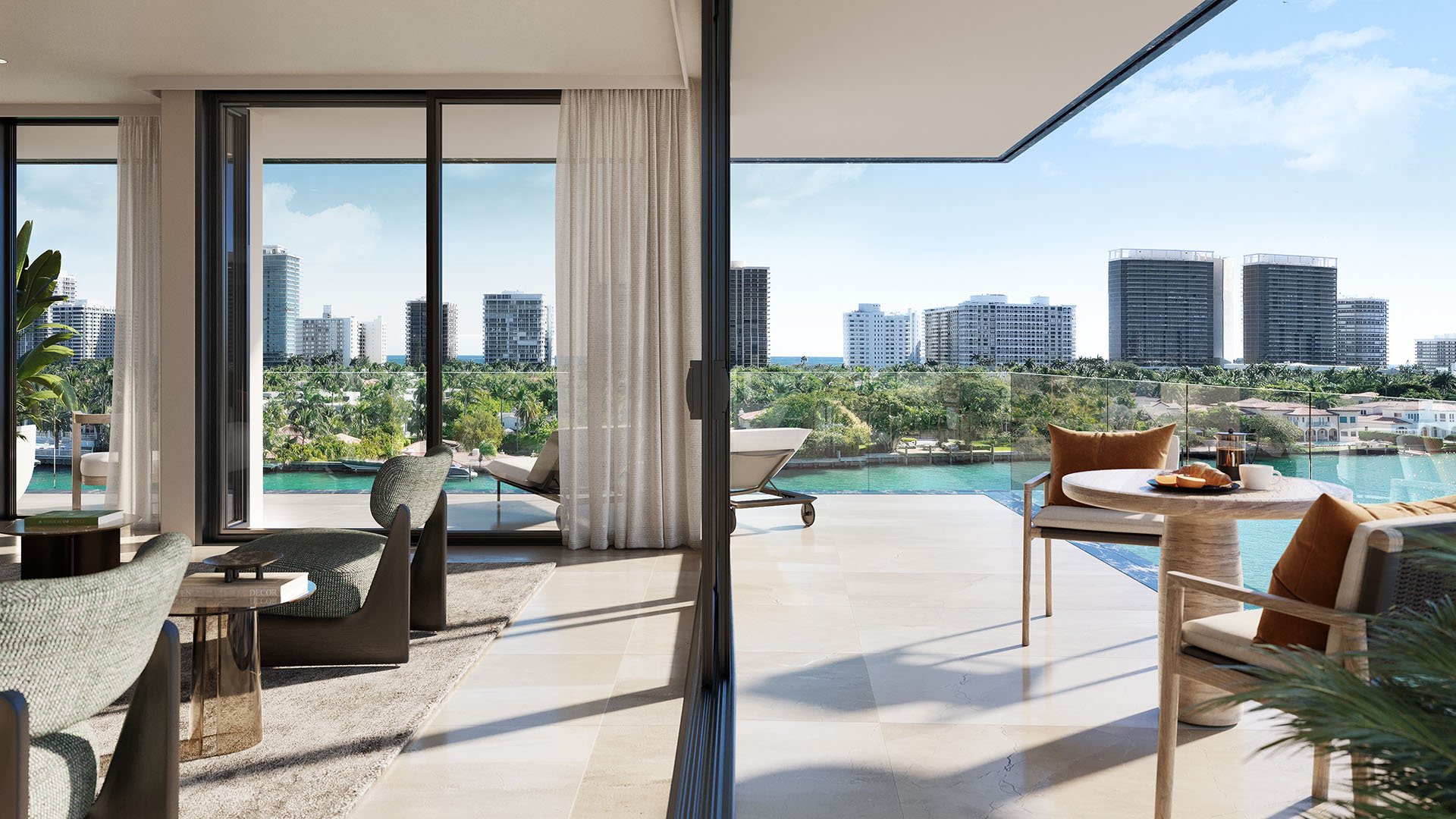
In Hallandale Beach, a beautiful view can be immediate, emotional, and persuasive. A protected view corridor is different. It is not simply the line of sight from a balcony today. It is the portion of that sightline with a durable reason to remain open, whether through public right-of-way, recorded easement, parcel configuration, setback, waterway, open space, ownership control, or another constraint that limits future obstruction.
That distinction matters because luxury buyers often pay for what they can see. The Atlantic horizon, the Intracoastal shimmer, a marina edge, or a long lateral sweep can all influence perceived value. But a buyer should separate view quality from view security before assigning a premium. Waterview premiums are most defensible when the buyer understands not only what exists, but what could lawfully exist between the residence and the view.
This is especially important for Oceanfront and Waterfront purchasing, where marketing language can be elegant but imprecise. A residence may enjoy an extraordinary view, yet the ownership question is sharper: what protects it, for how long, and from which angles?
The most disciplined approach begins inside the actual residence. Stand in the principal living area, the primary bedroom, the main terrace, and any secondary outdoor space. Note what the eye sees straight ahead, diagonally, and laterally. A view can feel protected from one room and exposed from another.
Floor height is only part of the analysis. Stack orientation, balcony depth, neighboring rooflines, podiums, landscaping, and the curve of the coastline can all shape the lived experience. A high floor may still be vulnerable to a nearby tower positioned in the wrong place, while a lower floor can feel unusually open if it looks across a waterway, street end, or permanent open area.
At 2000 Ocean Hallandale Beach, for example, a buyer should evaluate the specific residence, not just the prestige of the building or the promise of coastal living. The question is not whether the building has compelling views. The question is whether the selected line has the exposure, elevation, and physical buffer that match the buyer’s long-term expectations.
A protected corridor should be tested through documents, not adjectives. Buyers should ask counsel and the advisory team to review plats, recorded easements, condominium declarations, surveys, site plans, development agreements, zoning conditions, air-rights arrangements, and any restrictions affecting adjacent parcels. If a view is described as protected, there should be an identifiable reason that can be explained.
The most useful review centers on three questions. First, what land or air space lies between the residence and the view? Second, who controls it? Third, what can be built, planted, replaced, or modified there in the future? These answers create a more reliable picture than a sunset tour or a model-residence presentation.
For buyers considering Shell Bay by Auberge Hallandale, the same discipline applies. The property experience may be highly curated, but the view analysis remains technical. Confirm the relationship between the residence, surrounding parcels, open areas, and potential future vertical elements before deciding how much value to assign to a particular exposure.
The most important building for a Hallandale Beach view may not be the one a buyer is purchasing. It may be the parcel across the street, the site along a diagonal axis, or a low improvement that could be replaced. Buyers should look beyond the immediate foreground and examine the broader cone of visibility.
A practical test is to map the view in layers. The first layer is the foreground: railings, landscaping, podiums, neighboring amenity decks, and nearby rooftops. The second layer is the mid-ground: adjacent lots, corridors, waterways, rights-of-way, and developable sites. The third layer is the background: skyline, ocean, water, and horizon. A protected view corridor is strongest when multiple layers support openness.
Hallandale buyers should be especially cautious when the desired view depends on a privately owned parcel remaining unchanged. Private land is not automatically a risk, but it requires deeper diligence. A corridor formed by a public street, water body, or recorded restriction may be easier to evaluate than one dependent on the continued existence of a low-rise neighbor.
A buyer’s confidence grows when the view premium is tested against other South Florida markets. Nearby coastal addresses can help frame how much buyers are paying for height, frontage, water orientation, and perceived permanence. The goal is not to substitute another market for Hallandale Beach, but to understand whether a specific premium feels rational.
A residence at Auberge Beach Residences & Spa Fort Lauderdale may illustrate how beachfront positioning shapes buyer expectations, while Bentley Residences Sunny Isles can be useful when thinking about vertical coastal living and the role of elevation. These comparisons are not shortcuts. They are reference points for discussing how a view should be underwritten.
This is where Buyer’s Guides should become more analytical than romantic. The best advisor will not simply say that a residence has a beautiful outlook. The advisor will help isolate which portion of the view is water, which portion is skyline, which portion depends on neighboring property, and which portion is likely to remain visually meaningful under plausible future conditions.
Once the view has been mapped and documented, the buyer can decide how to price it. A fully unobstructed, apparently durable corridor may justify a stronger premium than a similar view with visible development risk. A partial corridor may still be valuable, especially if the residence has strong interior quality, terrace usability, and privacy, but it should not be priced as though the entire panorama is guaranteed.
The most refined buyers often create two valuations. The first assumes the view remains substantially intact. The second assumes some portion of the foreground or diagonal view changes. If the residence still feels compelling under the second scenario, the purchase is more resilient. If the entire value proposition depends on an unverified gap between buildings, the buyer should proceed with greater caution.
In Hallandale, the best purchases are rarely about chasing the widest view at any cost. They are about matching the view to lifestyle, privacy, architecture, and downside protection. The right corridor should feel beautiful in the present and intellectually defensible for the future.
Before contract, ask whether any claimed view protection is recorded, contractual, regulatory, or merely observational. Ask whether adjacent parcels have unused development potential. Ask whether the condominium documents address future construction, neighboring land, or rights retained by a developer or association. Ask whether the view from the actual unit has been tested at different times of day, not only during a staged showing.
Also ask what happens if the view changes. Would the residence still have enough light, privacy, terrace quality, and plan efficiency to command attention? A strong luxury purchase should not be fragile. The view may be the poetry, but the structure of the deal should still make sense without perfect weather, perfect marketing, or perfect assumptions.
What is a protected view corridor? It is a sightline with some identifiable reason to remain open, such as a right-of-way, easement, waterway, setback, or other limiting condition.
Is an ocean view automatically protected in Hallandale Beach? No. The buyer must examine the exact sightline, intervening parcels, and any legal or physical constraints that support the view.
Should I rely on sales language about protected views? Treat it as a starting point only. Ask for the documents or parcel conditions that explain why the view is considered protected.
Does a higher floor always mean a safer view? Not always. Height helps, but diagonal construction risk, neighboring towers, and stack orientation can still affect the experience.
Who should review view protection before contract? A real estate attorney, surveyor, land-use professional, and experienced luxury advisor can each help test a different part of the claim.
Can landscaping affect a protected corridor? Yes. Trees, palms, podium planting, and future landscape changes can alter lower-floor and terrace-level views.
How should I value a partially protected view? Price it according to the portion that appears durable, then discount any portion dependent on future decisions by neighboring owners.
Are Intracoastal views evaluated differently from ocean views? They can be. The analysis depends on waterways, parcels, setbacks, and the angle from the specific residence.
Should I visit the residence more than once? Yes. Light, glare, privacy, and perceived openness can change materially between morning, afternoon, and evening.
What is the safest rule for buyers? Never pay a permanent-view premium until the corridor has been mapped, documented, and stress-tested against nearby change.
When you're ready to tour or underwrite the options, connect with MILLION.
If branded residences are on your mind — as a home or as an allocation — we would be glad to share what we are seeing, privately.
Begin a quiet conversation