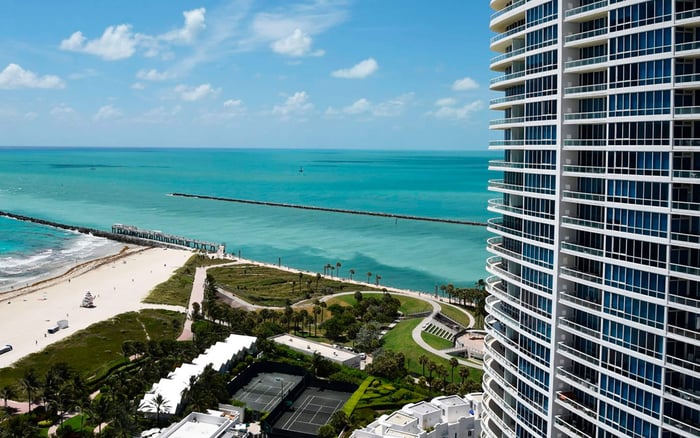
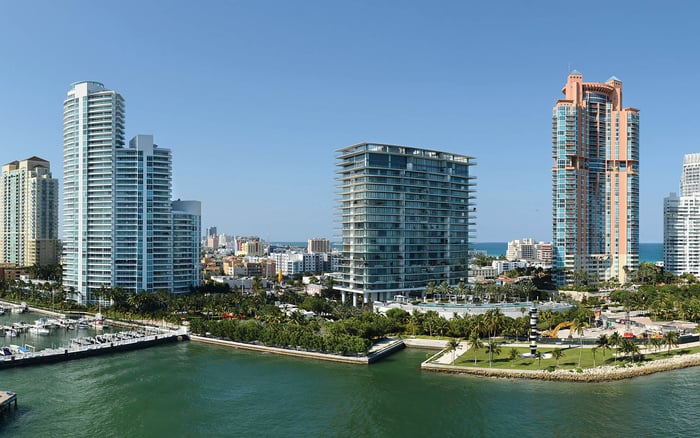
Setai Residences Miami Beach stands out for buyers who view privacy as a complete sequence, from curbside arrival and lobby movement to private elevator access and the residence itself.

For the most privacy-conscious buyer, the residence does not begin at the front door. It begins at the curb. In Miami Beach, where oceanfront energy, hotel activity, dining, nightlife, and visitor movement can converge within a single corridor, the arrival experience matters as much as the scale of the living room or the view from the terrace.
That is why Setai Residences Miami Beach belongs on the shortlist for buyers prioritizing private elevators and controlled arrival. Its appeal is not simply the strength of a luxury address. The more compelling point is experiential: the building supports a deliberate vertical journey from Collins Avenue into the private home, with the arrival sequence functioning as part of the privacy, security, and daily-living infrastructure.
In a market where many buyers already expect refined finishes, attentive service, and ocean access, circulation has become a sharper test. Who sees you arrive? How many thresholds do you cross? Where do guests, staff, residents, visitors, and hotel users naturally separate? These questions are especially relevant in a hybrid luxury-hospitality setting.
Private elevators are not merely a prestige feature. For the right buyer, they reduce shared circulation with other residents, hotel guests, visitors, and service traffic. At Setai Residences Miami Beach, that distinction is central to the buyer profile: someone who wants a home that feels protected not only once the door closes, but throughout the approach.
The importance lies in continuity. A controlled arrival sequence connects valet coordination, lobby access, elevator movement, concierge service, and security presence into one daily rhythm. The result is not theatrical privacy. It is practical privacy, designed for people who value discretion in routine moments: returning from dinner, receiving close friends, coordinating family travel, or managing staff and deliveries with less friction.
For high-profile buyers, this is often the difference between a beautiful condominium and a truly livable one. Acoustic separation, predictable movement, and reduced visibility can influence how often an owner uses a property, how confidently guests are hosted, and how comfortably the residence functions during peak Miami Beach activity.
Setai combines private residences with hotel-integrated services, creating a luxury-hospitality residential environment. That hybrid structure can be highly attractive, particularly for owners who want service without losing the autonomy of a private home. Yet it also makes the arrival sequence more consequential.
In a purely residential enclave, the flow of people is often easier to anticipate. In an active hotel-residential setting, residents may place greater value on discretion from public hotel activity. The key is not avoiding energy altogether. Many buyers want the convenience, service, and atmosphere that come with a hospitality component. The more refined question is whether the building manages public, semi-private, and private zones in a way that protects the owner’s experience.
That is where Setai’s shortlisting logic becomes clear. Buyers are not only evaluating the condominium interior. They are evaluating how the property choreographs movement from the public realm into the private residence. For a condo-hotel search profile, that choreography can carry as much weight as amenities.
Miami Beach is not a quiet suburban arrival. It is a global stage with a residential layer. That is part of its magnetism, but it also means oceanfront ownership requires a more rigorous look at access, visibility, and building management.
For buyers comparing Miami Beach addresses, the conversation often includes other refined options such as The Perigon Miami Beach, Shore Club Private Collections Miami Beach, and The Ritz-Carlton Residences® Miami Beach. Each name may enter a buyer’s consideration for different reasons, but the Setai question is unusually specific: how much control does the owner want from curbside arrival to the private residence?
That focus is particularly relevant for buyers who use Miami Beach seasonally, arrive at variable hours, host selectively, or expect staff coordination to be unobtrusive. In this setting, controlled arrival becomes less like a feature and more like a daily operating system.
A serious buyer should walk the sequence, not just the unit. Start with the curbside experience. Notice how valet activity is coordinated, where the first human interaction occurs, and how intuitive the transition feels from the exterior to the lobby environment.
Then study the degree of separation between public, semi-private, and private zones. The goal is not necessarily absolute isolation. It is clarity. A well-managed arrival should make the resident feel that the building understands different levels of access and visibility.
Next, focus on elevator movement. Private elevators are most valuable when they support a broader privacy structure. Buyers should ask how guest access is handled, how concierge interaction fits into the route, and how security presence supports the journey without making it feel burdensome.
Finally, consider repeatability. A property can feel impressive during a scheduled showing, but the true test is ordinary use. How would the arrival feel on a busy evening? How would it function when family members arrive separately? How would staff or close guests move through the building without disrupting the owner’s sense of calm?
Luxury buyers often speak about privacy as if it is a single condition. In practice, it is a set of small protections that add up. The most successful residences make those protections feel natural rather than defensive.
Setai’s value proposition for this buyer profile is not only privacy inside the unit. It is privacy throughout the full arrival sequence. That matters because daily life in Miami Beach is highly visible by nature. A controlled vertical journey lets an owner enjoy the benefits of an active oceanfront address while preserving a more composed private routine.
Arrival, circulation, and service choreography increasingly belong among the core purchase criteria. Finishes can be upgraded. Furnishings can be curated. The building’s underlying movement patterns are far harder to change.
For buyers who already know they want a private-elevator environment, Setai Residences Miami Beach should be considered through that lens. It is not merely a question of amenity count. It is a question of how elegantly the building protects the path home.
Why is Setai Residences Miami Beach relevant for private-elevator buyers? It is positioned for buyers who want private-elevator living and a controlled arrival sequence from Collins Avenue into the residence.
Is controlled arrival only about security? No. It also relates to privacy, visibility, acoustic separation, guest movement, staff coordination, and the daily ease of coming home.
Why does the hotel-residential structure matter? Because hotel-integrated services can add convenience, while also making the separation of public, semi-private, and private zones more important.
What should buyers watch during a tour? Buyers should study valet flow, lobby access, elevator movement, concierge interaction, and security presence as one connected sequence.
Does a private elevator guarantee complete privacy? Not by itself. Its value depends on how the building coordinates the full arrival experience before and after the elevator ride.
Who is the strongest buyer fit for Setai? It is especially relevant for privacy-focused and high-profile buyers who value discretion, predictable movement, and reduced shared circulation.
Why does Miami Beach make arrival control more important? Miami Beach is an active urban oceanfront setting, so managing visibility from curbside to residence can be especially meaningful.
How should buyers compare Setai with other Miami Beach projects? They should compare not only residences and amenities, but also how each building handles arrival, service, privacy, and daily circulation.
Is this mainly a primary-residence consideration? No. It can matter for seasonal owners as well, particularly those who want arrivals, guests, and staff movement to feel discreet.
What is the core takeaway for buyers? Setai’s strongest appeal for this profile is privacy across the complete arrival sequence, not just inside the residence.
If you'd like a private walkthrough and a curated shortlist, connect with MILLION.
If branded residences are on your mind — as a home or as an allocation — we would be glad to share what we are seeing, privately.
Begin a quiet conversation