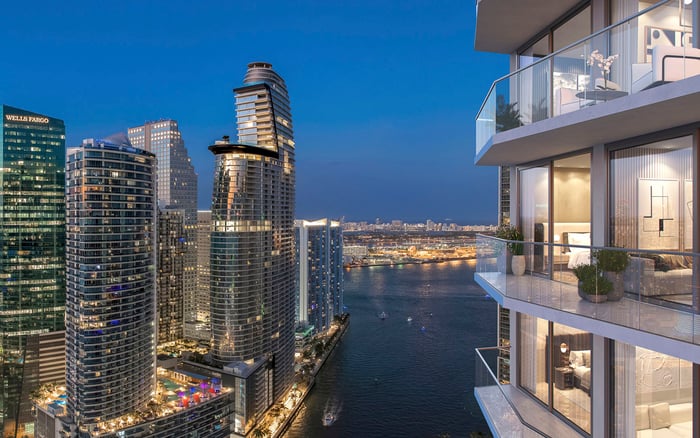
A discreet buyer’s guide for Boston families evaluating Miami as a family-office base, with emphasis on governance, neighborhood fit, privacy, liquidity, and long-term residential strategy.

For a Boston family considering Miami, the question is rarely simply where to buy. It is how a household, its advisors, its operating entities, its next generation, and its privacy requirements will function in a new geography. A family-office relocation is not a lifestyle purchase dressed in financial language. It is a governance decision with a residential front door.
The strongest moves begin before a property tour. Buyers should clarify whether Miami will become a primary base, a seasonal command center, a second home with administrative gravity, or a long-term intergenerational anchor. Each answer changes the search. A family that needs daily access to legal, banking, philanthropic, and investment relationships will evaluate Brickell differently from a buyer prioritizing campus-like privacy, club culture, or a quiet waterfront routine.
The Boston mindset is often disciplined, institutionally oriented, and accustomed to legacy planning. Miami rewards that same discipline, but it demands a precise read of neighborhood character, service expectations, building governance, and household logistics. The move should feel elegant, not improvised.
Before choosing between a condominium, waterfront estate, or branded residence, the family should assemble its professional circle. Tax counsel, estate counsel, insurance advisors, security consultants, aviation support, household staff leadership, and real estate representation should be aligned early. The point is not to complicate the home search. It is to prevent a beautiful property from making decisions the structure has not yet approved.
A family office should map how documents, meetings, investment approvals, philanthropic activity, collections, household payroll, and family education will be handled after the move. If principals travel frequently, the residence must support secure arrivals, private work, controlled guest access, and staff flow. If adult children will use the home independently, building rules, parking, guest policies, and amenity culture matter as much as views.
Investment committees may also want to separate emotional preference from asset behavior. A trophy residence can be both personally meaningful and strategically sound, but those are distinct judgments. Liquidity, construction quality, governance, maintenance obligations, and resale depth should be reviewed with the same seriousness as architecture and finishes.
Miami is not one market. Brickell offers a metropolitan rhythm suited to buyers who want proximity to finance, dining, private clubs, and high-rise service. A family weighing a polished urban base may naturally consider St. Regis® Residences Brickell as part of a broader South Florida review.
Miami Beach speaks to a different instinct. It offers waterfront drama, cultural access, and a resort-like cadence, but its atmosphere and privacy vary block by block. For buyers who want architecture, beach access, and a residential experience that feels composed rather than transient, The Perigon Miami Beach may fit the conversation many relocating families are having: how to combine elegance with daily usability.
Coconut Grove is often compelling for buyers moving from established Northeast neighborhoods. Its appeal is less about spectacle and more about canopy, scale, schools, sailing culture, and a softer residential rhythm. Four Seasons Residences Coconut Grove may suit families that want a neighborhood setting within a polished residential search.
Coral Gables offers another familiar vocabulary: avenues, institutions, private schools, clubs, and a sense of civic permanence. A buyer who values walkable village life, classical planning, and a more grounded daily routine may study The Village at Coral Gables as part of a broader search that balances charm with modern residential execution.
West Palm Beach deserves its place in the discussion for families who want access to Palm Beach culture while keeping options open across South Florida. Its residential conversation is increasingly sophisticated, and projects such as Alba West Palm Beach can enter the frame for buyers comparing a calmer base north of Miami.
Boston families often arrive with an understated preference for privacy. In South Florida, privacy is not achieved only by gates or elevation. It is shaped by building culture, staff professionalism, elevator configuration, parking design, marina access, service entrances, package handling, and how guests are received.
For some buyers, the most secure choice may be a highly serviced condominium with controlled access and professional management. For others, an estate or single-family residence may offer greater autonomy, but with more responsibility for staffing, vendors, maintenance, storm preparation, and physical security. Neither option is inherently superior. The right answer depends on how the family lives.
A useful exercise is to walk through a typical week. Who arrives first in the morning? Where do drivers wait? How are caterers screened? Where does a visiting advisor meet the principal? Can children and guests use amenities without compromising discretion? Does the residence allow a private office that feels separate from family life? These questions reveal more than a glossy amenity deck.
The condominium appeals to families who want lock-and-leave convenience, staffed amenities, and predictable maintenance. It can also create clarity for seasonal use, especially when principals divide time among multiple cities. The tradeoff is governance: associations, rules, assessments, renovation approvals, and shared infrastructure require careful review.
The estate appeals to families that want control, grounds, collections, pets, staff quarters, and a greater sense of domain. It can better support multi-generational living and private entertaining. The tradeoff is operational intensity. Insurance, landscaping, security, vendor oversight, and long-term capital upkeep become part of the family-office calendar.
A hybrid strategy is increasingly common: one highly serviced urban or waterfront condominium paired with a separate estate, club residence, or future land position. This approach can allow the family to learn the market before concentrating capital in a single residential expression.
A family-office buyer should apply an institutional lens to residential due diligence. Review building financials, reserves, insurance posture, management history, rental policies, renovation rules, litigation context, and long-term maintenance obligations. For new development, examine the sponsor, delivery expectations, deposit structure, construction progress, finish specifications, and what is included versus optional.
For resale property, study the real cost of ownership: maintenance, staffing, insurance, property management, renovation timing, and the opportunity cost of capital improvements. For waterfront homes, dockage, seawall condition, elevation, access, and storm protocols should be evaluated by appropriate specialists.
The most refined buyers do not rush this stage. They understand that privacy and certainty are luxuries. The best purchase is the one that still feels intelligent after the excitement of arrival has passed.
Relocation succeeds when the next generation is considered early. Schools, sports, arts, wellness routines, houses of worship, friendships, and travel patterns all influence whether Miami becomes home or merely a warm address. The household should also decide how visible it wants to be socially. South Florida can be intimate, highly connected, and fast moving. Discretion requires design.
For philanthropic families, Miami offers a chance to recalibrate civic engagement. The transition is smoother when giving, board participation, collecting, and cultural involvement are approached thoughtfully rather than as a public announcement. A family office can help pace that integration.
The best residential choice supports the family’s public and private selves. It gives principals a place to work, host, rest, and disappear when needed. It also gives heirs a sense that the move has a purpose beyond weather.
Before stepping into showrooms or private residences, define the non-negotiables. Is the priority walkability, school access, aviation convenience, oceanfront living, bayfront calm, club proximity, or office adjacency? Does the family want household staff on site year-round? Will the residence host advisors, board dinners, family retreats, or extended relatives? How important is immediate occupancy versus customization?
A written brief helps keep the search controlled. It should include desired neighborhoods, privacy requirements, bedroom count, office needs, security considerations, parking expectations, pet needs, outdoor space, water access, and tolerance for construction or renovation. This brief should be shared selectively and updated as the family learns the market.
For Boston buyers, the Miami move is most successful when it is treated as a long-term platform. The right home does not simply face the water or carry the right name. It supports a family system.
Should a Boston family choose Miami before choosing a property? Yes. The relocation thesis should come first; the residence should then support that thesis.
Is Brickell appropriate for a family office principal? Brickell can work well for buyers who want an urban base with service, dining, and business access.
Is Miami Beach better for lifestyle than governance? Not necessarily. Miami Beach can be highly practical when privacy, building quality, and access are evaluated carefully.
Why do some Boston families consider Coconut Grove? Coconut Grove offers a softer residential rhythm, mature neighborhood character, and strong family appeal.
How should buyers compare Coral Gables with waterfront districts? Coral Gables may offer a more institutional, neighborhood-oriented feel, while waterfront districts often emphasize views and leisure.
When should tax and estate advisors be involved? They should be involved before the property search becomes emotionally specific.
Is a serviced condominium easier than a single-family estate? It is often simpler operationally, but building governance and rules must be reviewed with care.
What should a family office ask about privacy? Ask about access control, elevators, staff procedures, parking, guest flow, and building culture.
Can West Palm Beach be part of a Miami relocation plan? Yes. West Palm Beach can be a strategic alternative for families comparing South Florida bases.
What is the best way to shortlist comparable options for touring? Start with location fit, delivery status, and daily lifestyle priorities, then compare stacks and elevations to validate views and privacy.
For a discreet conversation and a curated building-by-building shortlist, connect with MILLION.
If branded residences are on your mind — as a home or as an allocation — we would be glad to share what we are seeing, privately.
Begin a quiet conversation