A practical MILLION guide to assessing private elevators, controlled arrival, privacy, service circulation, storm readiness, and long-term usability before purchasing a luxury residence in Bal Harbour.
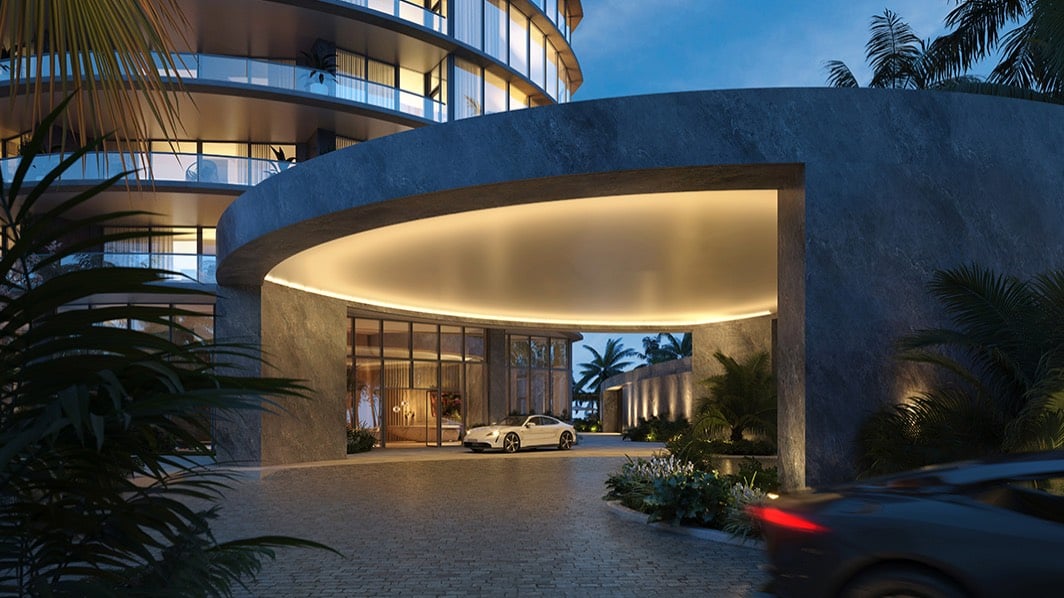
In Bal Harbour, arrival is not merely the path to an apartment. It is the home’s first private room, even before the front door opens. For a high-net-worth buyer, the question is not whether a building advertises private elevators or controlled access, but whether the sequence is elegant, secure, discreet, and durable in daily life.
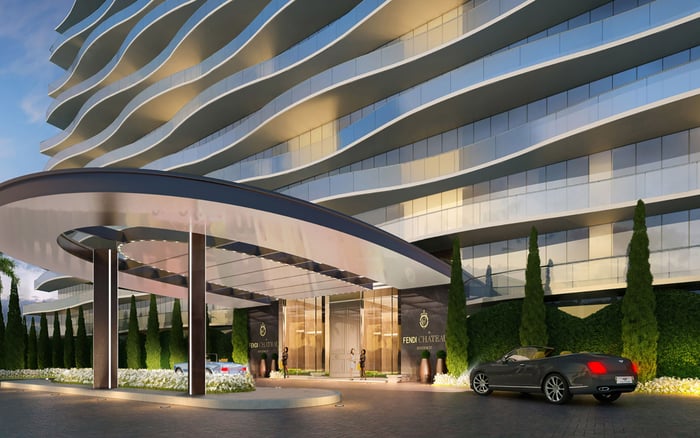
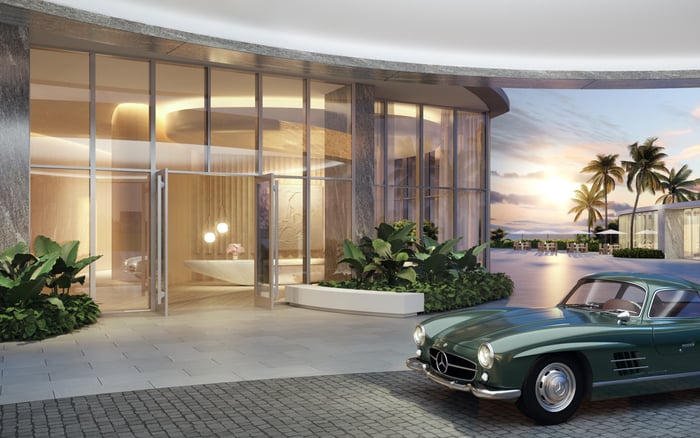
A proper evaluation begins at the curb. Watch how vehicles enter, where residents are received, how guests are identified, and whether the path to the elevator feels intuitive or exposed. Controlled arrival should reduce friction without feeling theatrical. The best versions create a quiet transition from public life to private space, with staff, technology, and architecture working together almost invisibly.
This is especially important in Bal Harbour, where privacy is often valued as highly as view, finish level, or amenity programming. Buyers comparing Rivage Bal Harbour and Oceana Bal Harbour should look beyond floor plans and renderings to understand how each arrival experience will perform on a busy weekend, during seasonal occupancy, or when the household is hosting.
Before purchasing, walk the complete route a resident, guest, vendor, and service provider would take. A private elevator can sound compelling, but its value depends on the system around it. Does the resident pass through a shared lobby first? Is there a separate vestibule? How close is the elevator to valet, garage, concierge, mail, package handling, and service corridors? Each answer changes the experience.
The most refined arrival sequences feel calm because they separate movement. Residents should not constantly intersect with large deliveries. Guests should not be left uncertain about where to go. Household staff should be able to operate without turning the private elevator foyer into a back-of-house zone. In an Oceanfront or Waterfront property, this planning can become even more important because beach access, pool access, service entries, and garage circulation may all compete for the same core areas.
Ask to see the full plan, not only the residence plan. Elevator banks, vestibules, controlled doors, garage levels, service areas, and staff stations are part of the ownership experience. If the route is unclear on paper, it may become frustrating in use.
The phrase private elevator can mean several things. It may describe an elevator that opens directly into a residence, an elevator shared by a limited number of homes, a keyed or credentialed elevator stop, or an elevator that arrives at a semi-private foyer. Buyers should ask for the precise definition and understand what is included in the deeded residence, what is a common element, and what is governed by association rules.
The private foyer deserves special attention. Is it fully within the residence, or is it controlled as a shared area? Can it be furnished? Can art, lighting, cameras, or smart-home elements be added? Who maintains the walls, flooring, ceiling, air conditioning, and lighting? These details affect both the emotional quality of arrival and the practical limits of customization.
Privacy is not only visual. It is also acoustic and operational. Listen for elevator noise, door chimes, corridor sound, and staff radio communication. Confirm whether the elevator opens directly into living space or into a buffer foyer. A beautiful arrival can lose value if it allows unnecessary sound, surprise encounters, or awkward deliveries.
Controlled arrival should never become a daily obstacle. The most successful systems balance discretion with convenience. Buyers should ask how residents, family members, guests, drivers, household staff, contractors, and delivery providers are authenticated. The answer may involve fobs, cards, keypads, biometrics, call stations, staff verification, license plate recognition, elevator permissions, or a combination of systems.
Do not evaluate technology only by how advanced it sounds. Evaluate how it behaves when life is imperfect. What happens if a phone dies, a guest arrives early, a driver changes, a housekeeper needs access, or a contractor is carrying equipment? A building may be secure and still inefficient if every exception requires repeated calls or manual intervention.
For a buyer, the best question is simple: does the system protect privacy while preserving grace? Controlled arrival should never make residents feel processed. It should make them feel known, expected, and shielded.
The quiet test of a private elevator building is service circulation. Luxury homes require a steady rhythm of housekeeping, floral deliveries, catering, wardrobe services, maintenance, pet care, and occasional construction. If these movements are not well planned, the private arrival becomes congested.
Ask how service providers enter, which elevator they use, how deliveries are staged, and whether large items require a separate route. Confirm procedures for furniture installation, art handling, appliance replacement, and emergency maintenance. These questions may feel unglamorous, but they determine whether the building lives elegantly after closing.
A Boutique building may offer intimacy, but it can also place more pressure on shared systems if service planning is thin. A larger building may offer more infrastructure, but only if staffing, access control, and elevator scheduling are disciplined. Neither scale is automatically better. The issue is whether the building’s operating plan matches the lifestyle of its residents.
Bal Harbour ownership is often shaped by seasonal rhythms, family visits, entertaining, and travel. A buyer should imagine the heaviest-use moments before committing. What happens when multiple households arrive at once? How are dinner guests cleared? Can a resident pre-authorize a guest list? How are chauffeurs, security teams, and household staff handled when several residences are hosting simultaneously?
Visit at different times if possible. A quiet weekday afternoon can hide weaknesses that appear on holidays, weekends, or event-driven evenings. The right arrival sequence should remain composed under pressure. Valet, front desk, security, and elevator coordination should feel practiced, not improvised.
This is also where neighboring markets provide useful comparisons. Buyers studying Bal Harbour may look at Surfside examples such as Fendi Château Residences Surfside, Arte Surfside, and The Delmore Surfside to sharpen their understanding of privacy, scale, and controlled arrival expectations along the same coastal corridor.
Private elevator convenience depends on reliability. Buyers should ask direct questions about maintenance contracts, inspection routines, backup procedures, outage protocols, and how residents are moved if a primary elevator is unavailable. In South Florida, storm planning and backup systems should be part of the conversation, especially for buyers who intend to leave a residence unoccupied for extended periods.
Review building rules carefully. Confirm whether pets can use the private elevator, whether staff may enter through the resident foyer, how short-notice guests are managed, and whether any restrictions apply to contractors or deliveries. The rules can either protect the feeling of privacy or undermine it through inconsistent exceptions.
For Resale purchasers, existing operations are easier to observe. Speak through appropriate channels, tour common areas, and study how the building actually functions. For new development purchasers, request detailed access-control descriptions, elevator diagrams, management protocols, and association language before relying on a sales presentation.
A sophisticated buyer should leave the tour with operational clarity. Who controls elevator permissions? How many residences share the elevator or vestibule? What happens during maintenance? Can the private foyer be customized? How are packages and food deliveries handled? Can guests be pre-cleared? Where do vendors wait? Which staff members can override access? What is recorded, and who can review it?
These are not signs of mistrust. They are the questions that protect the long-term experience of ownership. In Bal Harbour, the most desirable arrival is not necessarily the most elaborate. It is the one that feels natural every day, supports privacy without drama, and holds its composure when the building is full, the weather is difficult, or the household is active.
A private elevator is valuable when it gives the residence a sense of separation. Controlled arrival is valuable when it gives the owner a sense of command. Together, they should create a life that feels quieter, more personal, and more gracefully managed.
What should I ask first about a private elevator? Ask whether it opens directly into the residence, a private foyer, or a shared vestibule, and confirm who controls and maintains that space.
Is a private elevator always better than a semi-private one? Not always. A well-managed semi-private system can feel more refined than a poorly planned private one.
How can I test controlled arrival during a tour? Follow the full route from curb or garage to the residence, then ask how the same route works for guests, vendors, and staff.
Why does service circulation matter so much? Daily luxury depends on deliveries, maintenance, and household support moving smoothly without disrupting the resident arrival experience.
Should I review elevator maintenance before buying? Yes. Reliability, service contracts, outage procedures, and communication protocols should be part of due diligence.
What matters most in the private elevator foyer? Ownership status, customization rights, sound control, lighting, climate, and privacy all affect how the foyer lives.
How should seasonal use affect my evaluation? Ask how the building handles peak arrivals, guest lists, staff access, and extended absences when the residence is not occupied.
Are technology-driven access systems always preferable? Only if they are intuitive. The best systems are secure, redundant, and easy for residents to manage.
What should Resale buyers observe in person? Watch staff coordination, elevator wait times, guest processing, delivery routes, and the condition of private and shared areas.
How does Bal Harbour differ from nearby markets? Buyers often prioritize discretion, calm arrival, and refined access control, then compare those qualities across nearby coastal residences.
For a confidential assessment and a building-by-building shortlist, connect with MILLION.
If branded residences are on your mind — as a home or as an allocation — we would be glad to share what we are seeing, privately.
Begin a quiet conversation