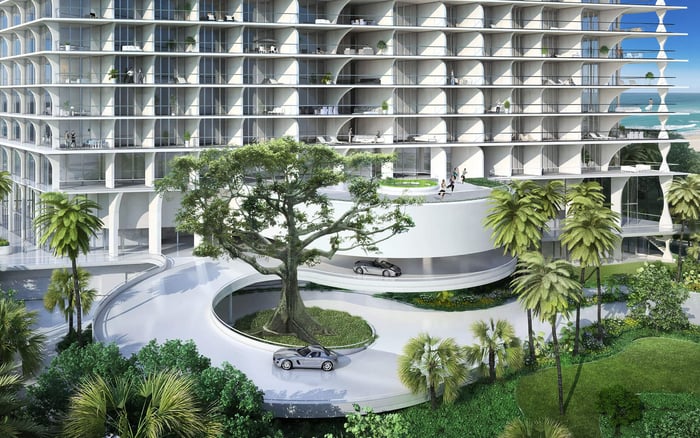
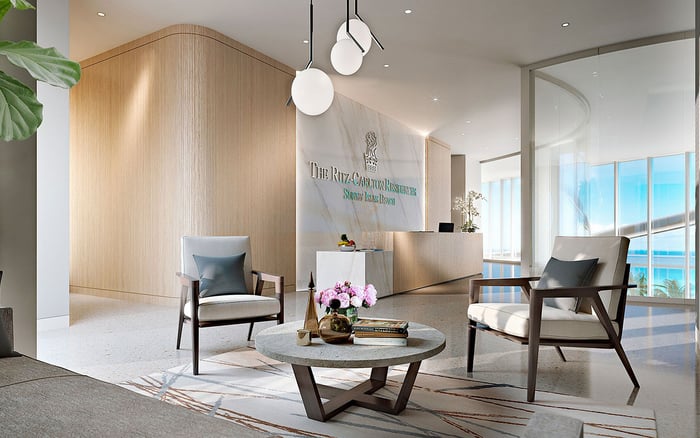
A discreet buyer’s guide to evaluating construction noise, renovation rules, mechanical sound, terrace exposure, municipal permits and contract protections before purchasing at Muse Residences Sunny Isles Beach.

At Muse Residences Sunny Isles Beach, the immediate appeal is clear: an oceanfront setting in Sunny Isles Beach, a high-rise residential environment, and daily life shaped by light, views and proximity to the water. Yet for a buyer considering a serious purchase, serenity should be examined with the same care as floor plan, finish quality, parking and building reserves.
Construction-noise exposure is rarely uniform across a tower. Two residences in the same building can live very differently depending on line, height, orientation, balcony geometry, neighboring parcels and the timing of nearby work. A residence facing the ocean may have one acoustic profile, while a line angled toward Collins Avenue, adjacent lots or service areas may have another. The point is not to assume a problem. The point is to verify the sound environment before the contract becomes difficult to unwind.
Luxury buyers comparing Sunny Isles Beach with other high-density coastal corridors, including searches around Bentley Residences Sunny Isles or The Ritz-Carlton Residences® Sunny Isles, tend to focus on architecture, amenities and view corridors. The more refined due diligence is quieter: asking precisely what may be built, repaired, renovated or operated within earshot.
Your first question should be direct: are any adjacent or nearby parcels active construction sites, entitled for redevelopment, or being marketed for future high-rise development? The seller and listing agent should be asked in writing, not merely in conversation during a showing. A verbal assurance that the area is “quiet” is less useful than a written response about known recurring conditions or future disruptions.
This inquiry should extend beyond visible cranes. A parcel can be quiet today while still being entitled, studied, marketed or positioned for future construction. Ask whether any neighboring lots, older structures, parking areas or underused sites could become future development corridors. If the answer is uncertain, that uncertainty itself should be reflected in your diligence timeline.
Sunny Isles Beach is a sophisticated vertical market, and Sunny Isles buyers often understand that change is part of the coastal value equation. The issue is not whether development exists in the broader area. The issue is whether the particular residence you are buying has realistic exposure to demolition, pile work, concrete pours, staging, truck movement or public infrastructure activity.
A polished showing can conceal the acoustic realities of daily ownership. Ask the condo association or property manager for recent complaints, board minutes and owner notices related to construction noise, interior renovation noise or mechanical noise. Association records may reveal patterns that are not obvious during a 30-minute appointment.
Specific questions matter. Has the building received complaints about drilling, tile work, demolition, elevators, HVAC equipment, generators, pool equipment, garage systems or other mechanical sources? Are there rules limiting contractor hours, interior renovations or noisy work inside Muse? If so, how are those rules enforced, and how much notice do residents receive?
Interior renovation noise deserves special attention in concrete high-rise buildings. Ask whether the unit above, below or next door has recently renovated, is currently renovating, or is expected to renovate after a sale. Impact noise can travel through structural systems in ways that feel surprising to buyers accustomed to detached homes.
Noise is not just a building-level condition. It is a line-by-line condition. Before buying, identify whether the unit faces Collins Avenue, neighboring parcels, the ocean, service areas or other potential sound sources. A higher floor may change the perception of traffic, equipment or construction, but height alone does not guarantee quiet.
The terrace or balcony should be evaluated separately from the interior. Outdoor spaces are often more exposed than living rooms, particularly when glass doors are open or when the terrace faces an active corridor. Ask whether the balcony is shielded, recessed, exposed or directly oriented toward likely construction paths. A terrace that looks cinematic at sunset may still be less usable during weekday work hours if it faces the wrong source.
Buyers comparing established Sunny Isles towers such as Jade Signature Sunny Isles Beach or Turnberry Ocean Club Sunny Isles should apply the same discipline: do not generalize from the tower name. Walk the exact residence, stand in the primary bedroom, open and close the balcony doors, and listen from the spaces where you will actually live.
In a luxury condominium, glass and exterior-wall systems are central to perceived quiet. Ask for the building’s window and exterior-wall specifications, including whether the glazing is impact-rated and whether any acoustic performance ratings are available. Impact-rated glass and acoustic performance are related concerns, but they are not the same question. A buyer should not assume that storm resilience automatically answers every sound concern.
If the unit is marketed as quiet, serene or private, consider asking whether an acoustic consultant can test interior sound levels with windows closed and open. The test need not be elaborate. It simply provides a more objective picture of how the residence performs under real conditions. For a high-value purchase, that extra step may be modest relative to the cost of discovering the issue after closing.
Touring strategy is equally important. Ask to visit the unit at different times of day, including weekday working hours. Evening and weekend showings can flatter a property. A Tuesday late morning, when construction, deliveries, maintenance and road activity are more likely to be underway, may tell you far more about the day-to-day experience.
Seller disclosure and association documents are important, but they should not be your only filters. Ask the City of Sunny Isles Beach about permitted construction hours, active building permits, pending applications and code-enforcement complaints near Muse. You should also ask whether any planned roadwork, utility work, seawall work, beach work or public-infrastructure projects could affect noise levels near the property.
This is where a disciplined buyer’s team can add value. Counsel, inspector, buyer’s broker and, where appropriate, an acoustic consultant can divide the diligence. The goal is not to create friction with the seller. It is to understand whether noise exposure is temporary, recurring, building-specific, municipal, neighbor-driven or simply not material to the chosen unit.
For South Florida’s premium condominium market, the strongest recommendations often sound unglamorous: verify hours, ask for records, confirm permits, and document answers before waiving protections. Those steps are especially relevant in dense oceanfront settings where neighboring activity can change the ownership experience.
Before contract execution, ask whether the seller will disclose any known recurring noise issues in writing. Then ask whether the purchase contract can include contingencies for document review, association disclosures, municipal permit checks and acoustical inspection. These are not unusual concerns for a careful buyer. They are a way to match a luxury purchase process to the realities of vertical coastal living.
Construction noise can affect more than comfort. It may influence pricing, resale timing, rental demand and the practical enjoyment of balconies, terraces and outdoor amenities. If a residence is otherwise compelling but faces a plausible construction corridor, the issue may not be a reason to walk away. It may be a reason to price risk more carefully, negotiate more intelligently and define your tolerance before closing.
The best buyer posture is calm and specific. Ask what is known, ask what can be verified, and ask what will be put in writing. At Muse Residences Sunny Isles Beach, quiet should be treated as a premium attribute that deserves due diligence, not as a mood conveyed by the view.
Should I ask about nearby construction before buying at Muse Residences Sunny Isles Beach? Yes. Ask whether adjacent or nearby parcels are active construction sites, entitled for redevelopment, or being marketed for future high-rise development.
Can noise exposure vary by unit within the same tower? Yes. Exposure can vary materially by line, height and orientation toward Collins Avenue, neighboring parcels, the ocean or other sound sources.
Are balconies and terraces more vulnerable to construction noise? Often, yes. Outdoor areas can be more exposed than interiors, especially if the terrace directly faces a likely construction corridor.
What building documents should I request? Ask for association records, board minutes, owner notices and any recent complaints related to construction, renovation or mechanical noise.
Should I ask about interior renovation rules? Yes. Confirm limits on demolition, tile work, drilling, contractor hours and how the association enforces those rules.
Can neighboring unit renovations create noise after I buy? They can. Ask whether the units above, below or next door have recently renovated or are expected to renovate.
Do impact-rated windows guarantee a quiet interior? Not necessarily. Ask for window and exterior-wall specifications, and request any available acoustic performance information.
When should I tour the unit to assess noise? Visit during weekday working hours as well as quieter periods. Real-time listening is more useful than relying only on evening or weekend showings.
Should municipal permit checks be part of diligence? Yes. Ask about active permits, pending applications, permitted construction hours and code-enforcement complaints near the property.
Can noise concerns be addressed in the purchase contract? Yes. Consider contingencies for document review, association disclosures, municipal checks and acoustic inspection before waiving protections.
For a tailored shortlist and next-step guidance, connect with MILLION.
If branded residences are on your mind — as a home or as an allocation — we would be glad to share what we are seeing, privately.
Begin a quiet conversation