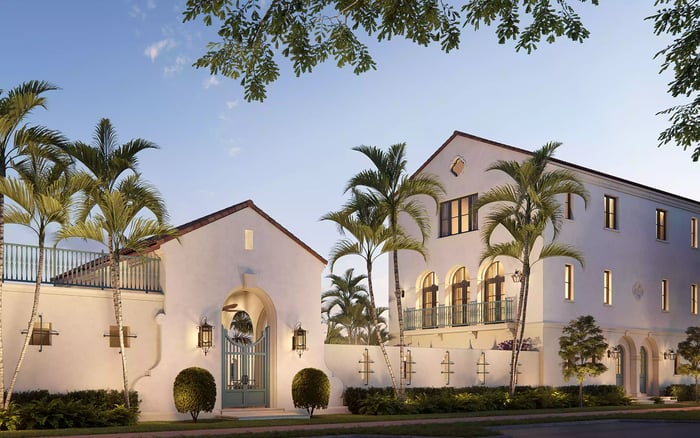
A practical luxury buyer’s guide to evaluating private dining, chef support, service flow, guest logistics, and event readiness before purchasing in Coral Gables.
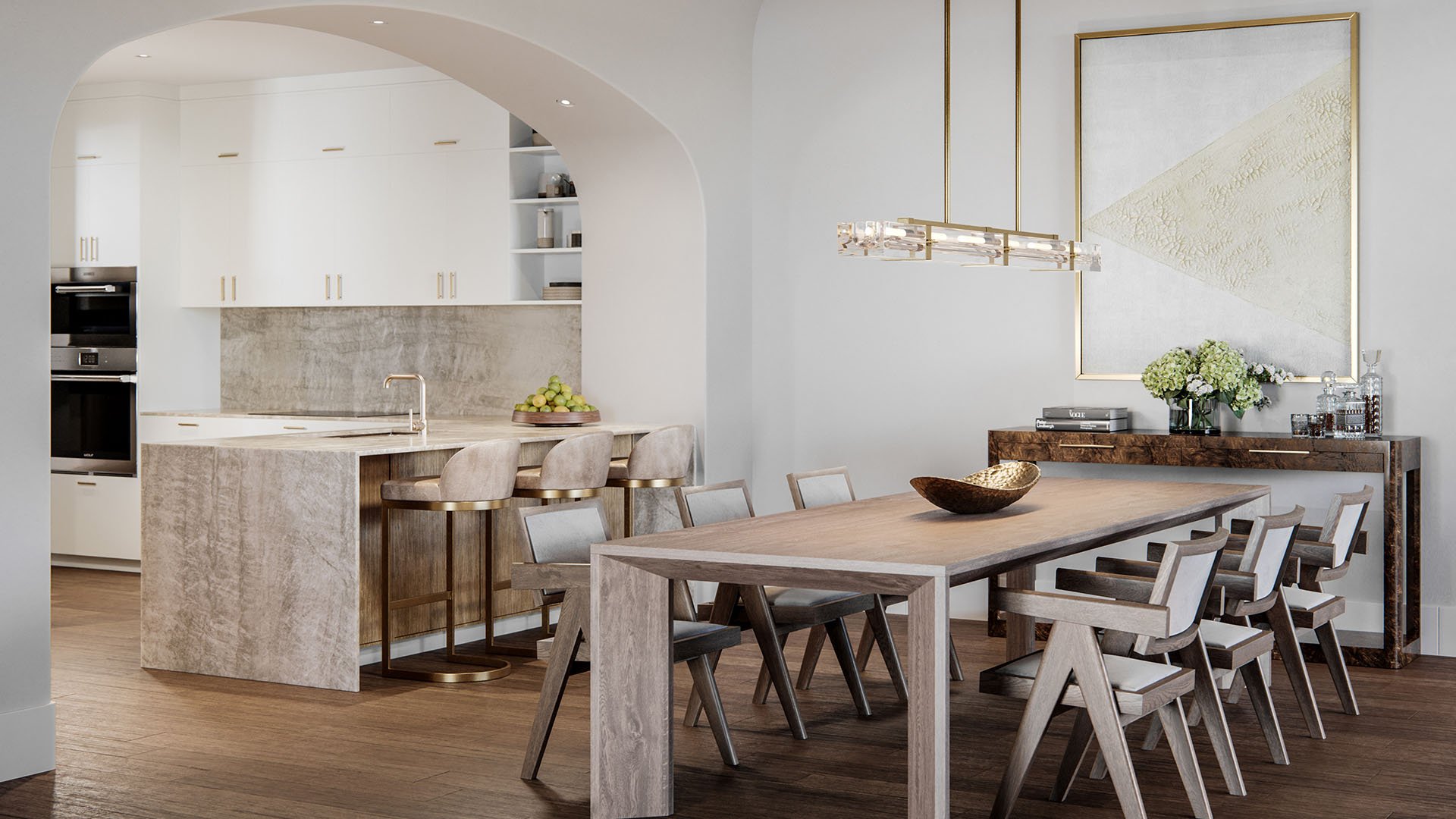
In Coral Gables, private dining is not a decorative amenity. For buyers who host board dinners, family holidays, philanthropic evenings, visiting relatives, or small cultural salons, it becomes part of the residence’s operating system. The room matters, but the invisible choreography matters more: how guests arrive, how food appears, where staff circulate, what happens after dessert, and whether the experience feels effortless rather than improvised.
A polished dining room can photograph beautifully and still fail in practice. Before purchasing, buyers should look beyond finishes and ask how entertaining functions on a busy evening. Is there a credible path from kitchen to table? Can service staff enter without crossing the private family zone? Is there a place for flowers, wine, glassware, linens, platters, and post-event cleanup? Does the residence support a seated dinner, a cocktail reception, or both?
This is why Coral Gables should be evaluated as much through lifestyle as through architecture. The strongest homes and residences are not merely large. They are composed for hospitality.
The first question is personal: what does private dining mean in your life? Some buyers want a formal dining room used a few times a year. Others want chef-driven dinners every month, relaxed Sunday lunches, or catered gatherings that begin on a terrace and end around a table. A family that hosts intergenerational holidays needs a different support plan than a couple that prefers tasting menus for twelve.
Create three scenarios before touring. One should represent your most common gathering, one your most ambitious event, and one the evening you would regret not being able to host after closing. Then walk the property through each scenario. Where do cars arrive? Where do guests place coats or bags? Can a caterer stage quietly? Is there enough separation between guest circulation and bedroom corridors? Does the powder room location feel intuitive?
Buyers considering Cora Merrick Park, or any Coral Gables residence with a refined hospitality promise, should use the tour to test these scenarios in real time. The goal is not to be difficult. It is to understand whether the home is designed for the way you live.
Private dining can mean many things in sales language. It may refer to a reservable room, an elegant lounge with a dining table, a chef’s kitchen, a catering pantry, or simply a space that can be adapted for hosting. Buyers should ask precise questions rather than accept broad phrasing.
If a building offers a private dining amenity, ask who manages bookings, whether advance reservations are required, whether outside chefs or caterers may be used, what cleanup standards apply, and whether there are time, music, alcohol, guest count, or noise expectations. Ask whether serviceware is provided or whether residents must bring everything in. Ask if staff support is included, available by request, or entirely the resident’s responsibility.
For single-family homes and townhome-style residences, the questions shift from rules to infrastructure. Look for a kitchen that can handle prep and plating without becoming the social center unless that is your intention. Confirm whether there is refrigeration capacity, discreet trash handling, practical storage, and a route for deliveries. A beautiful kitchen island is not a substitute for service logic.
Entertaining support is easiest to evaluate on a floor plan. Trace the path of food, staff, guests, and waste. If all four paths collide, the home may feel strained during events. If they are separated but still connected, the evening can unfold with quiet precision.
The most useful layouts provide a graceful public sequence: arrival, greeting, drink, dining, and post-dinner conversation. They also provide a hidden service sequence: delivery, prep, staging, serving, clearing, and disposal. The buyer’s eye should move between both.
At Ponce Park Coral Gables, or when assessing any residence in the same category of expectation, the question is not only whether the entertaining areas are attractive. It is whether the space allows hosts to be present with guests instead of managing logistics all night.
A great dinner feels intimate even when the home is generous. Buyers should listen for how sound travels between dining, living, terrace, elevator lobby, kitchen, and bedroom areas. Hard surfaces, open volumes, and dramatic glazing can elevate a room visually while making conversation tiring. If possible, visit at different times of day and stand where guests would actually gather.
Privacy is equally important. In a condominium or managed residential environment, buyers should understand how guests are greeted, announced, and directed. In a single-family setting, they should evaluate sightlines from the street, neighboring properties, and outdoor entertaining areas. The best entertaining homes preserve a sense of occasion without exposing the household.
Guest boundaries deserve attention. A residence may be perfect for a dinner of ten and uncomfortable for a reception of forty. Do not assume scale solves everything. Circulation, restroom placement, terrace access, and valet or parking coordination can determine whether an evening feels gracious or crowded.
The more refined the property, the more important the rules. Buyers should request the governing documents, house rules, reservation policies, and any guidelines that affect private events, amenity use, vendors, deliveries, music, terrace activity, and guest access. These details are not afterthoughts. They shape the daily value of the residence for anyone who hosts.
If outside culinary teams are central to your lifestyle, confirm whether they are allowed and under what conditions. If wine service matters, ask about storage, delivery protocols, and whether amenity spaces can support the format you prefer. If philanthropy or business entertaining is part of your calendar, understand whether the property distinguishes between private social use and more formal events.
The broader conversation around The Village at Coral Gables should remind buyers that residential character and hospitality planning are intertwined. A home can be elegant, but elegance is sustained by rules that match the owner’s expectations.
Entertaining support often depends on people, not finishes. A buyer should ask who will help coordinate deliveries, receive vendors, reserve shared spaces, manage guest arrivals, and troubleshoot during an event. If support is available, clarify whether it is provided by building staff, a preferred vendor, an outside service, or the owner’s private team.
Concierge language can sound comprehensive, but buyers should separate coordination from execution. Making a reservation is different from staffing a dinner. Granting vendor access is different from supervising setup. Receiving flowers is different from arranging the table. The more important entertaining is to your lifestyle, the more specific your questions should be.
For estate buyers, the staffing conversation may involve household managers, private chefs, drivers, security, or recurring vendors. The residence should support them without forcing service functions into guest-facing rooms. Staff parking, entry points, storage, and back-of-house discretion can be just as valuable as marble, millwork, or views.
Before signing, assemble a private dining checklist and review it with your advisor. Include floor plan performance, rules, staffing, vendor access, storage, acoustics, terrace use, guest arrival, cleanup, and any improvements needed after closing. If the property requires upgrades, understand whether they are cosmetic, operational, or structural.
The right Coral Gables purchase should make hosting feel natural. It should allow the owner to welcome guests without surrendering privacy, comfort, or control. In the ultra-premium market, that quiet ease is often the true luxury.
Should private dining influence my purchase decision in Coral Gables? Yes, if hosting is part of your lifestyle. The right residence should support entertaining without disrupting private family spaces.
What is the first thing to inspect in a private dining setup? Start with circulation. Trace how guests, food, staff, and cleanup move through the home.
Is a large dining room enough for serious entertaining? Not always. Storage, service access, acoustics, vendor rules, and cleanup logistics are equally important.
Should I ask about outside chefs before buying? Yes. Confirm whether outside chefs or caterers are permitted and what access, insurance, timing, or cleanup rules apply.
How do I evaluate a condominium private dining room? Ask how it is reserved, who manages it, what is included, and whether staff or serviceware are available.
What matters most for single-family entertaining? Look for a practical relationship between kitchen, dining, outdoor space, parking, delivery access, and guest privacy.
Are acoustics really important for dining? Very. A visually dramatic room can still be tiring if conversation does not carry comfortably.
Can entertaining rules affect resale appeal? They can. Buyers who host often value clear, flexible, and well-managed policies.
Should I bring an event planner or chef to a showing? For highly specific entertaining needs, a trusted professional can identify practical issues a buyer may miss.
What is the ideal result after due diligence? You should understand exactly how a dinner or reception would work before you commit to the purchase.
For a tailored shortlist and next-step guidance, connect with MILLION.
If branded residences are on your mind — as a home or as an allocation — we would be glad to share what we are seeing, privately.
Begin a quiet conversation