A discreet buyer’s guide to evaluating amenity depth in Brickell Key without compromising privacy, calm, or residential character.
For a Brickell Key buyer, amenity depth is not simply a matter of how many rooms, decks, lounges, studios, and service areas appear in a brochure. The more important question is whether those spaces support daily life without making the building feel like a hotel lobby or a weekend club. In a private residential setting, luxury is often measured by what does not intrude: noise that does not travel, guests who do not overwhelm circulation, and services that appear when needed without turning the address into a spectacle.
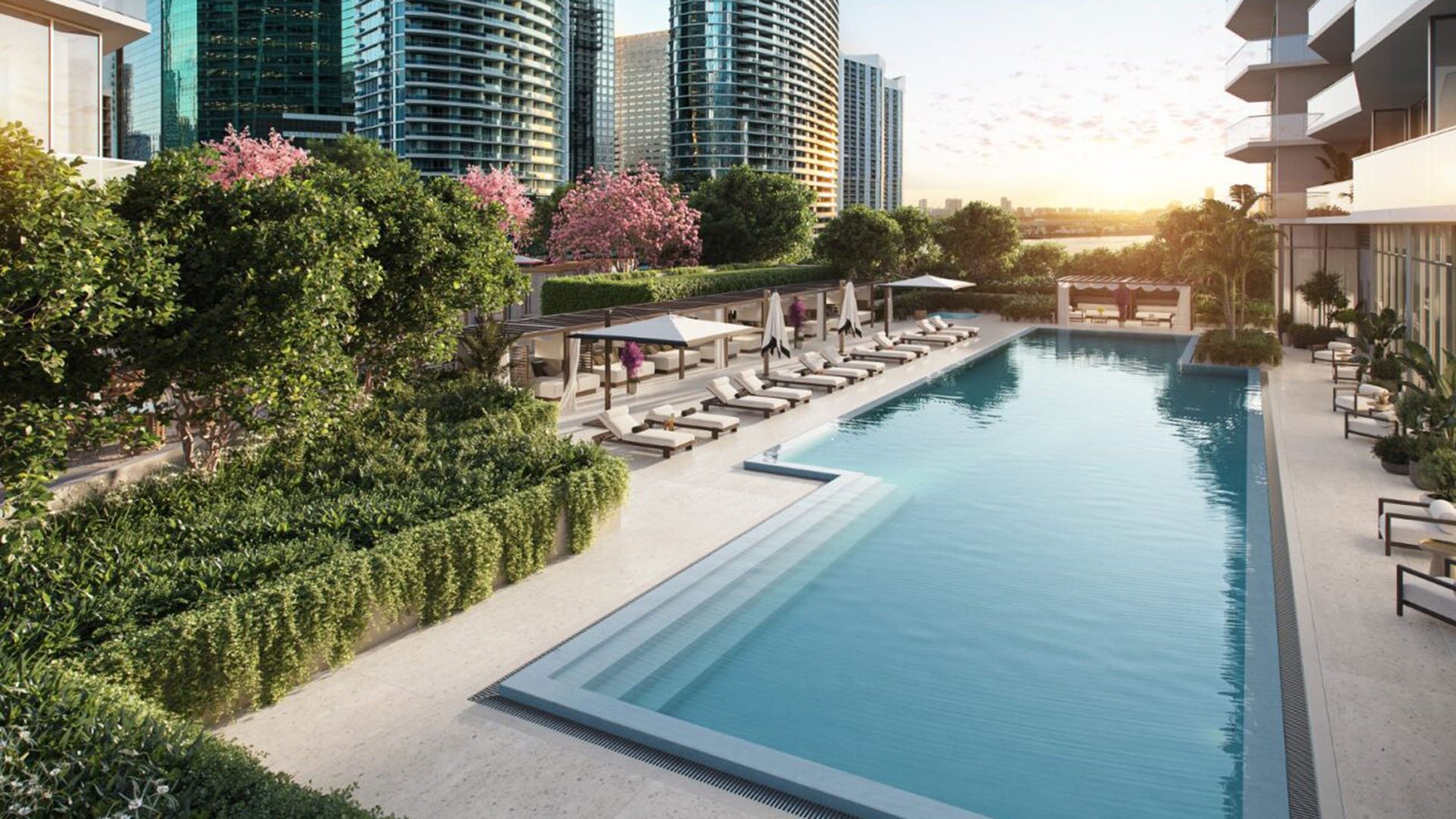
This is where a disciplined buyer separates amenity quantity from amenity intelligence. A pool may be beautiful in photography, yet feel wrong if its placement, hours, and acoustics dominate the residential experience. A wellness suite may be impressive, yet underwhelming if access is awkward or it functions as a social corridor. The goal is not austerity. It is depth with restraint: a building with enough range for exercise, recovery, entertaining, work, and family routines, while preserving the feeling of returning home.
Before touring any building, define the rhythms that matter. Do you swim before sunrise, host seated dinners, train privately, work from home, receive extended family, or spend most evenings away from the property? The right amenity program should answer those habits directly. If you will not use a cinema, game room, golf simulator, or private dining suite, its existence may still affect your maintenance obligations and the building’s atmosphere.
Brickell Key buyers are often drawn to a more composed residential mood while remaining close to Brickell. That makes the amenity question especially nuanced. A building can offer convenience and polish without importing the energy of a resort. The strongest fit usually comes from amenities that reduce friction: valet patterns that feel calm, elevators that do not make every arrival public, fitness areas that avoid crowding, and outdoor spaces that allow conversation rather than performance.
A marble counter, a sculptural reception desk, or a dramatic spa wall can distract from the more consequential issue: how residents move. Study the amenity plan as carefully as the residence plan. Ask where service staff circulate, where guests wait, how deliveries are handled, and whether wet areas are buffered from quiet residential zones. If the path to the gym crosses the main social lounge, privacy is already compromised.
Look for layered thresholds. A refined building does not necessarily hide amenities, but it sequences them. Entry, reception, resident-only corridors, wellness, outdoor areas, and service zones should feel intentional. When spaces are stacked or clustered without acoustic separation, the building may feel active even on ordinary days. Amenity depth works best when residents can choose visibility or seclusion depending on the moment.
This is also where comparison helps. Mainland Brickell developments such as St. Regis® Residences Brickell and Cipriani Residences Brickell can provide useful reference points for service-led living, even when a Brickell Key buyer ultimately prefers a quieter setting. The lesson is not to replicate a branded experience, but to understand what levels of staffing, arrival, dining, and wellness support feel appropriate for your life.
Hospitality is not the same as theatricality. A building can be exceptionally serviced without feeling staged. The difference is tone. Hospitality anticipates needs: packages are handled cleanly, reservations are managed discreetly, residents are recognized, and common areas are maintained with consistency. Performance seeks attention: oversized scenes, constant activation, and spaces designed more for impression than regular use.
For buyers seeking calm, the best questions are practical. How many residents are likely to use the fitness center during peak morning hours? Where do children, pets, guests, and service providers enter? Can the private dining room be used without turning the lobby into an event pre-function area? Are outdoor lounges arranged for small groups or large gatherings? Amenity depth should give residents options, not force them into a social script.
Aspirational projects across Brickell, including Baccarat Residences Brickell, show how buyers increasingly evaluate ambiance as part of value. In a Brickell Key decision, that ambiance must be weighed against the desire for residential discretion. The question is not whether a building is beautiful. It is whether beauty remains composed on a Tuesday morning, during school pickups, after dinner, and throughout high season.
Wellness amenities are often described as a collection of features, but buyers should assess them as a system. A proper wellness sequence considers arrival, changing, training, recovery, water, light, privacy, and maintenance. If the spa area is difficult to access, treatment rooms lack quiet, or outdoor fitness zones expose residents to too much visibility, the amenity may be less useful than it appears.
For a waterfront buyer, water views and outdoor air can be part of daily restoration, but they should not replace function. A serene terrace with poor shade or limited seating may photograph well and live poorly. A gym with dramatic glass may still disappoint if equipment selection, spacing, and acoustics do not support serious use. Depth is measured by how often the amenity improves an ordinary day.
New-construction buyers should be especially attentive to how promised spaces will be managed after opening. Ask about reservation systems, guest limits, staffing approach, maintenance standards, and whether amenities are designed for residents first. A building may have generous programming on paper, but if access is too broad or controls are vague, the atmosphere can drift toward resort behavior.
In Brickell Key, the feeling of privacy is often as valuable as the amenity itself. Buyers should examine not only what residents can use, but who else can use it, when, and under what rules. Guest policies, short-term access, private event guidelines, and service protocols all shape the mood of a building.
A quiet amenity program usually has clear governance. There is a difference between a building that allows residents to host elegantly and one that turns common areas into event venues. Buyers should request the rules, not simply the renderings. Pay attention to hours, booking procedures, alcohol policies, noise expectations, and whether certain rooms are designed for intimate use or larger gatherings.
This is where lifestyle becomes a due diligence category, not a marketing phrase. The right address should align with how formal or informal you want daily life to feel. Some owners enjoy a more social building. Others want a soft landing after travel, work, and public life. Neither preference is wrong, but the mismatch can be costly.
It can be useful to tour mainland Brickell buildings to calibrate expectations, especially when comparing amenity depth, staffing intensity, and design language. The Residences at 1428 Brickell offers another point of comparison for buyers considering newer residential concepts in the broader Brickell market. Still, the exercise should sharpen your Brickell Key priorities rather than dilute them.
Ask yourself after each tour: did the amenities feel like an extension of private life, or like a destination designed for display? Did the staff presence feel reassuring or excessive? Did the outdoor areas invite quiet use, or signal a constant social scene? Did the building seem to protect residents from the city’s intensity, or amplify it?
Buyer’s guides often focus on price, views, and floor plans, but in the ultra-premium market, amenity culture is part of the asset. It affects daily satisfaction, resale perception, and the type of neighbors a building attracts. The best Brickell Key purchase is not necessarily the one with the longest amenity menu. It is the one where the amenity program feels edited, durable, and aligned with the owner’s private standards.
What does amenity depth mean for a Brickell Key buyer? It means the building offers meaningful support for daily life, not just a long list of shared spaces.
How can amenities feel luxurious without feeling like a resort? They should be well staffed, acoustically controlled, privately accessed, and governed by clear resident-first rules.
Should I prioritize more amenities or better-designed amenities? Better-designed amenities usually matter more because they affect comfort, privacy, and actual use.
Why is circulation important when evaluating a building? Circulation determines whether residents, guests, staff, and deliveries move discreetly or create congestion.
How should I evaluate a pool deck? Consider shade, seating, noise, guest policies, privacy, and whether the area supports calm daily use.
Are branded or service-led buildings useful comparisons? Yes, they can help calibrate expectations for staffing and hospitality, even if you prefer a quieter address.
What questions should I ask about private dining rooms? Ask how reservations work, how guests enter, what hours apply, and whether events affect other residents.
Can too many amenities hurt the residential feel? Yes, if they encourage constant activation, outside traffic, or a social atmosphere that feels less private.
How do I judge wellness amenities before buying? Study access, equipment spacing, recovery areas, maintenance standards, acoustics, and privacy.
What is the best sign of a well-edited amenity program? The amenities feel easy to use, quietly maintained, and proportionate to the scale and culture of the building.
To compare the best-fit options with clarity, connect with MILLION.
If branded residences are on your mind — as a home or as an allocation — we would be glad to share what we are seeing, privately.
Begin a quiet conversation