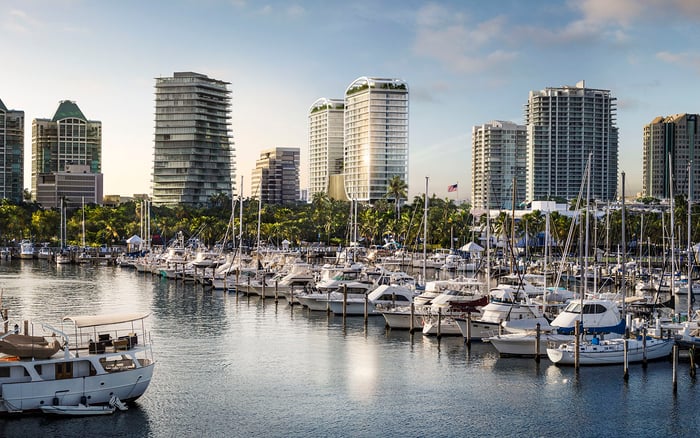
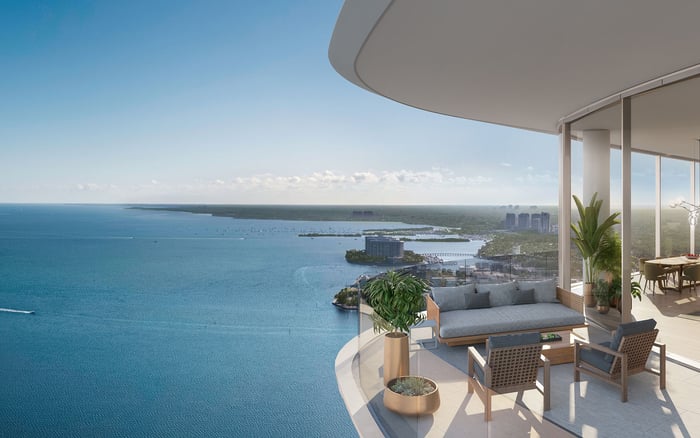
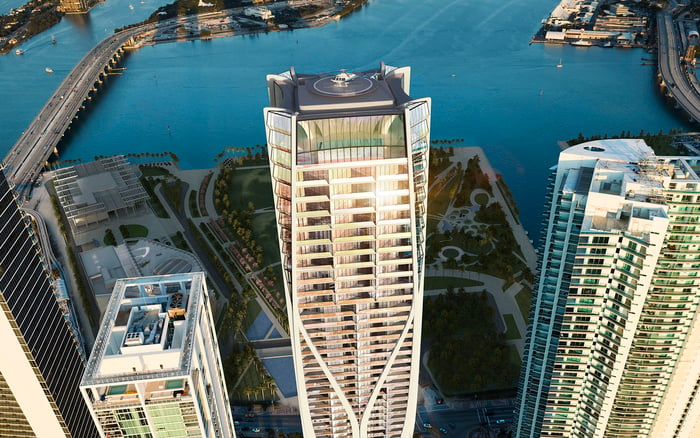
A practical luxury buyer guide for Boston households evaluating Brickell and South Florida waterfront homes through daily access, views, boating needs, privacy, and long-term livability.
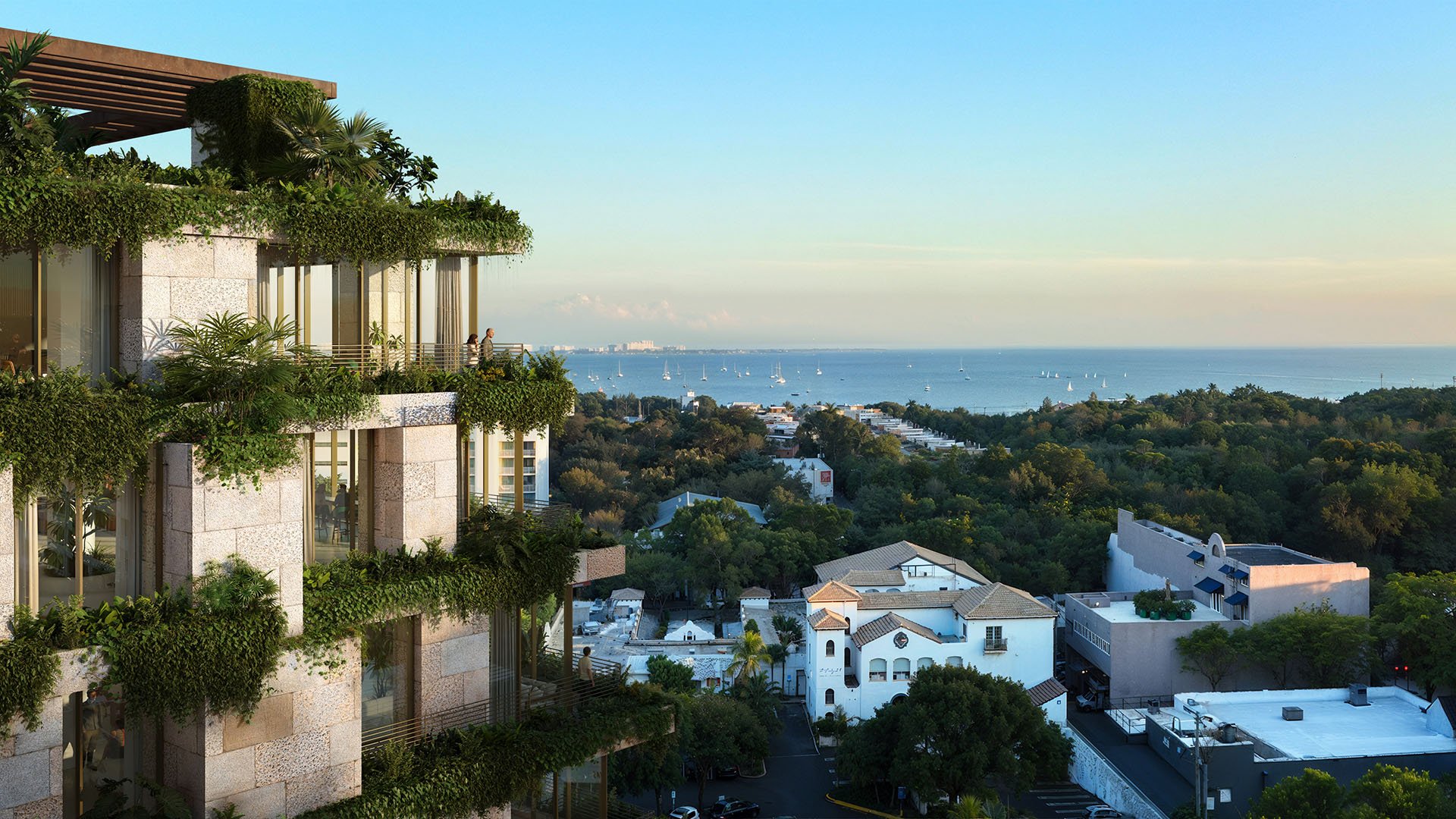
For many Boston buyers, South Florida begins as an image: sun on glass, boats on the bay, dinner on the terrace in January. The stronger purchase begins with a calendar. A waterfront address should improve the ordinary day, not simply decorate a holiday weekend.
That distinction matters in Brickell, where the premium is not only the Waterview but the ability to live with urban efficiency. The best fit is often not the most dramatic panorama on day one. It is the home that makes a morning meeting, school drop-off, private fitness session, grocery run, and evening reservation feel nearly frictionless. For a Boston household accustomed to compact routines and walkable neighborhoods, that practical layer may matter more than a few additional degrees of open water.
A buyer comparing 2200 Brickell with a quieter bayfront or island setting should ask a simple question: will this address save time five days a week, or only impress guests twice a month? Luxury, in this context, is measured in recovered minutes.
Brickell appeals to Boston relocators because it can feel legible. It has density, dining, offices, services, and an urban rhythm that makes daily life possible without designing every errand around a car. Still, the buyer should remain disciplined. A tower in Brickell is not automatically convenient simply because it is central.
Study the path from lobby to street. Consider whether valet procedures, ride-share access, guest parking, pet circulation, package handling, and elevator patterns match the way the residence will be used. A full-time home has different demands than a seasonal base. A buyer who entertains often may need a more graceful arrival sequence. A buyer who travels weekly may prioritize a lock-and-leave environment with predictable building operations.
At the upper end, residences such as Una Residences Brickell invite a buyer to weigh the relationship between waterfront identity and city adjacency. The question is not whether the address is desirable. The question is whether its particular balance of privacy, access, and exposure suits your actual routine.
Waterfront is not a single condition. It can mean wide bay, river, canal, inlet, ocean, Intracoastal, marina basin, or a layered view over treetops and rooftops. Each behaves differently. Light changes by orientation. Privacy changes by setback. Sound changes by road pattern, boating activity, restaurant proximity, and building shape.
A strong Waterview should be evaluated at several times of day. Morning glare may be energizing or exhausting. Afternoon heat on a terrace may shape how often that outdoor space is used. Night views can be more valuable than expected if the residence is occupied mainly after business hours. The best terrace is not always the largest; it is the one that is usable when the owner is actually home.
Do not treat height as a universal answer. High floors can expand the horizon and reduce some street-level noise, but they may also distance the resident from garden, pool, and water activity. Low floors can feel more residential and connected, but they require sharper attention to privacy. The right answer depends on temperament.
Marina access is often misunderstood by buyers arriving from the Northeast. Owning near water is not the same as living a boating life. If boating is essential, the due diligence should include how you board, where guests arrive, where gear is stored, how captains and crew are handled, and how quickly the route reaches open water. If boating is occasional, a waterfront home without direct boat infrastructure may still deliver the lifestyle value required.
For buyers considering Broward, Riva Residenze Fort Lauderdale can be part of a broader conversation about Fort Lauderdale, where water, yachting culture, and residential calm often intersect differently than in Miami’s urban core. The trade-off is not better versus worse. It is city pulse versus marine orientation, and each serves a different household.
Beach access is another separate category. An oceanfront building offers sand and horizon, but it may place the owner farther from offices, schools, or certain cultural routines. A bayfront or riverfront address may sacrifice immediate beach access while improving everyday function. The most sophisticated buyers separate romance from frequency: if the beach will be used twice a month, do not allow it to dominate a five-day-a-week decision.
Boston buyers often arrive with high expectations for discretion. They may not need spectacle. They may need competent staff, secure arrivals, reliable maintenance, thoughtful pet policies, and an address that can host visiting family without turning daily life into logistics.
Private-school access, medical proximity, club life, airport patterns, and restaurant habits should all be mapped before choosing a submarket. Brickell can be exceptional for a buyer who wants urban convenience. Coconut Grove may appeal to those who prefer a softer residential cadence with canopy, village character, and access to the bay. A residence such as Vita at Grove Isle belongs in that conversation when the priority shifts from downtown intensity toward a more retreat-like waterfront rhythm.
For some households, the best South Florida home is not the flashiest one. It is the one where children, dogs, staff, guests, cars, deliveries, trainers, and visiting grandparents can all move through the week without ceremony.
Begin with three columns: non-negotiable daily utility, emotional waterfront value, and long-term flexibility. Daily utility includes commute, parking, services, elevator flow, pet movement, and neighborhood errands. Emotional waterfront value includes view type, terrace usability, privacy, light, and the feeling of arrival. Long-term flexibility includes resale audience, household changes, and whether the residence can serve as both a primary home and seasonal base.
Then tour in pairs. Compare Brickell with Coconut Grove. Compare Fort Lauderdale with Miami Beach. Compare a marina-oriented environment with a pure Waterview residence. Contrast one high-energy address with one quieter one on the same day. The differences become clearer when experienced in sequence.
Finally, resist buying only the most photogenic frame. South Florida rewards homes that perform beautifully in repetition. The right waterfront address should make Monday feel lighter, not only make Saturday look better.
Is Brickell the best first stop for a Boston buyer? Brickell is often a logical starting point because it offers urban convenience, services, and waterfront proximity in one compact environment.
Should I prioritize Waterfront or Waterview? Prioritize the condition you will use most. A beautiful Waterview may be more valuable to daily life than direct water access you rarely use.
Is a Marina essential for a boating household? It depends on how frequently you boat, whether you use crew, and how important direct boarding is to your routine.
How should I compare Brickell with Fort Lauderdale? Compare daily rhythm first. Brickell leans urban and vertical, while Fort Lauderdale may offer a more marine-oriented residential feel.
What makes a terrace genuinely useful? Orientation, shade, wind, privacy, and furniture depth matter more than size alone. Visit at the time of day you expect to use it.
Are high-floors always better for waterfront living? Not always. High floors can enhance horizon and privacy, while lower levels may feel more connected to gardens, pools, and water activity.
How important is valet and arrival design? Very important for full-time living. A beautiful residence can feel inefficient if arrivals, guests, and daily parking are poorly choreographed.
Should Coconut Grove be considered by a Brickell-focused buyer? Yes, especially if the household wants a calmer residential mood while remaining connected to Miami’s waterfront lifestyle.
Can a waterfront condo work as both a primary home and second home? It can, provided the building operations, storage, guest logistics, and neighborhood services support both modes of living.
What is the best way to shortlist comparable options for touring? Start with location fit, delivery status, and daily lifestyle priorities, then compare stacks and elevations to validate views and privacy.
For a tailored shortlist and next-step guidance, connect with MILLION.
If branded residences are on your mind — as a home or as an allocation — we would be glad to share what we are seeing, privately.
Begin a quiet conversation