A discreet buyer’s guide to assessing Hillsboro Beach homes near private clubs while ensuring the residence, daily routine, and long-term value stand on their own.
In Hillsboro Beach, the club-adjacent purchase can be seductive because it suggests a life already composed: morning exercise, lunch nearby, familiar faces, discreet service, and recreation without over-planning. For a luxury buyer, that can be a meaningful advantage. It should not become the central reason to buy.
The stronger approach is to evaluate the property as if the club did not exist. Would the architecture, views, privacy, arrival sequence, building services, outdoor space, and everyday convenience still justify the decision? If the answer is yes, proximity to a club becomes an elegant enhancement. If the answer is no, the purchase may be too dependent on an amenity ecosystem the owner does not control.
This is especially important for buyers considering Rosewood Residences Hillsboro Beach, where the conversation naturally extends beyond square footage into hospitality, privacy, wellness, and the rhythms of coastal living. The test is not whether the nearby lifestyle is appealing. The test is whether the home remains compelling on a quiet Tuesday when no reservation, tee time, invitation, or event is on the calendar.
Club-adjacent can mean many things. For one buyer, it is golf and a regular game with a familiar group. For another, it is a dining room close enough to make entertaining effortless. For a third, it is wellness, tennis, spa access, family programming, or simply the social architecture of a place where people know one another.
Before touring, separate the appeal into three categories: essential, preferred, and occasional. Essential features should already be supported by the residence or immediate setting. Preferred features can be supplied by a club, nearby hospitality, or a broader neighborhood routine. Occasional features should not drive the purchase price.
A useful exercise is to write a seven-day schedule for your household without referencing a club. Where do you take a walk? Where do guests gather? How do children, friends, staff, or visiting family move through the day? Where does a car need to go, and where does it not? A residence that answers these questions independently gives the buyer leverage, both emotionally and financially.
This belongs in every serious buyer’s guide file because it prevents lifestyle language from replacing practical analysis.
The finest club-adjacent residences do not feel like satellites of another institution. They have their own identity. For Hillsboro Beach buyers, that means scrutinizing the private realm first: ceiling heights, acoustic separation, elevator experience, valet or arrival choreography, service corridors, storage, staff functionality, terrace usability, and the way the primary suite lives at different times of day.
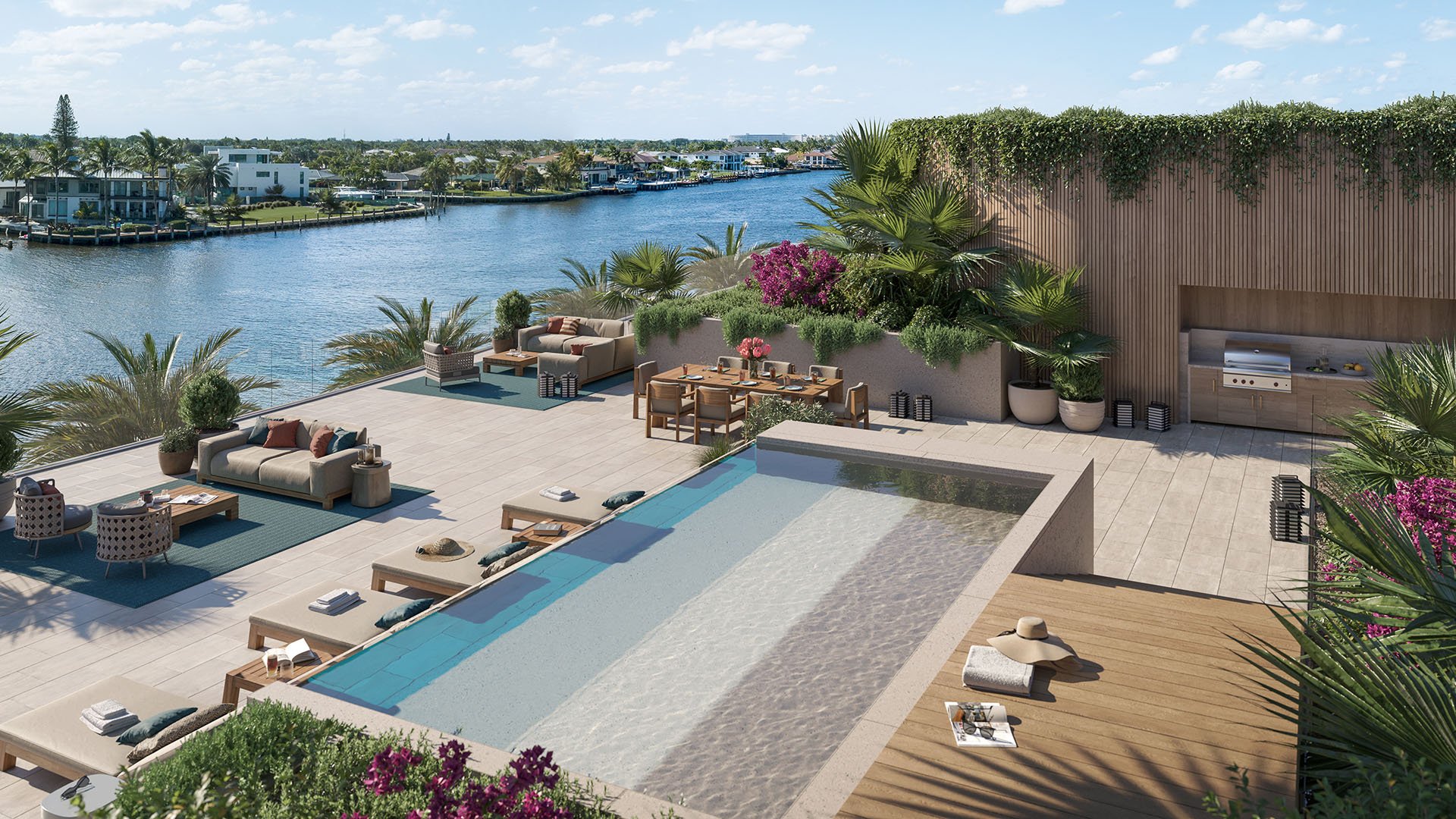
Waterfront value should also be assessed on its own terms. Views may be beautiful, but livability depends on orientation, glare, privacy from neighboring residences, balcony depth, and the ability to use outdoor spaces without feeling exposed. A buyer should stand in the main living areas and ask whether the outlook supports calm, entertaining, and daily pleasure even when no outside amenity is involved.
The same standard applies when comparing nearby coastal markets. A buyer weighing Hillsboro Beach against Armani Casa Residences Pompano Beach or The Ritz-Carlton Residences® Pompano Beach should not simply compare brand names or amenity menus. The more revealing comparison is how each home performs when the owner wants privacy, ease, and autonomy.
A club can compress social friction. It can make dinners, introductions, exercise, and family routines easier. That convenience has real lifestyle value, particularly for buyers relocating from established social networks elsewhere. But convenience is not the same as ownership.
Membership policies, programming, pricing, availability, dress codes, guest rules, and the personality of a club can change. Even when nothing changes formally, a buyer’s own preferences may evolve. The most resilient purchase is one where the club relationship remains optional: welcome when desired, irrelevant when not.
Buyers should therefore ask a simple question after each showing: if we never joined the club, would we still want this home? If the answer is uncertain, revisit the property at another time of day. Bring a family member who is less influenced by the club narrative. Consider how the residence works for quiet weekends, remote work, visiting guests, and off-season stretches.
Some buyers want the energy of a private club close at hand. Others want the prestige of proximity without the visibility that can come with being socially adjacent. There is a difference between access and exposure.
Study how people arrive, park, walk, and gather. Notice whether the residence feels protected from the patterns around it. The best club-adjacent purchase allows the owner to participate selectively. It should not create the feeling that every lunch, walk, or guest arrival is part of a social stage.
This is where a Hillsboro Beach search becomes highly personal. A buyer who entertains often may value a residence that transitions easily from private living to a more social setting. A buyer seeking restoration may prefer the opposite: a home that can disappear into quiet, even if recreation is nearby.
For comparison, projects such as Shell Bay by Auberge Hallandale show how the club and residential conversation can become deeply intertwined. That may be ideal for some households. For others, the more attractive model is a residence with refined amenities and access to outside pleasures, but no need to rely on them.
Luxury often fails in small inconveniences. A club-adjacent residence may look effortless during a hosted tour, yet daily life depends on details: where groceries arrive, how guests are received, how pets move through the property, where beach equipment is stored, and whether service staff can work discreetly.
Buyers should also consider how often the household will leave the immediate area for dining, schools, airports, medical appointments, arts, or business obligations. If a property is being justified by club proximity, the rest of the weekly map must still make sense. The goal is not to live everywhere at once. The goal is to avoid paying a premium for one lifestyle feature while compromising repeatedly on the routines that make ownership feel graceful.
When comparing with more urban or resort-oriented alternatives, such as Four Seasons Hotel & Private Residences Fort Lauderdale, the question becomes sharper: do you want services concentrated within a hospitality environment, or do you want a quieter residential base with club access as an external layer? Neither answer is universally superior. The right answer is the one that matches the way the household actually lives.
Resale strength in the luxury market is best supported by multiple forms of desirability. A property should appeal through location, design, privacy, scale, condition, views, service quality, and emotional atmosphere. Club adjacency can add value, but it should not be the only story.
A buyer should imagine the future buyer pool. Some prospects may love golf. Others may care more about waterfront serenity, wellness, family space, or lock-and-leave simplicity. The broader the home’s appeal, the less exposed it is to shifts in club culture or personal preference.
That is the essence of disciplined luxury buying in Hillsboro Beach: choose a residence with enough intrinsic merit that the club reads as an amenity of life, not a dependency of value.
What does club-adjacent mean in a Hillsboro Beach purchase? It means the residence benefits from proximity to a private or recreational club lifestyle while remaining legally and practically separate from that institution.
Should I buy primarily because I like a nearby club? No. The home should satisfy your privacy, design, service, and daily-living standards even if you never join or use the club.
How should golf influence the purchase decision? Treat golf as a lifestyle enhancement, not the foundation of value, unless the entire household is committed to using it consistently.
What is the biggest risk of club dependency? The buyer may overpay for an outside experience that can change, become less relevant, or fail to serve future resale audiences.
How can I test whether the residence stands on its own? Tour it with no club programming in mind and ask whether the views, layout, privacy, and services still feel exceptional.
Is waterfront living enough to offset limited club use? It can be, if the residence offers strong orientation, privacy, outdoor usability, and a daily sense of calm independent of any membership.
Should social access matter to relocating buyers? Yes, but it should be weighed carefully against household privacy, logistics, and the possibility that social preferences may evolve.
How do branded residences fit into this decision? Branded residences may offer service and design identity within the property itself, which can reduce reliance on outside clubs.
What should second-home buyers prioritize? They should prioritize ease of arrival, low-friction ownership, security, maintenance, and the ability to enjoy the home without scheduling around a club.
What is the best way to shortlist comparable options for touring? Start with location fit, delivery status, and daily lifestyle priorities, then compare stacks and elevations to validate views and privacy.
For a confidential assessment and a building-by-building shortlist, connect with MILLION.
If branded residences are on your mind — as a home or as an allocation — we would be glad to share what we are seeing, privately.
Begin a quiet conversation