A comparative buyer-focused analysis of how fashion, hospitality, and heritage-luxury brands become tangible residential value in South Florida through design, service, amenities, operations, and neighborhood fit.
In South Florida luxury real estate, a brand can open the door, but it cannot carry the purchase on its own. Sophisticated buyers know how to distinguish a recognizable logo from a truly livable proposition. The question is not simply whether a name is famous. It is whether that name has been translated into architecture, interiors, service, amenities, and operations with enough coherence to endure.
That is why Armani Casa Sunny Isles Beach, Mr. C Tigertail Coconut Grove, and Waldorf Astoria Residences Downtown Miami are useful case studies. Each represents a distinct route to residential value. Armani is fashion and design language. Mr. C is hospitality lifestyle. Waldorf Astoria is heritage luxury and service identity. Together, they show how Branded Residences can appeal to different buyer psychologies without relying on the same vocabulary.
The strongest branded residential value is not a decorative overlay. It is a reduction of uncertainty. A buyer can read the brand and infer a standard of taste, service, atmosphere, and future desirability. When the building experience supports that inference, the brand becomes an asset. When it does not, the name becomes thin.
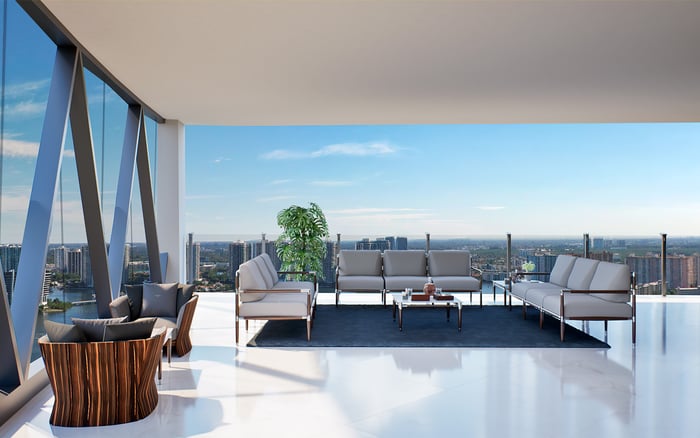
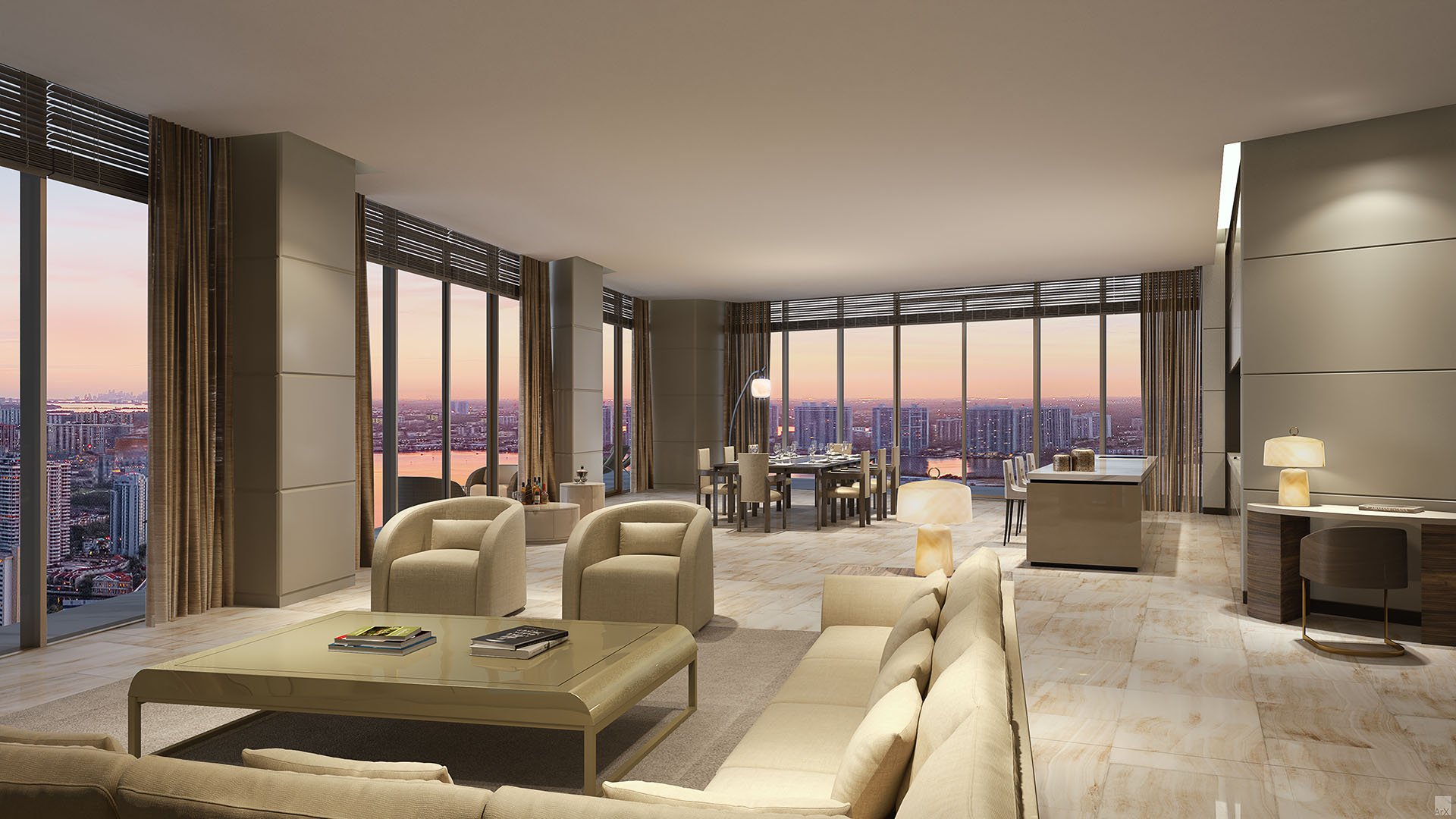
Armani Casa Sunny Isles Beach is the fashion-led example. Its residential appeal is rooted in associations that have long defined Armani: Italian couture, restraint, minimalism, and a controlled sense of elegance. In a beachfront market where views, finishes, privacy, and building stature all compete for attention, the Armani language offers a distinct promise: luxury without visual excess.
For a buyer, that matters because taste risk is real. In high-end condominiums, finishes can age quickly when they are too thematic or trend-driven. A fashion house known for restraint signals that the residence is intended to feel edited rather than overdesigned. The brand language implies a curated environment where architecture, interiors, amenities, and resident experience align around composure.
Sunny Isles Beach sharpens that proposition. The area is a vertical oceanfront luxury corridor, and buyers often compare buildings through a matrix of water views, building profile, amenity depth, and perceived prestige. In that context, Armani Casa is not simply selling proximity to the beach. It is selling a design filter for beachfront living, giving international buyers a legible shorthand for finish quality and aesthetic confidence.
The value is both emotional and practical. Emotional, because the name carries global recognition. Practical, because recognizable taste can support buyer confidence and long-term desirability. The brand does not replace due diligence, but it gives the residence a language that can be understood across markets and cultures.
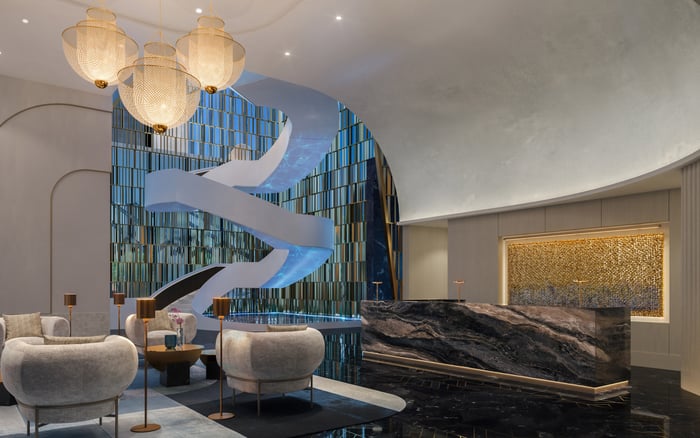
Mr. C Tigertail Coconut Grove operates differently. Its brand language is hospitality-led, shaped by European-inflected service culture and the idea of La Dolce Vita. This is not minimalism as a fashion code. It is lifestyle as atmosphere: arrival, welcome, lobby cadence, amenity programming, dining sensibility, and the subtle rituals that make a place feel gracious.
The challenge for a residential project with hospitality DNA is balance. Hotel-style service can be compelling, but a private home cannot feel transient. The experience must be polished without becoming over-programmed, warm without becoming performative. Mr. C Tigertail’s value depends on converting hospitality touchpoints into daily ease: how residents arrive, how common spaces feel, how amenities are animated, and how service supports life without overwhelming it.
Coconut Grove gives this proposition a natural frame. Compared with Miami’s denser high-rise districts, Coconut Grove is softer, greener, and more village-like in spirit. Buyers who gravitate here often want lifestyle, intimacy, walkability of mood, and a sense of neighborhood texture. In that setting, Mr. C’s hospitality language can feel less like spectacle and more like a cultivated social rhythm.
That is a different kind of residential value from the beachfront fashion model. It is less about the iconic finish and more about predictability of feeling. The buyer imagines how mornings, evenings, guests, meals, and weekends might unfold. If the service culture is consistent, the brand becomes part of daily life rather than a badge on the building.
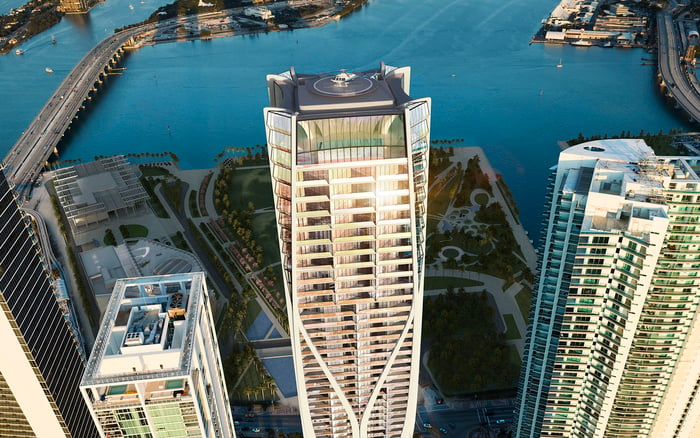
Waldorf Astoria Residences Downtown Miami is the heritage-luxury case study. Its value proposition is tied to old-world glamour, white-glove service, hospitality pedigree, architectural presence, and the promise of a globally legible luxury address. Where Armani speaks through design discipline and Mr. C through lifestyle rituals, Waldorf Astoria speaks through institutional memory.
In Downtown Miami, that matters because the market is skyline-driven. The buyer is not only purchasing a private residence. The buyer is buying into an urban identity, where vertical presence, landmark recognition, and a sense of arrival are part of the appeal. A heritage hospitality brand can make a tower feel more understandable to global buyers because the service promise is already embedded in the name’s meaning.
The residential value is therefore built around trust. White-glove service, if properly executed, becomes an operating system for luxury living. It informs how residents are greeted, how requests are handled, how common areas are maintained, and how the address is perceived by guests. In a dense urban market, that service clarity can help distinguish a residence from buildings that rely primarily on height, views, or amenities.
Downtown Miami also benefits from brands that carry international recognition. The more vertical and visually competitive the district becomes, the more important it is for a residence to possess a memorable identity. Waldorf Astoria’s language gives buyers an established frame: glamour, service, and destination status translated into private ownership.
The most important lesson across all three projects is that brand language becomes residential value only when it is tangible. Buyers should look beyond the name and ask how the brand appears in space, materials, staffing, amenities, and daily operations. A fashion brand should show design discipline. A hospitality brand should show service culture. A heritage luxury brand should show operational polish and address-level gravitas.
Micro-market fit is equally important. Armani Casa belongs to the Sunny Isles Beach conversation because beachfront luxury rewards visual identity, international cachet, and polished design. Mr. C Tigertail belongs to Coconut Grove because the neighborhood supports a softer, lifestyle-oriented interpretation of hospitality. Waldorf Astoria belongs to Downtown Miami because a skyline address benefits from landmark presence and globally recognizable service language.
The best buyers also think about resale desirability without assuming that a brand premium is automatic or measurable in isolation. The value is not the name alone. It is the combination of recognizable quality, lifestyle predictability, perceived trust, and market legibility. In other words, the brand should help the next buyer understand the residence quickly and confidently.
There is also a durability test. Does the brand language feel timeless enough to outlast a design cycle? Does the service model feel financially and operationally realistic? Do the amenities support actual resident life rather than marketing theater? Does the building’s identity harmonize with its neighborhood, or does it feel imported without context?
South Florida has become one of the most important laboratories for branded residential living because its buyers are global, design-aware, and highly sensitive to lifestyle cues. In this environment, brand language is valuable when it clarifies what a building stands for. Armani Casa clarifies taste. Mr. C clarifies lifestyle. Waldorf Astoria clarifies service and landmark identity.
For ultra-premium buyers, the decision is less about choosing the most famous name and more about choosing the brand that best matches how they want to live. The beachfront buyer seeking quiet visual authority may read Armani differently from the Grove buyer seeking hospitality warmth, or the Downtown buyer seeking service pedigree and skyline recognition.
That is the real sophistication of the category. Branded Residences do not all create value in the same way. The best ones translate a brand’s native language into residential life with enough specificity that the buyer can feel it before move-in and rely on it long after.
What makes Armani Casa Sunny Isles Beach a fashion-led residence? Its value is framed through Armani’s associations with Italian couture, restraint, minimalism, and curated design.
Why does Sunny Isles Beach matter to the Armani Casa value proposition? Sunny Isles Beach is a beachfront luxury micro-market where views, location, finishes, and brand identity are all part of the buyer comparison.
What defines Mr. C Tigertail Coconut Grove as hospitality-led? Its brand language centers on European-inflected service culture, La Dolce Vita lifestyle cues, and daily hospitality touchpoints.
Why is Coconut Grove a strong fit for Mr. C Tigertail? Coconut Grove has a softer, village-like lifestyle character that supports a more intimate hospitality-driven residential experience.
How does Waldorf Astoria Residences Downtown Miami create value? It connects heritage luxury, white-glove service, architectural presence, and a globally legible address within Downtown Miami.
Is brand name alone enough to create residential value? No. The brand must be made tangible through design, materials, staffing, amenities, and consistent operations.
How should buyers compare different branded residences? Buyers should compare whether the brand’s promise matches the building experience and the surrounding micro-market.
Does a branded residence automatically command a premium? Not automatically. Any premium should be understood as an analytical theme tied to trust, quality, lifestyle, and desirability.
Which buyer is best suited to a hospitality-branded residence? A buyer who values service rituals, amenity programming, arrival experience, and lifestyle predictability may find it compelling.
What is the core lesson from these three Miami projects? Armani, Mr. C, and Waldorf Astoria show that brand value works best when it becomes a coherent way of living.
For a discreet conversation and a curated building-by-building shortlist, connect with MILLION.
If branded residences are on your mind — as a home or as an allocation — we would be glad to share what we are seeing, privately.
Begin a quiet conversation