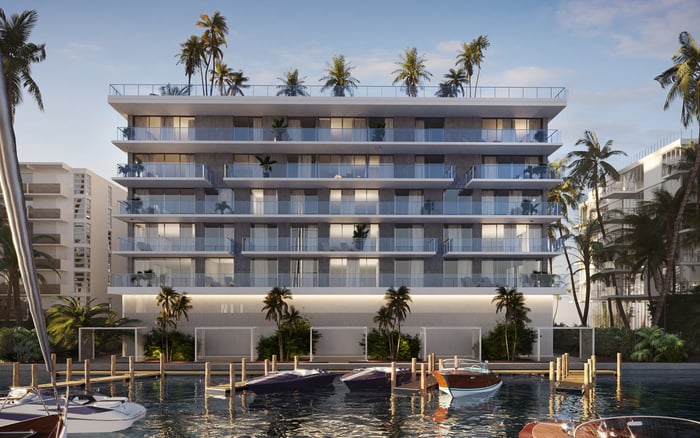
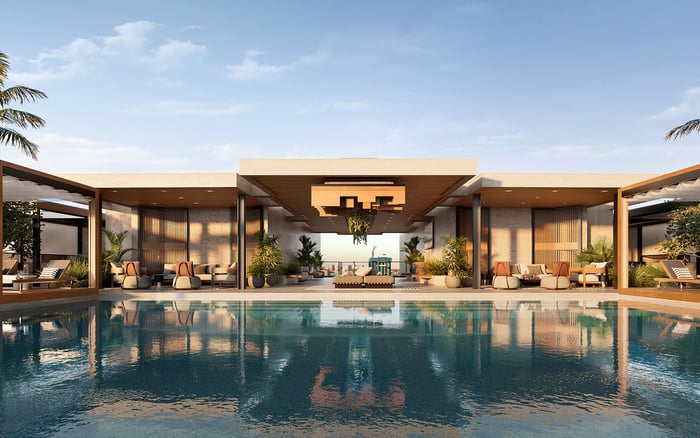
Alma Bay Harbor Islands reframes bayfront ownership as a more usable, manageable, and financially defensible proposition for luxury buyers who want calm, water views, and privacy without the operational weight often associated with larger waterfront condominium environments.
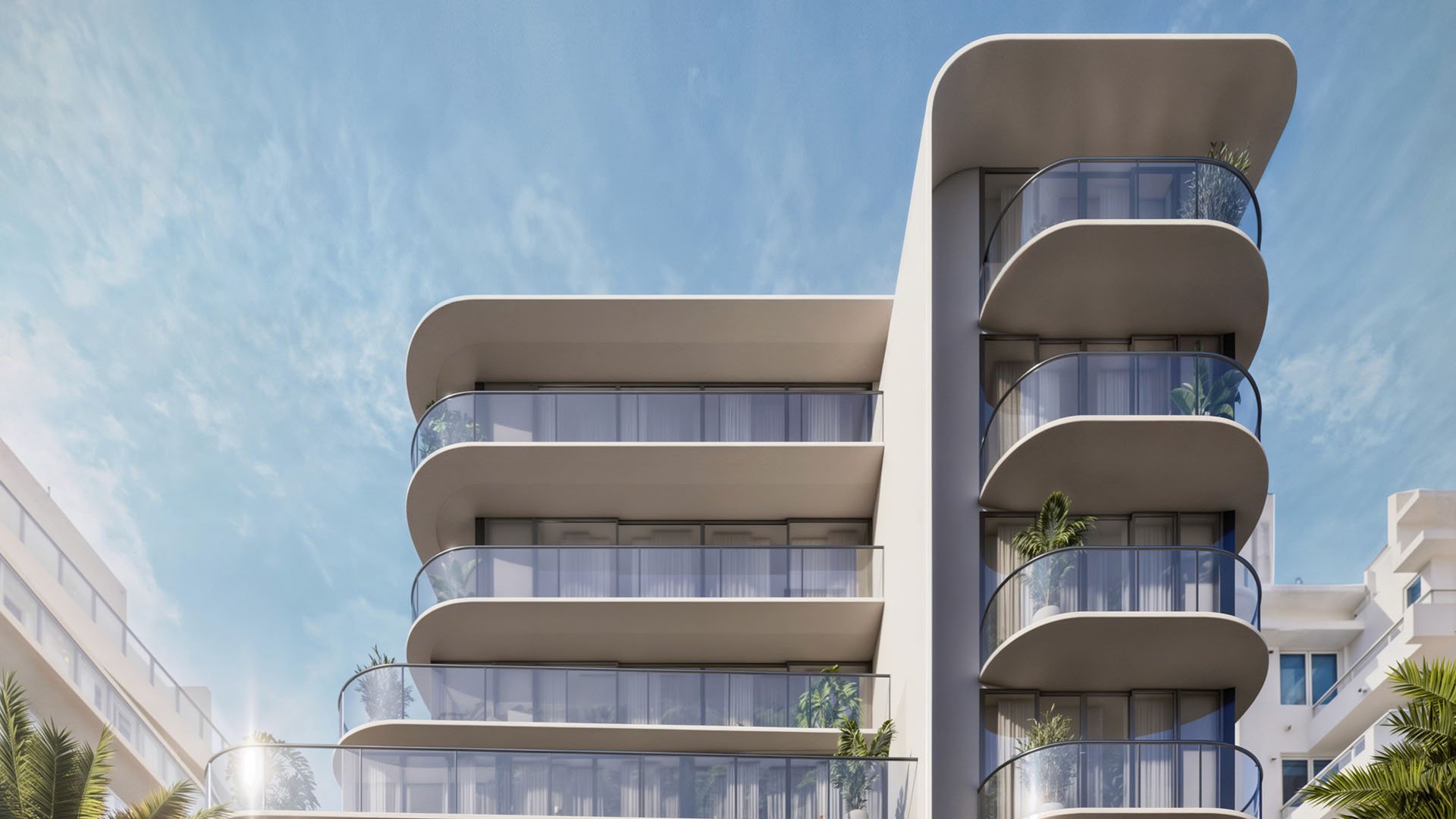
South Florida waterfront real estate has always traded on emotion. The first pull is rarely a spreadsheet. It is the light across the bay, the quieter morning atmosphere, and the sense that the home is anchored to water rather than traffic. Yet for many luxury buyers, the harder question comes after the view has done its work: can this lifestyle be used, managed, and justified day to day?
That is where Alma Bay Harbor Islands becomes an instructive case study. The project is a bayfront residential address in Bay Harbor Islands, a waterfront enclave in Miami-Dade County, and its central appeal is not simply proximity to the bay. Its more interesting proposition is that bayfront living can feel less theatrical and more ownership-oriented.
The distinction matters. In the ultra-premium market, spectacle can be persuasive, but livability is what sustains value for the owner. Alma’s thesis is built around waterfront pleasure translated into practical use: water views, coastal atmosphere, and bay proximity, set within a framework that feels more manageable than the large, complex waterfront environments that often dominate South Florida’s luxury conversation.
Bay Harbor Islands gives Alma an important contextual advantage. The location is quieter and more discreet than higher-traffic luxury districts, which changes the way a buyer evaluates the property. Instead of asking only whether a residence is impressive, the more relevant question becomes whether it supports a calmer, repeatable rhythm of ownership.
This is not isolation. The island’s value lies in being tranquil and connected at the same time. For buyers who want privacy without feeling removed from the broader Miami-Dade lifestyle, that balance can be more compelling than a louder address with more visible energy but less daily ease.
Buyers exploring this pocket may also compare the tone of Alana Bay Harbor Islands and Onda Bay Harbor, both of which keep attention on Bay Harbor Islands as a residential alternative to more congested waterfront settings. Alma fits into that conversation through a particularly practical lens: how to preserve the emotional advantages of bayfront living while reducing the feeling of ownership overhead.
In buyer terms, the relevant filters are Bay-harbor, Boutique, Waterfront, Waterview, Lifestyle, and Investment. Alma’s strength is not that it isolates one of those ideas, but that it brings them into a more coherent ownership argument.
Alma is framed as a boutique-scale alternative to larger waterfront condominium environments. That framing is important because scale is not only an aesthetic choice. It can influence how a building feels, how residents use it, and how easily an owner can understand the life of the property over time.
Large coastal buildings can be extraordinary, but they may also bring a more layered ownership experience. More residents, more programming, more shared environments, and more operational complexity can be appealing for some buyers and excessive for others. Alma’s position is aimed at the second group: those who want the water, the atmosphere, and the address, but prefer a residence that reads as manageable rather than monumental.
That is why practicality should not be mistaken for compromise. In luxury real estate, restraint can be a premium attribute when it produces clarity. A boutique waterfront project can feel more personal, more legible, and more aligned with a buyer who values control as much as display.
The same logic is visible elsewhere on the island, where buyers may also study La Baia North Bay Harbor Islands while weighing how different waterfront formats handle privacy, scale, and residential ease. Alma’s argument remains focused: the bayfront experience should be beautiful, but it should also be usable.
The word practical can sound almost too modest for luxury real estate, but in this context it is a more sophisticated standard. Practical does not mean plain. It means the property’s pleasures are not dependent on exceptional occasions; they can become part of ordinary life.
At Alma, the bayfront setting supports the essential emotional drivers of South Florida waterfront ownership: views, atmosphere, and proximity to the water. The practical layer comes from the way those benefits are positioned around daily use and long-term manageability rather than pure resort-style branding.
For many buyers, this is the more mature version of waterfront desire. The objective is not merely to own a dramatic residence. It is to own something that remains comfortable to inhabit, simple to explain, and rational to retain. That kind of confidence is especially relevant in a market where buyers have become more discerning about what they are actually buying beyond the postcard image.
This is also why The Well Bay Harbor Islands belongs in the broader comparison set for some buyers. Different projects may emphasize different residential experiences, but the Bay Harbor Islands buyer is often seeking a quieter, more deliberate version of luxury than the one found in South Florida’s busiest waterfront corridors.
Alma’s likely appeal is strongest for buyers who want waterfront ownership without feeling consumed by the machinery of it. That may include primary residents who prioritize daily calm, second-home buyers who want a place that is easy to return to, or long-term holders who believe a more discreet setting can support a durable ownership case.
The common thread is a desire for privacy without friction. These buyers are not rejecting luxury. They are refining it. They want the view, but not necessarily the performance of a highly programmed resort environment. They want access to the broader Miami-Dade lifestyle, but not the constant movement of a high-traffic district. They want a property that feels emotionally rewarding, yet defensible in practical terms.
That defensibility is the core point. Alma turns bayfront living into a more practical ownership proposition by connecting lifestyle appeal to scale, usability, location efficiency, and long-term manageability. For the right buyer, those qualities may be more persuasive than spectacle alone.
South Florida’s waterfront market will always reward beauty, and Alma benefits from the bayfront fundamentals that make the region so compelling. But the project’s more nuanced luxury is its attempt to make those fundamentals easier to live with.
In that sense, Alma is less about lowering expectations and more about sharpening them. The buyer is still choosing water, calm, and coastal atmosphere. The difference is that the decision is framed through an ownership model that feels rational, not merely aspirational.
That is a timely message for a more selective luxury audience. The strongest residences are no longer judged only by how they photograph or how many amenities they can claim. They are judged by whether the experience remains coherent after purchase. Alma’s promise is that bayfront living can retain its emotional force while becoming more practical to own.
What is Alma Bay Harbor Islands? Alma Bay Harbor Islands is a bayfront residential project in Bay Harbor Islands, a waterfront enclave in Miami-Dade County.
What makes Alma’s ownership proposition different? Alma is positioned around making bayfront living feel more manageable and ownership-oriented, rather than purely aspirational.
Is Alma primarily about views? Views are part of the appeal, but the broader thesis is livability, usability, and long-term manageability.
Why does Bay Harbor Islands matter for buyers? Bay Harbor Islands offers a quieter, more discreet waterfront setting while remaining connected to the broader Miami-Dade lifestyle.
Is Alma considered boutique in positioning? Yes. Alma is framed as a boutique-scale alternative to larger and more complex waterfront condominium environments.
Who is the best-fit buyer for Alma? Alma may suit buyers who want water, privacy, and coastal atmosphere without the operational feel of a larger resort-style building.
Does practical mean less luxurious? No. In this context, practical means the luxury is easier to use, understand, and justify as part of daily ownership.
How should buyers compare Alma with larger waterfront buildings? Buyers should consider scale, ease of use, location efficiency, and whether the ownership experience matches their lifestyle.
Is Alma more about primary living or second-home use? The practical ownership thesis can appeal to both, especially for buyers who value calm, convenience, and manageability.
What is the key takeaway for Alma Bay Harbor Islands? Alma’s appeal is the conversion of bayfront emotion into a more rational, livable, and defensible ownership proposition.
For a tailored shortlist and next-step guidance, connect with MILLION.
If branded residences are on your mind — as a home or as an allocation — we would be glad to share what we are seeing, privately.
Begin a quiet conversation