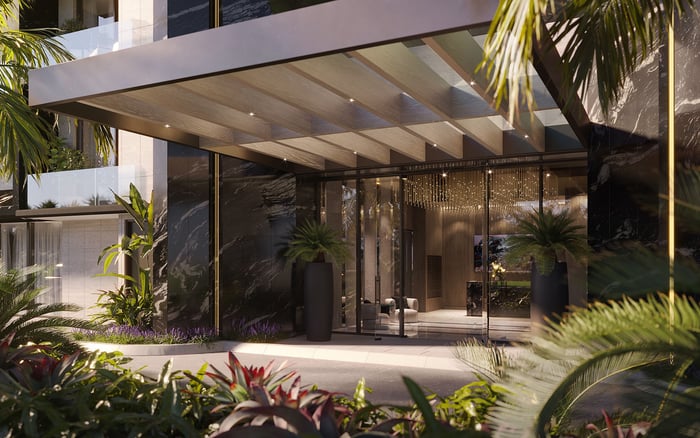
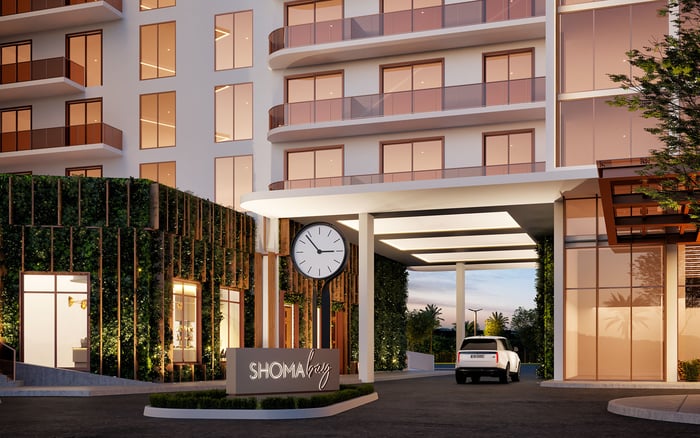
Alana Bay Harbor Islands stands out for buyers who value privacy, quieter circulation, and a controlled curb-to-residence arrival sequence in a boutique setting.
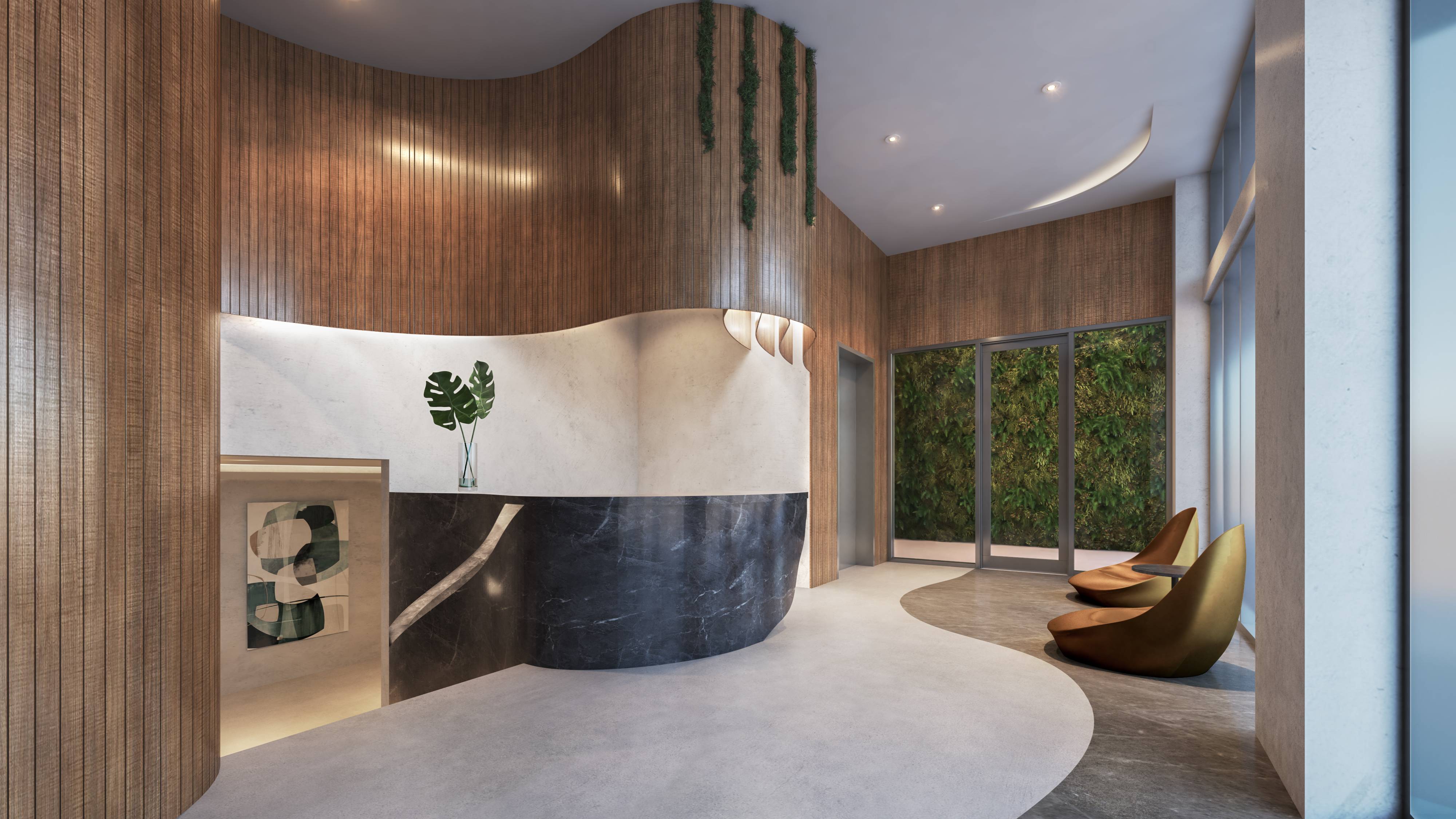
For a certain South Florida buyer, luxury is no longer defined by spectacle first. It is defined by the ability to move through a building with composure, discretion, and the sense that the experience has been calibrated around the resident rather than the crowd. That is why Alana Bay Harbor Islands belongs in the conversation for buyers who place private elevators, semi-private elevator access, and controlled arrival high on the decision matrix.
This is not a generic amenity story. Alana Bay Harbor Islands is positioned as a boutique luxury condominium option for buyers who prioritize privacy and controlled access. Its appeal is tied less to a high-traffic tower experience and more to a low-volume residential environment, where the route from curb to residence feels considered. For buyers accustomed to private homes, townhouses, or highly discreet residences, that distinction matters.
In many luxury buildings, the arrival sequence is where privacy is either protected or diluted. A busy lobby, frequent elevator sharing, and active corridors can make even a beautiful residence feel less personal. Alana’s value proposition is centered on reducing that exposure. The point is not isolation. It is control.
Boutique is sometimes used as a design adjective, but here it functions as a practical residential advantage. Alana’s boutique scale is presented as a way to reduce corridor traffic and create a calmer daily experience. That matters for residents who want a stronger sense of spatial ownership, not only inside the residence, but also in the transitional spaces that lead to it.
In a larger tower, shared circulation can become part of the social fabric. Some buyers enjoy that energy. Others prefer the opposite: fewer encounters, quieter elevator moments, and a building rhythm that does not feel public. Alana is framed for the latter buyer. It speaks to residents who value discretion as a structural feature of daily life.
This is where Bay Harbor searches become especially nuanced. The neighborhood conversation is not only about waterfront outlooks, proximity, or design language. It is also about how each building handles the choreography of arrival. Buyers comparing Onda Bay Harbor and Origin Bay Harbor Islands with Alana should look closely at the lived experience between vehicle, entry, elevator, corridor, and front door.
Private or semi-private elevator access is one of the clearest reasons Alana earns a place on a privacy-focused shortlist. For high-net-worth buyers, the elevator is not simply a vertical transport system. It is a threshold, a moment where the building either preserves the private nature of the residence or interrupts it.
Alana’s elevator configurations are central to its appeal for buyers who want to minimize exposure to crowds during arrival and vertical circulation. That makes the project particularly relevant for those who prefer the feeling of moving through a residence-oriented environment rather than a hotel-like or tower-like setting.
The distinction is subtle, but important. A private or semi-private elevator arrangement can make the approach to the home feel more residential, especially when paired with a controlled access concept. It can reduce unnecessary encounters, simplify the transition after travel, and create a more secure-feeling rhythm for everyday returns.
For buyers who entertain, host family, or come and go with staff, luggage, pets, or children, this detail can become central. It is not merely about prestige. It is about making the logistics of daily life feel smoother and less exposed.
A controlled arrival sequence begins before the elevator doors open. It starts at the curb, continues through entry and access points, and ends only when the resident reaches the home. Alana’s building concept emphasizes that sequence, presenting arrival as part of the privacy architecture rather than a neutral passage.
This is especially compelling for privacy-sensitive professionals. For those whose work or public profile makes discretion valuable, a lower-volume environment can help preserve separation between public life and private residence. The building does not need to be ostentatious to feel luxurious. In fact, its restraint may be the luxury.
Families may read the same features differently, but with equal interest. Controlled circulation can make coming and going feel easier, calmer, and more predictable. Parents often evaluate buildings through the lens of daily friction: How many common thresholds are involved? How busy are the corridors likely to feel? Does the arrival experience support a sense of security and order?
Second-home owners also have a clear reason to consider Alana. A residence used seasonally or intermittently benefits from a building environment that emphasizes discretion, security, and low-volume living. When an owner returns after time away, the experience should feel seamless rather than crowded.
The strongest comparison is not simply Alana versus larger Miami-area luxury towers. It is Alana versus any residence where arrival control is a decisive priority. Alana is distinguished by its emphasis on privacy, controlled access, and boutique-scale circulation rather than broad luxury branding. That makes the project best understood through experience, not slogans.
A buyer touring Alana should pay attention to questions that are more practical than decorative. How does the building handle entry? How direct is the movement from arrival to elevator? How much shared corridor experience is expected? Does the elevator configuration align with the way the buyer actually lives?
This is also where nearby project comparisons can be useful without making the search feel scattered. A buyer may consider La Baia North Bay Harbor Islands and The Well Bay Harbor Islands in the broader neighborhood context, then return to Alana if the deciding factor is the privacy of movement through the building. The most refined decision is often less about which project sounds more luxurious and more about which one behaves more privately.
For buyers evaluating new-construction residences in boutique settings, this is the right lens. The true question is not whether the building is impressive. It is whether the residence, access sequence, and circulation pattern support the buyer’s preferred level of exposure.
Alana Bay Harbor Islands is most relevant for buyers who want the condominium format without surrendering the controlled feeling of a private residential arrival. That includes privacy-sensitive professionals, families seeking a calmer building rhythm, and second-home owners who want discretion and security to be part of the everyday experience.
It also suits buyers who do not equate luxury with density. Some South Florida buyers want a tower with constant energy, layered amenities, and a more visible social scene. Others want the opposite: a boutique residential environment where the building’s best feature may be how little it interrupts daily life.
The final test is simple. If a buyer views the elevator, corridor, and lobby as secondary spaces, Alana may be just one more option. If those spaces are considered part of the home’s privacy envelope, Alana becomes much more compelling.
Why is Alana Bay Harbor Islands relevant for privacy-focused buyers? It is positioned around boutique scale, controlled access, and a lower-volume residential environment.
Does Alana emphasize private elevators? Alana is framed as especially relevant for buyers seeking private or semi-private elevator access.
What does controlled arrival mean in this context? It refers to the sequence from curb to residence, including entry, access, elevator movement, and circulation.
Who is the likely buyer for Alana? Privacy-sensitive professionals, families, and second-home owners are all natural audiences for its positioning.
How is Alana different from a high-traffic luxury tower? Its appeal centers on a quieter, boutique environment rather than a dense tower experience.
Why does elevator configuration matter so much? It can reduce shared exposure and make the transition from arrival to residence feel more personal.
Is Alana mainly about amenities? Its strongest stated appeal is privacy-oriented circulation and controlled access, not generic amenity branding.
Should families consider Alana? Yes, especially if calmer corridors, controlled arrival, and predictable movement through the building are priorities.
Is Alana suitable for second-home ownership? It may be compelling for buyers who value discretion, security, and a low-volume environment while away or in residence.
What should buyers evaluate during a tour? Focus on the arrival sequence, elevator access, corridor experience, and how private the building feels in practice.
When you're ready to tour or underwrite the options, connect with MILLION.
If branded residences are on your mind — as a home or as an allocation — we would be glad to share what we are seeing, privately.
Begin a quiet conversation