A discreet buyer’s guide to evaluating backup cooling, generator capacity, mechanical design, and collection protection before purchasing luxury real estate in Aventura.

In Aventura, luxury real estate due diligence now extends well beyond views, finishes, valet protocol, and wellness amenities. For collectors, one quiet question can determine whether a residence is simply beautiful or genuinely protective: what happens to the interior environment when the primary cooling system is interrupted?
Backup cooling is not just a comfort measure after a storm, service issue, or building-wide disruption. It is a safeguard for art, wine, couture, books, rare instruments, archival photography, watches, cigars, and sensitive interior materials exposed to heat, humidity, and rapid environmental change. A residence may photograph impeccably and still require deeper mechanical scrutiny if the owner intends to live with valuable objects.
The essential question is not, “Does the building have a generator?” It is, “What exactly remains cooled, for how long, and under what operating conditions?” That distinction separates lifestyle convenience from serious collection stewardship.
Start with the protected areas. A buyer should ask whether backup cooling serves the entire residence, selected rooms, common corridors, elevators, lobby areas, mechanical ventilation, or only essential building systems. In a high-value home, the most important space may not be the primary suite. It may be the art-hung salon, a wine room, a closet with couture storage, or a climate-sensitive study.
Collectors should request a plain-language explanation of the system hierarchy. If power is limited, which loads receive priority? Are chillers, cooling towers, pumps, air handlers, ventilation systems, smart thermostats, dehumidification equipment, and specialty storage systems connected to emergency power, or do they depend on normal utility service?
For buyers considering new or boutique inventory such as Avenia Aventura, the conversation should occur before contract comfort becomes contract assumption. If a sales presentation references backup power, ask for the scope in writing. If the system supports life safety and limited operations rather than full residential cooling, that is not necessarily a flaw. It simply needs to be understood before a collector plans installations.
A generator can be reassuring, but capacity is the deciding issue. Ask whether it is sized for full building cooling, partial cooling, or only critical systems. Clarify whether in-unit air conditioning is included, excluded, or available only through specific dedicated circuits. If a residence has multiple air-conditioning zones, confirm which zones can operate under backup conditions.
Fuel strategy deserves the same scrutiny. Buyers should ask what fuel type is used, where it is stored or supplied, how refueling or continuity is handled, and whether operating assumptions could change during a regional disruption. The objective is not to become an engineer. It is to understand whether the building’s promise aligns with the collection’s tolerance for heat and humidity.
Transfer behavior also matters. Some systems restart quickly; others require staged sequencing. Ask what happens when power is lost, how systems come back online, and whether cooling equipment requires manual intervention. For owners who travel frequently, remote monitoring can be as important as backup capacity. A collector in New York, London, or São Paulo should not discover a climate event only after returning to Aventura.
Interior designers can specify museum-quality lighting, UV-conscious glazing treatments, and sealed display millwork, but those choices depend on the mechanical foundation. Before commissioning custom millwork, wine walls, gallery lighting, or specialty humidification, buyers should understand the residence’s HVAC architecture.
Ask where air handlers are located, how service access works, whether condensate management is robust, and whether dedicated systems can be added for specialty rooms. A wine room, for example, should not be treated as decorative cabinetry with an appliance. It is a microclimate. The same principle applies to archival closets and display rooms with sensitive materials.
Luxury buyers should also ask about maintenance culture. Who services the building systems? Are records organized? Is there a schedule for testing backup systems? Are residents notified after tests? Does the property management team understand the needs of owners with high-value collections, or is collection protection treated as an entirely private matter?
The strongest answer is a coordinated one: building infrastructure, in-residence systems, sensors, and management protocols working together without drama.
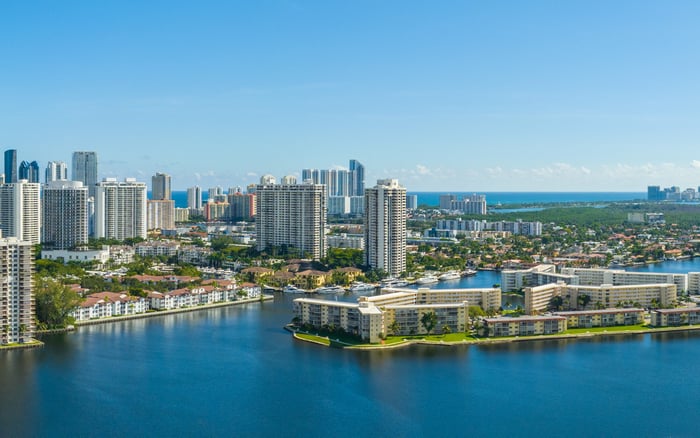
Aventura offers a distinct blend of marina proximity, retail access, and residential privacy, yet serious buyers often compare it with neighboring waterfront markets. That comparison should include mechanical resilience, not just architecture and price.
In Sunny Isles Beach, for instance, towers may appeal to buyers who want direct ocean orientation and high-service living. A collector considering Bentley Residences Sunny Isles should still ask the same mechanical questions: which cooling loads are backed up, whether specialty storage can be supported, and how building operations are prioritized during an outage.
Hallandale Beach can also enter the conversation for buyers who want a slightly different waterfront rhythm near Aventura. At 2000 Ocean Hallandale Beach, as with any luxury condominium, the relevant issue for collectors is not only the setting. It is whether the building’s systems, documentation, and management practices suit the owner’s collection profile.
Nearby North Miami may appeal to buyers weighing newer development options and access to Aventura without being directly inside it. A residence such as One Park Tower by Turnberry North Miami belongs in a broader due diligence conversation where location, services, and backup infrastructure are evaluated together.
Before signing, request answers in writing where possible. Ask for the emergency power narrative, not merely the amenity language. Ask whether in-unit cooling is included in backup power. Ask whether dehumidification is supported. Ask whether any specialty circuits can be dedicated to a collection room. Ask how building staff communicates during extended interruptions.
If the residence already contains a collection, arrange a mechanical walk-through with appropriate specialists before closing. If the collection will arrive later, plan for it now. Retrofitting dedicated climate control after interiors are complete can be disruptive, especially in a residence with stone, millwork, integrated lighting, and concealed mechanical runs.
The best buildings welcome informed questions. A serious buyer is not being difficult by asking about backup cooling. They are defining the residence’s purpose. For a collector, luxury is not only what can be seen in daylight. It is what continues to work when conditions are less convenient.
What should collectors ask first about backup cooling? Ask which rooms and systems remain cooled during an outage, and whether that includes in-residence air conditioning or only shared building systems.
Is a building generator enough for an art collector? Not always. A generator may support life safety, elevators, lighting, or limited operations without powering full climate control inside every residence.
Should a wine room have separate backup cooling? It may be advisable if the collection is valuable or sensitive. Ask whether a dedicated wine system can be connected to protected power or monitored remotely.
How important is humidity control in Aventura? Very important for many collections. Buyers should ask whether backup planning addresses humidity as well as temperature.
Can backup cooling be added after closing? Sometimes, but it depends on electrical capacity, mechanical access, condominium rules, and the residence layout. It is better to investigate before closing.
Should buyers rely on sales language about backup power? Sales language is a starting point, not a specification. Ask for the practical scope of what is powered and what is not.
Do closets need climate planning for couture or leather goods? Yes, if the contents are sensitive. Ask whether the closet location, airflow, and humidity profile are suitable for long-term storage.
What role does remote monitoring play? Remote monitoring can alert owners to temperature or humidity changes while they are away. It is especially useful for seasonal residents.
Are neighboring markets like Sunny Isles Beach and Hallandale Beach worth comparing? Yes. Compare service culture, mechanical design, backup systems, and management practices alongside views and architecture.
When should a mechanical specialist be brought in? Bring one in before contract deadlines whenever a significant collection, wine room, or specialty storage plan is involved.
For a tailored shortlist and next-step guidance, connect with MILLION.
If branded residences are on your mind — as a home or as an allocation — we would be glad to share what we are seeing, privately.
Begin a quiet conversation