South Florida’s newest luxury residences are shifting from key fobs to biometric access that can feel frictionless to residents yet more controlled for staff, vendors, and guests. For buyers, the conversation is no longer just about a “smart building,” but about identity, privacy, redundancy, and how seamlessly access policies can follow a lifestyle that moves between primary homes, pieds-à-terre, and waterfront weekends. This editorial breaks down what biometric security actually changes at the lobby, elevator, amenity deck, and unit door, and what sophisticated purchasers should ask before they trade plastic credentials for their own face, fingerprint, or palm.
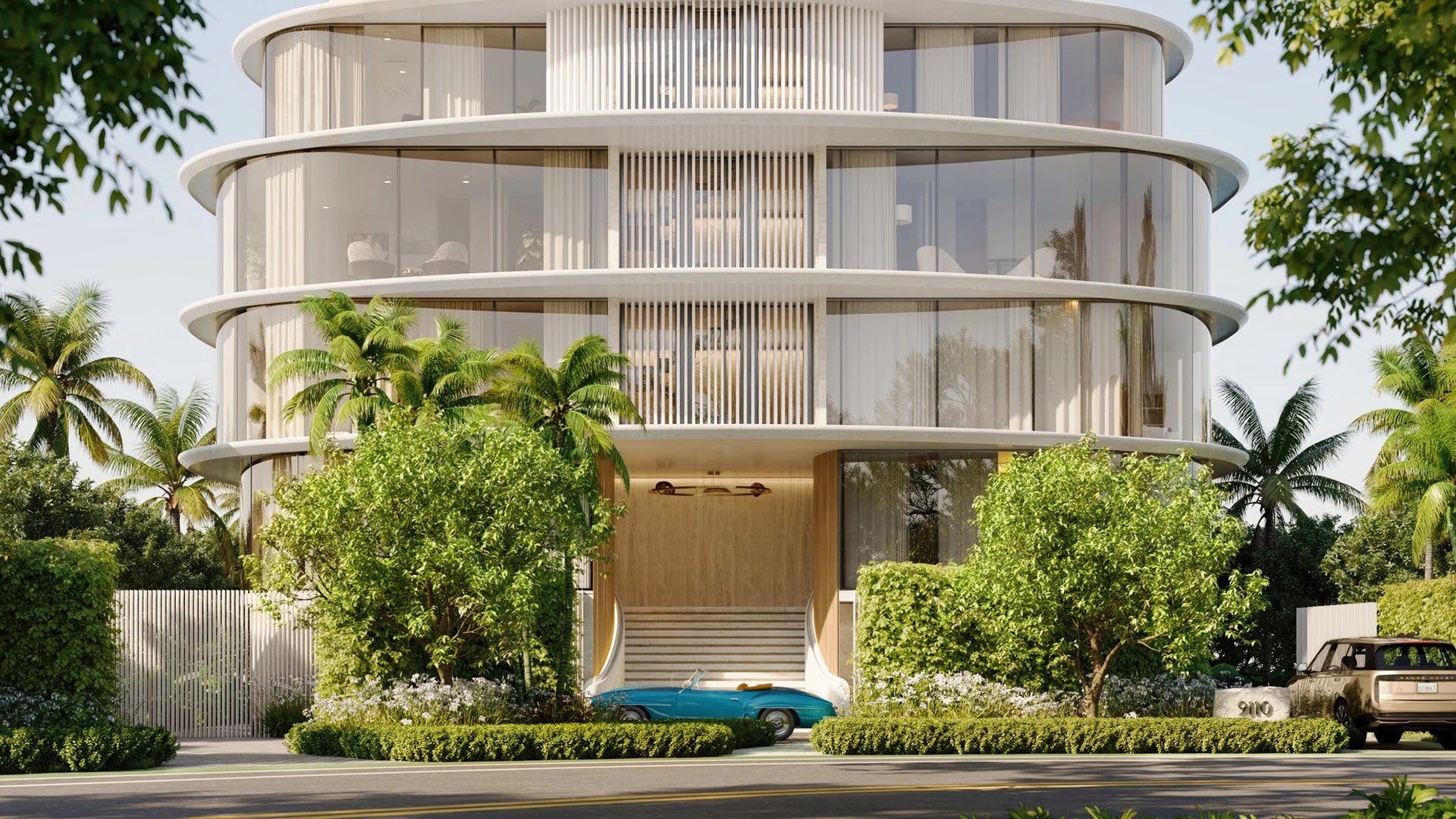
Key fobs solved a problem that mattered when luxury living became vertical: access at scale. They established a clean perimeter between lobby and street, residents and guests, elevator and amenity floors. But in today’s South Florida, the fob is starting to feel like an anachronism-easy to lose, easy to loan, and hard to manage with the nuance modern buildings now require.
Biometric security shifts the premise from “something you carry” to “someone you are.” In practice, that means identity-based access at the points that matter most: the porte-cochère, resident lobby, garage door, elevator call stations, amenity doors, and in some cases, in-unit entry. The promise isn’t spectacle. It’s less friction for residents and tighter control for everyone else.
For buyers, the choice is less about adopting a new gadget and more about selecting a building with a clear security philosophy. In Brickell, where high-rise life is tightly programmed, the emphasis often lands on elevator control and amenity zoning. In Miami Beach and Surfside, discretion and guest management tend to lead the conversation. In Sunny Isles, family use-cases and multiple generations under one roof can place added weight on permissions, staff access, and overall resilience.
Biometric security is often discussed as if it were a single feature. In reality, it’s an ecosystem of decisions: which biometric modality is used, where it’s deployed, how data is stored, and what happens when the system fails.
Common residential modalities include facial recognition, fingerprint, and palm recognition. Each carries a different profile for speed, accuracy, and resident comfort. Facial recognition is often the most seamless at a lobby door or turnstile, but it raises immediate privacy questions. Fingerprints are familiar, yet they require closer interaction with hardware and may not be ideal in every shared environment. Palm recognition sits between the two, often appreciated for fast scans without the same cultural baggage as face-based entry.
The more consequential distinction isn’t the modality-it’s how identity connects to authorization. The best-designed systems don’t simply open a door. They determine what a person is allowed to do in the building, and when. That’s where biometrics replaces the fob’s bluntness with a more refined permission model.
Luxury residential life is a choreography of arrivals: owners, family, guests, household staff, dog walkers, drivers, contractors, personal trainers, deliveries, and property managers. Key fobs treat this complexity as a distribution problem-issue more fobs, track them, and hope they come back.
Biometric access reframes the property as zones governed by rules. A resident may have always-on access to all amenity levels; a guest may receive time-boxed access to the lobby and a specific unit; a vendor may be limited to service corridors and only during approved windows. When designed well, the security posture strengthens without making the building feel like a fortress.
This is where “smart” becomes meaningful for a buyer. It’s not about opening a door with your face. It’s about the front desk being able to see-through a single interface-who is expected, what they can access, and whether that access should automatically expire. For second-home owners who aren’t on-site every week, that combination of visibility and control is especially compelling.
Consider the lifestyle profile of towers like 2200 Brickell, where residents often value a calm, private arrival experience in the center of the city. Identity-based access can make daily movement feel more fluid while reducing the operational churn of reissuing and deactivating physical credentials.
Most residential rollouts follow a predictable sequence. Biometric access typically appears first where it delivers measurable operational value-and where the user experience is repeated daily.
Lobby entry is the obvious starting point: doors, gates, and turnstiles that handle hundreds of passes. Elevator integration is the next leap, because it changes behavior rather than merely replacing a key. With elevator control, a building can authorize a resident to select any floor while restricting a guest to a single destination. Amenity doors often follow, particularly for fitness areas, spas, and club spaces where eligibility and occupancy matter.
Garages are increasingly central, too. In high-end South Florida, many residents experience the garage as their true “front door.” A well-designed system can keep the transition from vehicle to private corridor to elevator controlled-without feeling intrusive.
In coastal neighborhoods where arrivals are more nuanced, the human element remains essential. At The Perigon Miami Beach and other high-touch beachfront environments, buyers often prefer security that stays discreet and concierge-forward. Biometrics can complement that approach when it runs in the background-helping staff confirm identity quickly and reducing reliance on physical handoffs.
If a key fob is lost, it can be deactivated. If a biometric credential is compromised, it can’t be “reissued” the same way. That’s why privacy isn’t a side conversation-it’s the conversation.
Sophisticated buyers tend to focus on three questions:
First, what exactly is stored? Many systems store a mathematical representation rather than an image. That distinction matters, though it isn’t the only factor.
Second, where is the data stored-and who controls it? On-device storage, building-controlled servers, and cloud architectures each carry different risk profiles and governance implications.
Third, what is the retention policy? When a resident sells, a staff member leaves, or a vendor’s access ends, removal should be defined, auditable, and prompt.
Discretion also includes opt-in dynamics. In luxury communities, it’s reasonable that not every resident will want biometric enrollment. Buildings that respect choice typically support multiple credential types, positioning biometrics as a premium convenience rather than a mandatory gate.
In wellness-forward enclaves like Bay Harbor Islands, where lifestyle is curated and privacy expectations run high, the buyer conversation often expands from “security” to “trust.” In that context, buildings such as The Well Bay Harbor Islands align with an audience that expects technology to feel intentional-not imposed.
Biometric systems feel futuristic right up until they don’t work. Power interruptions, network outages, camera obstructions, sensor wear, or simple environmental conditions can degrade performance. South Florida adds its own stressors: humidity, salt air, intense sun, and storm-driven operational strain.
A buyer should treat resilience as part of luxury. The best buildings plan for graceful degradation, not lockouts. That includes:
Multiple authentication paths: biometrics paired with mobile credentials, PIN codes, or secure cards.
Staffed fallback: a concierge or security officer with clear protocols.
Fire-life-safety coordination: doors that behave correctly in emergencies.
Logging and audit trails: so incidents can be reviewed without guesswork.
This isn’t paranoia. It’s the difference between a system that dazzles during a sales tour and one that holds up when the building is on backup power and residents are arriving with luggage.
In ultra-premium real estate, buyers rarely announce they chose a building because its access control software is superior. But they feel the difference. They notice a lobby that moves quietly, a package room that doesn’t become a bottleneck, and a guest arrival process that avoids awkward waiting and repeated verification.
Operational excellence is also what makes biometrics valuable for full-time residents with complex schedules. It reduces the number of touchpoints where staff must make subjective judgments. It also lowers the temptation to circumvent rules-a common fob-era issue, where a “borrowed” credential becomes the path of least resistance.
In branded towers where service standards are part of the purchase, technology is expected to support staff-not replace them. The aim isn’t to eliminate the concierge. It’s to equip the concierge with better tools.
A building like Aston Martin Residences Downtown Miami speaks to this appetite for polish and precision: arrivals, departures, and resident movement should feel curated, with security that’s firm yet nearly invisible.
Biometrics can elevate livability when deployed with discipline. It can also introduce unnecessary exposure when treated as a marketing flourish. Before committing, buyers should push for clarity in a few areas.
Start with governance: Who administers access-building management, security leadership, or a third party? What internal controls limit misuse by staff? Next, scrutinize guest flows: Can you issue temporary access remotely, and can the building enforce “only to this floor” restrictions? Then evaluate staff and vendor policies: Are there role-based permissions, defined time windows, and automatic expiration?
Finally, insist on a clear posture for data handling: the enrollment process, storage location, deletion upon move-out, and whether residents can choose alternative credentials.
Biometric security is replacing the fob not because it’s more glamorous, but because it’s better suited to the realities of modern luxury living. Buildings that get it right make access feel effortless, boundaries feel unambiguous, and privacy feel respected.
Are biometric systems actually more secure than key fobs? They can be, because identity-based access reduces lost, shared, or copied credentials when implemented with strong policies.
Will I still get a physical key or backup credential? Many luxury buildings maintain secondary options such as mobile credentials, PINs, or secure cards for resilience.
Can I opt out of biometrics if I prefer privacy? In many cases, yes, and the best-run buildings offer an alternative access method without limiting daily use.
Does facial recognition mean the building stores my photo? Not necessarily; systems may store a mathematical template, but you should ask what is stored and where.
How are guests handled in biometric buildings? Well-designed systems allow time-limited, destination-limited access so guests do not need permanent credentials.
What about household staff and recurring vendors? The strongest programs use role-based permissions and schedules, so access matches the job and the time window.
Can biometrics control elevators as well as doors? Yes, and elevator integration is often where buyers feel the biggest improvement in privacy and control.
What happens during a power outage or network issue? Premium properties plan for fallback entry methods and staffed procedures so residents are not locked out.
Is biometric access suitable for families and multi-generational households? It can be, because permissions can be customized per person rather than relying on shareable fobs.
How do I evaluate whether a building’s system is well run? Ask about audit logs, deletion policies, backup methods, and who can grant or revoke access day to day.
For a discreet conversation and a curated building-by-building shortlist, connect with MILLION Luxury.
If branded residences are on your mind — as a home or as an allocation — we would be glad to share what we are seeing, privately.
Begin a quiet conversation