Miami’s new wellness-forward condominium amenity is not a single feature, but a sequence: red light therapy paired with contrast hydrotherapy. Together, they translate spa-grade recovery into a daily, resident-only ritual that feels as intentional as the architecture itself. This editorial explains what these modalities are, how they are being designed into South Florida buildings, what sophisticated buyers should ask before they underwrite the lifestyle, and why the best implementations prioritize privacy, protocol, and materials as much as the equipment.
In South Florida’s ultra-premium condominium market, wellness has moved well beyond the era of a token massage room and a mirror-lined fitness studio. Today, buyers evaluate buildings the way they evaluate a well-run private club: the quality of the spaces, the logic of the flow between them, and how easily they can be used without spectacle.
Red light therapy and contrast hydrotherapy have arrived in that context. They are not simply “new amenities.” They represent a philosophy of daily maintenance that suits Miami’s pace and climate, and they lend themselves to design-forward execution. When integrated well, they form a repeatable circuit that supports training, travel recovery, sleep hygiene, and stress management-without requiring residents to leave the property.
The most sophisticated developments treat this as part of the building’s identity, much like how a lobby’s proportions or a terrace’s wind management communicates quality. In Brickell, for example, wellness-driven programming can feel like a natural extension of a high-performance lifestyle in 2200 Brickell, where buyers already expect a more curated, private experience of the neighborhood.
Red light therapy typically refers to exposure to red and near-infrared light, delivered by panels, beds, canopies, or targeted devices. In residential settings, it is often positioned as a low-friction, noninvasive recovery practice: you step in, you stand or recline for a short session, and you return to your day.
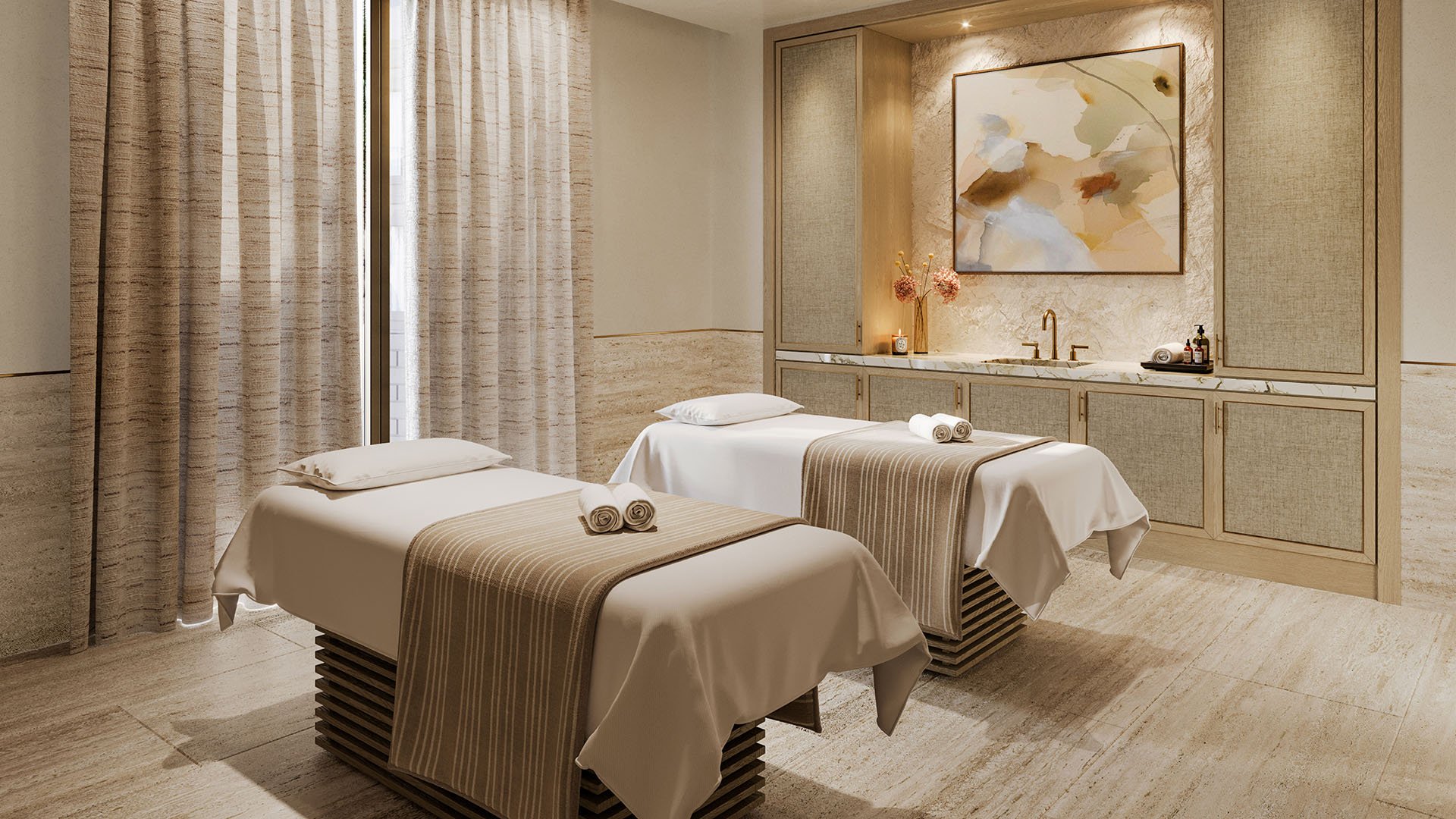
From a condo-amenity standpoint, what matters is not marketing language, but design and governance. A premium installation is quiet, low-maintenance, and intuitive. It should feel less like interacting with gym equipment and more like entering a calm, softly illuminated lounge. Buyers should expect:
A dedicated room or alcove with controllable ambient lighting, so the therapy light remains the focal element.
Materials that read warm and residential-not clinical-such as wood tones, textured stone, and upholstered seating that is easy to sanitize.
Clear operational rules around session timing and etiquette to prevent the “waiting line” dynamic that erodes a luxury experience.
The most discreet implementations also address sightlines. A red light room placed directly off a busy corridor can feel performative. When buffered by a transition space, the experience reads private and intentional.
Contrast hydrotherapy uses alternating heat and cold exposure, commonly through pairings such as sauna with cold plunge, steam with cold shower, or warm soaking with cold immersion. In a luxury condominium, its value is as much emotional as it is physical: it offers a controlled, sensory reset that makes the building feel like a destination.
Miami is uniquely suited to this trend because water is already a cultural language here. The strongest buildings treat hydrotherapy as an extension of the pool-deck and oceanfront mindset-just expressed in a more intimate register.
In coastal markets, this can dovetail with the overall wellness narrative of a boutique oceanfront address like 57 Ocean Miami Beach, where residents often prioritize restoration and privacy as much as the social energy of Miami Beach.
Red light therapy and contrast hydrotherapy become most compelling when they are programmed as a sequence rather than offered as isolated options. Buyers should think in terms of flow:
Preparation and downshift: a quiet lounge, hydration station, towel service.
Heat: sauna or steam to encourage relaxation and warming.
Cold: plunge or cold shower for a sharp reset.
Red light: a calmer, low-stimulation environment to finish, extend the recovery feeling, and transition back into the day.
This order matters because it turns the amenity into a ritual. Ritual is what drives consistent use-and that consistency is the difference between an impressive brochure and a true lifestyle asset.
Just as importantly, the sequence creates a design opportunity. The best wellness suites choreograph movement through temperature and light changes the way a well-designed residence choreographs movement from foyer to living room to terrace.
Luxury buyers are increasingly sophisticated about wellness claims, yet amenity details are often left vague. When evaluating a building, look for clarity in four categories.
You don’t need to be an engineer, but you do want confirmation that the equipment is commercial-grade and appropriate for shared use. For red light therapy, ask whether the building has dedicated panels or a more immersive setup, and how sessions are managed. For hydrotherapy, ask how temperatures are maintained consistently and how water quality is monitored.
Heat and humidity can be beautiful in a spa-and destructive in a poorly detailed building. Ask where steam and sauna rooms are placed, how they are ventilated, and what materials are used at thresholds, doors, and benches. The difference between a serene, long-lasting suite and one that feels tired quickly is often invisible: vapor barriers, air changes, and drainage.
Wellness spaces succeed when residents can arrive and leave without cutting through a crowded gym. Ideally, the suite has its own circulation logic and a buffer from social zones. This is especially important in high-density neighborhoods like Downtown and Brickell, where residents prize quiet refuge.
A world-class spa experience is operational, not just architectural. Ask whether the building uses reservations for the plunge or sauna, how long sessions are allowed, and whether towels and water are consistently stocked. A wellness amenity that is frequently “out of order” becomes a liability to the building’s brand.
In Miami condominiums, wellness suites can drift toward two extremes: overly theatrical or purely utilitarian. The most credible approach is calm, purposeful, and materially rich.
Look for:
Transitional lighting: a progression from brighter corridors into dimmer recovery rooms.
Drying zones: a heated towel area-or simply enough space to towel off without standing in a hallway.
A true relaxation lounge: not an afterthought, but a comfortable, acoustically soft space.
Lockers and personal storage: because luxury is frictionless.
In buildings that already understand service and resident experience, these details often align naturally. For instance, at The Well Coconut Grove, the neighborhood’s quieter, more residential rhythm makes the idea of a consistent wellness circuit feel especially native to daily life in Coconut-grove.
It’s tempting to treat wellness as a trend line. In practice, well-executed recovery amenities can shape how a building is perceived over time.
They support retention: residents who build rituals around a building are more likely to stay.
They signal stewardship: attention to ventilation, materials, and operations suggests broader competence.
They differentiate in a crowded field: when multiple towers offer similar views and finishes, the lived experience breaks ties.
That said, buyers should be realistic. The presence of red light therapy and contrast hydrotherapy does not automatically translate into a premium. The premium attaches to execution: privacy, calm, reliability, and aesthetic coherence.
The next evolution is integration. Rather than treating red light and contrast as separate destinations, developers and designers are beginning to merge them into a single wellness narrative that connects fitness, recovery, and outdoor living.
Expect to see:
Recovery suites adjacent to performance gyms, with quieter, more residential finishes.
Expanded protocols and resident education delivered through discreet building programming.
A shift toward smaller, better-designed spaces that feel exclusive, even in large buildings.
This is also why boutique oceanfront properties continue to resonate: they can deliver a more controlled experience. In a setting like 2000 Ocean Hallandale Beach, the appeal is often the sense that amenities are not simply abundant, but carefully paced and private-a key ingredient for any recovery-focused offering.
When you tour a wellness suite or review amenity plans, use a checklist that goes beyond the headline.
Can you move from heat to cold to recovery without walking through public areas?
Is there staff support, or is it purely self-serve, and does that match the building’s positioning?
Are there enough showers, changing areas, and towel points to avoid congestion?
Does the space feel timeless, or does it rely on novelty lighting and branded gadgets?
Is the wellness suite acoustically insulated from the gym and from adjacent residences?
If the answers are confident and specific, you’re likely looking at a building that understands wellness as resident service-not a marketing bullet.
What is red light therapy in a condo amenity context? It is a dedicated space where residents use red or near-infrared light sessions for recovery and relaxation.
What is contrast hydrotherapy? It is alternating heat and cold exposure, typically via sauna or steam paired with cold plunge or cold shower.
Why combine red light therapy with contrast hydrotherapy? The combination creates a complete recovery circuit that feels cohesive and encourages consistent use.
Do these amenities require a lot of space to be done well? Not necessarily; thoughtful circulation, ventilation, and a real lounge can matter more than square footage.
What should I ask about a building’s cold plunge? Ask how temperature is maintained, how water quality is managed, and how access is governed at peak hours.
Are these amenities more relevant for athletes only? No; many residents use them for stress reduction, travel recovery, and creating a calming daily routine.
How can I tell if a red light room is designed for privacy? Look for a buffered entry, limited sightlines, and separation from main gym circulation.
Will humidity from steam rooms affect nearby spaces? It can if detailing is poor, so verify ventilation strategy, drainage, and durable materials at thresholds.
Do wellness amenities like these affect resale appeal? When executed credibly, they can differentiate a building and strengthen lifestyle-driven buyer demand.
Is it better when these amenities are reservable? Often yes, because booking can protect privacy and prevent crowding in spaces designed to feel serene.
When you're ready to tour or underwrite the options, connect with MILLION Luxury.
If branded residences are on your mind — as a home or as an allocation — we would be glad to share what we are seeing, privately.
Begin a quiet conversation