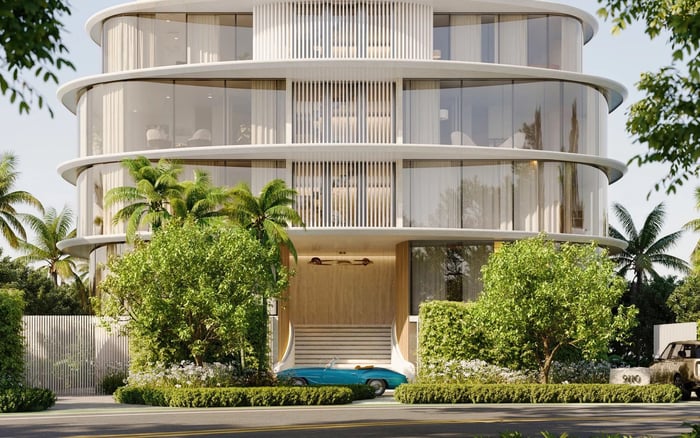
A contingency-free offer can secure a South Florida trophy property, but only when risk is engineered in advance. This buyer-oriented playbook shows how to replace contingencies with proof: underwriting, inspections, title diligence, and disciplined timing that protects your deposit and your privacy.

In South Florida’s top tier, “contingency-free” is less a gamble and more a signal: you can perform on schedule, at price, with minimal friction. On a trophy property, that signal carries weight because sellers often value certainty and discretion as much as proceeds.
Still, waiving contingencies does not waive reality. The property can carry hidden physical issues, title complications, condominium governance friction, or timing problems that turn a straightforward close into an expensive lesson. The objective is to translate the traditional protections of financing, inspection, appraisal, and sale-of-home contingencies into something more persuasive: pre-offer diligence, verified liquidity, and contract language that reduces the ways your deposit can be trapped.
This is the safe way to be aggressive: move the work earlier, document more, and compress timelines with a team that can operate in parallel.
Before you write an offer that removes the conventional escape hatches, confirm that your risk is capped-and chosen.
Liquidity and cadence.
If you are paying cash, confirm funds can be moved and cleared on the closing timeline without banking friction. If you are financing, a contingency-free offer generally means you are underwriting the loan before you contract, not after.
Asset complexity.
If your purchase is tied to the sale of another property, a contingency-free offer is only prudent if you already have alternative liquidity or a bridge plan committed.
Lifestyle and holding strategy.
Trophy ownership is rarely only about price. If you are buying for privacy, pied-à-terre usage, or long-term positioning, your tolerance for short-term volatility and capex is different. Make sure your contract posture matches your intent.
In markets where signature architecture and brand-backed amenities influence demand, such as Brickell and Miami Beach, sellers may expect buyer sophistication. When evaluating a new-construction or newer luxury tower, calibrate your approach to the building’s documentation and management culture-not just the unit itself. For context, the buyer profile at 888 Brickell by Dolce & Gabbana or 2200 Brickell often prioritizes execution certainty and minimal renegotiation.
A contingency-free offer is safest when diligence is front-loaded and run like a closing.
1) Physical condition: inspect before you negotiate hard.
If the seller will allow it, schedule a pre-offer walkthrough with your inspector and, when relevant, a specialist for roof, seawall, pool, HVAC, or building envelope. If access is limited, negotiate a short access window immediately after acceptance that is not framed as an “inspection contingency,” but as an operational requirement with clearly defined outcomes.
2) Title and survey: identify deal-killers early.
Have counsel and title professionals run early checks for easements, open permits, liens, or boundary questions. For waterfront property, apply heightened scrutiny to shoreline and access-related details.
3) Condominium intelligence: documents first, emotions second.
In condo transactions, diligence is often less about the unit and more about the building’s governance and financial posture. Request documents early, read them like an operator, and flag upcoming capital projects or restrictions that affect your use.
4) Insurance and risk: price the reality, not the marketing.
Premium real estate can come with premium insurance complexity. Engage your insurance advisor early enough to confirm availability, terms, and expected requirements.
A practical way to think about this sprint: if you can understand the asset well enough to own it for ten years, you can likely write a clean offer that closes on time.
On trophy deals, the deposit is both leverage and vulnerability. Sellers want it large and hard; buyers want it protected and staged.
Stage deposits to match information release.
Instead of a single large deposit on day one, structure a smaller initial deposit with subsequent increases after specific milestones, such as delivery of condo documents, receipt of title commitments, or completion of a defined access period.
Define “default” precisely.
Ensure the contract language is unambiguous on what constitutes default, cure periods, and notice requirements. Ambiguity is where deposits get stuck.
Use escrow discipline.
Confirm the escrow holder, wiring protocols, and signature authority. For high-net-worth buyers, operational security is part of financial security.
If you are competing for a Miami Beach oceanfront product, the seller’s priority may be speed and certainty more than incremental price. In those settings, the deposit structure can be a quiet differentiator-especially when paired with a clean, well-timed offer near properties like 57 Ocean Miami Beach.
If you want to be contingency-free while still financing, the only safe path is to make the loan feel like a formality.
Fully underwrite before offer when possible.
Treat your application as if you are already in contract: document income, assets, entity structure, and source-of-funds to the lender’s satisfaction.
Align the loan with the asset.
Trophy properties can bring unique valuation questions, condo approval requirements, or documentation nuances. Confirm your lender has the appetite and process for this type of collateral.
Control timing.
When you remove the financing contingency, you take ownership of the schedule. Build in realistic processing time and avoid overpromising on close if your structure is complex.
If your goal is to win without overpaying, underwriting certainty is often more persuasive than an aggressive number with shaky execution.
An appraisal contingency is often waived in competitive settings, but appraisal risk still exists. Manage it instead of ignoring it.
Know your value thesis.
Your agent should be able to articulate why the price makes sense in the current micro-market, including the unit’s condition, line, view corridor, and building desirability.
Prepare for low appraisal scenarios.
If financing, decide in advance whether you will bring additional cash, re-trade terms, or walk. Contingency-free means the decision is yours-but it must be pre-made.
Document what is special.
On ultra-premium assets, uniqueness is the point. Compile the tangible differentiators that support value.
The art is to keep the offer simple on the surface while embedding professional protections.
Shorten timelines, not standards.
A fast close wins, but only if your diligence and funding are prepared. Compress the calendar by running legal, title, and property reviews in parallel.
Limit the seller’s obligations cleanly.
Trophy sellers often dislike extensive repair lists. If you discover issues, negotiate a credit or price adjustment instead of demanding extensive work-and do it quickly.
Add access and cooperation clauses.
Ensure the seller must provide reasonable access for your team and deliver required documents promptly.
Plan entity and privacy structure early.
If you intend to buy via an entity for discretion or estate planning, have the entity formed and ready. Delays here can break a tight timeline.
In boutique buildings with a strong lifestyle component, your personal use goals should align with the building’s rules from day one. Buyers exploring wellness-forward residential environments, for example, often evaluate operational standards and house rules early when considering properties like The Well Bay Harbor Islands.
A clean offer does not need theatrics. It needs clarity.
Lead with credibility.
Provide proof of funds or lender documentation that is appropriately redacted but persuasive.
Keep communications discreet.
Fewer parties, fewer email chains, fewer misunderstandings. Trophy sellers respond to professionalism and privacy.
Offer a seller-friendly possession plan when appropriate.
A short post-closing occupancy or flexible closing date can be more valuable than a small price bump, provided it is documented correctly.
Have a backup plan.
If the transaction fails late, what is your next move? Knowing your alternative keeps you from making emotional concessions.
Once your offer is accepted, execution becomes choreography.
Run a closing checklist from day one.
Title, lender, counsel, insurance, and any building approvals should have assigned owners and deadlines.
Schedule your final walk-through with intent.
Confirm property condition, included items, and any agreed credits or repairs. Document issues promptly.
Confirm wiring protocols repeatedly.
High-value closings attract fraud attempts. Treat wiring instructions as sensitive and verify through trusted channels.
Be ready for a fast signature cadence.
Your team should anticipate that documents can arrive with little notice.
Even sophisticated buyers can stumble when speed replaces structure.
Mistake: waiving contingencies without pre-offer access.
If you cannot inspect or review documents, your risk rises sharply.
Mistake: over-depositing too early.
Large deposits can be appropriate, but only when the contract’s default and notice language is tight.
Mistake: ignoring condo governance.
House rules, leasing limitations, and capital planning matter as much as finishes.
Mistake: assuming “cash” automatically equals “simple.”
Moving funds, entity approvals, and international banking timelines can complicate an otherwise clean close.
Is a contingency-free offer the same as an as-is contract? Not necessarily. You can buy as-is and still perform deep diligence; the key is when and how you evaluate risk.
Can I still inspect if I waive the inspection contingency? Often yes if the seller grants access, but you may lose the right to cancel based on the findings.
How do I protect my deposit when removing contingencies? Use staged deposits, precise default language, and clear notice and cure provisions.
Should I waive the appraisal contingency if I am financing? Only if you are prepared to bring additional cash or accept the risk of a value gap.
What makes a contingency-free offer attractive to a seller? Certainty of closing, clean terms, credible proof of funds, and a realistic timeline.
Is it safer to go contingency-free on new construction or resale? It depends. Newer towers may reduce physical risk, while resale can offer clearer operational history.
How fast can a trophy property close with a clean offer? It varies by title, financing, and building approvals, but speed is realistic when diligence is pre-worked.
Do I need an attorney for a contingency-free purchase? Yes. Removing contingencies increases the importance of contract language and title protections.
What if the seller refuses pre-offer inspections or documents? You can still proceed, but you should adjust price, deposit, or timeline to reflect the added uncertainty.
How do I stay discreet while still proving I can close? Share redacted proof, limit distribution, and keep communications tightly managed by your team.
When you're ready to tour or underwrite the options, connect with MILLION Luxury.
If branded residences are on your mind — as a home or as an allocation — we would be glad to share what we are seeing, privately.
Begin a quiet conversation