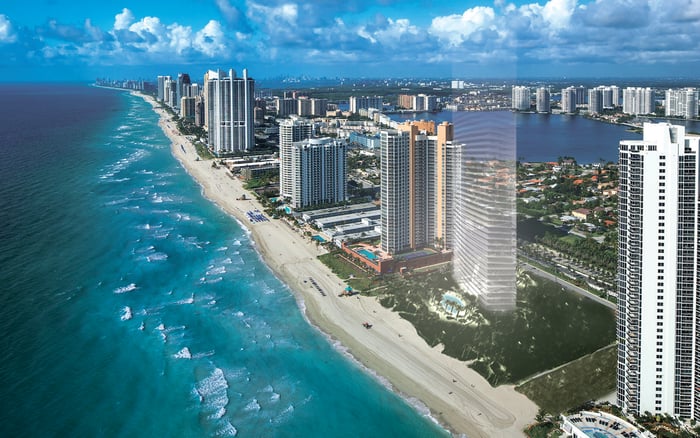
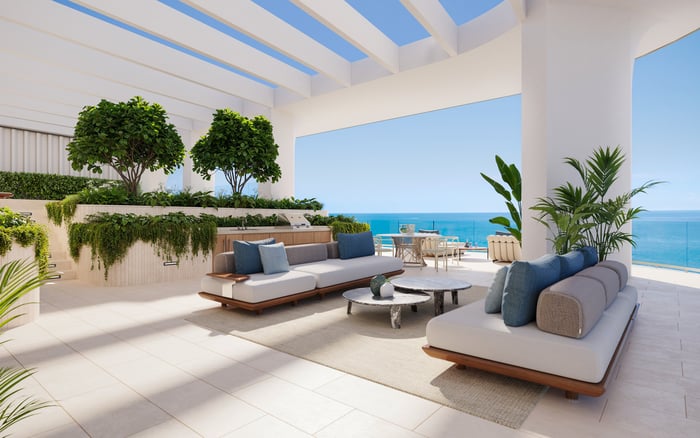
Hollywood Beach is moving into a new phase, with major institutional investment and more than $1 billion in reported development activity reshaping expectations for waterfront living in Broward. From the planned scale of Icon Beach Residences to ultra-boutique offerings like Bellamar, the market is expanding at the top end while resale dynamics normalize. Here is what sophisticated buyers should watch as 2026 approaches.
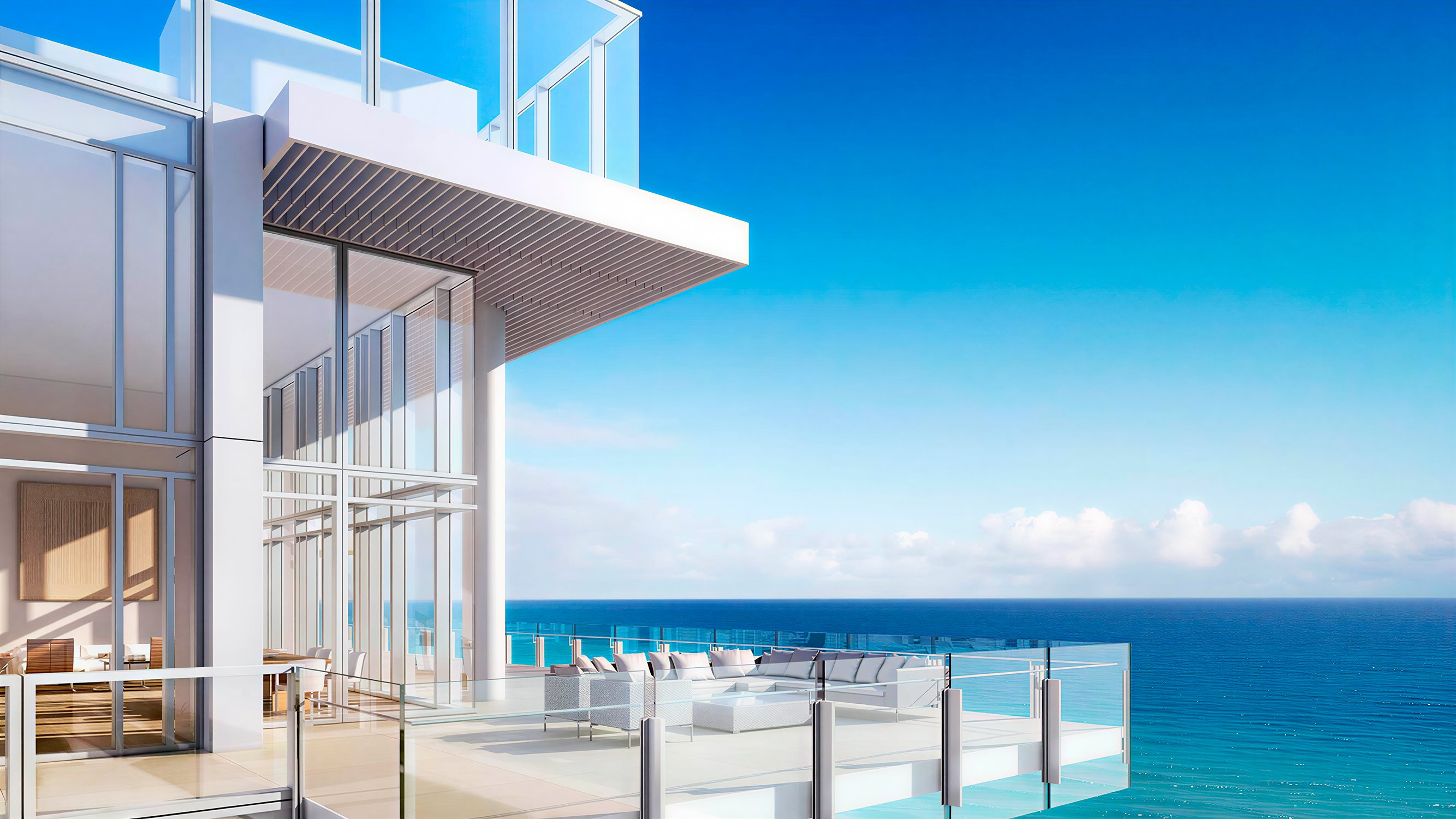
Hollywood Beach has long delivered the fundamentals that consistently attract luxury buyers: direct Atlantic frontage, an established resort ecosystem, and a lifestyle that reads relaxed and authentic instead of overtly performative. What is changing is not the presence of those advantages, but the scale of capital now moving into the city and the surrounding district.
Public reporting points to more than $1 billion in new development activity tied to Hollywood’s broader growth momentum. For a market that has historically lived in the slipstream between Miami Beach and Fort Lauderdale, that threshold matters. It signals a bigger underwriting story: Hollywood Beach is being treated less as an in-between beach town and more as a durable coastal node within Broward.
For an ultra-premium audience, the headline is not simply that more inventory is coming. The more consequential shift is that Hollywood Beach is increasingly being underwritten as a long-term, institutionally supported address. In most coastal markets, this kind of support tends to arrive alongside improvements that buyers feel in daily life, including stronger streetscapes, more cohesive services, and a deeper, more consistent buyer pool over time.
It can also narrow the distance between legacy resale inventory and best-in-class new construction, but only when the new product is credible and the delivery timeline is clear. Buyers often pay up for certainty, and in a market entering a new cycle, certainty becomes a pricing lever.
In practical terms, this is a moment for sophisticated buyers to position early. Pricing still reflects Hollywood’s value proposition relative to Miami Beach, and negotiation leverage remains more balanced than it was during peak-cycle years. That combination can reward buyers who arrive with a clear thesis, strong due diligence, and the patience to be selective.
Luxury real estate values rarely move on architecture alone. They move most decisively when high-confidence institutions invest in the same geography. Institutional investment is a signal of durability, and durability is what luxury buyers and lenders tend to price in.
One of the most consequential local signals is the South Broward Hospital District Board’s approval of an approximately $700 million expansion of Memorial Regional Hospital. Even if a buyer never expects to personally use the facility, a healthcare expansion of this magnitude matters. It implies job creation, infrastructure coordination, and a stronger civic foundation that can help stabilize demand across cycles.
Hollywood Beach also benefits from a hospitality halo that continues to modernize. The Diplomat Beach Resort has been widely covered for its transformation to Hilton’s Signia brand. In resort markets, reinvestment at flagship hotels frequently spills into residential outcomes: dining options improve, service expectations rise, and the overall sense of arrival becomes more compelling for visitors who later convert into owners.
For buyers weighing a second-home purchase, these institutional and hospitality investments help reduce the perception of “seasonal town” risk. They strengthen the case that the area is not only a place to visit, but a place that is likely to keep improving. That matters when you are underwriting a property not just as a view, but as a long-term lifestyle asset.
Hollywood’s upcoming and recently marketed residential pipeline is notable because it is not one monolithic product type. Instead, the market is beginning to differentiate into distinct luxury categories, from true high-rise scale to ultra-boutique beachfront scarcity, with mixed-use urban living as a separate lane.
Icon Beach Residences has been reported as planned for 3724 S Ocean Drive, with groundbreaking expected in 2026. Coverage describes a 38-story project with roughly 400 residences, a scale that would materially add to Hollywood Beach’s luxury inventory. Marketing materials indicate a 1 to 3 bedroom mix, with residences roughly 948 to 2,580 square feet, and pricing promoted as starting in the low $800,000s.
Those details shape how a buyer should read the opportunity. Icon Beach is positioned as “new luxury” rather than ultra-trophy: a product aimed at buyers who want fresh construction, contemporary amenity programming, and an oceanfront lifestyle without entering the price-per-square-foot universe that defines top Miami Beach addresses. For many buyers, that middle band is where the best combination of usability and resale liquidity tends to live.
At the opposite end of the spectrum sits Bellamar Residences, positioned as a boutique beachfront project with 25 residences on Hollywood Beach. In any coastal market, that kind of limited supply is a quiet driver of pricing power. Boutique buildings can behave differently in downturns because ownership often skews more discretionary and less price-sensitive. They also trade with fewer true comparables, which can shift negotiation dynamics.
Diplomat Landings, advanced by BH Group/Related and sited at or near 3690 S Ocean Drive, adds another layer to the story. While specific program details can evolve, the branding itself signals a bet on the established Diplomat corridor as a lifestyle address, not just a hotel district. In luxury markets, corridor identity matters. Buyers frequently pay as much for the implied neighborhood experience as they do for the unit finishes.
Then there is CIRC Hollywood Residences, marketed as a large mixed-use residential tower with integrated retail and day-to-day conveniences. This is a different luxury proposition. Instead of the resort-seclusion logic of beachfront towers, it sells walkability, services, and a more urban cadence.
The key takeaway is that “Hollywood luxury” is splintering into clearer subcategories. Buyers will make better decisions when they choose the identity that fits their use case first, and only then compare price per foot. The same square footage can live very differently depending on the building’s concept, management, and location within the corridor.
Hollywood can feel like value relative to Miami Beach, but it is not a discount market. The distinction is important. Value is about what you receive for the price, while a discount implies compromised desirability or weakened demand. Hollywood’s current setup reads more like the former.
In late 2025, neighborhood-level data for Hollywood Beach showed a median sale price around $450,000, with median price per square foot around $497, and homes taking roughly 156 days to sell, typically drawing about one offer per home. Those metrics describe a normalized market. It is not a frenzy. Select properties still trade quickly, but much of the inventory requires price discipline and a realistic view of condition, building quality, and competition.
At the same time, a profile for Hollywood’s South Central Beach area places median property values around $779,000 and average rents around $3,446 per month. That points to a high-cost beach zone with meaningful rental demand, and it reinforces the idea that the market is not monolithic. Hollywood Beach includes multiple micro-environments, and pricing can change dramatically depending on building profile and proximity to the water.
Importantly, the same profile reports a very high vacancy rate, around 58%. In a resort market, that figure is often better understood as seasonality and second-home usage, not necessarily economic distress. For luxury buyers, it is also practical intelligence. Certain months will feel quieter. Buildings may have more “lights off” nights. Property management quality can become part of the lifestyle, because it shapes how well the building operates during both peak and off-peak periods.
So how should a buyer interpret the spread between resale and pre-construction pricing? New product can command a premium because it reduces immediate capex uncertainty and often delivers stronger wellness programming, better acoustics, modern glazing, and contemporary amenity design. But in Hollywood, that premium sits on top of a resale market that is not overheating.
That creates leverage for buyers. It allows a more deliberate approach: be selective, time entry around seasonality, and insist on clarity regarding what is included, what is optional, and what will actually be delivered. In this cycle, the buyer who asks better questions tends to secure the better outcome.
South Florida condo buyers are operating in a new era shaped by inspections and reserve realities. Miami Realtors has discussed how these changes are influencing financability and buyer behavior, and has noted that older condo sales have accelerated in certain contexts.
For Hollywood Beach, where much of the existing stock dates to prior decades, due diligence is no longer a simple checklist. It becomes a strategy. It is not enough to fall in love with a view or a floor plan. A sophisticated buyer wants a clearer read on special assessment risk, reserve funding posture, and the building’s ability to remain competitive when newer deliveries enter the market.
This is where Hollywood’s established trophy buildings stay relevant. Addresses such as Trump Hollywood, Diplomat Residences, and Apogee Beach are often framed as premier options in the local inventory, in part because their positioning and scarcity can help them hold mindshare even as the pipeline expands. Scarcity is not immunity, but it can reduce substitutability, and substitutability is the real enemy of pricing power.
In other words, buyers should underwrite not only the unit, but the building’s long-term narrative: its governance and maintenance reality, its reputation trajectory, and its ability to compete for the same buyer profile five years from now.
If you are purchasing as an investment with any planned rental component, underwriting needs to extend beyond rent projections. It should also account for downtime driven by seasonality, HOA trajectory, and the building’s competitive set two to four years out. In a market that is normalizing, the margin for error narrows, and a clean pro forma depends on assumptions that match how the building actually operates.
Hollywood Beach’s lifestyle advantage is straightforward: it is easy to live. The Hollywood Beach Broadwalk is regularly cited as a signature draw, anchored by a long beachfront promenade lined with dining and shops. For buyers who split time between cities, that kind of frictionless amenity is not a luxury add-on. It is the daily convenience that makes a second home feel like a true retreat.
The broader resort ecosystem matters as well. A revitalized flagship hotel brand and an active development pipeline can elevate the beachfront experience, from dining options to service standards. In coastal markets, lifestyle premium is rarely a single amenity. It is the combined effect of what happens when you walk outside.
Some buyers cross-shop Hollywood with Miami Beach when they want a higher-density, internationally legible luxury ecosystem. If that is your frame of reference, it can be useful to benchmark what “prime” looks like further south, even if you ultimately choose Broward.
Along Miami Beach’s oceanfront, projects such as 57 Ocean Miami Beach and Shore Club Private Collections Miami Beach reflect a market where brand, service, and design provenance often take center stage.
On the hospitality-anchored end of the spectrum, Setai Residences Miami Beach and The Ritz-Carlton Residences® Miami Beach underscore how Miami Beach prices in the promise of staffing, culinary programming, and the feeling of a well-run hotel, even for private owners.
Hollywood’s opportunity is that it can deliver an oceanfront lifestyle with less intensity. For many buyers, it also lands at pricing that still feels rational relative to those benchmarks, particularly when you weight square footage, day-to-day livability, and the ability to actually use the home the way you intend.
In a normalized market, advantage tends to flow to the buyer who is crisp about priorities and realistic about tradeoffs.
First, decide whether you are buying the building or the unit. In pre-construction and new construction, you are buying a future building: its delivery certainty, amenity program, and reputation trajectory. In resale, you are buying the current building: its reserves, governance, and maintenance reality. The questions you ask should change accordingly.
Second, treat seasonality as a feature you can use. If you are purchasing a second home, you can often secure better terms when the market is quiet, then enjoy the lifestyle when demand returns. If you are purchasing with rental intent, the same seasonality can support premium peak-season pricing, but only if building policies and management execution align with that strategy.
Third, underwrite the corridor, not just the address. The strongest Hollywood Beach outcomes tend to cluster along established stretches of S Ocean Drive where the resort ecosystem and premium inventory are already proven. Corridor strength can protect value when individual buildings go through inevitable cycles of renovation, governance changes, or shifting competitive positioning.
Finally, remember that “value” is not the same as “cheap.” Hollywood’s next cycle is about quality differentiation. The best assets will be the ones that feel inevitable: well-located, well-managed, and difficult to replicate.
Is Hollywood Beach seeing real development momentum? Yes. Public reporting describes more than $1 billion in new development activity in Hollywood, alongside major institutional investment such as an approximately $700 million hospital expansion.
What new projects are shaping the luxury conversation? Reported pipeline highlights include Icon Beach Residences (planned as a 38-story project with roughly 400 residences and groundbreaking expected in 2026) and boutique beachfront inventory like Bellamar Residences with 25 residences.
How should I compare resale pricing to new development pricing? Use resale market metrics as a reality check, then decide how much premium you will pay for new construction certainty, contemporary amenities, and reduced near-term capex risk.
Does the area’s high vacancy rate matter for buyers? It can. In resort zones it often reflects seasonal and second-home patterns, which can influence building atmosphere, rental strategy, and the timing of your purchase.
Explore Hollywood Beach opportunities with MILLION Luxury.
If branded residences are on your mind — as a home or as an allocation — we would be glad to share what we are seeing, privately.
Begin a quiet conversation