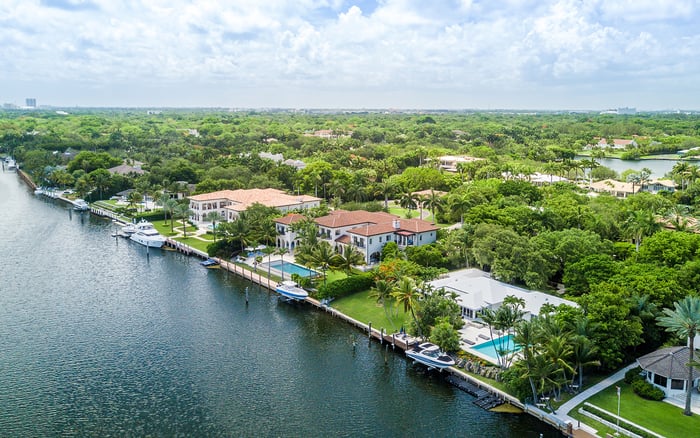
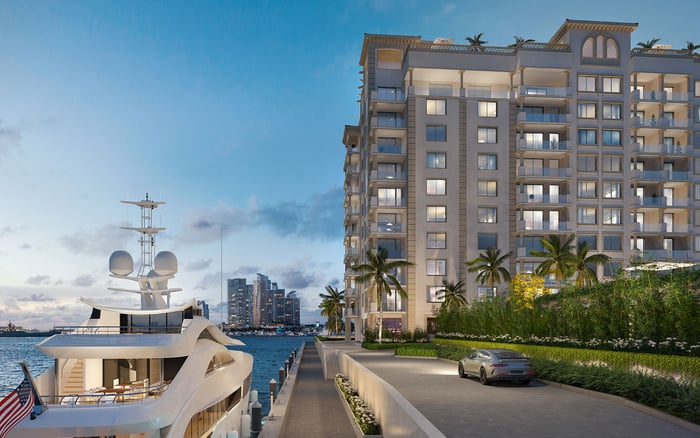
A discreet field guide to how record sales, off-market strategy, and billionaire-style compound thinking are reshaping pricing and positioning from Miami Beach to Naples.
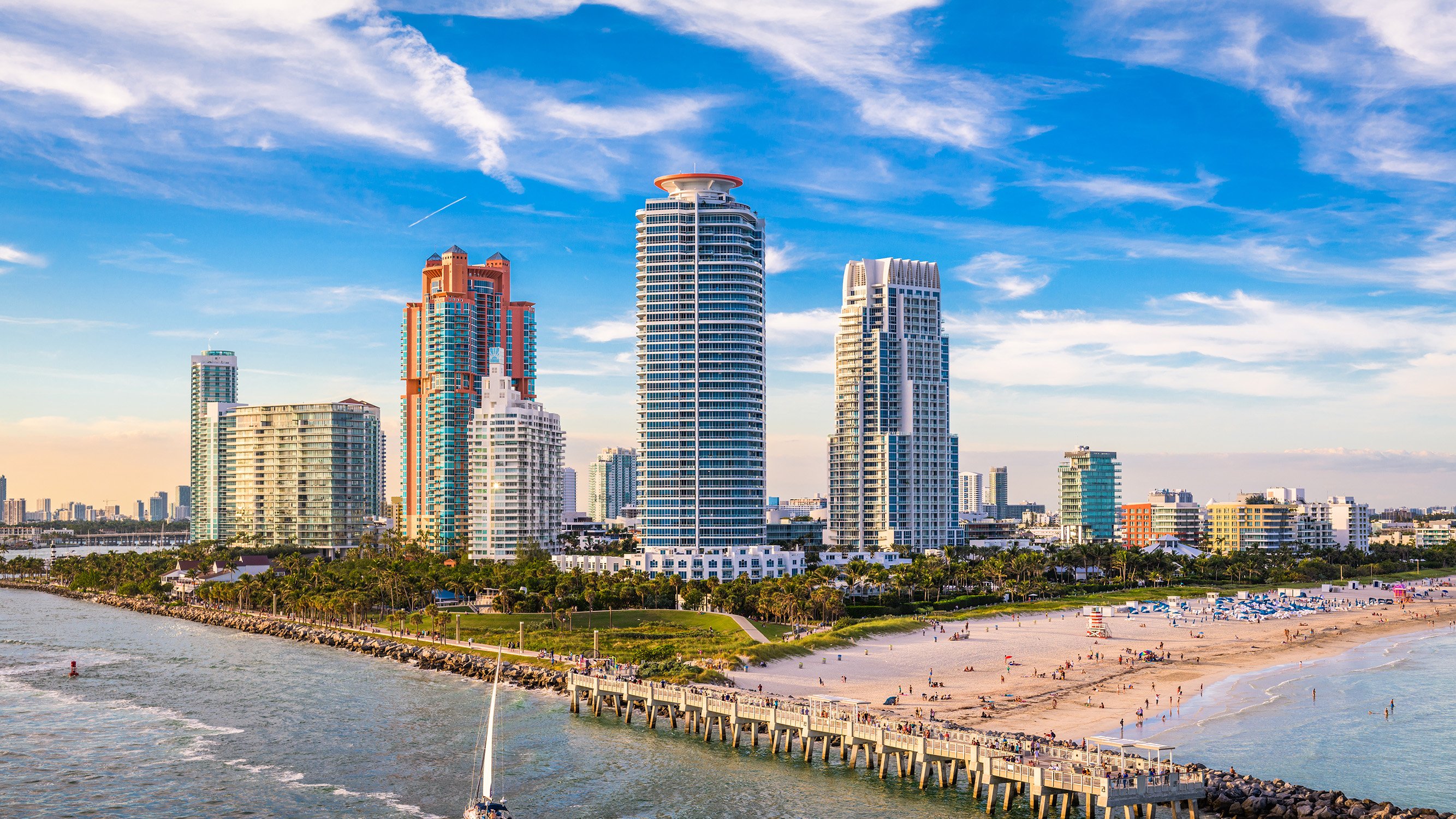
In South Florida’s ultra-prime tier, a record sale is rarely just a datapoint to celebrate. It operates as market-making. When a trophy property trades at a number that feels outside the prior category, it quietly recalibrates what sellers will attempt, what buyers will tolerate, and what advisors will underwrite as realistic.
Miami-Dade received a vivid example when a Star Island mansion at 26 Star Island Dr sold for $120 million, widely covered as a local benchmark. The headline number is memorable. The real impact is what follows: scarcity becomes the central narrative, and provenance can begin to matter as much as square footage. In that climate, “cannot replicate the setting” often persuades more effectively than “can upgrade the finishes.”
This is why experienced buyers watch record prints as directional signals of where liquidity is forming. Not across every neighborhood. Not for every product type. But for very specific combinations of address, water access, privacy, and ready-to-own condition, the price ceiling stops being theoretical and starts acting like a reference point.
Just as importantly, records are not purely about reach. They are about confirmation. A single sale can validate that a subset of buyers will pay for frictionless ownership, immediate usability, and a location profile that cannot be manufactured. When that validation lands, it changes how future inventory is positioned, and it changes how quickly competitive buyers decide.
At the top of the market, full public marketing is often optional. South Florida’s so-called whisper market is built on controlled distribution, where brokers and advisors share opportunities selectively through trusted networks rather than broad public portals.
The practical driver is privacy. The strategic driver is leverage. Controlled exposure can compress time, reduce unproductive “tourism,” and create a negotiating table made up of qualified counterparties. One widely discussed example from Miami Beach involved 88 La Gorce Circle reportedly going under contract within roughly 48 hours after limited private showings. The takeaway is not that every property will move that fast. The takeaway is that, in the right micro-market, velocity itself becomes a luxury feature.
For buyers, whisper-market access tends to be earned, not requested. The most common signals of seriousness are straightforward: proof of funds, a credible advisory team, and a willingness to meet the process where it is. That process may include limited showing windows, compressed decision timelines, and a preference for buyers who can proceed with minimal uncertainty.
For sellers, discretion can also protect optionality. A residence can be tested quietly at an ambitious number without accumulating public “days on market” that invite discounting, or without broadcasting security-sensitive details to a wide audience. In an environment where perception affects leverage, the ability to stay selective can be as valuable as the ability to go wide.
Miami Beach remains one of the most legible luxury narratives in the United States because the lifestyle is immediately comprehensible: ocean access, design, dining, privacy, and a buyer base that moves globally.
What has evolved is how buyers describe value, and what they compare it to. A growing share of ultra-high-net-worth purchasers are weighing a waterfront estate not only against another estate, but against a best-in-class branded or service-forward residence that reduces ownership complexity. The question is no longer only, “Is the home spectacular?” It is also, “How effortless is it to own?”
That comparison helps explain why legacy and new-generation condo offerings can carry “estate logic” without the estate burden. In that context, projects like Faena House Miami Beach function as more than buildings. They signal a neighborhood’s capacity to support eight-figure pricing with design credibility and a hospitality-adjacent experience that many buyers already understand.
Similarly, for buyers who want immediate access to the Miami Beach social grid, Setai Residences Miami Beach can appeal as a lock-and-leave base where service, security, and discretion are core to the value proposition, not add-ons negotiated after the fact.
The shift is fundamentally psychological. Ultra-prime buyers are increasingly willing to pay for operational simplicity, provided the address and lifestyle remain uncompromised. In practice, that means the bar is higher. Service must feel seamless, the arrival experience must feel intentional, and the residence must read as a durable asset, not simply a beautiful interior.
If there was any lingering doubt that South Florida condos can trade like standalone estates, a county condo record helped settle it. Fort Partners sold an oceanfront Seaway penthouse at The Surf Club for $86 million, widely framed as a Miami-Dade condo benchmark.
That sale matters for more than bragging rights. It validates a specific buyer thesis: service plus brand plus a tightly held residence count can compete with the autonomy of a mansion. In Surfside, that blend is especially powerful because the community’s scale and calm read as intentional, even when the global spotlight nearby burns bright.
For developers and resellers, the implication is clear. The top of the condo market is no longer priced purely by interior square footage. It is priced by a stack of intangibles that are difficult to reproduce: a sense of arrival, privacy in the elevator-to-door journey, the frictionless management of a second home, and the confidence that your view corridor will not be casually replicated.
For buyers, a penthouse at this level should be underwritten less like a typical condo and more like a rare asset with its own liquidity profile. The “comps” are often psychological, not statistical. In other words, the most relevant comparison may be the best alternative lifestyle you could buy for the same capital, and whether this residence answers that alternative more completely.
Another defining pattern in today’s ultra-prime market is that trophy purchases are increasingly portfolio-driven. In coverage of billionaire buying, the “compound” concept appears repeatedly: acquiring adjacent or nearby parcels to increase privacy, control sightlines, and shape a personal perimeter.
Indian Creek Village has become South Florida shorthand for this mentality. Reporting around Jeff Bezos’s Indian Creek buying spree has popularized the modern compound playbook, and local coverage has emphasized how the village’s security infrastructure and controlled access are core to its appeal. In this kind of gated-community environment, the neighborhood’s operational reality becomes part of the asset’s value, not a background detail.
The same theme shows up outside Indian Creek. Google co-founder Larry Page was reported to have bought two Coconut Grove waterfront estates for a combined $173 million. The detail that matters is not only the price, but the pattern: multiple acquisitions in one area can be a deliberate move to establish a base, manage privacy, and influence the future environment around the residence.
For buyers who do not need a compound, the lesson remains highly practical. When the market’s most sophisticated participants buy in clusters, they are telegraphing where they believe long-term desirability will concentrate. It is a signal about location confidence, and about where scarcity and security are likely to remain durable.
Neighborhood prestige is never static. It is periodically re-priced by visibility.
Celebrity purchases can function as social proof, not because fame creates intrinsic value, but because it amplifies the narrative that a neighborhood is “safe” for the ultra-wealth. The Weeknd’s reported $50 million Coral Gables mansion purchase was covered as a record, effectively pulling Coral Gables into more frequent ultra-prime conversations.
This is not just gossip economics. It can influence agent behavior, attract additional media attention, and shift seller psychology. Owners who previously priced within a more conservative band may begin to underwrite their own homes against a new set of reference points, particularly when inventory is limited.
Meanwhile, Coconut Grove has continued to benefit from a different form of visibility: the “serious money” signal of large, strategic purchases. When high-profile buyers choose waterfront positions in established, livable neighborhoods, it reinforces the idea that the most enduring luxury is not always the flashiest. Often, it is the most functional, offering day-to-day livability while still delivering the privacy and positioning that ultra-prime buyers require.
While Miami-Dade dominates the cultural narrative, the broader South Florida luxury map includes an increasingly consequential Gulf Coast counterpart. In Naples, a reported $225 million Port Royal transaction involved multiple Gordon Drive parcels, a reminder that mega-assemblage deals are often about controlling land scale more than showcasing a single structure.
Transaction reporting around one parcel at 2340 Gordon Dr underscores the multi-parcel character that can sit behind a single eye-catching headline. In these deals, the structure is sometimes secondary to the footprint, frontage, and long-term ability to shape what will exist on the site.
For buyers, the strategic takeaway is straightforward. In the highest price tiers, acreage, frontage, and the ability to define an estate’s perimeter can dominate valuation. Features can be renovated and layouts can be rethought. Land scale, particularly on a protected stretch, is not something the market can easily manufacture.
Privacy has long been part of luxury real estate’s unwritten contract. In whisper-style deals, it is common to require NDAs before releasing addresses, photography, or due-diligence materials. That practice protects sellers, filters out unqualified curiosity, and can reduce security risk.
At the same time, privacy practices are evolving against a backdrop of increased compliance expectations. Coverage of FinCEN’s Residential Real Estate Reporting Rule has cited a March 2026 implementation timeline, reflecting a policy direction toward greater beneficial-ownership transparency in certain residential transfers.
The practical implication is not that privacy disappears. It is that privacy becomes more structured. Buyers using entities and advisors should expect more standardized documentation. Sellers should expect that sophisticated counterparties will want clean, defensible files that support a smooth closing. Discretion, in other words, may increasingly mean “confidential and compliant,” not “informal and quiet.”
For market participants, this shift also changes how “readiness” is perceived. In ultra-prime transactions, the best-prepared party often controls the pace. A buyer who can meet documentation expectations quickly gains credibility. A seller who can provide organized diligence materials reduces friction, which can matter more than small price concessions when the goal is certainty and privacy.
For buyers:
For sellers:
In Miami Beach, projects such as Shore Club Private Collections Miami Beach and The Ritz-Carlton Residences® Miami Beach reflect the market’s broader direction: buyers increasingly pay for a complete operating experience, not just a beautiful interior. At the ultra-prime level, the residence and the lifestyle infrastructure are priced together.
What is a whisper-market listing in South Florida?
A whisper-market listing is a property marketed privately through curated broker and advisor networks, often without broad public promotion.
Why do NDAs show up in ultra-luxury home searches?
NDAs help protect privacy and security by limiting who receives addresses, photos, and due-diligence documents, and by filtering for qualified interest.
Are condos really competing with waterfront estates at the top?
In certain cases, yes. Record-setting sales like the $86 million Surf Club Seaway penthouse show how brand, service, and scarcity can command estate-level pricing.
What is driving compound-style buying in South Florida?
Billionaire buyers are often seeking privacy, control, and long-term optionality, which can involve multiple purchases in the same neighborhood.
How might new reporting rules affect luxury transactions?
As described in coverage of FinCEN’s Residential Real Estate Reporting Rule, buyers and sellers should expect more structured transparency requirements in certain transfers over time.
Explore discreet, ultra-prime opportunities with MILLION Luxury.
If branded residences are on your mind — as a home or as an allocation — we would be glad to share what we are seeing, privately.
Begin a quiet conversation