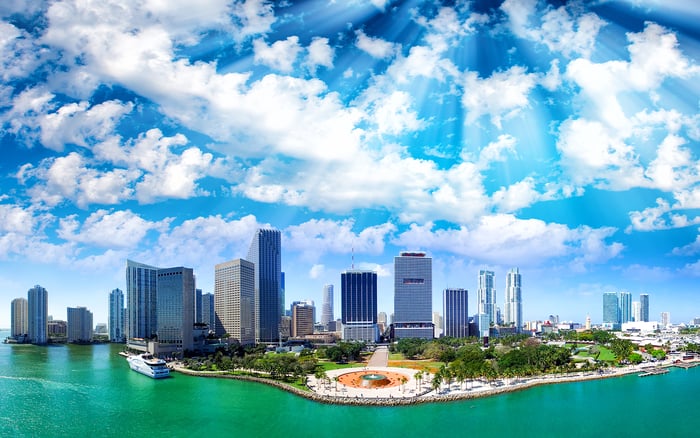
South Florida’s ultra-luxury real estate has shifted from a pandemic-era surge to a more durable, globally anchored market. With record-adjacent activity, selective inventory and a steady pipeline of service-heavy new development, today’s $10M+ buyer is underwriting lifestyle, privacy and long-term optionality as much as price.
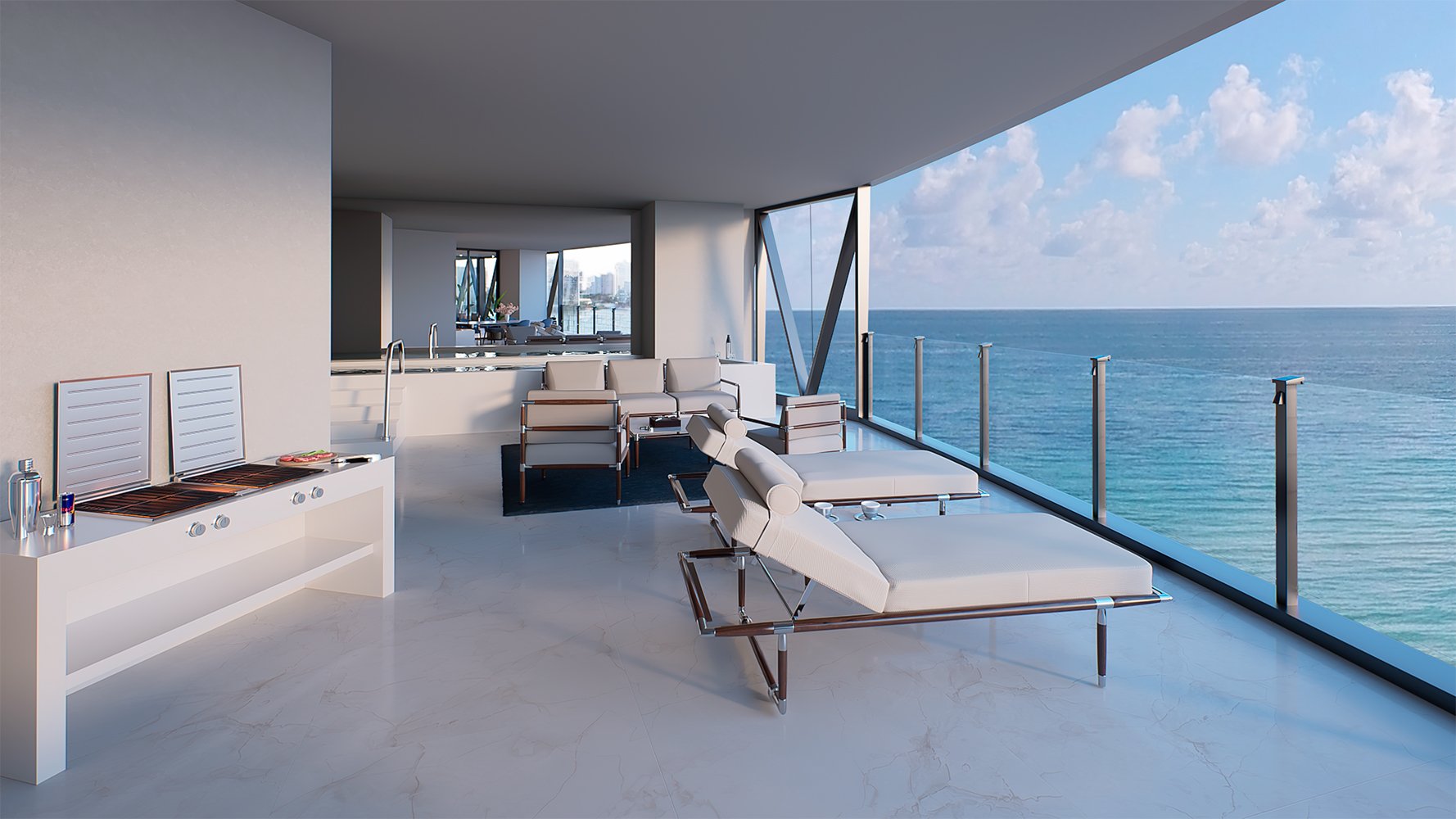
South Florida’s ultra-luxury market no longer reads like a one-off surge. The pandemic years accelerated demand, but the more consequential story is what followed: deals continued to close, capital continued to fund major development, and South Florida’s value proposition widened from a seasonal escape to a credible, globally oriented residency strategy.
In the most widely used framing, “ultra-luxury” begins around $10M. Through that lens, 2021 marked a clear step-change in velocity across Florida’s prime coastal counties. Miami-Dade recorded 50 ultra-luxury sales in 2021 totaling roughly $822M. Naples posted 65 ultra-luxury sales totaling about $1B. Broward County registered 27 ultra-luxury sales totaling roughly $422M. These figures are more than headline-worthy totals; they indicate that the region built a deeper, more consistent bench of buyers capable of transacting at the very top.
The key question for 2026 is not whether the spike happened. It is how that demand behaves once the market reintroduces friction, including higher interest rates, rising insurance costs, and the normalization of post-pandemic mobility. In a “normal” environment, the data has still shown a luxury tier that is comparatively steady. Even as overall sales softened in Miami-Dade, reporting has described the high end as holding up better. In July 2025, for example, Miami-Dade total home sales were reported down about 16% year over year (2,122 to 1,782). That kind of split is typical of a luxury market that is less rate-sensitive and more choice-driven.
For $10M+ buyers, the practical takeaway is straightforward: confidence is selective, not absent. Value is rarely defined by “cheap” pricing. It is defined by timing, by access to scarce inventory, and by moving early on the right building, the right line, the right view corridor, or the right operating model.
Ultra-luxury buyers may appreciate narrative, but they underwrite risk with measurable inputs: liquidity, absorption, and the quality of available inventory. One of the more constructive signals has been inventory rising without returning to pre-pandemic excess.
Miami-Dade was reported to have 18,377 active listings in July 2025, up 33.5% year over year, yet still about 15.6% below July 2019 levels. Condo inventory was cited at 12,838, about 16.5% below 2019. In real terms, that combination creates a market that can feel more negotiable than 2021, while still remaining structurally constrained relative to the prior cycle.
At the broader luxury condo level, late 2021 already reflected meaningful momentum. In Q4 2021, Miami luxury condo sales reached 552 units with a median price around $1.75M, up approximately 111.5% year over year. That median is not ultra-luxury on its own, but it matters because it speaks to depth. A strong luxury base typically supports a thinner, higher-priced tier above it by keeping the broader “move-up” ecosystem active.
This is also why the most desirable inventory can behave differently from the broader market. Prime oceanfront exposure, true turnkey service, and floorplans that cannot be recreated tend to operate on their own timeline. Buyers who wait for a generalized downturn often find that the best apartments never needed one. Selection, not sentiment, is what shapes outcomes at the top.
If 2020 through 2022 made Miami feel newly relevant, the years since have made it feel newly established. Miami has been reported as topping a global list for ultra-rich second homes, and that distinction matters. Second-home buyers are less anchored to local employment cycles and more influenced by lifestyle design, tax planning, family geography, and a desire for geopolitical comfort.
Remote and flexible work patterns expanded that pool further by blurring the line between “primary” and “secondary” residence. Academic and institutional commentary has documented shifts in remote work trends since 2019, reinforcing the idea that many top earners and entrepreneurs widened their location choices. For the ultra-wealthy, a residence can be a utility, not a declaration.
The result is a buyer mix that is simultaneously domestic and international, often multi-residence by design. In that context, Miami Beach functions as an amenity city as much as a municipal boundary. Culture, design, dining, waterfront leisure, and ease of arrival become part of the product, and buyers are willing to price that in.
This is also why discretion and privacy sit alongside price-per-square-foot in every serious conversation. The ultra-luxury buyer is not comparing Miami to the mid-market elsewhere. They are comparing it to other global coastal capitals and asking which place best supports a year-round, low-friction life, with optionality built in.
At the ultra-luxury level, “new” is less about novelty and more about the building’s operating model. Buyers are increasingly underwriting the residence as an ongoing service platform: staffing, arrival sequence, security protocols, valet execution, wellness programming, and the quiet reliability of management.
Boutique oceanfront inventory illustrates this shift particularly well. Arte Surfside is publicly positioned as a small-format oceanfront project with 16 residences. That kind of scarcity is compelling to buyers who value intimacy and control over social density. In practice, boutique product can trade like a collectible: fewer owners, fewer resales, and a tighter connection between service consistency and long-term resale perception.
At the same time, development capital has remained present well beyond the initial pandemic shock. Among South Florida’s largest 2025 construction loans, one of the most discussed was a roughly $630M loan for Bentley Residences in Sunny Isles Beach. For buyers, financing at that scale is a market signal: the development ecosystem still supports ambitious, high-service towers, and lenders still believe the end-user demand exists for that level of amenity.
In Sunny Isles Beach, the conversation often centers on altitude, panoramic water exposure, and amenity depth. Bentley Residences Sunny Isles aligns with the broader pattern of ultra-luxury purchasers prioritizing a complete lifestyle stack: privacy, wellness, convenience, and a building that feels closer to a private club than a conventional condominium.
In Miami Beach, design-forward product remains central to global perception. Faena House Miami Beach reflects the segment that trades on architecture, interiors, and a culture of service that resonates with international second-home ownership.
And for buyers seeking a newer expression of the Miami Beach thesis, Five Park Miami Beach speaks to continued demand for contemporary, amenitized living with proximity to the city’s most dynamic districts.
Across these examples, the throughline is not just “luxury.” It is operational excellence. In a world where many buyers can own anywhere, frictionless living becomes the differentiator that justifies premium pricing.
Ultra-luxury can stay resilient during broader slowdowns for a structural reason: the top end is less dependent on traditional financing. When financing costs rise, the mid-market can stall first, especially in condos. One visible example is the limited number of FHA-approved condo buildings across Miami-Dade, Broward, and Palm Beach counties, reported as 21 out of 2,397 buildings. That constraint does not typically govern $10M+ buyers directly, but it does influence the broader ecosystem beneath them. When the base is restricted, the move-up ladder can become less fluid.
Transaction rails have also expanded at the high end. South Florida has been covered as a place where crypto-to-closing pathways have been used in luxury transactions, including reporting tied to an Arte Surfside deal. This does not mean crypto is standard practice. It does suggest that portions of the buyer pool are comfortable with alternative liquidity events and nontraditional wealth profiles, which can widen the set of capable purchasers for truly rare inventory.
Policy is another layer sophisticated buyers track, even when it does not target them directly. Florida’s Live Local Act (passed in 2023 and amended in 2024) has been summarized as offering incentives tied to reserving 40% of units as affordable (at or below 120% of area median income) in exchange for higher density. While the legislation is aimed at workforce and affordable supply, luxury buyers should still pay attention. Zoning and density policy can shape neighborhood skylines, traffic patterns, and the long-term feel of streets that were previously defined by quiet scarcity.
At the top of the market, South Florida is not one market. It is a chain of micro-markets, each with its own buyer motivations, lifestyle drivers, and inventory constraints.
Miami-Dade remains the global spotlight. It attracts second-home owners, international families, and entrepreneurs who want a social capital as much as a coastal residence. Miami’s ultra-luxury activity was later reported as being on pace to set records even amid broader market frictions, reinforcing that the top end can move on its own rhythm.
Broward, particularly Fort Lauderdale’s premier waterfront and new-build corridors, offers a different proposition: boating-forward lifestyles, a sense of space, and access that can feel easier while remaining close to the region’s core. The 2021 ultra-luxury surge there, 27 sales totaling roughly $422M, supports the view that $10M+ demand is not confined to a single set of zip codes.
Palm Beach operates in its own luxury language, with a long-established identity and a buyer base that often prioritizes legacy, discretion, and social infrastructure. A decade-long lens is instructive: West Palm Beach luxury home prices were reported up about 187.3% over the past decade to a median around $4.04M, the fastest among major U.S. metros in that specific analysis. In the same analysis, New York luxury home prices were reported up about 15.4% over the decade. That comparison helps explain why mobile wealth has viewed Florida as comparatively strong.
Naples sits as the quieter counterpoint that remains very much in the conversation. Its 2021 ultra-luxury total of about $1B across 65 sales, alongside continued luxury coverage into 2025, supports the thesis that this is a durable demand center rather than a temporary overflow market.
Finally, Surfside stands out for scarcity. When a neighborhood has limited oceanfront parcels and a clear identity, supply can stay tight even when inventory rises elsewhere. That scarcity is part of why certain assets remain insulated from broader cycles.
In 2026, ultra-luxury buyers tend to win not by being the most aggressive, but by being the most prepared. The advantage goes to the buyer who can move decisively on the right opportunity, and who understands what to underwrite beyond finishes and headline pricing.
First, underwrite the building as a service business. Staff quality, management culture, and operational consistency matter as much as materials and design. The long-term “feel” of a building is rarely created by marble; it is created by how a team handles arrivals, maintenance cadence, security, package flow, and resident privacy. In the $10M+ tier, a weak operating model is expensive, and it shows.
Second, separate trophy value from trend value. Branded and design-driven properties can command premium pricing, but the premium is most defensible when it is paired with true scarcity, standout architecture, and a proven resident experience. Buyers should be honest about what they are paying for: brand heat, or durable livability.
Third, treat neighborhood trajectory as both risk factor and opportunity. Inventory in Miami-Dade has risen year over year, yet was still reported below 2019 levels. That means negotiation can exist, but the best lines in the best buildings can remain scarce. Be prepared to move quickly when the right fit appears, because the market does not discount irreplaceable views on schedule.
Fourth, stay realistic about liquidity. In the $10M+ segment, time-to-sell is inherently less predictable and more dependent on uniqueness and narrative fit. A one-of-one home can be priceless to the right buyer and invisible to the wrong one. Build your exit strategy around that reality, and avoid assuming that a general market rebound automatically creates demand for a highly specific product.
Fifth, watch the pipeline. Continued major construction lending signals confidence in top-tier demand and amenities. It also signals future competition. Buying into a market with an active pipeline requires clarity: are you purchasing a timeless view and a rare location, or a product that will be easier to replicate in the next wave.
Is South Florida ultra-luxury still growing, or was it a pandemic-only story? The pandemic years accelerated demand, but subsequent reporting describes ultra-luxury activity staying near record levels even when overall sales softened.
Why do Miami’s top-tier condos hold value better than the broader market? The highest-end segment is typically less rate-sensitive, and the best inventory is constrained by location, views, and service models that are difficult to replicate.
Does rising inventory mean better negotiating power in 2026? Potentially, yes. Active listings rose year over year in Miami-Dade, yet inventory was still reported below 2019 levels, so leverage depends on the specific property.
What should buyers prioritize in newer ultra-luxury buildings? Operational excellence: staffing, privacy, security, wellness, and management consistency often matter more than finishes.
For confidential, buyer-aligned guidance across Miami Beach, Sunny Isles Beach, Surfside, Palm Beach, and beyond, connect with MILLION Luxury.
If branded residences are on your mind — as a home or as an allocation — we would be glad to share what we are seeing, privately.
Begin a quiet conversation