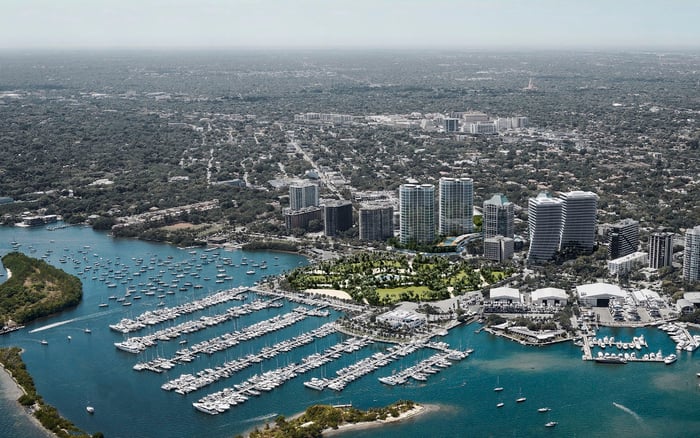
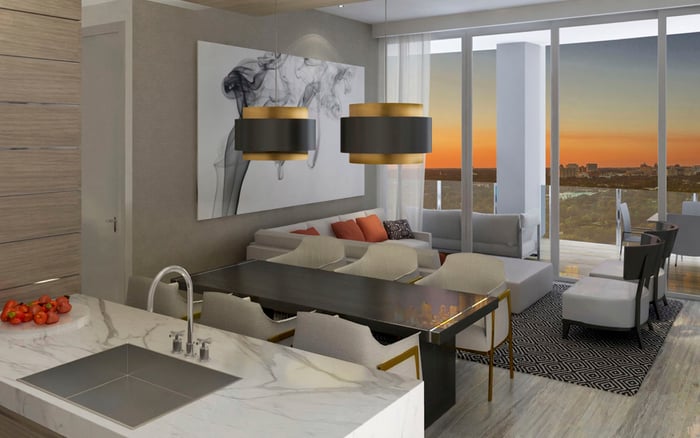
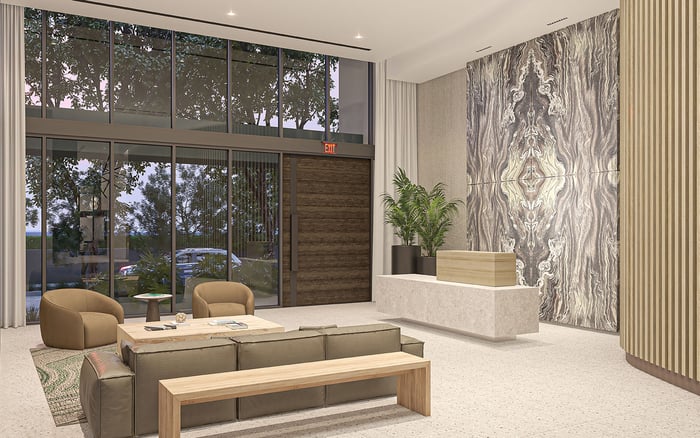
A buyer-oriented comparison of two Coconut Grove condo profiles, focused on the lived experience of privacy, arrival, and vertical circulation: boutique Arbor Residences and the three-tower Park Grove enclave.
In Coconut Grove, privacy is rarely just about square footage. It’s about the choreography of daily life: how often you share an elevator cab, how many neighbors you cross paths with at the mailroom, and whether the lobby reads as a salon or a transit hub. For buyers who value discretion, a building’s scale and circulation plan can matter as much as the residence itself.
That’s what makes the Arbor Residences vs. Park Grove comparison so relevant. Both are part of the Coconut Grove conversation, both deliver a modern luxury proposition, and both appeal to buyers who expect calm, not commotion. They simply express that promise differently: Arbor is boutique and low-rise; Park Grove is a resort-style enclave across three towers.
This guide stays focused on what you actually feel day to day - arrival, elevator flow, shared-space encounters, and how architecture quietly shapes those moments.
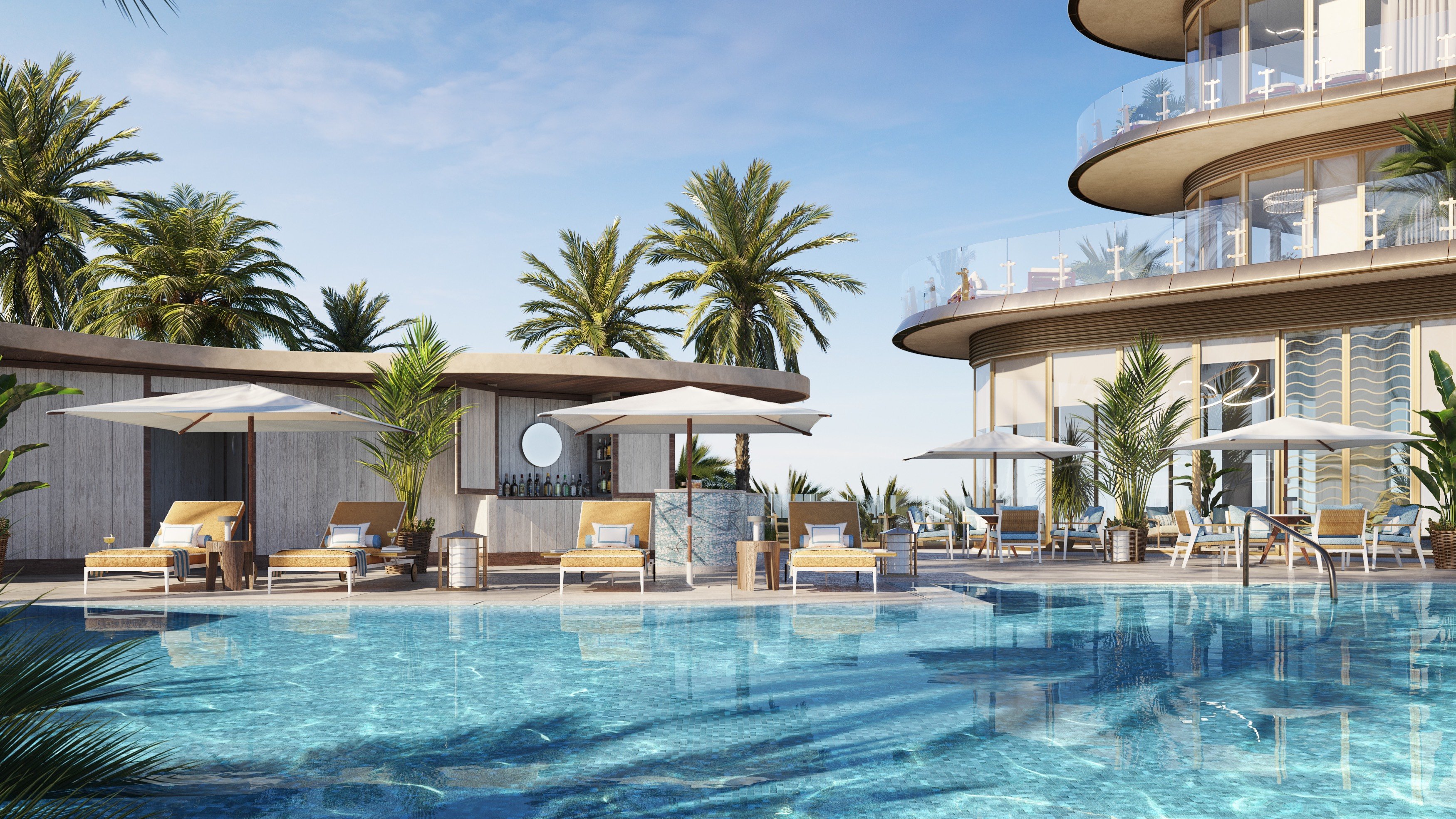
Arbor Residences is a boutique condominium with 45 residences in a five-story building, located at 3034 Oak Ave in Coconut Grove. The project is designed by Behar Font & Partners and is presented with a service-forward posture that includes 24-hour concierge and valet. Its amenity set emphasizes a rooftop terrace, a fitness center, and a resort-style pool deck and courtyard pool area.
Park Grove is a three-tower luxury development in Coconut Grove totaling 276 residences, addressed along 2811, 2821, and 2831 S Bayshore Dr. Architecturally, it is defined by OMA’s “peanut-shaped” towers, a form intended to maximize views and outdoor space such as balconies and terraces. Park Grove positions itself as a resort-style environment with multiple pools and robust wellness and resident spaces, paired with concierge-oriented services.
From a privacy and elevator-flow standpoint, those headline differences point to two very different daily rhythms.
The simplest privacy advantage is density. With 45 residences across five stories, Arbor’s day-to-day pace tends to be quieter by design. Fewer homes typically means fewer repeat touchpoints: fewer people timing elevators at the same moments, fewer overlapping deliveries, and a smaller set of familiar faces in the lobby.
Low-rise living also changes circulation. In a five-story building, vertical travel is shorter and the building serves fewer floors, which can reduce both the perception of waiting and the number of stops on a typical ride. Even without making assumptions about private elevator configurations, the basic math of height and residence count can translate into a more intimate cadence.
Arbor’s amenity mix reinforces that privacy narrative. A rooftop terrace and fitness center can feel like extensions of home when the resident population is limited. The pool deck and courtyard pool area provide an outdoor anchor without requiring a large, campus-like footprint. With 24-hour concierge and valet, the arrival experience can feel curated - particularly for residents who prioritize discreet drop-offs and a controlled front-of-house environment.
The trade-off some buyers weigh with boutique buildings is that “intimate” also means fewer parallel options. When a property offers a smaller set of shared spaces, each one carries more weight in the overall lifestyle. The upside is clarity and calm; the consideration is that the building’s personality is more concentrated.
Park Grove takes a different route to privacy, using scale and segmentation rather than smallness. It is widely known as a three-tower development totaling 276 residences, with components commonly described as One Park Grove, Two Park Grove, and Club Residences at Park Grove. Rather than funneling everyone through a single vertical spine, the three-building approach can localize traffic: in practice, you primarily share lobbies and elevators with residents of your own tower.
Architecturally, the “peanut-shaped” tower form is designed to maximize views and create more outdoor space, which can influence privacy in subtle ways. More expansive balconies and terraces can help outdoor living feel less exposed, and the building form can shape sightlines between neighbors.
Park Grove’s amenity program is positioned as resort-style, with multiple pools, spa and wellness facilities, fitness, and other resident spaces. For some buyers, that breadth can actually support privacy. With multiple destinations on-site, residents naturally distribute themselves instead of clustering into a single room at the same time. The result can be less of a “single hotspot” effect, even in a larger community.
Service also plays a role. Park Grove is presented with concierge-oriented staffing and a service-driven model. In practice, attentive front-of-house teams can smooth the edges of high-occupancy living by managing arrivals, deliveries, and guest flow. That said, high-rise towers, by their nature, create more vertical-circulation demand than a five-story building, and elevator logistics can feel more complex even when well managed.
Many buyers ask: “Does it have private elevators?” When that detail isn’t consistently disclosed across public summaries, you can still evaluate elevator flow using defensible, buyer-driven proxies.
First, focus on residence count and building height. Arbor’s 45 residences in five stories suggests fewer potential elevator interactions and fewer stops. Park Grove’s multi-tower, 20+ story high-rise format implies more vertical-circulation demand, even though segmentation across towers can help distribute it.
Second, evaluate the arrival funnel. Does valet stage cars efficiently? Is there a single pinch point between curb and elevator? Are deliveries managed through a dedicated path? Arbor explicitly highlights 24-hour concierge and valet, signaling an emphasis on controlled arrivals. Park Grove similarly emphasizes concierge-oriented staffing, with the added complexity of a larger campus.
Third, consider how often you’ll need to leave your residence to access the amenities you actually use. If you value one well-designed rooftop terrace and a straightforward fitness routine, Arbor’s compact program can be ideal. If you want a fuller “resort day” at home, Park Grove’s multiple pools and wellness spaces may reduce the need to leave the property, even if you accept more activity in shared areas.
Privacy is lived in the in-between moments: the elevator ride, the corridor, the gym at 7 a.m., the pool deck on a Sunday.
At Arbor, fewer residences typically means fewer chance encounters. The mood can feel closer to a private club - where you recognize neighbors - than a destination where you blend into the crowd. A boutique building can also feel more controllable for second-home owners who prefer a calm property when they arrive after time away.
At Park Grove, privacy can be more about optionality. With a broader amenity ecosystem, you can choose quieter pockets. Tower segmentation can also create micro-communities: the people you see repeatedly are more likely to be those who share your building, not the entire 276-residence community.
The decision comes down to your definition of discretion. If discretion means minimal encounters, Arbor has an inherent advantage. If discretion means moving through a larger environment without feeling exposed, Park Grove may suit - particularly if you value resort-style breadth.
Coconut Grove buyers are often balancing privacy with access: proximity to the water, dining, and a walkable rhythm, without sacrificing calm. Across South Florida, that same calculus shows up in different ways.
On Miami Beach, for example, beachfront and coastal projects often emphasize controlled arrival sequences and amenity zones that feel curated. Buyers who are weighing Grove living against Miami Beach options sometimes compare the experiential details: the tone of the lobby, the separation between resident and guest flow, and how much the building feels like a sanctuary.
If you are building a broader shortlist, it can be helpful to sense-check priorities by touring a range of profiles: the verticality and views associated with Five Park Miami Beach, the branded, service-led lifestyle of The Ritz-Carlton Residences® Miami Beach, or the oceanfront calm that draws attention to 57 Ocean Miami Beach. These tours aren’t about switching neighborhoods; they’re about clarifying what “privacy” feels like when it’s expressed through architecture, staffing, and circulation.
Within Coconut Grove itself, that clarity matters - because boutique and enclave-style living sit in close proximity.
Arbor Residences tends to fit buyers who prioritize:
Park Grove tends to fit buyers who prioritize:
Neither is universally “more private.” Arbor’s privacy is structural - created by low density and short vertical travel. Park Grove’s privacy is organizational - created by three towers, distributed amenities, and a campus-like plan.
Which building is more private day to day, Arbor or Park Grove? Arbor’s boutique scale of 45 residences generally means fewer shared-space encounters.
Does Park Grove’s three-tower layout help with elevator congestion? It can, because residents are distributed across separate buildings rather than one tower.
Is Arbor Residences a high-rise? No, it is a five-story boutique building in Coconut Grove.
Where is Arbor Residences located? It is located at 3034 Oak Ave in Coconut Grove, Miami.
Where is Park Grove located? Park Grove is addressed along 2811, 2821, and 2831 S Bayshore Dr in Coconut Grove.
Who designed Arbor Residences? Arbor is designed by Behar Font & Partners.
Who designed Park Grove? Park Grove’s architecture is by OMA, which shaped the project’s distinctive tower forms.
What amenities define Arbor’s lifestyle? Arbor highlights a rooftop terrace, fitness center, and a pool deck and courtyard pool area.
What amenities define Park Grove’s lifestyle? Park Grove is positioned with resort-style amenities, including multiple pools and wellness spaces.
What should I ask on a tour to judge elevator flow? Ask about peak-hour wait times, delivery handling, and how valet and concierge manage arrivals.
For a confidential assessment and a building-by-building shortlist, connect with MILLION Luxury.
If branded residences are on your mind — as a home or as an allocation — we would be glad to share what we are seeing, privately.
Begin a quiet conversation