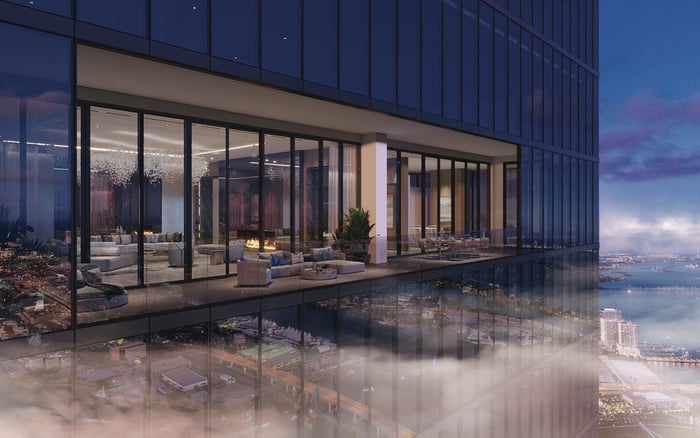
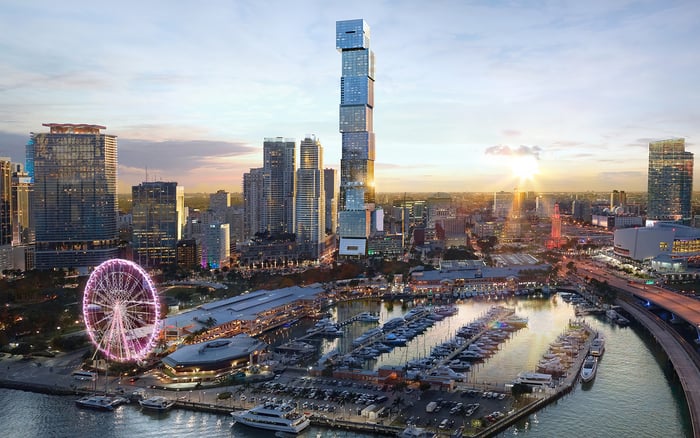
In Downtown Miami, two landmark towers frame wellness in distinct ways: Waldorf Astoria’s hotel-integrated, turnkey living and Aston Martin’s sky-level amenity stack. For buyers weighing privacy, service, and lifestyle performance, the differences are less about square footage and more about how daily routines are curated, from spa programming and fitness circulation to the social temperature of pools, lounges, and resident-only zones.
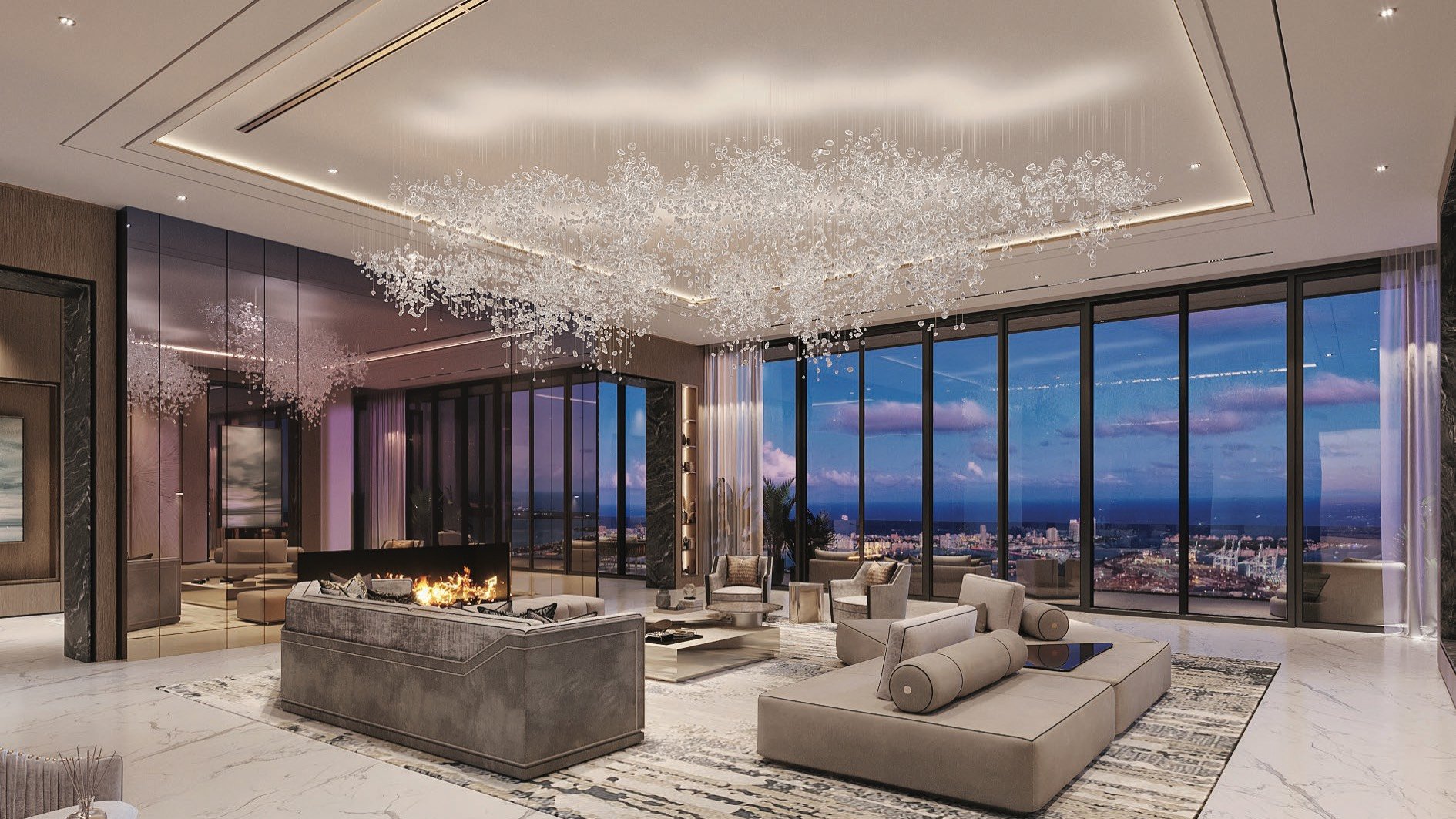
In South Florida’s ultra-premium condo market, “wellness” has moved beyond a spa checkbox. At the top end, it functions more like an operating system: how you move through the building, how quiet spaces stay quiet, how service shows up without friction, and whether the environment makes consistency feel effortless.
Downtown and Brickell buyers often run on compressed schedules: early flights, late dinners, high-output days. The best towers respond by reducing decision fatigue and travel time inside your own home base. Wellness, in that sense, is not only about what exists, but about how reliably you will use it on an ordinary week.
Two projects illustrate this shift at a high level: Waldorf Astoria Residences Miami and Aston Martin Residences. This comparison stays intentionally practical, using only what has been publicly disclosed about each building’s program and how those choices can translate into day-to-day ownership.
Aston Martin Residences Downtown Miami frames wellness and entertainment as a vertical destination. Its Sky Amenities are publicly described as spanning levels 52 to 55, connected by a grand staircase, with 42,275 square feet dedicated to resident-focused spaces. The idea is straightforward: concentrate the lifestyle core, make it visually memorable, and keep routines within a cohesive “club” zone.
Waldorf Astoria Residences Downtown Miami presents a different model. It is positioned as a mixed-use tower with residences above hotel floors. Project materials describe 100 stories, 360 condominium residences, and 205 hotel guest rooms and suites in one composition. Here, the wellness narrative is inseparable from hospitality. Amenities are not only rooms and decks, they are also a service framework and a cadence of attention.
If you are weighing these two, the deciding question is rarely “which has more.” The more useful question is “which operating model matches how I live.”
Waldorf Astoria Residences Miami is widely recognized for its architectural identity: a 1,049-foot supertall formed by nine stacked glass “cubes,” designed by Carlos Ott with Sieger Suarez Architects. From the skyline, it reads as sculpture. From a buyer’s perspective, the stronger differentiator is what the brand signals: consistent standards, predictable service, and a social environment that can feel public or discreet depending on your preference.
Publicly disclosed specifications also point to a turnkey intent. Residences are described as fully finished and furnished, with interior design by BAMO. Kitchens are specified with Sub-Zero and Wolf appliances and Italkraft Italian cabinetry, while bathrooms are specified with Duravit and Dornbracht fixtures. For many second-home buyers, that is not an aesthetic footnote. It is a practical advantage that can compress the timeline between closing and living.
On wellness programming, the plan is unusually clear. The spa and fitness amenities are described as located on dedicated levels 23 and 24. Pool life is split between a resort-style pool deck with cabanas and food-and-beverage service, and a separate residents-only pool deck. That dual approach reads as intentional privacy engineering: one setting for guests and energy, another for quiet ownership routines.
Hospitality-driven social anchors are also part of the proposition. Spaces such as Peacock Alley are positioned as signature gathering points. For some owners, that translates into a dependable place to meet without leaving the building. For others, it means the option to step into a polished atmosphere without the exposure of a public venue.
Because the tower remains under construction, it is best evaluated as planned and programmed rather than operational. Construction progress has been publicly reported as passing the 50th floor in late 2025, signaling active vertical momentum.
Aston Martin Residences Downtown Miami is explicit about placing lifestyle into a consecutive stack of floors. The Sky Amenities concept includes a two-level fitness center with dedicated spinning and boxing rooms, plus a wellness suite described with a spa lounge, treatment rooms and suites, a sauna, a steam room, and a meditation room. The impact is not just the menu of spaces, but their adjacency. Grouped together, they are meant to function like a private club rather than a series of isolated rooms.
The entertainment program is equally decisive. Virtual golf and two private movie theaters are part of the disclosed amenity composition, supporting an owner profile that prefers resident-centric social time over constant reliance on external venues.
Outdoors, the project describes an infinity pool with cabanas and a sky bar and lounge on the top sky-amenity level. For buyers who equate wellness with light, air, and altitude, the placement can change how the building feels. You are not simply going to a gym. You are moving into a destination with a different atmosphere.
The signature differentiator is one that most condo towers cannot replicate: a superyacht marina with 900 linear feet of dockage. For an owner whose decompression ritual includes time on the water, that convenience is structural, not decorative.
At this tier, wellness often comes down to control: of noise, of crowding, of how public your routine feels, and of whether shared spaces support the version of downtime you actually want.
Waldorf’s two-pool concept implies a more layered social map. A residents-only deck can become the baseline for calm, while the resort-style deck with food-and-beverage service can absorb guests, celebrations, and the livelier tempo that comes with a hotel environment.
Aston Martin’s sky-amenity concentration implies something else: a single, highly designed nucleus. The upside is cohesion and visual impact. The trade-off, depending on your temperament, is that peak hours can feel more like a members club, especially when fitness, spa, and lounge traffic overlap.
For both buildings, the most revealing question is simple: Where will you go on an ordinary Tuesday? The answer usually clarifies whether a tower’s wellness model aligns with how you prefer to move through your day.
Waldorf’s “fully finished and furnished” positioning is a decisive advantage for buyers who value certainty and speed. If you are acquiring a residence as a second home, a pied-a-terre, or a frequently used executive base, turnkey is less about style and more about time. It removes months of furnishing decisions and coordination.
Aston Martin’s appeal reads closer to buyers who enjoy shaping a home and who respond to a brand-forward setting. Even when an owner customizes, the lived experience is still anchored by the amenity architecture. You are buying into the building’s social and wellness choreography alongside the residence itself.
For Miami-beach buyers looking for a parallel lifestyle, consider how hospitality translates when the setting shifts from skyline to shoreline. Properties such as Setai Residences Miami Beach and Shore Club Private Collections Miami Beach are often assessed through the same lens: service intensity, privacy, and how seamlessly the building supports a ritualized day.
Downtown and Brickell increasingly compete on experience, not only proximity. A skyline address can deliver velocity: access to business corridors, dining, and arts within minutes. A beachfront address can deliver decompression: morning walks, ocean air, and a different cadence to the day.
For buyers who split time between the city core and the coast, it can be useful to benchmark hospitality programming across submarkets. A private-club concept like Casa Cipriani Miami Beach highlights how membership culture and dining can become part of residential life, while a modern oceanfront offering like 57 Ocean Miami Beach underscores the appeal of simpler, health-forward routines anchored by the beach itself.
The point is not that one geography wins. It is that “wellness” reads differently in each context. Downtown often rewards convenience, verticality, and service structure. Miami Beach often rewards air, light, and a sense of retreat.
Decide whether your wellness is service-led or self-led. Waldorf’s model is designed around hospitality integration. Aston Martin’s model is designed around resident club concentration.
Evaluate pools as a privacy strategy, not a perk. Waldorf’s separation between resort-style and residents-only pool decks suggests intentionality around noise, guests, and daily calm.
Consider how often you will use the sky club. Aston Martin’s levels 52 to 55 configuration can be a lifestyle centerpiece if you actually enjoy going “up” for routines.
If boating is part of your identity, treat dockage as a primary feature. A 900-linear-foot marina is not a decorative amenity. It changes logistics.
For second homes, weigh the value of immediate readiness. Waldorf’s disclosed turnkey specifications, from BAMO interiors to appliance and fixture lines, can compress your timeline from closing to living.
Are both projects in the same market segment? Yes. Both are positioned as ultra-luxury, branded residential offerings in Downtown with a strong lifestyle and wellness emphasis.
What is Waldorf Astoria Residences Miami’s overall concept? It is a mixed-use tower planned with residences above hotel floors, pairing private ownership with hotel-integrated hospitality.
How tall is Waldorf Astoria Residences Miami planned to be? It is designed as a 1,049-foot supertall with a nine stacked-cube form.
How many residences are planned at Waldorf Astoria Residences Miami? Project materials describe 360 condominium residences.
What makes Waldorf’s wellness and pool programming distinct? It is planned with dedicated spa and fitness levels and both a resort-style pool deck and a separate residents-only pool deck.
What are Aston Martin’s “Sky Amenities”? They are resident amenity floors organized across levels 52 to 55, connected by a grand staircase, and described as totaling 42,275 square feet.
What wellness spaces are disclosed for Aston Martin Residences? The program includes a spa lounge with treatment rooms and suites, sauna and steam, a meditation room, and a two-level fitness center with spinning and boxing rooms.
Does Aston Martin include entertainment amenities beyond wellness? Yes. Disclosed amenities include virtual golf and two private movie theaters.
Which building is more compelling for yacht owners? Aston Martin Residences is differentiated by a superyacht marina with 900 linear feet of dockage.
Where can I explore South Florida’s best luxury towers with discretion? Explore curated guidance and opportunities with MILLION Luxury.
If branded residences are on your mind — as a home or as an allocation — we would be glad to share what we are seeing, privately.
Begin a quiet conversation