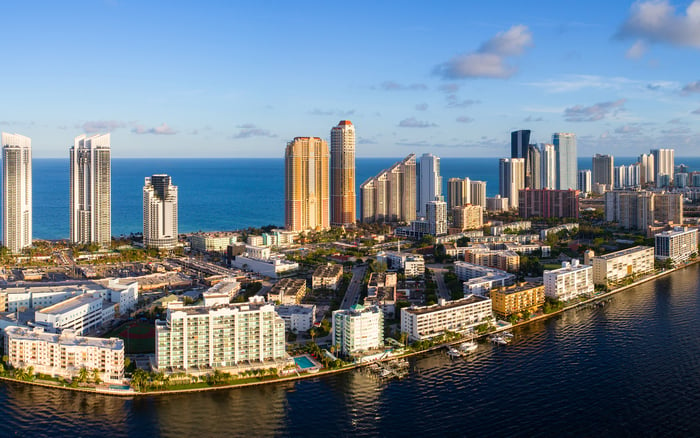
A buyer-focused editorial on one of South Florida’s most meaningful luxury condo distinctions: full-floor or semi-private access versus shared corridor living. This guide compares privacy, noise, security, and daily experience across building layouts, then translates the trade-offs into practical tour questions for high-end purchasers. For many buyers, the decision is less about square footage and more about how the building manages circulation, who shares your arrival moments, and whether the residence truly feels insulated from the rest of the tower.
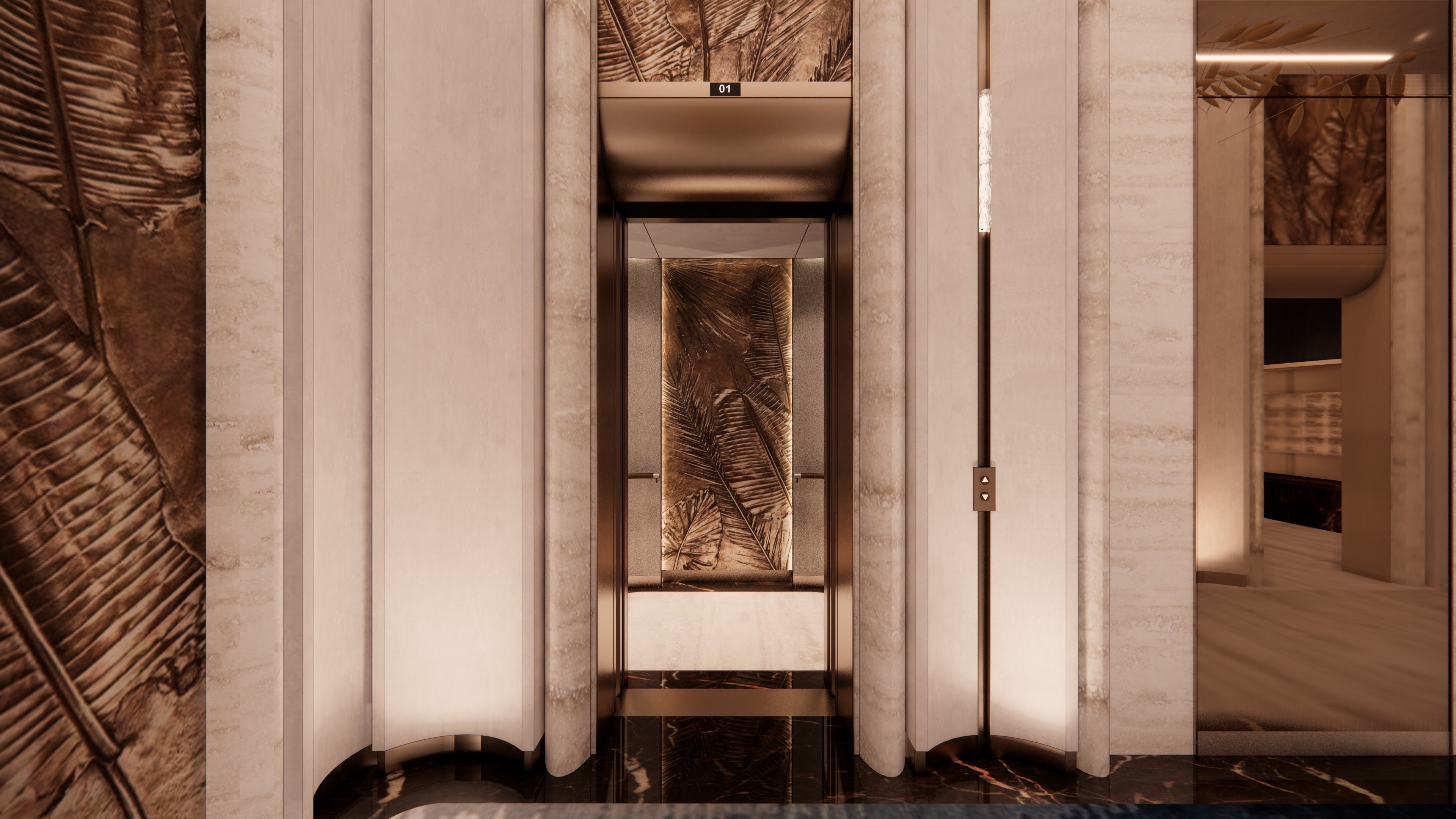
In South Florida’s luxury condo market, the difference between a private elevator entry and a shared hallway isn’t a minor detail. It shapes how the home feels every day. Buyers often start with a simple question: do I step out of an elevator into my own foyer, or do I enter from a corridor where neighbors, guests, and staff move through the same space? The answer influences privacy, noise, security, and the emotional sense of exclusivity. In many ultra-luxury buildings, the apartment itself may be exceptional either way, but the arrival sequence can determine whether the residence feels like a private home in the sky or a premium unit inside a larger machine.
Private or semi-private elevator lobbies are one of the most consistent signals of “true” luxury because they reduce shared circulation. When you enter directly into a private foyer, the building is effectively eliminating a public zone right outside your door. That matters for sound. It matters for sightlines. It matters for the way guests arrive. And it matters for the subtle daily feeling of being insulated from the rest of the tower.
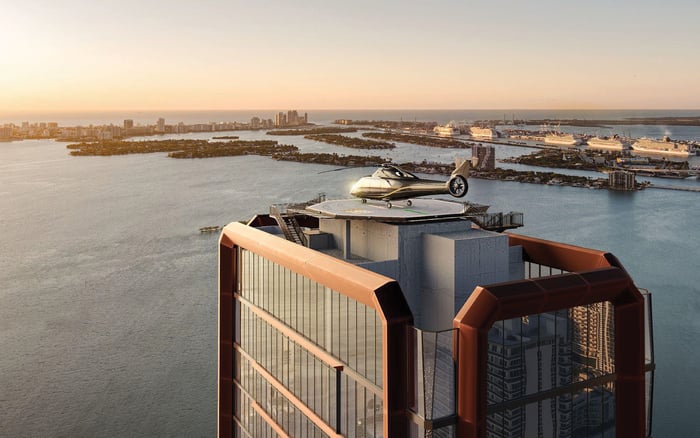
Buildings that offer private elevator entry often pair it with a boutique density profile: fewer residences per floor, fewer total units, and fewer daily interactions with the broader resident population. That can translate into a more controlled environment, but it can also come with trade-offs: fewer amenities, fewer staff layers, or a higher per-unit share of operating costs. For buyers who prioritize privacy above all else, ultra-luxury properties such as Regalia Sunny Isles Beach, known for its low-density, full-floor concept, illustrate why “arrival” can become a core part of the value proposition.
A shared hallway is not inherently a compromise. Many of South Florida’s best new developments and resale towers deliver exceptional residences with corridor entry. The key is how well the building manages that corridor.
In well-run luxury buildings, corridors are wide, quietly finished, and intentionally designed to prevent the “hotel hallway” effect. Doors are solid-core with strong seals, camera systems are layered, and elevator access is controlled. In some of Miami’s most ambitious high-rise projects, shared corridors are part of a bigger ecosystem: more units, more amenities, more staff, more services. For some buyers, that ecosystem is the point. A large building can offer a sense of energy, more on-site programming, and a deeper service infrastructure.
The trade-off is friction. Corridor living means your front door sits on a shared path. If the building has many units per floor, the probability of hearing doors, voices, carts, or deliveries increases. That does not mean the building is poorly built, it means the circulation pattern is more communal.
In luxury condos, quiet is rarely the product of a single material choice. Many sound-control targets reference STC ratings, and higher STC generally correlates with better speech and music privacy between spaces. But real-world outcomes often come down to execution: gaps, penetrations, and imperfect sealing can undermine an otherwise strong wall assembly. For buyers, the most useful mindset is to evaluate sound as a system.
Mass and insulation help, but so do resilient isolation techniques and meticulous sealing.
Door hardware, undercuts, and elevator core adjacency matter as much as the walls.
Corridor activity, not just neighbor activity, can define the noise profile. During a tour, listen in the pause points: the elevator lobby, the door threshold, and the first 30 seconds after entry. That is when you will detect whether the building has treated “arrival acoustics” as part of the luxury promise.
Private elevator entry often feels safer because it reduces exposure, but true security is layered. The best buildings combine controlled elevator access, thoughtful lobby design, and clear separation between resident circulation and service circulation. Shared corridors can still be highly secure when the building has disciplined access control, cameras, and a concierge or front desk culture that doesn’t treat security as a formality.
Buyers should also consider “soft security,” the social reality of who can get close to your door and when. A private foyer naturally restricts that. In a corridor building, ask how guests are managed, whether the elevators require key access to reach residential floors, and how vendors are routed. Many high-end towers also now treat delivery logistics as part of luxury: controlled package rooms, separate service elevators, and policies that limit cart traffic in resident corridors.
Some buyers assume boutique buildings automatically deliver better experience. Not always. Boutique can mean more privacy, but it can also mean less staff redundancy. Larger buildings may feel more public, but they can support more staffing, more operational oversight, and more robust amenity programs. The operational question is: what lifestyle do you want?
If you want a residence that feels like a private home, you may value the small-building cadence. If you want a more resort-like experience with dining, wellness, and programming inside the building, a larger ecosystem might be more aligned.
A project like 2200 Brickell reflects a modern approach to luxury living where daily experience is curated through design, staff, and amenity planning, not just unit interiors. Meanwhile, full-floor or low-density concepts remain compelling for buyers who treat privacy as the primary asset.
New construction buyers often focus on floor plans and finishes, but the most durable luxury value is often embedded in building layout. Circulation patterns are hard to change. A private elevator foyer is structural. A shared hallway is structural. If you buy pre-construction, you are underwriting the lived experience years in advance.
That is why some buyers look for clarity: how many units per floor? What does the elevator lobby look like? Are there separate service corridors? Is there a dedicated service elevator? How will move-ins, deliveries, and repairs be handled?
In large-scale developments, circulation systems become a complex choreography. The best projects design that choreography intentionally. A new-generation tower like Aria Reserve Miami shows how modern luxury can be expressed through scale, views, and amenities, but buyers should still evaluate the “arrival” story, because it defines privacy just as much as the unit’s interior design.
Luxury is easiest to evaluate when you measure the moments that repeat every day.
Arrival sequence: From lobby to elevator to unit, note how many public moments you experience.
Threshold design: Look for a private elevator foyer or a recessed entry that creates a buffer.
Corridor adjacency: Ask where elevators, trash rooms, and amenity doors sit relative to the unit.
Elevator behavior: Observe peak-time waiting and how often you share the cab.
Acoustic tells: Listen at the door, in the foyer, and near any core walls.
Security layers: Understand how guests, vendors, and deliveries are routed.
Ownership dynamics: Consider whether you prefer boutique agility or large-building structure. To see how these themes translate into different building identities, compare ultra-private concepts like Regalia Sunny Isles Beach with higher-service luxury ecosystems such as 2200 Brickell.
Is private elevator entry always quieter than a shared hallway? Often, yes, because there is less foot traffic and fewer door events outside the unit, but building construction and corridor management still matter.
Does a shared corridor reduce resale value in luxury condos? Not necessarily. Many premium towers have corridor entry, but privacy-focused buyers may pay more for private lobbies.
What is the biggest practical advantage of a private foyer? It removes a public zone at your door, improving privacy, security, and the feeling of exclusivity.
Can corridor buildings still feel ultra-luxury? Yes. When corridors are wide, quiet, well-finished, and access-controlled, the experience can still feel highly elevated.
What should I listen for during a tour? Pause at the elevator lobby and the door threshold. Corridor sound, elevator noise, and door events can reveal daily realities.
How do deliveries affect corridor living? Buildings with separate service elevators, package rooms, and routing policies reduce cart traffic and noise in resident corridors.
Do boutique buildings always have better privacy? They often have fewer residents per floor, which can help, but privacy also depends on security systems and operational discipline.
How many units per floor is considered “low density”? There’s no universal number, but fewer units per floor generally correlates with fewer shared interactions and less corridor traffic.
How do fees compare between boutique and larger buildings? Boutique buildings can have higher per-unit costs due to fewer owners sharing fixed expenses, while larger buildings spread costs but may have more amenities.
What security features should buyers prioritize? Layered access control, controlled circulation, and clear routing for guests and vendors typically matter most.
What should I focus on during a first tour? Pay attention to the arrival sequence, the threshold, corridor traffic, and the building’s sound and access cues.
For tailored guidance, speak with MILLION Luxury.
If branded residences are on your mind — as a home or as an allocation — we would be glad to share what we are seeing, privately.
Begin a quiet conversation