Lionel Messi’s arrival accelerated global attention on South Florida, but the clearest real-estate signal is not hype. It is the pattern of where ultra-high-net-worth buyers choose to live: gated waterfront single-family privacy in Fort Lauderdale, rare full-floor towers in Sunny Isles, and branded, service-led new development in Brickell. Against a broader post-2022 price correction, the top of the market remained historically active in 2025, reinforcing a familiar truth for luxury buyers: scarcity, security, and lifestyle infrastructure set the ceiling.
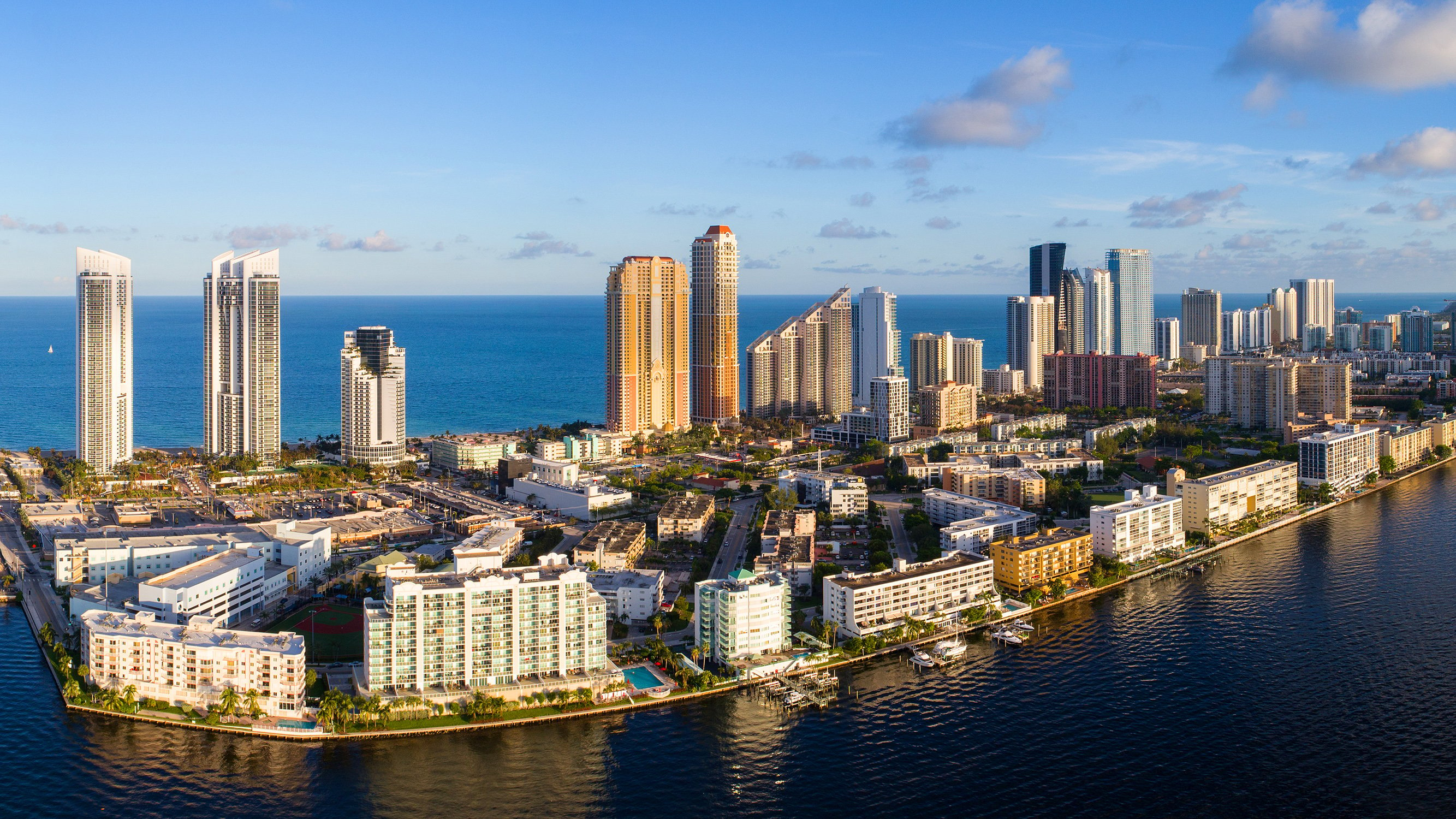
When Lionel Messi joined Inter Miami CF in July 2023, the headline was sport. The lasting implication for South Florida luxury real estate is quieter-and more enduring: a renewed sense of international inevitability. Iconic talent tends to follow strong lifestyle markets, not manufacture them from scratch. In South Florida, that lifestyle is already clear to global buyers: year-round outdoor living, deep airlift, and a coastline that can still deliver genuine privacy.
For sophisticated buyers, the signal is behavioral. High-visibility residents compress decision cycles for others who were already paying attention. The outcome is rarely one dramatic price move. Instead, it’s a broader buyer pool, a sharper preference for turnkey and service-forward product, and a more pronounced premium for addresses that are already supply-constrained.
For buyers, that split is actionable. It suggests room for negotiation and selectivity in the general market, while trophy assets remain protected by scarcity. For sellers of truly prime product, it reinforces a familiar reality: liquidity is still there when a home is singular, correctly positioned, and thoughtfully presented.
Messi’s South Florida real-estate footprint has been covered in ways that are unusually instructive. He reportedly purchased a waterfront mansion at 91 Compass Lane in Fort Lauderdale’s gated Bay Colony neighborhood for $10.75 million. The home has been described as roughly 10,500 square feet with 8 bedrooms and 9.5 bathrooms.
That profile reads like a contemporary ultra-high-net-worth checklist: gated-community control, water adjacency, and a layout that supports extended family and staff while preserving discretion. It’s a single-family decision that prioritizes daily livability over spectacle.
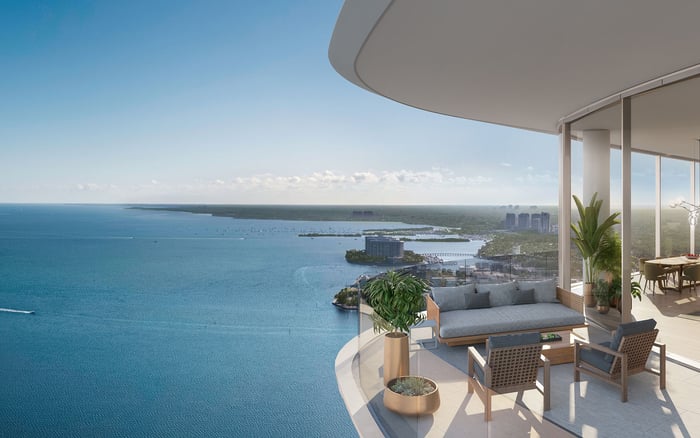
Earlier, Messi was also reported to have bought a full-floor condo at Regalia in Sunny Isles Beach for about $7.3 million. Regalia’s structure is the point: just 39 residences, one per floor. In a corridor known for supertalls and panoramic views, full-floor living is a different order of luxury-defined by quiet, elevator-to-residence privacy and a scarcity that cannot be recreated once a building is complete.
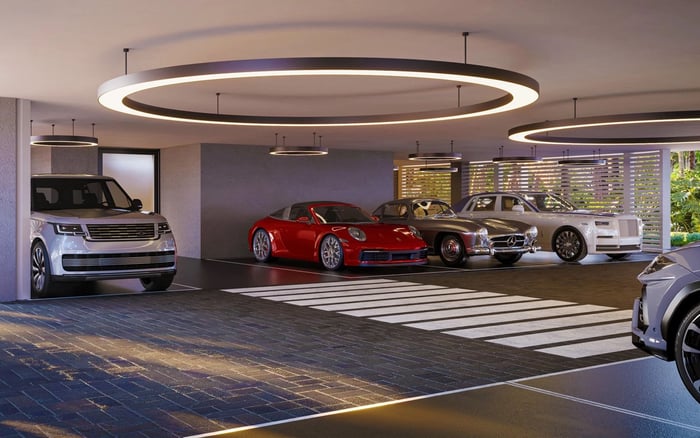
He has also been linked to ownership at Porsche Design Tower in Sunny Isles Beach, a building long aligned with privacy-forward positioning, including its car elevator concept. Whether a buyer uses every novelty feature is beside the point. The core appeal is controlled access and the sense that the building itself was designed around discretion.
Most recently, it was publicly disclosed that Messi had multiple condos under contract at Cipriani Residences Miami in Brickell as of April 2025. Without over-reading any single transaction, the pattern is clear: buyers at this level often assemble options across neighborhoods and product types. A gated house can anchor privacy and family routine, while a branded Brickell residence supports proximity to the city’s business and dining core-with service embedded in the value proposition.
In Brickell, that service-led thesis is exactly why projects such as Cipriani Residences Brickell remain central for buyers who want hospitality DNA without the volatility of a condo-hotel.
South Florida’s luxury ecosystem has never been solely domestic. In 2025, foreign buyers purchased $4.4 billion of South Florida residential real estate, up from $3.1 billion in 2024, with total transactions rising to about 5,300 from about 4,000. Colombia (15%) and Argentina (12%) represented the top country shares of foreign-buyer closed sales in 2025.
Condominiums remain the primary on-ramp: 51% of international South Florida residential purchases were condos or co-ops. That preference aligns with the region’s supply reality. For many global buyers, a well-run condominium offers lock-and-leave ease, immediate usability, and a management structure that reduces friction.
Notably, a portion of international buyers purchase without visiting Florida at all (11%). In that context, brand, building reputation, and product clarity carry outsized weight. The buyer is underwriting certainty: the neighborhood, the team, the service model, and the building’s long-term desirability.
In this environment, Brickell’s branded pipeline isn’t about fashion or logos. It’s about global familiarity and operational reassurance. Buyers with multinational lives often value predictability as much as design.
Inter Miami’s rising business profile since Messi’s arrival has reinforced the club’s cultural gravity. The larger real-estate angle is the ecosystem developing around it. Miami Freedom Park, a major mixed-use project anchored by the club’s future stadium, has announced 125,000 square feet of retail for an entertainment district.
For luxury residential markets, infrastructure like this works indirectly. It expands the city’s year-round calendar, deepens corporate hospitality, and supports the perception that Miami’s growth is organized-not incidental. Lifestyle districts can also create new proximity premiums. Buyers who prioritize walkable social life and curated retail tend to track these nodes.
This preference for integrated living is one reason newer residential towers across the urban core continue to resonate, including Mercedes-Benz Places Miami and The Residences at 1428 Brickell, where the promise is not only view and finish, but a more complete building-as-club lifestyle.
South Florida’s premium market works because it offers distinct, non-substitutable lifestyles.
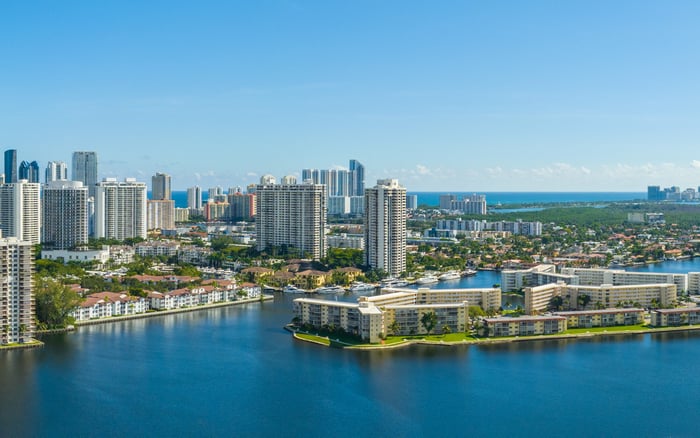
Sunny Isles is vertical, ocean-facing, and international by nature. The buyer here often values security, altitude, and privacy engineering. The full-floor concept at Regalia is emblematic-and for those seeking a contemporary alternative with a similarly rarefied feel, Regalia Sunny Isles Beach reflects the enduring appeal of limited inventory.
Brickell is urban, dining-driven, and increasingly service-oriented. It suits buyers who want to step into the city rather than drive through it. Branded towers matter here because they reduce the cognitive load of buying in a fast-evolving skyline.
Fort Lauderdale, by contrast, offers a residential rhythm many families prefer: boating culture, gated enclaves, and an emphasis on single-family privacy. That same privacy logic is what draws attention to luxury waterfront and newer coastal residences, including Four Seasons Hotel & Private Residences Fort Lauderdale for buyers who want beachfront services without sacrificing discretion.
A celebrity narrative can be intoxicating, but luxury buyers win by separating story from structure.
First, focus on scarcity that can’t be manufactured: a gated neighborhood with limited waterfront lots, a building with one residence per floor, or a truly irreplaceable view corridor.
Second, prioritize privacy and governance. In condominiums, that means strong access control and a clear approach to owner use. In single-family enclaves, it means controlled entry and a community profile aligned with discretion.
Third, treat service as a tangible asset. In branded and hospitality-adjacent towers, service reduces friction for global owners. That convenience isn’t a perk; it’s part of the investment rationale.
Finally, keep the broader cycle in view. A market can soften at the median while staying resilient at the top. In 2025, both realities held at once: cooler conditions versus 2022 peaks, alongside sustained depth for $10 million-plus property.
For buyers, this moment rewards precision. If your goal is long-term capital preservation, concentrate on the product types that maintain a bid in every cycle: best-in-class waterfront, best-in-class full-service towers, and residences defined by genuine rarity.
For sellers, the mandate is to compete on certainty. International demand is real, condos remain a preferred format, and new construction continues to be influenced by foreign-buyer participation. Presentation, clarity, and a discreet marketing strategy can matter as much as price-especially when your prospective buyer is underwriting from abroad.
South Florida’s luxury market doesn’t require any single person to validate it. But when the world’s most recognizable athlete chooses to plant flags across gated waterfront and rarefied vertical living, the message is unmistakable: the region has become a permanent address in the global luxury atlas.
Did Lionel Messi buy a home in South Florida? Yes, he reportedly purchased a waterfront mansion in Fort Lauderdale’s gated Bay Colony for $10.75 million.
How big is Messi’s Fort Lauderdale home? It has been described as roughly 10,500 square feet with 8 bedrooms and 9.5 bathrooms.
Has Messi owned a condo in Sunny Isles Beach? Yes, he was reported to have bought a full-floor condo at Regalia in Sunny Isles Beach for about $7.3 million.
Why do ultra-luxury buyers like full-floor residences? They offer a rare mix of privacy, controlled access, and scarcity that is difficult to replicate in newer supply.
Is Brickell still a top choice for international luxury buyers? Yes, Brickell remains a global-facing neighborhood where branded, service-led towers are especially compelling.
Are foreign buyers still active in South Florida real estate? Yes, foreign-buyer purchase volume rose to $4.4 billion in 2025, with transaction counts also increasing.
What do international buyers purchase most often in South Florida? Condos and co-ops are a leading choice, representing 51% of international purchases in the region.
Did Miami prices decline from the 2022 peak? Yes, Miami’s median list price pulled back meaningfully from its July 2022 peak, even as luxury remained active.
Is the $10M+ market still strong? Yes, South Florida closed 361 sales of $10 million-plus homes in 2025, the second-most on record.
What is Miami Freedom Park and why does it matter to real estate? It is a planned mixed-use district anchored by Inter Miami’s future stadium, supporting long-term lifestyle demand.
For a tailored shortlist and next-step guidance, connect with MILLION Luxury.
If branded residences are on your mind — as a home or as an allocation — we would be glad to share what we are seeing, privately.
Begin a quiet conversation