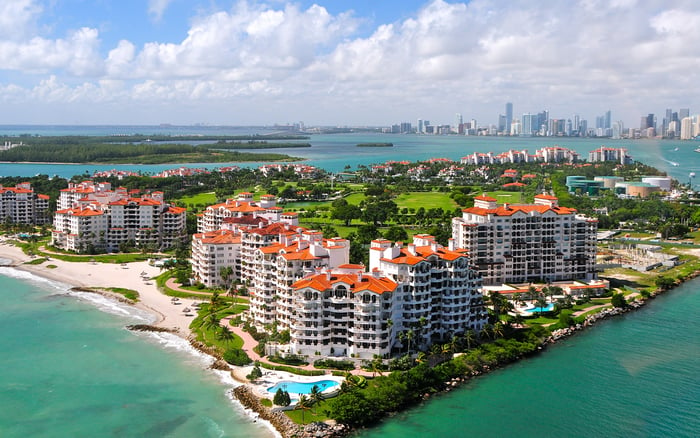
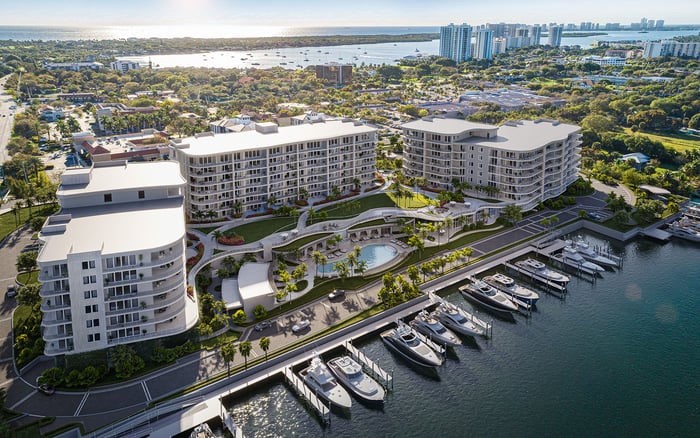
Two of Miami’s most guarded addresses are evolving in distinct ways: Fisher Island’s club-centric, condo-forward lifestyle and Indian Creek’s municipality-scale estate privacy. This MILLION Luxury editorial breaks down access, ownership costs, supply, and how buyers are positioning capital across both enclaves.
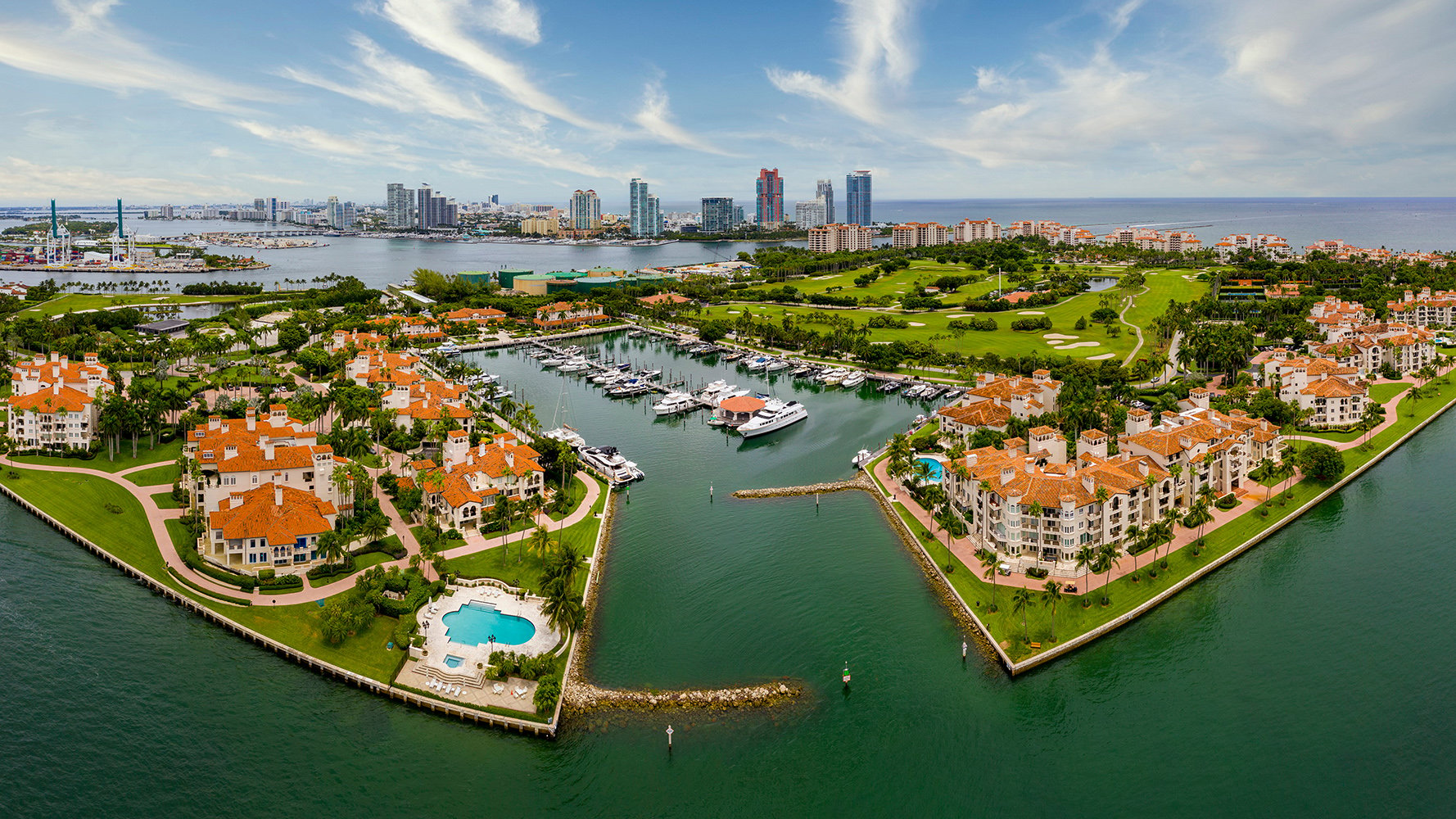
South Florida has many gated communities, but only a handful feel structurally insulated from the city around them. Fisher Island and Indian Creek sit at the top of that pyramid-not because they’re hidden from view, but because entry and daily life are deliberately constrained.
Fisher Island reads like a private resort that happens to be residential. Life is organized around a private-club ecosystem, marina culture, and a built environment where condominiums play an outsized role. Indian Creek, by contrast, is the pure estate model: a tiny incorporated village with a reputation for an extreme security posture and a single bridge that naturally compresses access.
For buyers, the decision is less “which is better” and more “which privacy architecture matches the way you live.”
Indian Creek’s pricing story works differently. It’s defined by an exceptionally small pool of homes and a culture of discretion. Transactions and listings that have been publicly covered have reached nine figures, including a $110 million sale and a separate ultra-trophy listing pitched at $200 million. These aren’t “medians” in any useful statistical sense-they’re signals of what scarcity plus global-profile demand can command when the asset is a waterfront estate inside a municipality engineered for privacy.
The practical takeaway: Fisher Island’s pricing is typically expressed through consistent, high-end turnover. Indian Creek’s pricing shows up as punctuation-occasional, outsized events.
Privacy isn’t a vibe. It’s infrastructure.
Fisher Island is accessible only by ferry, boat, or private watercraft, and helicopter access is commonly discussed in market conversations. That access profile creates a controlled entry environment that’s difficult to replicate on the mainland. Even when you entertain, the island itself does much of the filtering.
Indian Creek’s control point is a single bridge. One connection means fewer variables: fewer ingress points, fewer casual pass-throughs, and a stronger psychological perimeter. It also supports the enclave’s “Billionaire Bunker” reputation, where the baseline expectation is that neighbors value discretion as much as the water view.
Neither model is inherently more private. They’re simply optimized for different routines. Fisher Island suits buyers who want access control plus a fully staffed, amenity-driven day. Indian Creek suits buyers who want the quiet authority of municipal boundaries and an estate-scale buffer.
Ultra-luxury buyers understand that the purchase price is only the beginning, but these two enclaves price “belonging” differently.
On Fisher Island, the private club is central to the lived experience. Membership has been publicly disclosed with a $250,000 initiation fee, with ongoing dues and additional golf-related fees. In other words, ownership can include a meaningful layer of lifestyle cost that doesn’t show up on the deed.
The tradeoff is clarity: you’re paying into a managed ecosystem designed to keep residents on-island. Dining is organized across multiple club-run venues, and marina services reinforce a yachting-forward daily rhythm. The island becomes both home and social infrastructure.
Indian Creek’s signature shared amenity is its country club, anchoring a private golf-community feel. But the economic center of gravity is the estate itself: land, waterfront, build quality, and the long-term optionality of a property that rarely has a true substitute.
A buyer deciding between the two is often deciding between two definitions of service. Fisher Island monetizes service through an explicit club model. Indian Creek monetizes it through scarcity and land value.
Scarcity is the common denominator, but the composition of scarcity differs.
Fisher Island remains condo-forward, with publicly visible luxury listings that demonstrate real depth at the top end. What makes it distinctive isn’t a lack of residences-it’s that the island still trades like a private world. New supply is also rare, which is why any credible development activity carries weight.
A notable example is The Residences at Six Fisher Island, a new luxury condominium development that has been publicly discussed as breaking ground with an expected 2026 completion. For buyers who want Fisher Island’s access control without inheriting an older building’s compromises, new construction can be a decisive differentiator.
Indian Creek’s scarcity is more absolute. Community profiles consistently describe a very small number of homes, often cited around 41. With inventory that constrained, the market becomes less about choice and more about timing, relationships, and readiness to move when an opportunity surfaces.
Fisher Island is at its best for buyers who want to compress their universe. You can live, dine, socialize, and boat within a managed ecosystem built for members. That appeals to second-home owners who value frictionless arrival and departure, as well as full-time residents who want privacy without feeling isolated.
Indian Creek is for buyers who want the opposite: privacy that reads as distance. Day-to-day life can be intentionally quiet. The estates speak for themselves. The culture tends to reward understatement and a low-profile approach to entertaining.
Many Miami buyers also cross-shop comparable privacy-adjacent addresses that deliver a similar tone in different formats. In the South of Fifth corridor, Apogee South Beach offers a boutique, security-forward condominium experience where privacy is curated at the building level rather than the municipality level. Farther north, Surfside’s ultra-luxury conversation often includes The Surf Club Four Seasons Surfside, which expresses discretion through hospitality-grade service and a tightly controlled resident environment.
These aren’t substitutes for Fisher Island or Indian Creek. They’re alternative answers to the same question: how do you buy peace in a high-visibility city?
In both enclaves, the smartest buyers separate “privacy optics” from “privacy mechanics.” A gate is optics. Controlled access by water, a single bridge, and a deeply embedded discretion culture are mechanics.
Consider four decision points.
First, liquidity expectations. Fisher Island’s condo market can offer more visible comparables and potentially more frequent turnover. Indian Creek may offer fewer opportunities and longer holds, with pricing influenced by trophy dynamics.
Second, your service preference. If you want a private-club ecosystem where dining and marina services are part of the core product, Fisher Island’s model is coherent. If you want an estate as the primary amenity, Indian Creek reads as a purer expression.
Third, your tolerance for ongoing lifestyle costs. Fisher Island’s membership economics make the all-in cost explicit. Indian Creek’s carrying costs are less about membership architecture and more about the realities of maintaining an estate-scale asset.
Fourth, your appetite for new construction. If newness is non-negotiable, Fisher Island’s limited but real development pipeline may be more actionable than Indian Creek’s ultra-low supply. Elsewhere in Miami, buyers who prioritize new-build privacy in a high-design setting may also look at Five Park Miami Beach as part of a broader Miami Beach strategy.
The defining shift in South Florida’s top tier is that luxury is increasingly measured by control. Not just concierge service, but control over access, control over visibility, and control over daily friction.
Fisher Island sells controlled entry plus a private, club-based ecosystem. Indian Creek sells controlled entry plus municipal separation and estate scarcity. Both can be correct. The right answer is the one that aligns with your personal security expectations, your social rhythm, and the way you want to use Miami.
Is Fisher Island accessible by car? No. Access is by ferry, boat, or private watercraft, with helicopter access often discussed.
Why is Fisher Island considered so expensive? Its 33109 ZIP has been cited with a $9.5M median sale price, reflecting ultra-high demand.
Does Fisher Island have a private club? Yes. The Fisher Island Club anchors dining, social life, and resident amenities.
What does Fisher Island Club membership cost? Membership has been publicly disclosed with a $250,000 initiation fee plus ongoing dues.
What lifestyle does Fisher Island favor most? Buyers who want resort-style living with on-island dining, marina culture, and services.
Is Indian Creek a private community or a municipality? It is an incorporated municipality with its own village governance structure.
Why is Indian Creek called the Billionaire Bunker? It is widely known for intense privacy expectations and a high-profile resident base.
How is access controlled in Indian Creek? The island is constrained by a single bridge connection, creating a natural entry point.
How many homes are in Indian Creek? Community profiles often cite a very small number of homes, around 41.
Are nine-figure sales normal in these enclaves? Indian Creek has seen widely covered nine-figure deals and trophy listings; Fisher Island’s pricing is often expressed through very high median condo sales.
For a confidential assessment and a building-by-building shortlist, connect with MILLION Luxury.
If branded residences are on your mind — as a home or as an allocation — we would be glad to share what we are seeing, privately.
Begin a quiet conversation