Two of Florida’s most controlled-access enclaves deliver radically different versions of privacy: a 2,500-acre Keys campus built around boating, golf, and aviation, versus a ferry-served island minutes from Miami Beach. This MILLION Luxury guide compares access, amenities, membership economics that are publicly disclosed, and what today’s pricing signals can and cannot tell you.
Privacy in South Florida is rarely accidental. The most coveted enclaves are designed through distance, controlled entry, and a deep on-site lifestyle that minimizes the need to leave. Ocean Reef Club and Fisher Island sit at the top of that conversation, but they appeal to two distinct buyer mindsets.
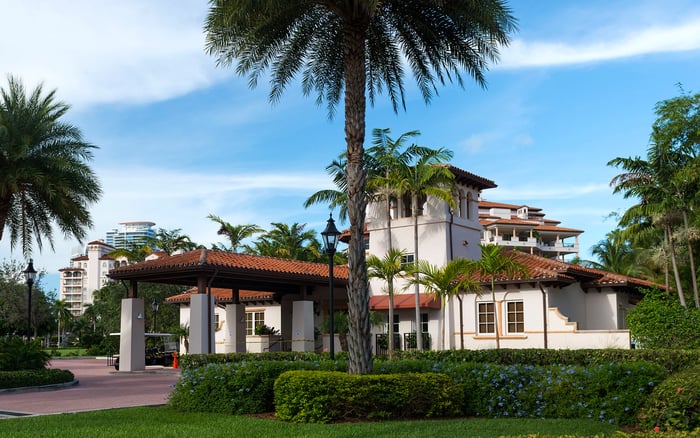
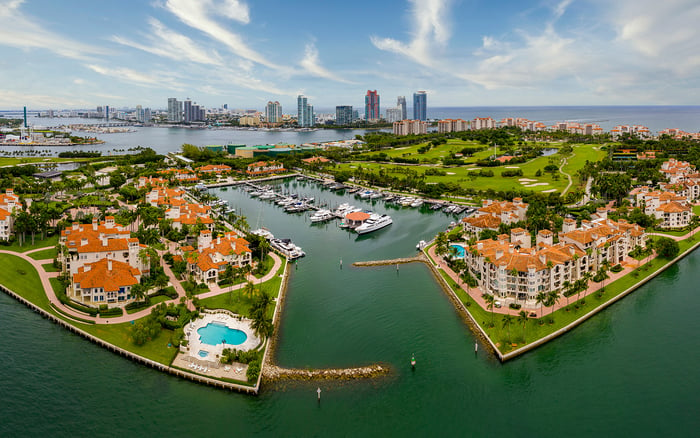
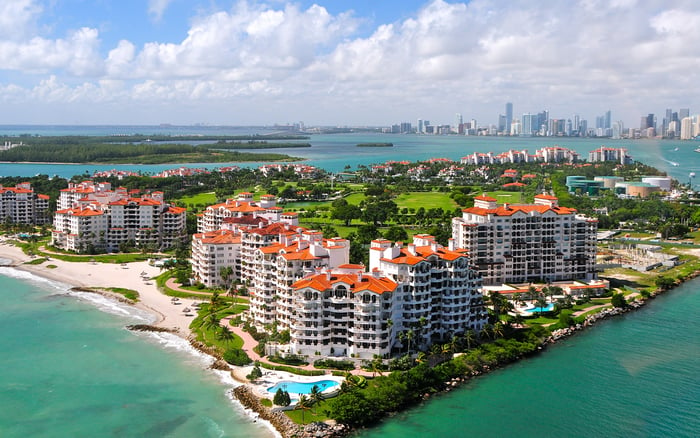
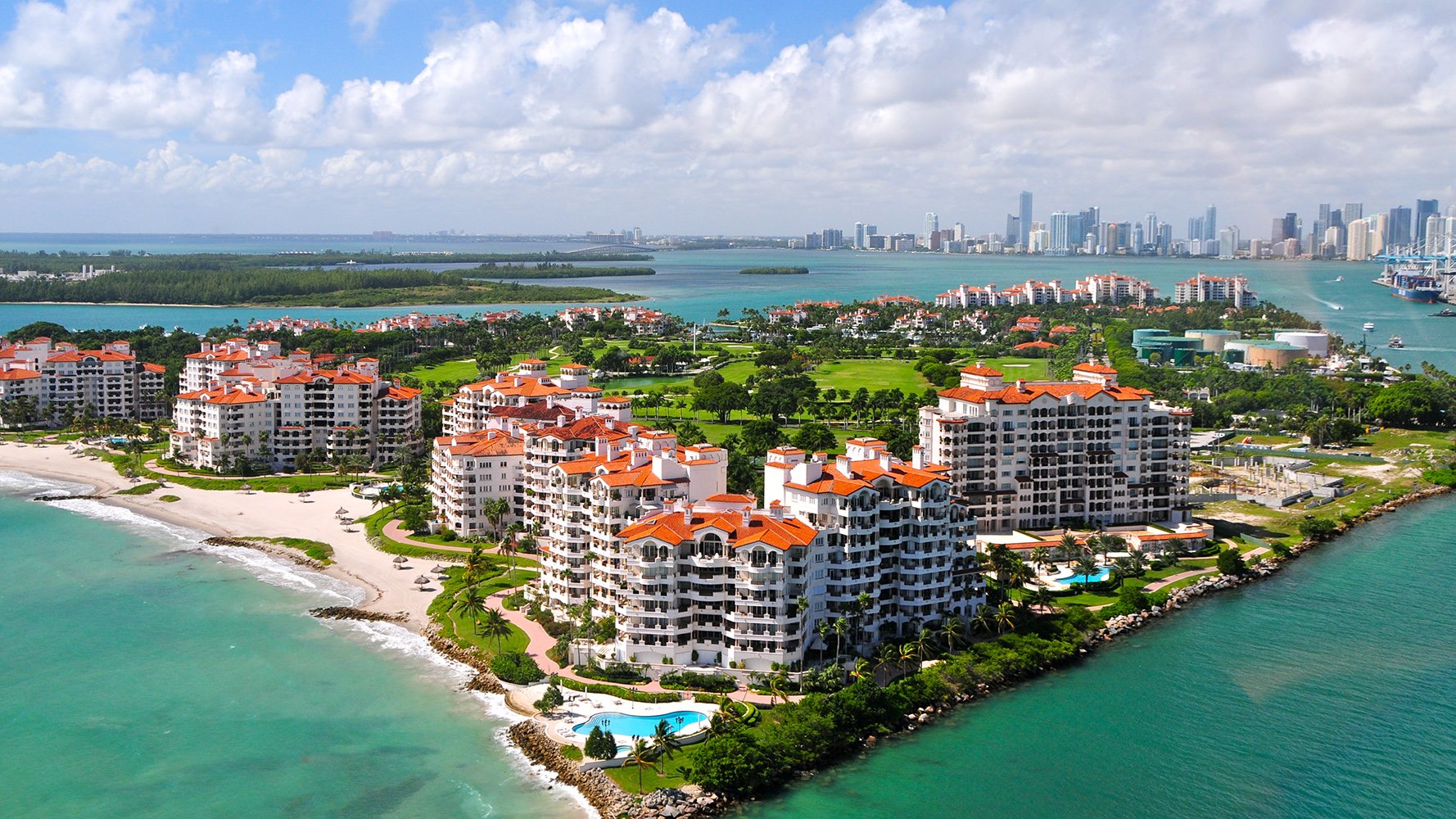
Ocean Reef Club is a private club community at the northern tip of Key Largo, about 60 miles from Miami. It spans roughly 2,500 acres and is built to feel self-contained and gated, with about 1,700 member families who collectively own the club. Fisher Island, by contrast, is a private island community just off Miami Beach, known for limited access and a deliberately insulated day-to-day rhythm.
Choosing between them is less about which address is “more exclusive” and more about which version of discretion fits your life. One is a Keys campus where the amenities are the destination. The other is an island that keeps you close to the city while remaining meaningfully apart.
Ocean Reef’s first luxury is separation. The drive south of Miami becomes part of the transition, and once inside the gates, the community’s scale supports a full calendar without depending on off-property plans. Convenience is also engineered into the property itself. Ocean Reef promotes private aviation access via its on-property airport, a material advantage for owners who treat time as their tightest constraint.
Fisher Island’s luxury is controlled adjacency. Access is managed through the Fisher Island ferry system, which operates 24/7/365 for residents and authorized users. The skyline is close, but the crossing creates a boundary that is both practical and symbolic.
For some buyers, the right answer is neither fully “away” nor fully “near.” That is part of why Miami Beach continues to attract ultra-prime demand for residences that deliver privacy through service and security rather than distance. In that context, The Ritz-Carlton Residences® Miami Beach can read as a different expression of discretion: controlled arrivals and hotel-grade operations, while still staying on the grid.
Ocean Reef’s amenity offering is unusually complete. The club provides two championship 18-hole golf courses, Dolphin and Hammock, plus a marina positioned as a central lifestyle pillar, including slips that accommodate large yachts. The throughline is water and movement: boating, fishing, and the ability to depart without leaving home.
For families, Buccaneer Island functions as a recreation hub with a beach and lagoon, plus water-sports activities and rentals. Add a broad on-property dining lineup across multiple venues, and member accommodations that support short stays inside the community, and the “campus” description becomes precise. It is not an amenity deck. It is an ecosystem.
Ocean Reef has also continued to reinvest. A notable project is the Dolphin Clubhouse, renovated and expanded into an approximately 35,000-square-foot facility completed in December 2021 with a reported $25 million budget. Ocean Reef is also included in Platinum Clubs of America’s Top 150 Country Clubs list for 2025 to 2026, reflecting how the club is positioned within national private-club rankings.
Fisher Island’s amenities skew toward a more compact, curated intensity. Its golf amenity is “The Links,” a 9-hole course designed by P.B. Dye and promoted as a Golf Digest top-10 nine-hole course. Tennis is presented as a signature offering, with multiple court surfaces, and dining is organized across on-island venues intended to reduce the need to leave.
Both lifestyles are engineered. The difference is scale and cadence: Ocean Reef’s marina-centric sprawl across multiple venues versus Fisher Island’s concentrated, island-contained routine where access is ritualized.
In club-oriented communities, the economics are never just the purchase price. Membership structure, governance, and published carrying costs can be as consequential as the home itself.
At Ocean Reef, membership is structured into categories including Equity and Legacy, and prospective members are directed to the club for current requirements and availability. Put simply, details can evolve and are not fully standardized in public-facing summaries.
Fisher Island is more explicit in its published membership materials. Fisher Island Club equity membership is tied to property ownership, and materials describe a $350,000 equity contribution fee for equity membership applicants. The same materials list annual Fisher Island Community Association (FICA) dues at $53,378.36.
None of these figures replace buyer diligence around approvals, timing, and ongoing obligations. They do, however, underline a key reality in the most private markets: transparency is often selective. Treat disclosed fees as the beginning of your underwriting, not the conclusion.
Ultra-prime buyers often look for a single median number to simplify a complex market. In controlled-access enclaves, that approach can mislead. Inventory mix, seasonality, and the gap between listing data and sale data can be substantial.
For Ocean Reef and North Key Largo, Realtor.com has reported a median listing home price around $6.6 million. For Fisher Island, Fox Business has cited the area as America’s most expensive ZIP code with a median listing price of $11.9 million, referencing Realtor.com data.
Sales-based snapshots can look different. Redfin reports a median sale price of $4.3 million in November 2025, down 34.1% year over year, with homes averaging 216 days on market. Zillow reports an average Fisher Island home value around $6.29 million using its home-value estimate metric.
These are not apples-to-apples comparisons. Listing medians reflect what sellers are asking and what product is on the market. Sale medians reflect closed deals and can swing sharply based on which segment traded that month. The more useful takeaway is strategic: both enclaves operate as thin markets where a small number of transactions can reshape the narrative. A sound pricing decision should be anchored in the specific home, the membership pathway, and the lifestyle value, not a headline median.
Ocean Reef tends to fit buyers who want distance to do the work. If your ideal routine is weekends that turn into seasons, and if your calendar revolves around golf, boating, and family life that does not require “going into town,” the Keys campus model is hard to replicate. The gated structure matters, but the real differentiator is completeness: the community is large enough to feel like a private world.
Fisher Island suits the buyer who wants a private address without giving up immediate access to Miami’s commercial, cultural, and medical infrastructure. The ferry becomes a filter, not an inconvenience. For many, that is the point. You can step into Miami Beach when you choose, then step away just as quickly.
There is also a third cohort: buyers who want oceanfront living and high-touch services but do not want a club ecosystem or reliance on a ferry. Miami Beach has matured into a market for that exact preference set, from legacy icons to newer boutique offerings. Consider the contrast between a full-service residential experience at Setai Residences Miami Beach, a more intimate coastal proposition at 57 Ocean Miami Beach, or the high-design, lifestyle-driven aura that has helped define Shore Club Private Collections Miami Beach. These are not substitutes for Ocean Reef or Fisher Island, but they are credible alternatives for buyers who define discretion through service, security, and controlled access points rather than geographic separation.
In any private enclave, the real purchase is a bundle: property plus access plus rules. Before committing, align your team around a few non-negotiables.
First, confirm the membership pathway and timeline. Ocean Reef and Fisher Island both rely on membership structures that can include approvals, categories, and requirements that should be verified directly with the community.
Second, evaluate your personal friction tolerance. A ferry can feel like romance or routine depending on how often you move between worlds. Similarly, a 60-mile separation from Miami can feel like freedom or distance depending on your business cadence.
Third, underwrite the lifestyle, not only the home. A marina slip, golf access, tennis culture, on-property dining, and accommodations for visiting family can change how you travel and how you host. Those shifts can carry real economic value even when they do not appear as a line item in a comp.
Finally, treat market data as context. Thin inventory and trophy assets can distort both listing and sale medians. The best decisions in these markets are made with long time horizons and an exact understanding of what makes the home, and the community, difficult to replace.
Is Ocean Reef Club closer to Miami than the Florida Keys feel? Ocean Reef sits at the northern tip of Key Largo, about 60 miles from Miami, which can feel significantly separate in day-to-day life.
How large is Ocean Reef Club? It spans roughly 2,500 acres and is designed to operate as a self-contained, gated community.
How many member families does Ocean Reef have? It is reported to have about 1,700 member families (equity members) who collectively own the club.
What are Ocean Reef’s signature amenities? Two championship 18-hole golf courses, a major on-site marina, and private aviation access via an on-property airport, supported by extensive dining and family recreation.
What is Buccaneer Island at Ocean Reef? A family recreation hub with a beach and lagoon, plus water-sports activities and rentals.
How does Fisher Island control access? Access is via the Fisher Island ferry system, which operates 24/7/365 for residents and authorized users.
Is Fisher Island Club membership tied to owning property? Yes. Fisher Island Club equity membership is tied to property ownership and positions members as equity participants in the club.
What Fisher Island fees are publicly disclosed? Published membership materials describe a $350,000 equity contribution fee and list annual FICA dues at $53,378.36.
Does Fisher Island have golf and tennis? Yes. The island promotes a 9-hole P.B. Dye-designed course called The Links and positions tennis as a signature amenity with multiple court surfaces.
Which is better for a buyer who needs Miami Beach regularly? Fisher Island generally offers closer adjacency to Miami Beach, while Ocean Reef emphasizes separation and a full campus lifestyle that reduces the need to leave.
Explore South Florida’s most private addresses with MILLION Luxury.
If branded residences are on your mind — as a home or as an allocation — we would be glad to share what we are seeing, privately.
Begin a quiet conversation