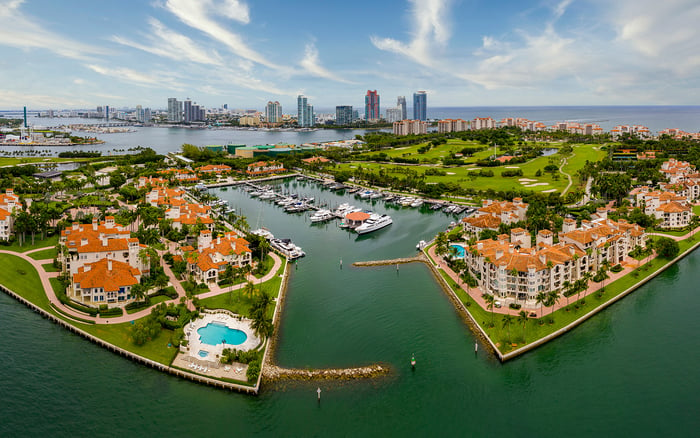
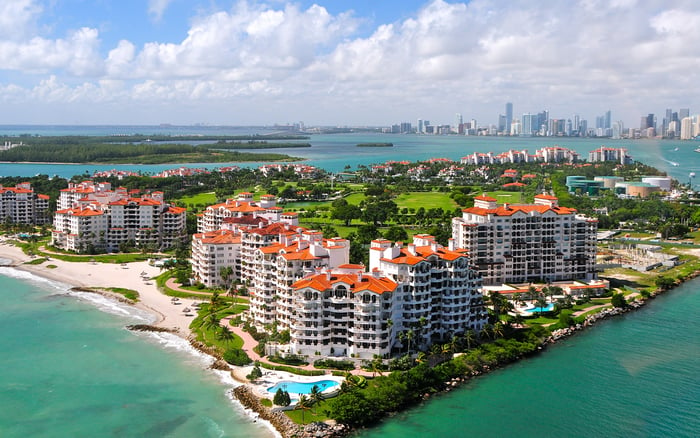
Fisher Island and Ocean Reef Club represent two of Florida’s most tightly held private club lifestyles, each built around controlled access, equity-style membership, and a daily rhythm designed for members first. One is a 216-acre island just offshore from Miami Beach, reached primarily by ferry and private boats. The other is a sprawling, member-owned Key Largo community with an on-site private airport, marina life, and multi-generational continuity baked into its membership framework. For buyers weighing privacy, convenience, and legacy, the distinction is less about amenities and more about how you want to arrive, live, and belong.
In South Florida, luxury is often measured in square footage, views, and recognizable names. For a more exacting buyer, the real upgrade is quieter and harder to replicate: controlled access, reliably calm streets, and a social ecosystem that feels intentional, not incidental.
Fisher Island and Ocean Reef Club are two of the clearest case studies. Both are understood as extreme-luxury environments, and both operate with membership structures that function less like optional perks and more like a framework for how the community runs. In each, what matters is not only what you can do once you arrive, but the fact that arrival itself is designed.
This guide is for buyers evaluating a true second-home strategy, or a primary residence that prioritizes discretion, continuity, and ease over nightlife proximity.
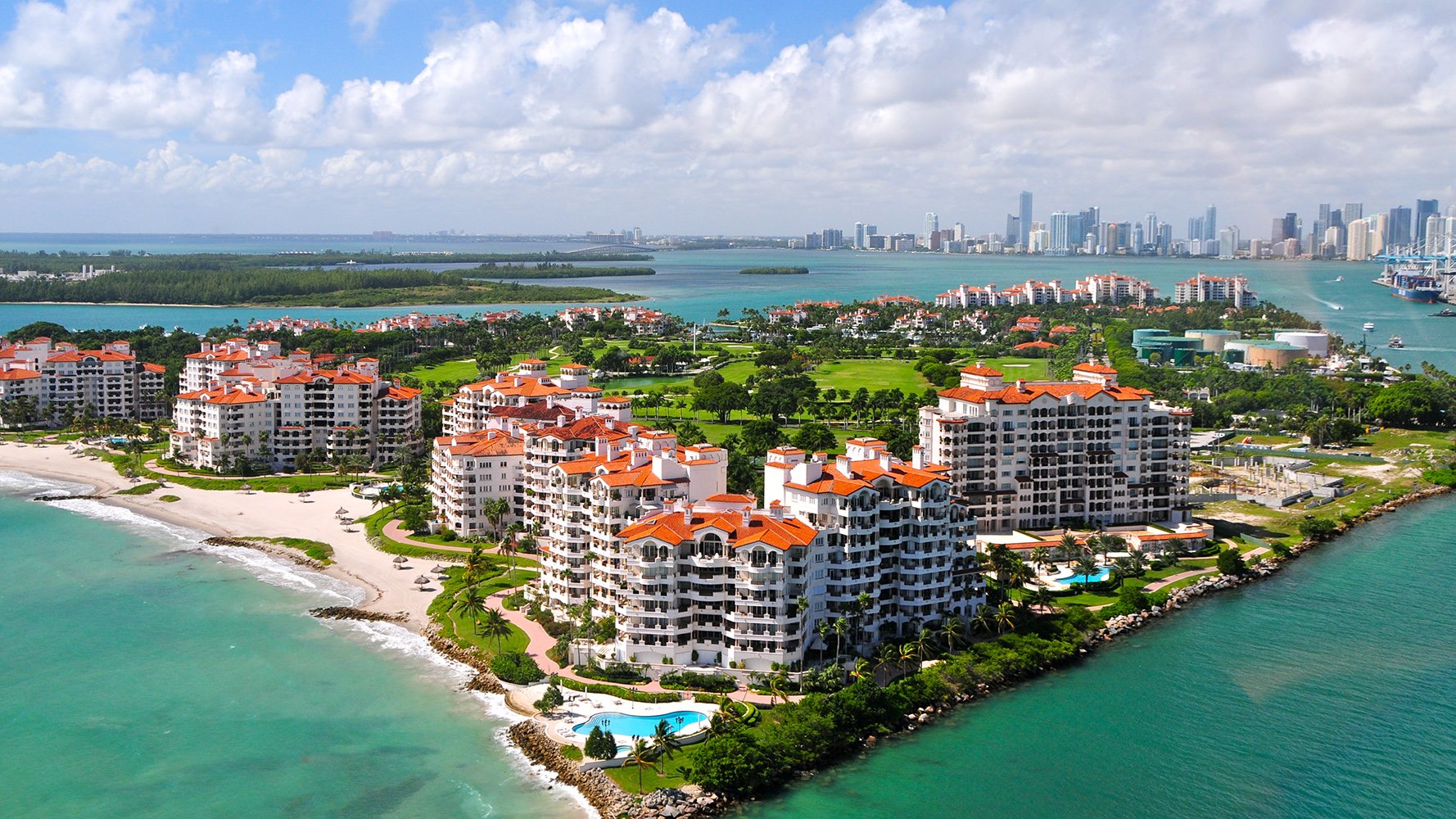
Fisher Island sits just offshore from Miami Beach and is frequently described as a roughly 216-acre private island community. There is no public road connection. Access is primarily via the Fisher Island ferry and private boats, a detail that does more than create atmosphere. It creates a boundary.
That boundary shapes daily life. It influences traffic and deliveries, sets expectations around guests, and supports a cadence for owners who like the ability to step away from Miami Beach intensity within minutes.
Ocean Reef Club, by contrast, is a private, member-owned club community in Key Largo spanning roughly 2,500 acres. Its scale produces a different kind of separation. Instead of an island perimeter, you get the experience of being inside a large, self-contained world where golf, marina, and dining are not occasional diversions. They are the local infrastructure.
If you filter searches through an Exclusive-area or Gated-community lens, these two places reveal the nuance: exclusivity can be enforced by geography, or by master-planned completeness.
Both communities underscore a reality that can be easy to miss if you are used to conventional country clubs. Here, membership is not simply a dues decision. It is closely tied to real estate ownership and, by extension, to community governance.
On Fisher Island, Fisher Island Club membership is structured as an Equity Membership for Fisher Island property owners, positioning the club as an extension of the residential community. That distinction matters. It signals that lifestyle access is embedded in the ownership proposition, not an add-on that can be replaced elsewhere.
Ocean Reef Club similarly states that equity membership is tied to ownership and club ownership, rather than operating as a simple dues-only model. The club also states that Social Membership is not currently available, and that the waitlist has been closed to new applicants. Membership materials describe sponsorship or endorsement expectations, and the club highlights legacy-related eligibility for members’ descendants.
Taken together, these disclosures point to the same theme: the club functions as a private civic layer. If your priority is continuity and the ability to build family rituals into a place, this governance element tends to matter more than any single amenity.
In ultra-private environments, amenities are not just features. They are the choreography of the week.
Fisher Island’s golf offering is a 9-hole course designed by P.B. Dye. The format signals intent: repeat play, practice, and convenience, rather than a destination-round mindset. The island’s racquet program includes 18 tennis courts, reinforcing a lifestyle designed to be active, social, and close to home.
Ocean Reef Club offers two 18-hole golf courses, commonly referenced as the Dolphin and Hammock courses. That inventory aligns with its larger footprint and resort-within-a-community scale. In practical terms, more course capacity supports a calendar of play that can accommodate generations, guests, and varied skill levels without feeling constrained.
For buyers choosing between the two, the decision is rarely about which is “better.” It is about which rhythm fits: an island lifestyle where everything feels minutes away, or a large-scale community where variety is built into the plan.
Sophisticated buyers evaluate luxury through logistics: how a place functions on a Thursday night, how smoothly a weekend begins, how guests arrive, and how quickly you can leave.
Ocean Reef Club operates a private airport, a rare amenity that reduces friction for owners who split time across multiple homes. The difference between driving in and flying directly into a private environment can be the difference between postponing a trip and making it happen.
On the water, Ocean Reef Club presents its marina as a major on-site amenity and a full-service facility for members. The club also highlights Buccaneer Island, a centerpiece recreation area known for beach-oriented facilities and water features. Together, these features speak to a coastal, active lifestyle with a strong sense of programming.
Fisher Island’s access profile is inherently marine-forward because of the ferry and private-boat approach. Even for residents who rarely captain their own vessel, the psychology of arriving by water sets a tone that is difficult to replicate on the mainland.
Ultra-luxury buyers often read real estate pricing as a proxy for operational standards and social selectivity. Fisher Island’s pricing profile is frequently characterized as multi-million-dollar, and Zillow’s Home Values data places the typical home value in the multi-million-dollar range, often cited around $6M+. Market reporting has also tracked Fisher Island’s luxury condo dynamics, including price-per-square-foot and median pricing commentary for high-end segments.
That valuation is not only about finishes. It reflects the constraints and privileges of a place where controlled access and club structure are closely intertwined with ownership.
If you are exploring Fisher Island options that feel intrinsically private, residences associated with the island’s newest generation of inventory can be a useful starting point, such as The Residences at Six Fisher Island, or a more estate-oriented lens through The Links Estates at Fisher Island.
Ocean Reef’s market is widely treated as a distinct submarket within Key Largo, and market updates track its pricing and trends accordingly. For buyers, the implication is a different valuation logic: you are not buying “the Keys” in the abstract. You are buying a specific private community with its own scarcity and demand dynamics.
Some addresses trade on a modern brand. Others trade on a story that predates contemporary development.
Fisher Island’s early elite era is closely tied to William K. Vanderbilt Jr.’s “Alva Base” estate history, a reminder that the island’s mystique did not begin with today’s luxury condos. It began with the premise that certain lives are designed away from public view.
Ocean Reef’s modern narrative is less Gilded Age and more multi-generational by design. The club’s emphasis on descendants’ eligibility, paired with ownership-tied equity membership, signals a place built for repeat family use. It speaks to buyers who think in decades, not seasons.
Not every buyer wants ferry logistics, even when privacy is compelling. Some households want comparable polish within the Miami Beach corridor, with more straightforward access for guests and for day-to-day business needs.
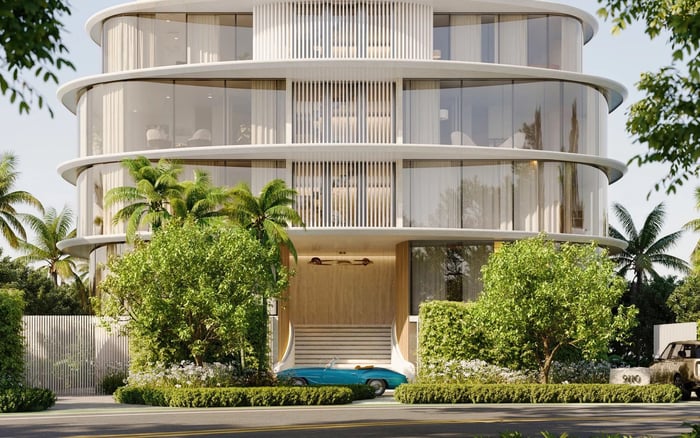
In that case, consider oceanfront new construction and branded residential environments that emphasize discretion and design, even if they do not replicate a club-community governance model. 57 Ocean Miami Beach offers an oceanfront lens on Miami Beach living, while The Ritz-Carlton Residences® Miami Beach speaks to buyers who want hospitality-grade service as part of the residential experience.
These options do not replace the private-enclave feeling of Fisher Island or Ocean Reef Club. For some buyers, though, they deliver the right tradeoff: a refined daily environment with the city still close.
At this level, decisions are often made by removing friction, not by chasing superlatives.
First, clarify your access preference. If arriving by ferry or private boat feels like a feature, Fisher Island’s boundary will likely register as an immediate upgrade. If flying directly into a community matters, Ocean Reef’s private airport becomes a practical advantage.
Second, decide how much you want the club to function as governance. Both communities emphasize equity and ownership ties. Ocean Reef’s publicly described constraints around Social Membership, along with its sponsorship expectations, may appeal to buyers who view restriction as protection.
Third, test your family calendar. A second home that will see multi-generational use benefits from a place designed to keep everyone engaged, and Ocean Reef’s scale, marina orientation, and family recreation features support that. A household that prefers a quieter footprint may lean toward Fisher Island’s island cadence, racquets depth, and compactness.
Finally, be candid about the feeling you want when you return. Some buyers want the clear sensation of leaving the city. Others want a private world that still operates with the breadth and variety of a town.
Is Fisher Island connected to Miami by road? No. Fisher Island has no public road connection, and access is primarily via the Fisher Island ferry and private boats.
Is Ocean Reef Club membership available as social-only? Ocean Reef Club states that Social Membership is not currently available, and the waitlist has been closed to new applicants.
What are the signature sports amenities on Fisher Island? Fisher Island Club offers a 9-hole golf course designed by P.B. Dye and promotes a racquet program that includes 18 tennis courts.
Does Ocean Reef Club offer both boating and golf? Yes. Ocean Reef Club highlights a full-service marina and offers two 18-hole golf courses.
For a private consultation on South Florida’s most discreet addresses, visit MILLION Luxury.
If branded residences are on your mind — as a home or as an allocation — we would be glad to share what we are seeing, privately.
Begin a quiet conversation