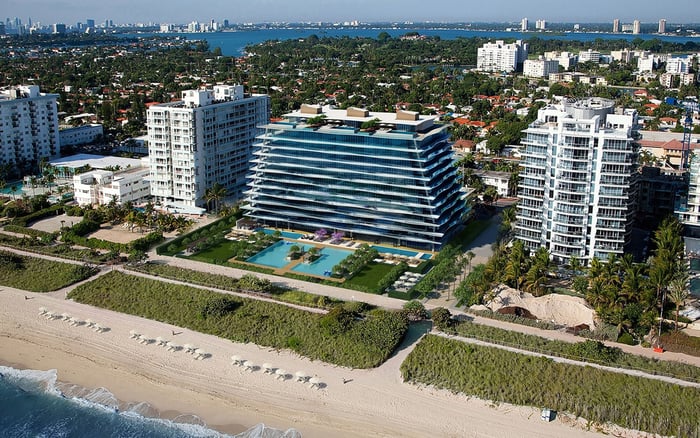
A discreet buyer's guide to evaluating health-concierge services at Fendi Château Residences Surfside, with questions on scope, privacy, costs, access, and long-term value.

For buyers evaluating Fendi Château Residences Surfside, health-concierge language belongs in the same diligence file as parking, maintenance, insurance, and building reserves. The appeal is clear: a residence that can help coordinate wellness needs aligns with how many ultra-prime households live today. Yet the details matter. A polished phrase can mean anything from general appointment assistance to a more structured service relationship with defined providers, protocols, and limitations.
The disciplined buyer is not asking whether wellness is fashionable. The real question is whether the offering is specific, reliable, private, and durable. In Surfside, where discretion and ease are often as important as finishes, health-concierge services have value only when the owner understands exactly what is being promised-and what is not.
Start with a plain-language definition. Does the service coordinate appointments, maintain a preferred provider directory, arrange in-residence visits, support post-procedure recovery logistics, or simply route requests through a concierge desk? Each model has a different value profile.
Ask who is responsible for delivering the service. Is it handled by building staff, a third-party concierge platform, an affiliated wellness operator, or independent professionals engaged case by case by the resident? Buyers should also confirm whether the service is included in association charges, offered à la carte, or subject to membership fees. If pricing has not been finalized, that uncertainty should be reflected in the buyer's underwriting.
New-construction and resale buyers should approach this differently. A pre-closing buyer may need to review proposed operating materials and service descriptions. A resale buyer can ask what has actually been available to owners, how requests are submitted, and whether the program has changed over time.
The first question is scope: What can the concierge actually do? A luxury building may facilitate introductions, but that is not the same as guaranteeing medical availability or outcomes. Buyers should listen for precise verbs such as schedule, coordinate, refer, arrange, remind, or transport. Each carries a different level of obligation.
The second question is coverage. Is assistance available during standard concierge hours, extended hours, or around the clock? If there is after-hours support, is it staffed by the building, an outside call center, or a vendor network? For families who travel frequently, response time may matter more than the menu of services.
The third question is geography. Does assistance apply only while the resident is physically at the property, or can it support coordination before arrival and after departure? Second-home owners may value pre-arrival pharmacy coordination, recovery planning, or transportation logistics, but those services should not be assumed unless they are written into the offering.
Health-related requests are different from dinner reservations. Buyers should ask how personal information is collected, stored, shared, and deleted. If a resident asks a concierge to help coordinate a specialist appointment, who sees the request? Is sensitive information entered into a system, sent by email, handled by phone, or shared directly with a provider?
Family access deserves a separate discussion. Can a spouse, adult child, assistant, or household manager request services on behalf of the owner? What permissions are required? Can those permissions be limited, changed, or revoked? For high-profile households, the best service is often the one with the fewest unnecessary touchpoints.
Pets, household staff, visiting relatives, and private security teams can also complicate access. If in-residence services are contemplated, buyers should understand building entry procedures, elevator access, insurance requirements, and whether providers must be pre-approved.
Luxury hospitality and medical care are not interchangeable. A health-concierge program may enhance convenience, but it should not be treated as a substitute for a personal physician, emergency service, or specialist relationship. Buyers should ask whether the offering includes emergency protocols and, if not, how the building handles urgent situations in a general operational sense.
Credentials also matter. If a service involves wellness practitioners, nurses, therapists, trainers, nutrition professionals, or recovery aides, who verifies licensing, insurance, background checks, and scope of practice? If the building merely introduces residents to independent providers, buyers should know where the building's responsibility ends.
A boutique building culture can make service feel personal, but personal does not always mean formalized. Sophisticated buyers should distinguish between staff willingness and documented obligation.
Health-concierge services should be reviewed in writing. Ask for the applicable rules, service menus, vendor agreements if available, membership terms, fees, cancellation rights, and exclusions. If a service is promoted as an amenity, buyers should ask whether it can be modified, suspended, or discontinued by management, the association, or a vendor.
Continuity matters. What happens if the third-party provider changes? Are there minimum service standards? Are residents notified before pricing changes? Are unused memberships refundable or transferable? For an owner who plans to use the residence seasonally, the answer can influence the amenity's practical value.
Buyers should also ask whether there are conflict-of-interest disclosures. If a concierge refers residents to particular providers, is any fee, commission, preferred relationship, or marketing arrangement involved? The goal is not suspicion. It is clarity.
At the ultra-prime level, wellness is part of a broader service ecosystem. It touches arrival, privacy, security, household staffing, dining, recovery, fitness, and family logistics. At Fendi Château Residences Surfside, buyers should evaluate any health-concierge discussion within the full ownership experience, not as a stand-alone luxury phrase.
Surfside appeals to buyers who often want calm, discretion, and proximity to broader Miami and Miami Beach living without feeling overexposed. In that setting, a well-defined wellness support program may add meaningful ease. A vague program may add little more than vocabulary.
Resale value is harder to quantify, but service clarity can matter. Future purchasers may respond favorably to amenities that are documented, understandable, and easy to use. They may discount features that sound impressive but are difficult to verify. For this reason, buyers should preserve written materials in the same file as floor plans, budgets, rules, and maintenance history.
Before moving forward, request written answers to a focused checklist: What services are included? Who provides them? What is the cost? What are the hours? What information is collected? Who may request service? What is excluded? What happens in an emergency? Can the program change? How are complaints handled?
Then ask a practical question: Would this service make life easier for the way the household actually lives? For some owners, the answer may be yes because coordination saves time. For others, established private medical relationships may be more important than an amenity. The right conclusion is personal, but the process should be rigorous.
What should a buyer ask first about health-concierge services? Ask what the service actually includes, who provides it, and whether it is documented in writing.
Is a health concierge the same as medical care? No. It may coordinate or facilitate requests, but buyers should not assume it replaces physicians, emergency services, or specialist care.
Should the service be included in association fees? Buyers should ask whether it is included, optional, membership-based, or billed per request.
Why does privacy matter so much? Health-related requests can reveal sensitive personal information, so buyers should understand how data is shared, stored, and deleted.
Can family members use the service for the owner? Possibly, but buyers should ask what written permissions are required and whether access can be limited or revoked.
What should seasonal owners ask? They should confirm whether support applies before arrival, during residence, and after departure.
Are response times important? Yes. A service that sounds broad may be less useful if it has narrow hours or unclear escalation procedures.
Can the program change after purchase? Buyers should ask whether management, the association, or a vendor can modify, suspend, or discontinue the offering.
Does this affect resale value? Clear, durable service terms may support buyer confidence, while vague amenity language can be harder to value.
What documents should buyers keep? Keep service descriptions, fee schedules, rules, vendor terms, permissions, and any written answers provided before purchase.
For a discreet conversation and a curated building-by-building shortlist, connect with MILLION.
If branded residences are on your mind — as a home or as an allocation — we would be glad to share what we are seeing, privately.
Begin a quiet conversation