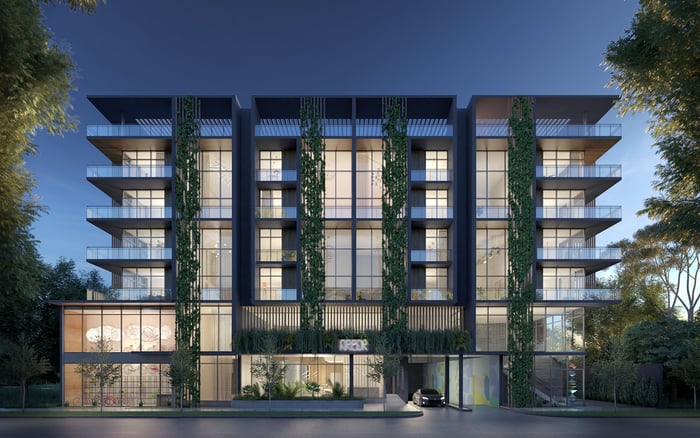
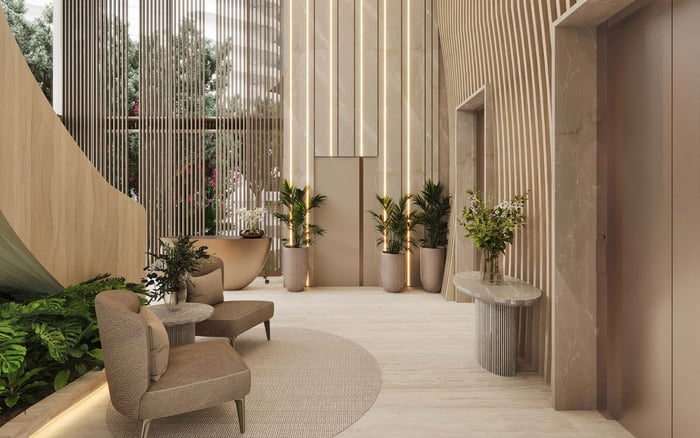
Club-adjacent living is becoming a defining lens for South Florida buyers who want privacy, setting, and curated lifestyle proximity without reducing the purchase decision to a checklist of amenities. Arbor Coconut Grove, The Well Coconut Grove, and Alma Bay Harbor Islands show how this model can express itself across both established and quieter residential markets.
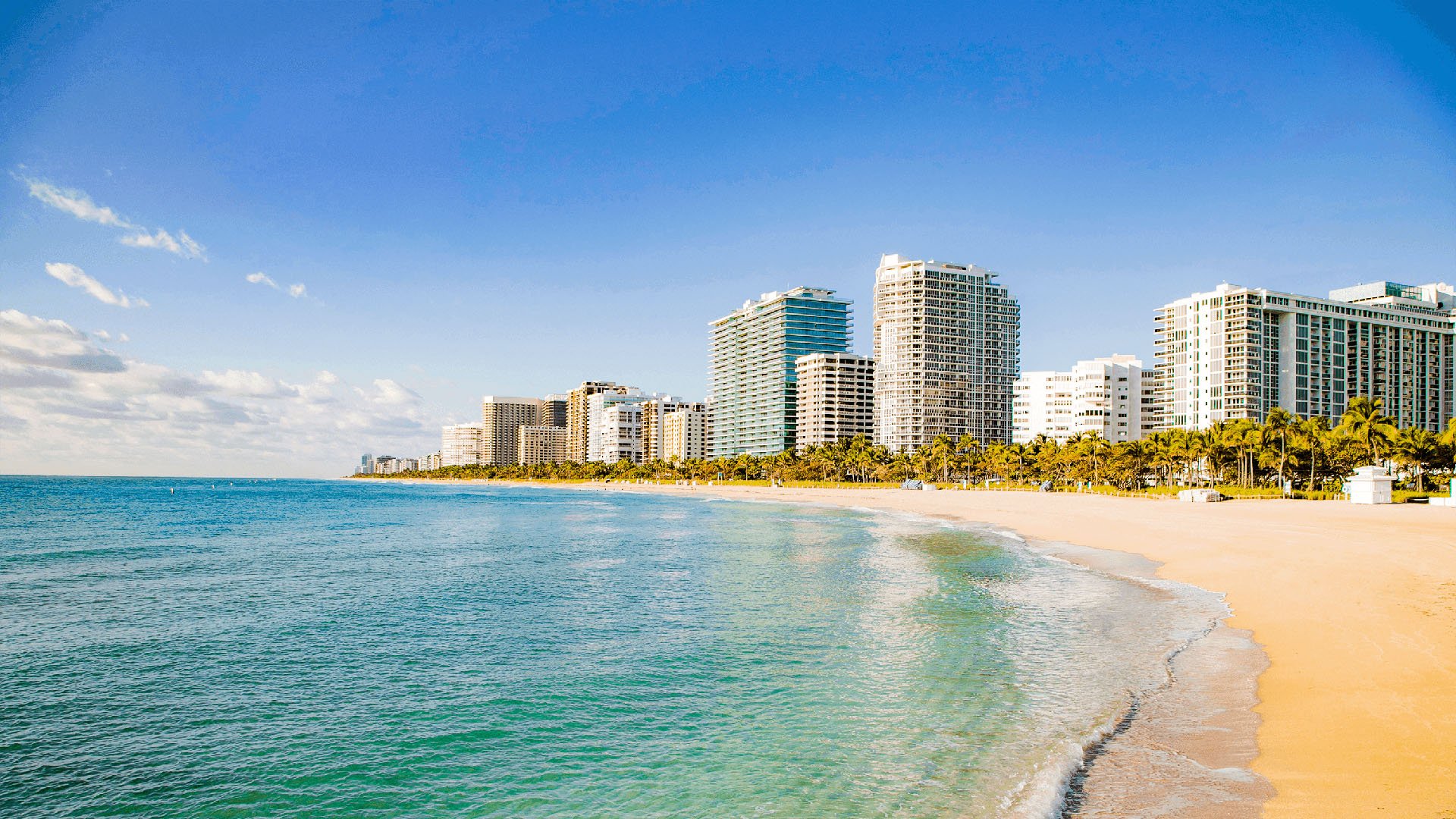
South Florida luxury buyers are increasingly fluent in the language of amenities. Pools, lounges, fitness areas, private dining, wellness rooms, and service layers still matter, but the conversation is shifting. The defining question is no longer simply what a building contains. It is what kind of life the building places within reach.
That is the essence of club-adjacent living. It does not have to mean formal private-club membership, and buyers should not assume guaranteed access, privileges, or reciprocal benefits unless they are clearly documented. Instead, the phrase describes residences shaped by the atmosphere of club life: curated wellness, social ease, identity, discretion, and the sense that home belongs to a broader lifestyle ecosystem.
Seen through that lens, Arbor Coconut Grove, The Well Coconut Grove, and Alma Bay Harbor Islands are not competing for a simple ranking. They are useful case studies in how South Florida’s luxury market is moving beyond conventional amenity-heavy condominium thinking and toward more intentional residential environments.
Coconut Grove has always rewarded buyers who value texture over spectacle. Its appeal lies in shade, walkability, established residential character, and a softer relationship with the water and the city. In that setting, the club-adjacent idea feels especially natural because lifestyle is already embedded in the neighborhood rather than imposed on it.
Arbor Coconut Grove and The Well Coconut Grove place two of the three case studies in the Grove, making the neighborhood central to understanding this shift. One project helps frame the emerging model of living near environments that feel social and programmed without necessarily becoming conventional clubs. The other sharpens the overlap between luxury housing, wellness, and lifestyle branding. Together, they suggest that the Grove is not merely a picturesque alternative to denser Miami districts. It is an important market for curated, wellness-forward luxury living.
For buyers, that matters because club-adjacent value is not always visible in a floor plan. It shows up in daily rhythms: where one walks, how easily one moves from private home to social environment, and whether the neighborhood itself supports a more composed way of living. In Coconut Grove, the residential proposition can feel less like a vertical resort and more like a carefully edited extension of place.
Alma Bay Harbor Islands adds a different note to the discussion. By bringing Bay Harbor Islands into the comparison, the club-adjacent concept moves beyond Miami’s most familiar core neighborhoods and into a quieter island market. That broadening matters. It shows that buyers do not need the constant visibility of a marquee urban address to seek a lifestyle-led residential experience.
Bay Harbor Islands offers a more residential mood, and Alma’s inclusion in this conversation suggests that quieter settings can still participate in the same larger trend. The appeal is not necessarily about scale or spectacle. It is about proximity to wellness, social, and lifestyle-oriented experiences while preserving the privacy and calm that island buyers often prioritize.
For Bay Harbor buyers, that distinction is meaningful. A club-adjacent residence in a quieter enclave can serve a different psychology than one in a more urban environment. The objective may be less about being at the center of every scene and more about having selected, elevated experiences close enough to become part of everyday life.
The clearest lesson from these three projects is that identity now matters alongside architecture, location, and amenities. A buyer evaluating club-adjacent living should ask how the project’s lifestyle narrative aligns with the way the household actually lives. Is wellness a central priority or a secondary benefit? Is social programming desirable, or is privacy more important? Does the neighborhood reinforce the promise, or does the building have to create the experience on its own?
Boutique scale may appeal to buyers who want intimacy, but scale alone does not define the model. New-construction buyers should also separate tangible features from atmosphere. A building can describe itself through wellness, social connection, or lifestyle language, but the lasting value lies in whether those ideas are supported by setting, design, operations, and resident culture.
This is why club-adjacent living is best understood as a lens rather than a product category. Arbor Coconut Grove, The Well Coconut Grove, and Alma Bay Harbor Islands each illustrate a version of the same broader movement: private residential life is increasingly shaped by experiences that once sat outside the home. The result is a more nuanced luxury market, one in which the most desirable address is not only well located, but also emotionally legible.
For South Florida’s high-end buyer, the draw of club-adjacent living is subtle. It is not only the ability to host, work out, dine, or unwind. It is the feeling that those parts of life have been considered in relation to the residence, the neighborhood, and the daily cadence of ownership. That is a different proposition from simply stacking amenities into a building.
In Coconut Grove, the model leans into an established neighborhood with a wellness-forward, lifestyle-sensitive buyer base. In Bay Harbor Islands, it demonstrates that quieter residential enclaves can still support curated living without mimicking denser urban markets. Across both, the common thread is restraint. The luxury is not always louder. It is more integrated.
For buyers comparing these projects, the decision should begin with lifestyle fit. The question is not which development has the longest checklist. The better question is which address makes the buyer’s preferred way of living feel most natural.
What does club-adjacent living mean in South Florida? It refers to residences shaped by proximity to social, wellness, and lifestyle-oriented experiences, without necessarily implying formal club membership.
Does club-adjacent mean residents receive private-club access? Not automatically. Buyers should confirm any access, privileges, or services directly before treating them as part of the purchase value.
Why are Arbor Coconut Grove and The Well Coconut Grove important to this trend? Together, they make Coconut Grove a central case study for curated, wellness-forward luxury living in South Florida.
How does Alma Bay Harbor Islands change the conversation? Alma shows that club-adjacent living can extend beyond Miami’s core neighborhoods into quieter residential island markets.
Is Coconut Grove especially suited to this model? Yes. Coconut Grove’s residential character, mature setting, and lifestyle orientation make the concept feel integrated rather than forced.
Is Bay Harbor Islands a quieter alternative? Yes. Bay Harbor Islands adds a calmer residential context while still participating in the broader lifestyle-led luxury trend.
Should buyers compare these projects as a ranking? Not necessarily. They are better viewed as different expressions of the same shift toward curated residential ecosystems.
What should buyers look for first? Buyers should begin with lifestyle fit, then evaluate location, architecture, services, and the credibility of the project’s positioning.
Are amenities still important? Yes, but amenities are only one part of the value. The stronger question is how those features support everyday life.
Who is this type of living best suited for? It suits buyers who want privacy at home with nearby access to wellness, social connection, and a more intentional residential atmosphere.
For a tailored shortlist and next-step guidance, connect with MILLION.
If branded residences are on your mind — as a home or as an allocation — we would be glad to share what we are seeing, privately.
Begin a quiet conversation