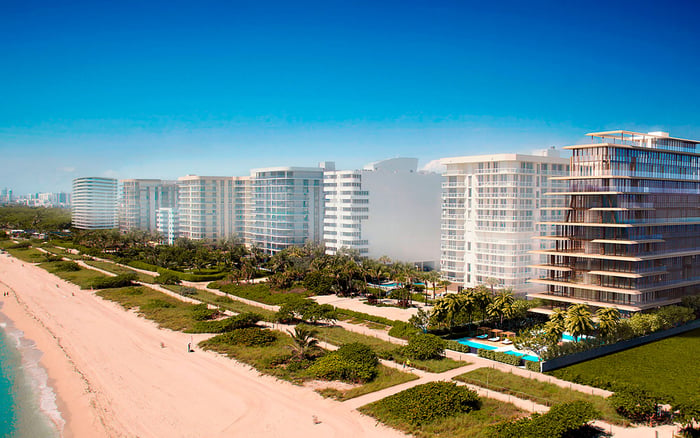
A buyer-focused operations comparison of Fendi Château Residences Surfside and Nora House West Palm Beach for seasonal owners who rely on property managers, household staff and predictable lock-and-leave routines.
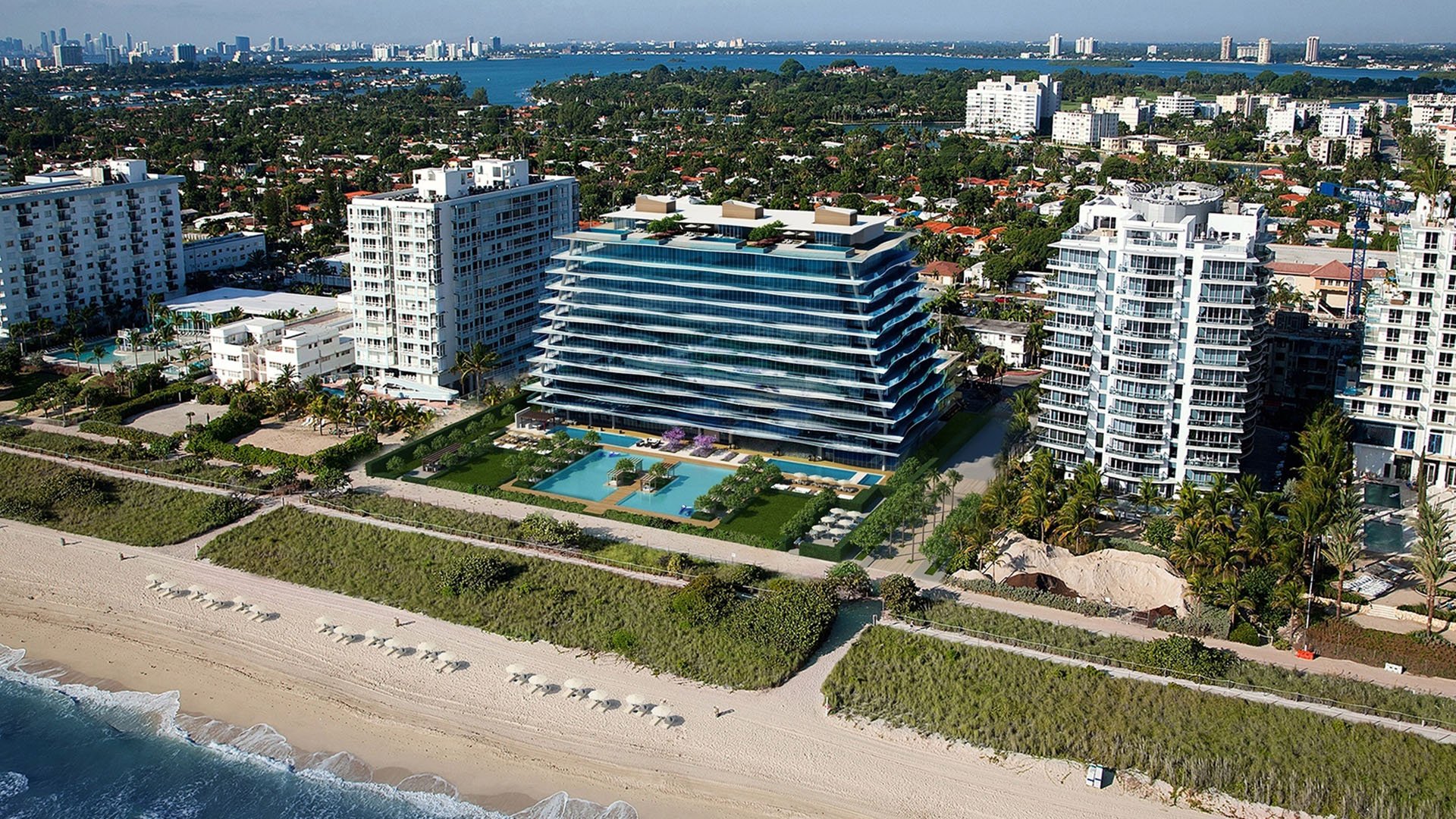
For a seasonal buyer, the choice between Fendi Château Residences Surfside and Nora House West Palm Beach is not simply about architecture, address or atmosphere. It is about whether a residence can be managed discreetly during absences and brought back to life quickly when the owner arrives. The strongest second home behaves less like a trophy and more like a well-rehearsed household.
That distinction matters in South Florida, where many ultra-premium owners divide their time among multiple residences. A property manager may be responsible for climate settings, vendor access, deliveries, linens, cars, pantry stocking, pet preparation, art conditions, terrace furniture and arrival timing. If the building’s rhythms do not support that work, even a beautiful home can become labor-intensive.
This is the lens through which a buyer should compare Fendi Château Residences Surfside with Nora House West Palm Beach. One suggests a Surfside lifestyle shaped by coastal calm and privacy. The other sits within the West Palm Beach conversation, where access, dining, culture and Palm Beach adjacency influence daily convenience. This is a second-home, boutique and new-construction evaluation before it is a design evaluation.
A property manager-friendly residence begins with predictability. The manager needs reliable communication with building staff, clear vendor protocols, workable loading and delivery procedures, secure key control, straightforward parking access and rules that do not shift from week to week. Seasonal ownership magnifies these fundamentals because most problems surface when the owner is not present.
The first issue is access. Can a housekeeper, air-conditioning technician, florist, private chef or installer enter without a chain of calls that interrupts the owner? Is there a clean process for recurring vendors and one-time specialists? A residence may feel effortless during a showing, but the manager will know whether it is truly effortless after a month of coordinating deliveries and service calls.
The second issue is staging. Before an arrival, the manager may need to cool the home, open shades, inspect terraces, stock bathrooms, receive luggage, confirm lighting scenes and test audiovisual systems. In a property built around seasonal use, these tasks should feel routine. In a less suitable setting, they can become a sequence of permissions, delays and improvisations.
Fendi Château Residences Surfside will appeal to buyers who want a more composed South Florida base. Surfside, as a residential setting, is often chosen by owners who value privacy, a quieter pace and proximity to the broader Miami Beach and Bal Harbour orbit without feeling immersed in a downtown environment. For a seasonal household, that can be powerful.
The operational advantage of this setting is emotional consistency. The owner arrives expecting calm. The property manager’s role is to protect that calm by making the residence feel prepared, secure and undisturbed. If the buyer’s lifestyle involves family stays, private dining, beach-oriented days, wellness routines and a preference for minimal friction, the Surfside model may be compelling.
The property manager should still test the practical side carefully. Ask how recurring vendors are approved, how deliveries are handled, how much advance notice is expected for larger service appointments and whether any restrictions could affect seasonal preparation. A residence can be discreet and still be highly functional, but only if the building’s operating culture understands the difference between security and inconvenience.
For buyers considering Fendi Château Residences Surfside, the ideal outcome is a residence that can sleep quietly for weeks, then reopen with the poise of a private suite. That requires staff familiarity, documented routines and a manager who can act without calling the owner for every minor decision.
Nora House West Palm Beach belongs in a different kind of conversation. The appeal is less about retreat and more about access. A West Palm Beach residence can suit owners who want a seasonal base connected to restaurants, cultural outings, private clubs, business lunches, family logistics and the Palm Beach social calendar. In that context, a property manager’s work often involves movement as much as maintenance.
The manager may be coordinating car service, last-minute dinner readiness, guest arrivals, wardrobe deliveries and same-day household needs. Urban convenience can reduce certain burdens, especially when daily services are close at hand. A residence that is easy to access, easy to supply and easy to reset between guest stays can be highly efficient for owners who come and go frequently.
The tradeoff is that a more active environment may require sharper coordination. The buyer should understand how the building handles guests, deliveries, rideshare arrivals, household staff, contractors and after-hours needs. If the owner values spontaneity, the manager needs systems that can support it. If every request requires advance choreography, the convenience advantage becomes less persuasive.
For West Palm Beach seasonal use, the best version of the proposition is not simply proximity. It is proximity supported by building procedures that make quick arrivals and short stays genuinely easy.
A buyer comparing these two residences should create an operations scorecard before signing a contract. The scorecard should not be emotional. It should be the same document a property manager would use if asked, “Can you run this home well while I am away?”
Start with access control. Identify who can enter, under what approval, at what hours and through which points. Then review delivery logistics. Seasonal homes receive everything from groceries and garment bags to furniture, wine, art handling and replacement parts. If loading access is difficult or rules are ambiguous, the manager’s job becomes harder.
Next, examine maintenance cadence. A seasonal residence needs periodic inspections, climate management, leak checks, appliance testing and terrace review. The goal is not to find problems after arrival. The goal is to prevent the owner from ever seeing them.
Storage is another underestimated issue. Seasonal households accumulate duplicate wardrobes, beach items, entertaining pieces, linens, small appliances and owner-specific supplies. If the residence lacks practical storage strategies, the manager is forced to compensate with off-site solutions or constant editing.
Finally, review communication. The best buildings do not overwhelm owners with noise, but they do give managers clean points of contact. A manager should know who to call, what is documented and how quickly routine questions are resolved.
Fendi Château Residences Surfside is likely the more natural fit for the buyer who wants a composed seasonal refuge. The decision leans toward privacy, continuity and a sense that the home can be maintained in a quiet, highly controlled manner. It may suit owners who arrive for longer stays and expect the property to feel serene from the first hour.
Nora House West Palm Beach may be better for the buyer who prizes access and momentum. The decision leans toward convenience, social proximity and a household that supports shorter, more frequent visits. It may suit owners who want the property manager to solve daily logistics quickly because the owner’s calendar is active.
Neither approach is inherently superior. The stronger purchase is the one that matches the buyer’s real use pattern. A rarely occupied residence with complex operating rules can become frustrating. A centrally located residence without privacy discipline can feel exposed. The best seasonal home is the one whose setting, staff culture and procedures all support the same lifestyle.
Before deciding, ask the property manager to attend a second showing. Their questions will be different from the buyer’s questions and often more revealing. They will notice service paths, storage gaps, elevator routines, access points, staff desks, parking realities and the small frictions that rarely appear in marketing language.
Ask how the residence is prepared after storms or long vacancies. Ask what happens if a vendor must enter while the owner is overseas. Ask whether building personnel are accustomed to working with third-party managers. Ask how packages are held, how groceries are received and how quickly a unit can be readied for an unplanned arrival.
The answer may be Surfside. It may be West Palm Beach. The important point is to choose the home that can be managed elegantly in real life, not just admired in a presentation.
Is this comparison mainly about design? No. It is about how each residence may function for seasonal ownership, especially when a property manager handles the home during absences.
Why does property manager access matter so much? Seasonal owners often need vendors, staff and deliveries coordinated while they are away. Clear access rules reduce delays and owner involvement.
Who is the likely fit for Fendi Château Residences Surfside? It may suit a buyer who prioritizes privacy, calm and a more controlled seasonal retreat in Surfside.
Who is the likely fit for Nora House West Palm Beach? It may suit a buyer who values urban convenience, frequent arrivals and access to the West Palm Beach and Palm Beach lifestyle.
What should buyers ask building management first? Ask about vendor approval, delivery procedures, recurring staff access, parking logistics and after-hours support.
Should a property manager join the showing? Yes. A manager can identify operational strengths and weaknesses that a buyer may overlook during a design-focused tour.
Is storage important for a seasonal residence? Very important. Seasonal homes often require space for duplicate wardrobes, linens, entertaining items and owner-specific supplies.
Can a beautiful residence still be difficult to manage? Yes. If access, communication or delivery procedures are cumbersome, daily operations can become inefficient.
What is the most important seasonal-use test? Ask whether the residence can be prepared quickly, quietly and consistently after weeks or months of absence.
Which residence is the better purchase? The better purchase is the one whose building routines match the owner’s actual travel patterns, privacy expectations and household needs.
For a confidential assessment and a building-by-building shortlist, connect with MILLION.
If branded residences are on your mind — as a home or as an allocation — we would be glad to share what we are seeing, privately.
Begin a quiet conversation