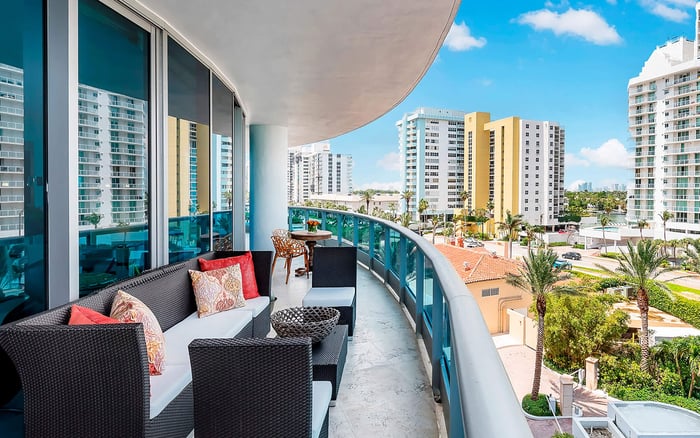
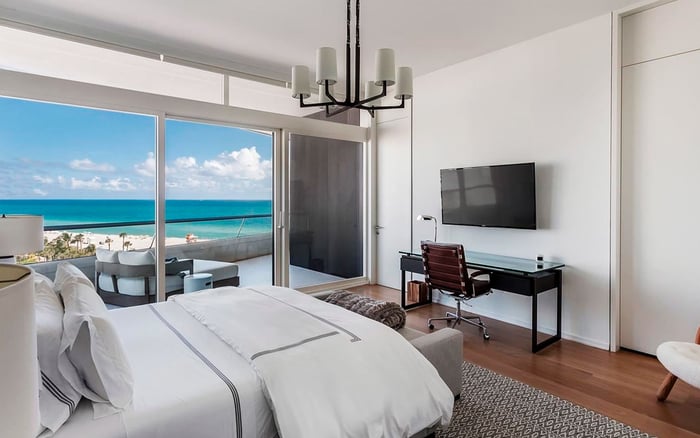
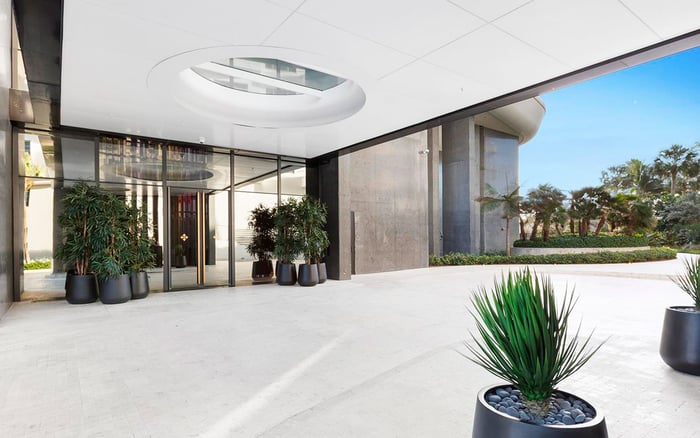
A discreet buyer and owner guide to treating private elevator openings at Faena House Miami Beach as both a luxury arrival moment and a household access-control threshold.
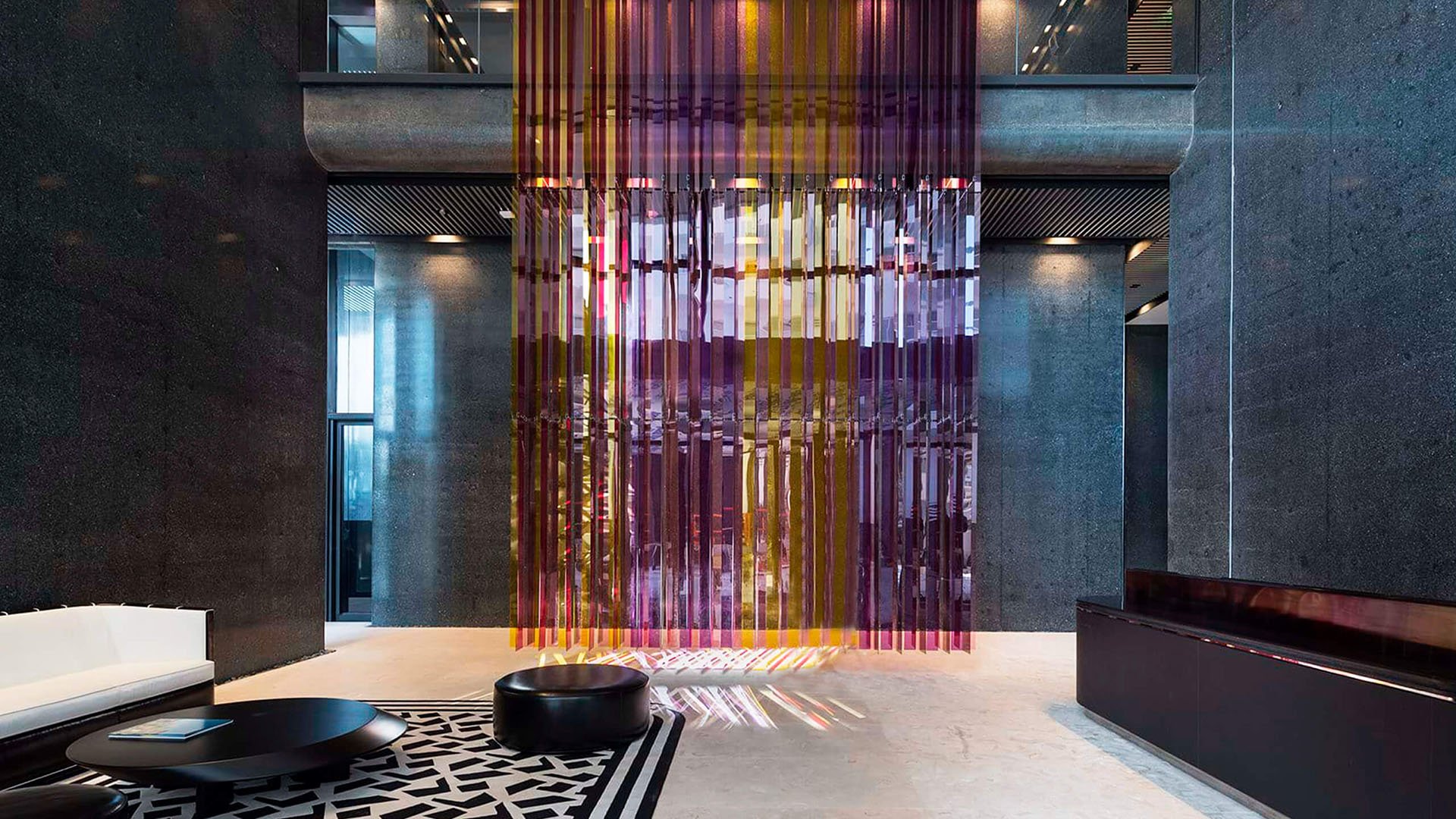
Faena House Miami Beach holds a rare position in the ultra-prime oceanfront conversation: a Collins Avenue condominium within the Faena District where arrival is integral to the residential identity. The sequence is deliberately controlled. A household moves from street or porte-cochère to a staffed lobby, then into a secured elevator, then directly or nearly directly into a private or semi-private residential threshold.
That threshold is not a decorative afterthought. In a building of this caliber, private or semi-private elevator access is a defining feature of ownership because it shapes how residents receive guests, manage staff, protect privacy, and frame the first impression of the home. The most disciplined households treat the elevator opening as a small but consequential room within the residence.
In search terms, Faena House Miami Beach often sits within Miami Beach, oceanfront, exclusive-area, resale, and balcony conversations. Yet the private elevator foyer is what connects those lifestyle categories to daily operations. It is the point where shared building infrastructure meets the household’s private realm.
In many Faena House residences, the elevator opens into an intermediate private foyer rather than immediately into the main living area. That distinction matters. A foyer creates a graceful pause before the home reveals itself, while also serving as a buffer for guests, household staff, vendors, deliveries, luggage, flowers, and service transitions.
The owner’s first decision is conceptual: should this space be ceremonial, functional, or hybrid? A ceremonial foyer may emphasize art, lighting, scent, and a quiet sense of arrival. A functional foyer may prioritize package staging, staff movement, visitor verification, and direct access protocols. A hybrid foyer can do both, but only when design and operations are planned together.
The common mistake is treating the elevator opening as simply another interior design surface. In practice, it is an access-control point. It deserves the same level of thought as a front gate at a waterfront estate or a controlled garage entry in a private compound.
Before altering, furnishing, or programming the elevator foyer, owners should determine how the space is treated within the condominium structure. Depending on the residence, the foyer may be legally part of the unit, a limited common element, or another form of controlled-use space. That status can affect what may be installed, removed, displayed, monitored, or secured.
This is especially important for owners considering millwork, art lighting, rugs, cameras, consoles, smart-home panels, or decorative doors. A beautiful arrival moment should not create a compliance issue with building systems or association requirements. The private threshold may intersect with fire-rated doors, smoke detection, intercoms, elevator controls, and emergency access needs.
Buyers should raise these questions before closing, not after move-in. The issue is not whether the foyer can be made elegant. It almost certainly can. The better question is what the household is permitted to control, what must remain accessible, and which rules apply when design choices touch building infrastructure.
Private elevator access enhances privacy by reducing exposure to shared residential corridors and neighbor traffic. That privacy is one reason the feature feels so valuable in an ultra-luxury Miami Beach condominium. But the same feature can create operational risk if the household does not define who can summon, enter, or wait at the residence threshold.
A serious buyer should ask how elevator permissions, key fobs, call access, guest clearance, and after-hours procedures are managed. The questions should be practical: Can staff access the floor independently? How are vendors admitted? What happens when a guest arrives before the owner is ready? Are temporary permissions available? How are permissions revoked when staffing changes?
For households with chefs, assistants, housekeepers, estate managers, drivers, private security, or rotating service providers, written protocols are essential. The elevator opening is not merely a doorbell with better architecture. It is the point where the building’s security culture and the household’s internal discipline must align.
A private foyer at Faena House Miami Beach can be an extraordinary design opportunity. The temptation is to make it gallery-like: a sculptural table, a major artwork, dramatic lighting, perhaps a mirror that expands the space. Those choices may be appropriate, but only if they preserve visibility, clearance, and emergency function.
Avoid overfurnishing. A foyer should allow two or more people to enter with luggage without feeling trapped. It should preserve sightlines from the residence side. It should not obstruct doors, panels, sensors, intercoms, or emergency access. If cameras or visitor verification devices are used, they should be integrated discreetly rather than treated as afterthoughts.
Lighting is especially important. The space should feel warm enough for guests, bright enough for recognition, and consistent enough for staff to manage deliveries or service arrivals without confusion. Luxury is not only the visual composition. It is the absence of friction.
For resale, a well-managed private elevator foyer can reinforce the sense of exclusivity, privacy, and controlled arrival expected in ultra-luxury Miami Beach condominiums. Buyers at this level often notice whether the first private threshold feels calm, intentional, and secure. They also notice when it feels improvised.
The most persuasive foyer is not necessarily the most elaborate. It is the one that tells a buyer the residence has been lived in with discipline. Permissions are clear. Staff flow is understood. The design does not fight the building. Emergency requirements have not been compromised. The first private moment feels both gracious and governed.
That balance is the essence of ownership at this level. The private elevator opening is a luxury, but it is also a responsibility. Households that understand both sides tend to enjoy the feature more fully, and they leave fewer questions for the next buyer.
Does every Faena House residence have the same private elevator configuration? No. Buyers should verify the specific elevator, foyer, and access arrangement for the individual residence they are considering.
Why is the private elevator opening so important? It is the transition between shared building space and the household’s private realm. That makes it both an arrival moment and an access-control point.
Can the elevator open directly into the living area? Some residences may open directly or nearly directly into a private threshold, while many use an intermediate foyer. Unit-specific materials should confirm the layout.
Should owners furnish the private foyer like an interior room? They can, but design choices should preserve clearance, visibility, and emergency function. The space should not be treated only as a decorative gallery.
What should buyers ask before closing? They should ask how elevator permissions, key fobs, call access, guest clearance, and after-hours procedures are managed. Staff and vendor access should also be clarified.
Is the foyer always legally part of the unit? Not necessarily. Owners should determine whether it is part of the unit, a limited common element, or another controlled-use area before making changes.
How does the foyer affect household staff protocols? It defines how staff enter, wait, receive deliveries, and interact with guests. Clear written rules reduce confusion and protect privacy.
Can security devices be added in the foyer? Possibly, but any cameras, locks, intercom changes, or visitor verification systems should be reviewed for building and access requirements. Discretion and compliance both matter.
Does a private elevator foyer help resale positioning? Yes, when it feels elegant, controlled, and well maintained. A disciplined threshold reinforces the privacy expected in ultra-luxury Miami Beach ownership.
What is the best way to shortlist comparable options for touring? Start with location fit, delivery status, and daily lifestyle priorities, then compare stacks and elevations to validate views and privacy.
For a tailored shortlist and next-step guidance, connect with MILLION.
If branded residences are on your mind — as a home or as an allocation — we would be glad to share what we are seeing, privately.
Begin a quiet conversation