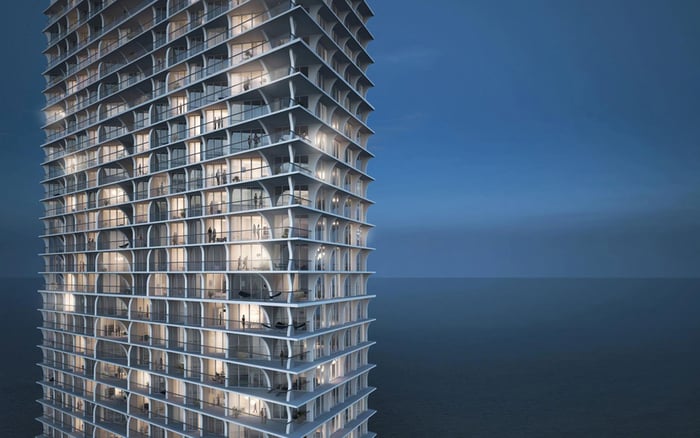
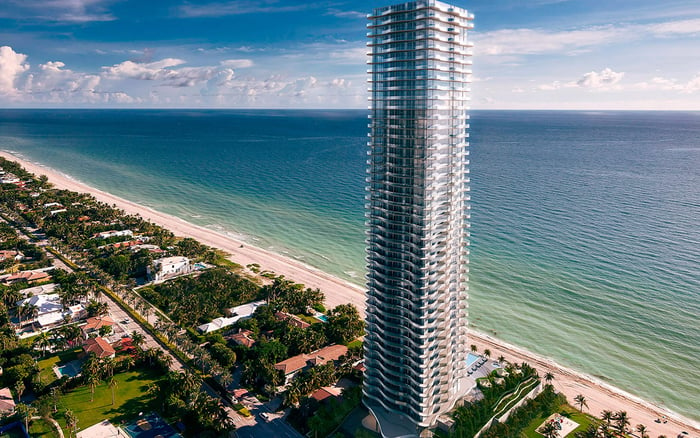
A discreet ownership analysis comparing Jade Signature’s contemporary Sunny Isles condominium profile with the more complex questions raised by a hotel-linked Miami residence.
At the top of South Florida’s residential market, the choice between Jade Signature Sunny Isles Beach and Delano Residences & Hotel Miami is not simply a matter of architecture, coastline, or brand memory. It is a question of ownership experience. The buyer is not only acquiring walls, views, services, and amenities. The buyer is acquiring a financial structure, a governance model, a future resale audience, and a set of annual obligations that may feel very different over a five-, ten-, or fifteen-year hold.
Jade Signature is framed as a contemporary oceanfront condominium in Sunny Isles Beach, with the familiar logic of a large-scale luxury residential tower. That matters. A pure condominium is often easier for buyers to underwrite because the relationship among association costs, amenity programming, maintenance, and governance is more legible. By contrast, a hotel-linked residence such as Delano Residences & Hotel Miami naturally raises a different set of questions around hospitality operations, service standards, brand expectations, and the cost of maintaining a resort-like environment.
In a buyer’s internal shorthand, Jade Signature Sunny Isles Beach may sit under Sunny Isles, oceanfront, resale, and investment; Delano may trigger condo-hotel questions before a detailed document review even begins. Those labels are imperfect, but they reveal the deeper issue: the right answer depends on whether an owner values simplicity, spectacle, scarcity, or service most.
Jade Signature’s appeal begins with its position as a modern residential condominium in Sunny Isles Beach. It is not presented as a boutique collection with only a handful of residences. It is better understood as a large-scale luxury tower, where ownership appeal is shaped by contemporary residential programming, substantial amenity depth, and oceanfront positioning.
That scale can be a strength for certain buyers. Larger residential towers can create deeper resale comparability, stronger market recognition, and a broader audience of future purchasers who understand the product type. In Sunny Isles, where luxury condominium living has long been central to the market’s identity, a recent-generation residential tower can feel familiar to both international and domestic buyers.
The key advantage is clarity. A buyer evaluating Jade Signature is likely focused on residence size, view corridor, amenity use, association costs, building condition, and resale liquidity within the broader Sunny Isles luxury-tower context. Those are serious questions, but they are conventional questions. The ownership model is not attempting to blend private residence, hotel ecosystem, and branded hospitality identity into a single structure.
Delano Residences & Hotel Miami carries a different implication because the name itself points toward a hospitality-inflected ownership experience. For certain buyers, that may be precisely the attraction. A hotel-associated residence can feel more curated, more social, and more emotionally distinct than a conventional condominium tower. It may also appeal to buyers who want a Miami ownership experience tied to service, atmosphere, and cultural memory rather than square footage and view alone.
But the more layered the ownership proposition, the more carefully it should be evaluated. A hotel-integrated setting can introduce costs and governance questions that are not always visible in the first conversation. Buyers should look closely at what is residential, what is shared, what is hotel-operated, what is optional, and what is mandatory. They should understand who controls service standards, how operating budgets are approved, and how future capital needs are allocated.
Scarcity also requires discipline. A rarer-feeling address is not automatically a more liquid asset. True trophy value requires a future buyer pool that understands and wants the same ownership proposition. If the next buyer wants a simple private condominium, a hospitality-heavy structure may narrow the audience. If the next buyer wants service, heritage, and social energy, that same structure may become a strength.
Operating costs are where emotion becomes arithmetic. In ultra-prime property, buyers often accept high carrying costs when the value proposition is clear: beach, privacy, service, security, architecture, and ease. The problem is not cost itself. The problem is opacity.
Jade Signature’s residential framing suggests a simpler cost architecture than a hotel-serviced branded residence. That does not mean costs are low, nor that every residential tower is simple. It means the categories are more familiar: association assessments, building reserves, amenity maintenance, insurance, staffing, and long-term capital planning. For a buyer who wants a primary or secondary residence without a hospitality layer, that clarity can be valuable.
A hotel-linked model can be more nuanced. Owners may be paying for an elevated service ecosystem, but they should know exactly how that ecosystem is funded. If service levels are central to the value of the residence, future owners must also believe those service levels justify the ongoing cost. A beautiful acquisition can become less elegant if annual obligations rise without a matching sense of control or benefit.
This is why sophisticated buyers increasingly compare residences not only by price per square foot, but by cost per year of enjoyment. The best property is not always the least expensive to carry. It is the one whose costs remain aligned with the owner’s actual use and the market’s future appetite.
Liquidity at the top of the market is rarely about one buyer. It is about the number of credible buyers who can understand the asset quickly and want it for similar reasons. Jade Signature benefits from being legible as a Sunny Isles luxury condominium. The buyer pool can include oceanfront condominium users, second-home owners, international families, and purchasers already comfortable with the vertical beachfront lifestyle.
A hotel-linked residence may have a more selective future audience. That is not necessarily negative. Some of South Florida’s strongest trophy assets are selective by nature. The issue is whether selectivity is supported by enduring demand. A future buyer must want not only the residence, but also the operating model, service environment, location identity, and governance structure.
For owners thinking about exit strategy, this distinction matters. Broad buyer depth can support more predictable resale conversations. Narrower buyer depth can still produce exceptional outcomes, but timing, presentation, and market mood may matter more. The rarer the asset feels, the more important it is to test whether rarity is architectural, operational, emotional, or merely narrative.
The Jade Signature buyer is likely to prioritize oceanfront living, modern condominium infrastructure, amenity depth, and a more straightforward residential framework. This buyer may want a residence that feels impressive but understandable, with ownership decisions anchored in conventional condominium documents and comparable Sunny Isles demand.
The Delano-oriented buyer may be more drawn to a hospitality atmosphere, an identity-rich Miami setting, and the possibility of a more differentiated ownership story. This buyer should be especially comfortable reviewing service structures, shared-use arrangements, budget mechanics, and long-term brand relevance.
Neither approach is inherently superior. They reward different temperaments. The disciplined buyer asks which property will feel better not only on closing day, but during hurricane season, assessment discussions, insurance renewals, guest visits, quiet weeks, and eventual resale negotiations.
For South Florida’s ultra-premium audience, the more intelligent comparison is not beach versus brand. It is control versus curation. Jade Signature offers the cleaner profile of a contemporary Sunny Isles oceanfront condominium. Delano Residences & Hotel Miami, by contrast, should be evaluated through the lens of hospitality complexity, selective scarcity, and the durability of buyer desire for a hotel-linked living experience.
The best purchase is the one whose structure supports the owner’s real life. If the goal is elegant simplicity with a recognized residential tower profile, Jade Signature deserves serious consideration. If the goal is a more atmospheric, service-led Miami ownership narrative, Delano may warrant attention, provided the operating documents, costs, and governance align with expectations.
Is Jade Signature a conventional condominium ownership model? Jade Signature is framed as a contemporary residential condominium in Sunny Isles Beach, making its ownership model more conventional than a hotel-integrated residence.
Why do operating costs matter so much in this comparison? Over time, carrying costs can materially affect satisfaction, liquidity, and the buyer’s sense of control over the asset.
Does trophy scarcity always improve resale value? No. Scarcity helps only when future buyers also value the same location, structure, services, and ownership proposition.
Who is the natural buyer for Jade Signature? A buyer seeking modern oceanfront condominium living, amenity depth, and a clearer residential framework may find Jade Signature compelling.
Who might prefer Delano Residences & Hotel Miami? A buyer who values hospitality atmosphere, brand identity, and a more curated Miami lifestyle may be drawn to that type of residence.
Should buyers compare only price per square foot? No. Ultra-prime buyers should also compare annual costs, governance, amenity use, future buyer depth, and resale clarity.
Is a hotel-linked residence harder to evaluate? It can be, because the buyer must understand service obligations, shared facilities, operating budgets, and governance arrangements.
Does Sunny Isles Beach support deep condominium demand? Sunny Isles has a recognized luxury-tower context, which can make contemporary oceanfront condominiums easier for buyers to understand.
What is the biggest risk in choosing the wrong ownership model? The main risk is discovering that the property’s costs, rules, or resale audience do not match the owner’s intended use.
What is the best way to shortlist comparable options for touring? Start with location fit, delivery status, and daily lifestyle priorities, then compare stacks and elevations to validate views and privacy.
If you'd like a private walkthrough and a curated shortlist, connect with MILLION.
If branded residences are on your mind — as a home or as an allocation — we would be glad to share what we are seeing, privately.
Begin a quiet conversation