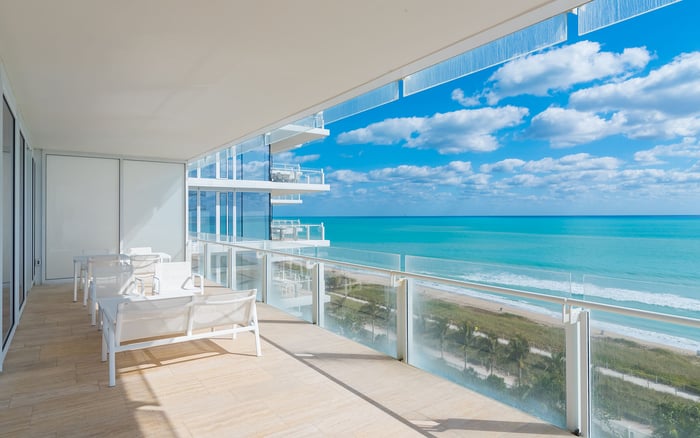
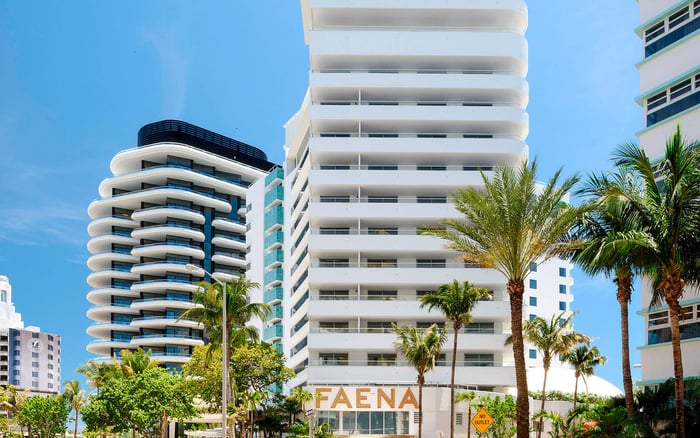
Salt air is part of Surfside’s appeal, but it is equally persistent as a corrosive force on balcony furnishings. For oceanfront and near-ocean residences, chloride-laden mist, wind-driven spray, and high humidity can quietly degrade metals, finishes, and hardware, turning “outdoor” pieces into short-lived liabilities. This MILLION Luxury guide breaks down what actually fails first, which materials hold their look, and how owners can align furniture choices with building exposure, maintenance expectations, and resale-level presentation.
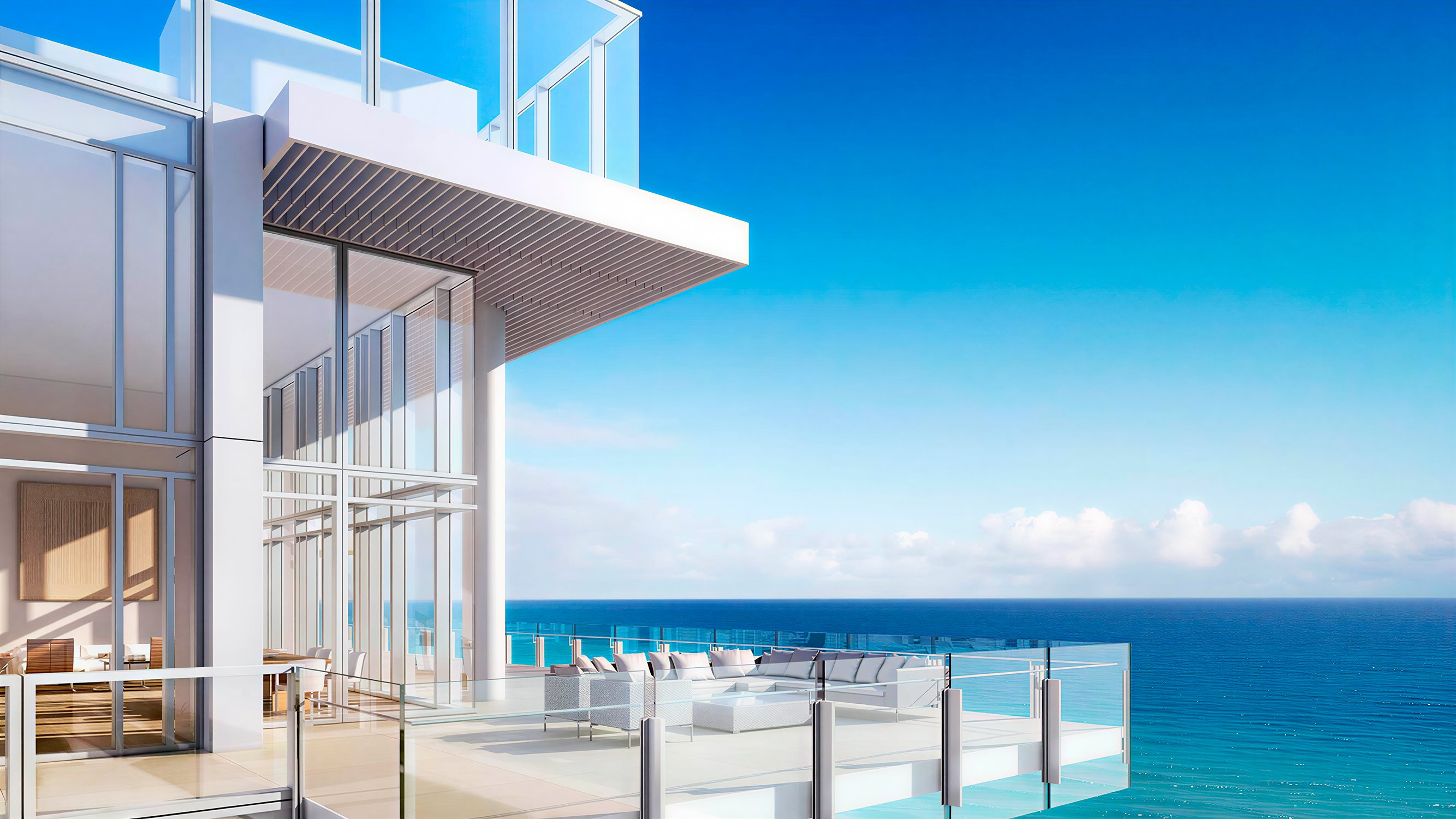
Surfside’s terraces are built for daily living: morning coffee over the Atlantic, an evening aperitivo in the sea breeze, and a horizon line that makes even a modest balcony feel expansive. That same breeze, however, carries salt. Chloride residue can settle invisibly on furniture, migrate into seams and hardware, and hold moisture against metals and coatings.
What catches many owners off guard is less the fact of corrosion and more how it starts. It rarely announces itself with dramatic rust. More often, it begins as small, compounding failures: a powdery bloom on an aluminum leg, faint orange staining under a screw head, a stuck adjustment knob, a hinge that squeaks, a discolored weld line, or a once-rich powder coat that turns chalky. Left unaddressed, those early signals can progress into pitting, flaking, and structural weakness.
From a property perspective, balcony furnishings are part of the home’s first impression. In Surfside and neighboring Bal-harbour, terraces are routinely photographed and toured as lifestyle space. A crisp, well-maintained outdoor set reads as stewardship. A set marked by streaks, corrosion halos, and mismatched replacement parts reads as deferred maintenance-even when the interior is flawless.
For longevity, look beyond brand names and silhouettes and focus on construction. Corrosion typically begins where materials meet, where water lingers, and where coatings are thinnest.
Fasteners and mixed metals.
Screws, bolts, and brackets are often the first areas to show staining. When a frame and its fasteners are different metals, deterioration can accelerate at the joint. The most common tell is rust bleed or discoloration at connection points.
Welds, corners, and undersides.
Coatings are often less consistent at welds and tight corners. Undersides receive less sun, stay damp longer, and are easy to overlook during cleaning. In coastal conditions, those “forgotten” surfaces frequently become the starting line for degradation.
Moving parts.
Adjustable feet, reclining mechanisms, swivel bases, and sliding extensions add convenience, but they also create crevices where salt deposits and moisture persist. If you prefer multifunctional pieces, plan for more frequent rinsing and lubrication.
Cushion hardware and zippers.
Even when frames present well, zipper pulls, snaps, and hidden staples can corrode and transfer stains to fabric. The most luxurious textile is only as elegant as its smallest metal component.
In high-exposure coastal living, the best “outdoor” furniture is designed to be rinsed, sun-baked, and still look intentional. The aim is not perfection-it’s controlled, predictable aging.
Stainless steel: choose the right grade and finish.
Stainless can perform beautifully, but not all stainless holds up the same near salt air. Brushed finishes tend to disguise micro-scratches, while mirror-like finishes show spotting more readily. Stainless performs best when owners commit to periodic fresh-water rinsing and gentle cleaning.
Aluminum: light, stable, but coating quality is everything.
Aluminum doesn’t rust like carbon steel, yet it can still pit and corrode-especially when the coating is compromised. High-quality powder coating and precise detailing around joints matter more than heft. Bubbling or chalking should be treated as an early warning.
Teak and engineered woods: beautiful, but be honest about upkeep.
Teak can be a sophisticated coastal choice for owners who prefer a natural aesthetic. It will weather, and that weathering must be either embraced (a controlled silver patina) or managed (cleaning and periodic treatment). Wood also raises the importance of drainage and airflow under cushions.
Woven synthetics and resin: a practical luxury if well executed.
Quality synthetic weaves can look refined and often conceal minor salt residue. The vulnerability is the internal frame and hardware. If the structure inside is mild steel, the weave may stay attractive while the skeleton quietly deteriorates.
Avoid plain carbon steel unless truly protected.
When a piece relies on paint over steel without robust corrosion engineering, coastal exposure can turn it into a short-term purchase. In Surfside, that often appears as rust at chips and scratches within a season.
Two Surfside balconies can perform very differently based on micro-exposure. Buyers and owners benefit from reading a terrace the way a marine designer would.
Height and wind.
Higher floors can feel cleaner and breezier, yet wind can drive salt mist deeper into crevices. Lower floors may see more direct splash or sand abrasion. Neither is automatically “safer”-they simply fail differently.
Orientation and overhang.
A deep overhang limits direct wetting, while open rail conditions increase exposure. If rain reaches the furniture regularly, prioritize fast-drying materials and simpler joints.
Proximity to the ocean.
True oceanfront terraces operate in a different category than balconies a few blocks inland. If your home sits in direct Atlantic airflow, default to materials and fasteners that can tolerate frequent rinsing.
In Surfside, residences with strong indoor-outdoor programming make these decisions feel especially consequential. Owners who split time between multiple homes often favor lower-maintenance outdoor setups that still photograph beautifully. In that context, terraces at The Surf Club Four Seasons Surfside set a familiar standard for restrained elegance, while design-forward coastal living at Eighty Seven Park Surfside often inspires owners to treat outdoor furniture as an extension of the interior palette-not an afterthought.
Balcony care isn’t only about preserving furniture; it’s also about protecting adjacent finishes. Corroding hardware can stain tile, stone, and grout. Abrasive sand under chair feet can dull surfaces. Dripping metal cleaners can etch sensitive materials.
A practical, luxury-appropriate standard looks like this:
Fresh-water rinse cadence. A simple rinse clears salt before it concentrates. The more direct the ocean exposure, the more a rinse schedule pays off.
Gentle wash, then dry. Mild soap and soft cloths outperform aggressive chemicals on most finishes. Drying minimizes water spots and residue rings.
Protect the underside. Periodically flip or lift items and clean contact points. Corrosion often starts where air circulation is limited.
Separate metals from stone when possible. Protective glides or pads help reduce staining risk and surface scratching.
Store soft goods intelligently. Cushions left outside continuously can trap salt and moisture against frames. A discreet storage bench or an interior-closet rotation helps preserve the look.
The design objective is consistency: furniture that reads “current” year-round, not only after a deep clean before guests arrive.
Shopping for balcony furniture in Surfside is less about trends and more about specifying pieces like components of the residence.
Ask about fasteners.
Quality outdoor furniture should not treat hardware as an afterthought. When replacement screws are difficult to source-or end up mismatched-the piece tends to age poorly.
Look for drainage and airflow.
Water should not pool inside tubular legs or under seat pans. If you can’t see how a piece sheds water, assume it doesn’t.
Confirm the repair story.
Can the fabric be re-slung? Can cushion covers be replaced? Can a topcoat be professionally refinished? Pieces that can be refreshed discreetly remain longer-term assets.
Consider weight versus wind.
Lightweight pieces are easy to move but can shift in storms. In coastal settings, stability matters-and so does a plan to secure or store items during severe weather.
For buyers comparing buildings across the coastline, balcony usability and exposure remain part of the lifestyle math. A Brickell high-rise balcony may be breezy but often less salt-saturated than direct oceanfront. That contrast can shape your furnishing strategy, whether you spend weekends near the sand or prefer the skyline energy around 2200 Brickell.
In ultra-premium South Florida, outdoor space isn’t bonus square footage. It’s part of the home’s brand. When a terrace looks crisp, buyers often assume the same discipline extends to HVAC servicing, appliance care, and overall stewardship.
Corroded furniture suggests the opposite. It can make a balcony feel like a storage zone rather than an outdoor living room. Even when buyers plan to replace everything, visible deterioration raises practical questions: Is the environment harsher than expected? Does the balcony get drenched? Are there drainage issues? Has salt residue been allowed to sit on surrounding finishes?
The solution is rarely dramatic. More often, it’s a recalibration: fewer pieces, better materials, easier-to-clean profiles, and a consistent rinse-and-dry routine. In salt air, minimalism can be a luxury strategy.
This logic extends beyond Surfside. Along Miami Beach, owners in design-centric towers often choose refined, low-profile furniture that tolerates exposure while remaining visually quiet against the ocean. For example, terraces in the North Beach corridor near 57 Ocean Miami Beach tend to reward owners who select durable finishes that hold their color integrity in sun and salt.
Before you finalize a purchase or refresh a terrace, pressure-test the plan:
Does every metal component have a coastal-appropriate finish, including screws?
Are there crevices that will trap salt, and can you rinse them easily?
Will the piece stain adjacent tile or stone if hardware begins to corrode?
Can you store cushions, or do they need to live outside year-round?
Does the layout encourage airflow so furniture dries quickly after rain?
If your building sits in Surfside’s most exposed oceanfront slice, treat furniture like marine equipment that happens to be beautiful. If your residence is slightly inland or sheltered, you can allow more softness in material selection-but salt discipline still pays dividends.
In that sense, outdoor furniture becomes a quiet expression of taste: not the loudest object on the balcony, but the one that still looks intentional after a season of salt air.
Is saltwater corrosion inevitable on a Surfside balcony? In ocean air, some level of salt deposition is inevitable, but visible corrosion is largely controllable through material selection and routine cleaning.
What parts of balcony furniture fail first near the ocean? Fasteners, weld zones, and moving mechanisms often show staining, sticking, or pitting before major frame damage appears.
Is aluminum always a safe choice for coastal furniture? Aluminum resists red rust, but it can still pit and degrade if coatings fail or salt sits in joints for long periods.
Does stainless steel mean no maintenance? No. Stainless can spot and discolor in salt air, so periodic rinsing and gentle cleaning remain important.
Will teak last on an oceanfront terrace? Yes, but it will weather; you either embrace a silver patina or commit to cleaning and periodic treatment.
Do cushions make corrosion worse? They can. Trapped moisture and salt against the frame can accelerate finish wear where fabric meets metal.
How often should I rinse balcony furniture in Surfside? A regular fresh-water rinse is ideal, with frequency increasing when the balcony receives direct ocean spray and constant wind.
Can corrosion stain balcony tile or stone? Yes. Rust bleed and metal runoff can mark grout and porous surfaces, so protective pads and quick cleanup matter.
Should I buy lighter furniture for easier storm storage? Light pieces are easier to move, but they can shift in wind; choose an approach that balances stability with secure storage.
What is the most discreet way to keep a balcony looking “listing ready”? Choose fewer, higher-quality pieces with simple profiles, rinse regularly, and store soft goods so the setting stays crisp.
For a discreet conversation and a curated building-by-building shortlist, connect with MILLION Luxury.
If branded residences are on your mind — as a home or as an allocation — we would be glad to share what we are seeing, privately.
Begin a quiet conversation