A buyer-oriented comparison framework for wellness and fitness amenity scale at two North Bay Village luxury towers, with practical questions to ask before committing.
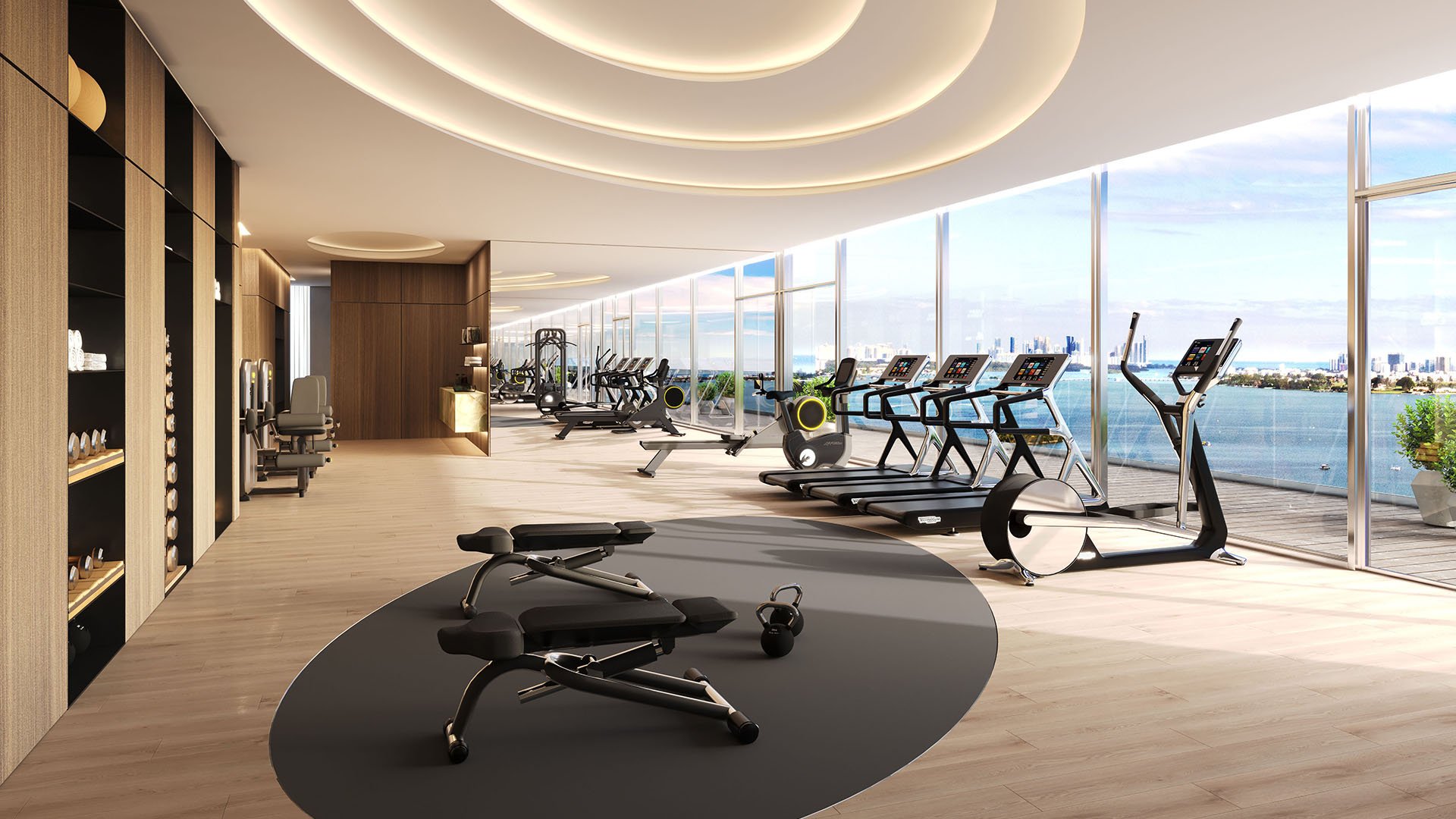
In ultra-premium residential buying, the fitness center has become a proxy for how a building is built to support modern life. Not simply because residents expect strong cardio and weights, but because wellness now extends into recovery, mobility, performance training, and privacy. When buyers ask about the “scale” of a fitness center at Pagani North Bay Village and Continuum Club & Residences North Bay Village, they are rarely asking for a square-foot number alone. They are asking whether the building can deliver a true club experience without feeling like a shared apartment gym.
North Bay Village is uniquely positioned for this conversation. Set between the energy of Miami Beach and the convenience of the mainland, it draws residents who want discretion, water views, and a lifestyle that can be as performance-focused as it is social. In that context, “scale” becomes operational: how many people can use the space comfortably, at the same time, while still feeling like it belongs to them.
Because the Research Pack and Fact Table do not provide verified, directly comparable square footage, the most reliable way to evaluate scale is through visible, functional components that shape day-to-day use. For MILLION Luxury clients, scale can be assessed across five pillars.
First is zoning. A truly scaled fitness program does not force every user into one open room. It separates heavy strength, free weights, functional training, cardio, and stretching so serious lifting doesn’t collide with quiet mobility work.
Second is capacity. Count stations and usable floor area, but focus on pinch points: entrances, bottle-fillers, towel stations, and transitions between zones. High-end gyms fail when circulation is tight, even if the room photographs beautifully.
Third is recovery. Luxury now includes post-workout spaces that are not an afterthought. When recovery is integrated with the fitness center, the building reads as wellness-first rather than simply amenity-forward.
Fourth is programming readiness. Studios designed for classes, trainers, or small-group sessions change the entire experience. A space that can host instruction comfortably often feels “bigger” in daily life than a large room with no studio functionality.
Fifth is acoustic and daylight control. Sound isolation, rubber flooring, and daylight placement determine whether residents actually want to spend time there. A gym that looks sleek but feels loud, dark, or echoing will underdeliver.
Pagani’s appeal is tied to design discipline and the psychology of crafted spaces. In a building like Pagani North Bay Village, buyers should evaluate whether the fitness environment is curated like a private atelier-or built to operate like a true members’ club.
A design-forward tower can deliver “scale” through intelligent layout even when the footprint is compact. Look for separate rooms or clearly defined zones, an equipment mix that prioritizes performance over volume, and a recovery component that feels intentional rather than decorative. Pay attention to how the space is reached from the residential elevators. When the route is intuitive and discreet, residents use it more. When it’s tucked behind back-of-house corridors, the gym can feel secondary-regardless of how polished the finishes are.
During a tour, ask to see where mats, accessories, and cleaning supplies live. Luxury scale is partly defined by what you don’t see: storage that keeps floors clear, and an environment that stays immaculate without constant staff presence.
The word “club” changes the baseline. With Continuum Club & Residences North Bay Village, the expectation shifts to a broader wellness environment designed for consistent, repeat use across multiple training styles.
When evaluating scale here, confirm that the fitness center reads as an anchor amenity, not a supplement. Can it support simultaneous use by different types of residents without conflict? A scaled club environment should allow one resident to lift heavy, another to complete a quieter session, and a third to join a class-without the space tipping into crowding.
Also evaluate how privacy is managed. The most sophisticated luxury gyms feel active without feeling public. Separate entrances to the wellness area, controlled access, and thoughtful sightlines are subtle, high-impact details. If the gym is exposed to high-traffic amenity corridors, it can feel performative rather than restorative.
For a clean, real-world measure of scale, run a “peak-hour simulation” during your visit. Stand at the entrance and map the experience as if it were 7:30 a.m. on a weekday.
Ask yourself:
Can two people pass comfortably in the main corridor without turning sideways?
If three residents arrive at once, do they queue for towels, water, or lockers?
Are the most popular stations clustered too tightly, creating an artificial bottleneck?
Scale is the absence of friction. In premium buildings, it is also the absence of negotiation. You should not feel that your workout depends on whether someone else is finished with the only functional trainer-or the only heavy bench zone.
In South Florida, scale increasingly includes the option to train outside. Even without claiming any specific outdoor fitness features for either tower, you can still assess whether the amenity plan supports a broader wellness lifestyle-movement, sunlight, and recovery that feels consistent with waterfront living.
If you are cross-shopping the larger market for wellness-forward amenity philosophies, it can be useful to compare how other luxury projects frame lifestyle. For example, The Well Bay Harbor Islands is often considered by buyers who prioritize holistic wellness, while Shoma Bay North Bay Village appeals to those who want North Bay Village positioning with a contemporary amenity set. These comparisons help clarify what you personally mean by “scale”: more equipment, more modalities, more serenity, or more service.
The most compelling fitness centers in the region typically feel like a sequence: arrival, warm-up, training, cooldown, recovery, and re-entry to the day. When a building can deliver that sequence without crowding or visual noise, the gym feels materially “larger” than its footprint.
Because marketing language can be imprecise, the strongest buyers ask operational questions that are difficult to overstate.
Ask about:
Equipment philosophy: performance-focused mix vs. broad, entry-level variety.
Maintenance cadence: how quickly machines are serviced or refreshed.
Class readiness: whether there is a dedicated studio and how it is scheduled.
Trainer use: whether outside trainers are permitted and how that affects privacy.
Storage and housekeeping: whether the space stays clear at peak hours.
Then confirm the answers with your own eyes. Check flooring thickness, mirror placement, and how far weights are from neighboring residences or quiet lounges. In a luxury tower, fitness should feel energetic inside the room-and silent everywhere else.
For many buyers, North Bay Village is a strategic lifestyle choice. It offers a more contained, water-oriented rhythm than Miami Beach while still keeping culture and dining close. That makes the on-site fitness center more consequential than it would be in a neighborhood where you prefer to train off-site.
If your schedule is built around early mornings, consider elevator times and proximity. If you train at night, consider lighting, visibility, and whether the space feels secure and calm. If you travel often, consider whether the fitness environment is intuitive and consistent enough to support a 30-minute session without setup.
Between Pagani North Bay Village and Continuum Club & Residences North Bay Village, the “scale” that matters most is the one you will actually use. Some residents want a quieter, design-controlled training environment that feels private and perfectly edited. Others want the breadth and throughput of a true club experience. The right choice is the building whose wellness program aligns with your habits-not your aspirations.
If you’re weighing these two towers, treat the fitness center like a primary room in the home, not a bonus. Request a second visit at a different time of day. Walk the path from elevator to lockers to training floor. Listen for sound bleed. Notice whether daylight and ceiling height make the space feel expansive. Then picture a month of real life: work calls, travel days, quick sessions, longer lifts, recovery days.
In luxury real estate, the best amenities are the ones that disappear into your routine. When the fitness center is truly scaled, you stop thinking about it-and start relying on it.
What does “scale” mean if we do not have verified square footage? It means how well the gym handles multiple users through zoning, capacity, and flow.
Is a larger gym always better in a luxury tower? Not necessarily; a well-zoned, quieter space can outperform a bigger but crowded room.
What should I look for first on a tour? Look for distinct strength, cardio, and mobility zones and whether circulation feels easy.
How can I evaluate privacy in the fitness center? Check access control, sightlines from amenity corridors, and whether studios are enclosed.
What is the simplest test for overcrowding risk? Imagine peak hours and count bottlenecks like towel stations, lockers, and pinch points.
Do studios matter if I do not take classes? Yes; studios add flexibility and keep functional training from overwhelming the main floor.
Why does recovery space factor into “scale”? Recovery expands the wellness footprint and reduces congestion by diversifying how people use it.
How important is acoustics in a condo gym? Very; good isolation protects both residents working out and those relaxing nearby.
Should I assume amenities will match renderings exactly? Use renderings as intent, but confirm finishes, equipment types, and layouts during walkthroughs.
What is the best decision framework between Pagani and Continuum Club & Residences? Choose the building whose wellness environment best supports your real weekly routines.
To compare the best-fit options with clarity, connect with MILLION Luxury.
If branded residences are on your mind — as a home or as an allocation — we would be glad to share what we are seeing, privately.
Begin a quiet conversation