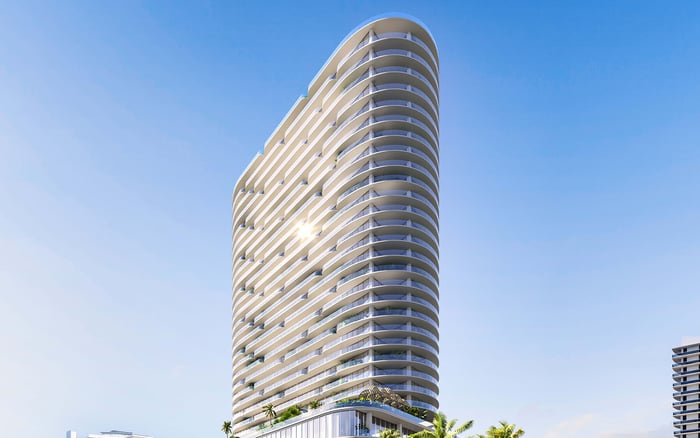
A buyer-focused look at why maintenance response at Continuum Club & Residences in North Bay Village depends on governance, documents, budgets, and control rather than branding alone.

Continuum Club & Residences is a proposed residential project in North Bay Village, Florida, positioned within the Continuum brand. For a luxury buyer, that positioning carries weight. It shapes expectations around service, architecture, lifestyle, and resale psychology. Yet the most important ownership question is not simply what the name suggests. It is who controls and funds long-term maintenance once the building is occupied, staffed, insured, repaired, and governed over time.
At the ultra-premium level, maintenance response is not a back-office detail. It is part of the product. A delayed elevator repair, unresolved water-intrusion concern, staffing failure, mechanical issue, or unclear safety protocol can affect daily comfort, perceived quality, and long-term value. For Continuum Club & Residences North Bay Village, the central due-diligence question is practical: when something requires immediate action, who has the authority, budget, and obligation to respond?
That question matters precisely because this is a New Project conversation. In Pre-construction and New-construction purchases, buyers often evaluate renderings, amenity promises, views, and brand language before a lived operating history exists. The more aspirational the promise, the more disciplined the document review should be.
A luxury brand can shape expectations, but it does not automatically determine how a condominium will operate. Buyers should not assume that the Continuum name alone guarantees the same ownership structure, operating model, or maintenance standards as other Continuum-branded properties.
The key issue is the nature of the Continuum affiliation. Is it direct ownership, a licensing arrangement, a management role, or a broader branding relationship? Each possibility can produce a different answer when a resident asks who is responsible for service quality, repair escalation, capital planning, and day-to-day accountability.
This distinction is not a negative signal. It is the difference between marketing identity and legal responsibility. In luxury real estate, the documents often matter as much as the design. The strongest buildings pair aesthetic clarity with governance clarity, so residents understand where authority sits and how obligations are funded.
The core ownership question is whether long-term maintenance falls to individual owners, the condominium association, the developer, a club operator, or another shared-facilities entity. In a branded condominium with possible club or shared-use components, that answer may vary by location within the property.
Prospective purchasers should identify which components are residential common elements and which are club, commercial, hospitality, developer-controlled, or otherwise shared facilities. The lobby, amenity decks, pools, fitness spaces, back-of-house areas, mechanical systems, access points, parking areas, and exterior components may not all sit under the same cost or control structure.
Shared amenities can be particularly sensitive. If residents, club members, guests, or outside users benefit from the same facilities, the allocation of maintenance costs becomes a central ownership issue. The question is not only who uses the amenity, but who pays for wear, staffing, insurance, repairs, reserves, and eventual replacement.
Maintenance response in this environment can depend heavily on the condominium declaration, shared-use agreements, management contracts, and association budget. A beautiful amenity is only as durable as the governance structure supporting it.
Routine maintenance can often be planned. Urgent maintenance reveals the real chain of command. Buyers should focus on who has decision-making authority when there is water intrusion, a mechanical failure, a staffing disruption, a life-safety concern, or an issue affecting access, security, or habitability.
A sophisticated review should trace the path from complaint to resolution. Who receives the notice? Who inspects the condition? Who can approve spending? Who selects vendors? Who communicates with residents? Who pays now, and who may be reimbursed later? These questions may sound procedural, but they define the lived experience of ownership.
For high-end residents, the expectation is not merely that issues will eventually be handled. The expectation is that the building knows how to act. Service quality, building safety, and resale value depend on governance as much as on finishes, amenities, or water views.
Another essential issue is whether the developer retains control over the association during the early years and when that control transfers to unit owners. Developer control is common in the early life of many condominium projects, but buyers should understand what decisions can be made during that period and what obligations will remain after turnover.
Reserve funding, capital-repair planning, insurance costs, and future special assessments are central to evaluating long-term ownership risk. A low initial assessment can be attractive, but the better question is whether the budget realistically supports the level of service promised. Luxury maintenance is rarely inexpensive. Staff, insurance, mechanical systems, security, landscaping, hospitality functions, and amenity upkeep all require ongoing funding.
For an Investment-minded buyer, this is especially important. Resale confidence is shaped not only by entry price and design, but by how well the association can maintain the asset. Deferred maintenance or uncertain cost allocation can become a valuation issue long before it becomes a visible physical issue.
Before signing, buyers should request and review the condominium declaration, proposed association budget, shared-use agreements, management contracts, reserve assumptions, insurance framework, turnover provisions, and any maintenance matrix describing responsibility by component.
The most useful review separates ownership, control, payment, and access. Ownership asks who legally owns or controls the component. Control asks who can make operational decisions. Payment asks who bears ordinary maintenance, emergency repair, and capital replacement costs. Access asks who may use the component and under what rules.
A buyer should also ask how service standards are enforced. If a club operator, manager, association, developer affiliate, or shared-facilities entity is involved, what happens if performance falls short? Can the association compel action? Can residents vote on management changes? Are service obligations defined, or are they aspirational?
The best answer is not always the simplest structure. Complex luxury properties can function beautifully when the governing documents are clear, funding is realistic, and authority is not fragmented during urgent events.
For buyers evaluating North Bay Village, the appeal is often tied to privacy, bayfront atmosphere, and a quieter residential rhythm within reach of Miami’s core luxury corridors. But the North Bay Village decision should still be made through a governance lens. Waterview living can capture attention, yet ownership quality is ultimately tested in budgets, reserves, and response protocols.
Continuum Club & Residences North Bay Village belongs in a category where the ownership experience will be judged by how the promise is administered after closing. The brand may open the conversation. The documents should determine the level of confidence.
Is Continuum Club & Residences a completed building? It is described as a proposed residential project in North Bay Village, so buyers should treat operating details as due-diligence items.
Does the Continuum name guarantee a specific maintenance standard? No. Buyers should not assume the name alone confirms the same operating structure or standards as other Continuum-branded properties.
What is the main ownership question for buyers? The central question is who controls and pays for maintenance: owners, the association, the developer, a club operator, or another entity.
Why do shared amenities matter? Shared amenities can complicate cost allocation when residents, club members, guests, or outside users benefit from the same spaces.
Which documents are most important to review? Buyers should focus on the condominium declaration, shared-use agreements, management contracts, budgets, reserves, and turnover terms.
What should buyers ask about urgent repairs? They should ask who can authorize action, hire vendors, spend funds, and communicate with residents during time-sensitive issues.
Why does developer control matter? Developer control can affect early decisions, budgets, contracts, and the timing of when unit owners gain association authority.
Are reserves important in a luxury building? Yes. Reserve funding and capital planning help determine whether the property can sustain service levels without disruptive assessments.
Is this only a legal issue? No. It is also a lifestyle, safety, service, and resale issue because maintenance response shapes the daily ownership experience.
What is the best buyer posture? Buyers should be enthusiastic about the concept but exacting about the documents, budgets, and maintenance authority before closing.
If you'd like a private walkthrough and a curated shortlist, connect with MILLION.
If branded residences are on your mind — as a home or as an allocation — we would be glad to share what we are seeing, privately.
Begin a quiet conversation