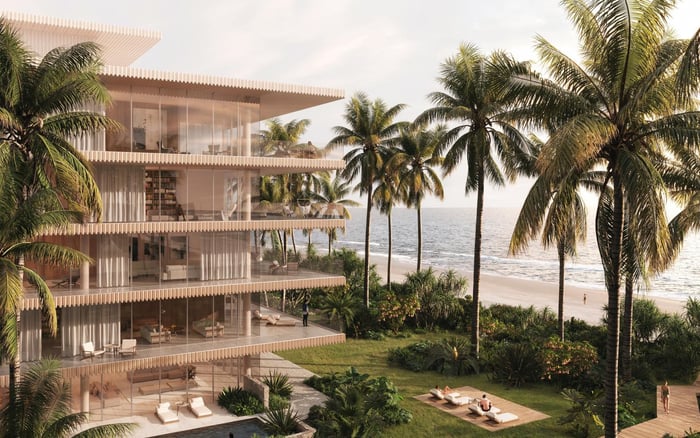
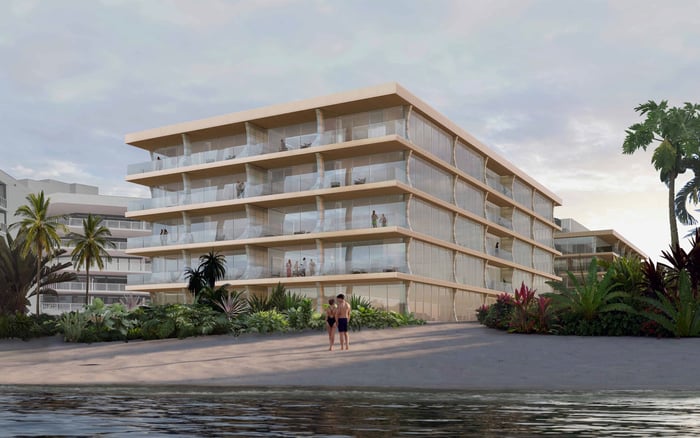
For Palm Beach and West Palm Beach buyers, “private beach access” is less a checkbox than a layered set of logistics: deeded frontage versus a managed beach experience, the time cost of crossing bridges, and the durability of privileges over decades. This MILLION Luxury editorial frames the viability of beach access at The Berkeley Palm Beach against The Ritz-Carlton Residences® West Palm Beach, offering a buyer-oriented way to vet what is real, what is operational, and what is simply assumed.
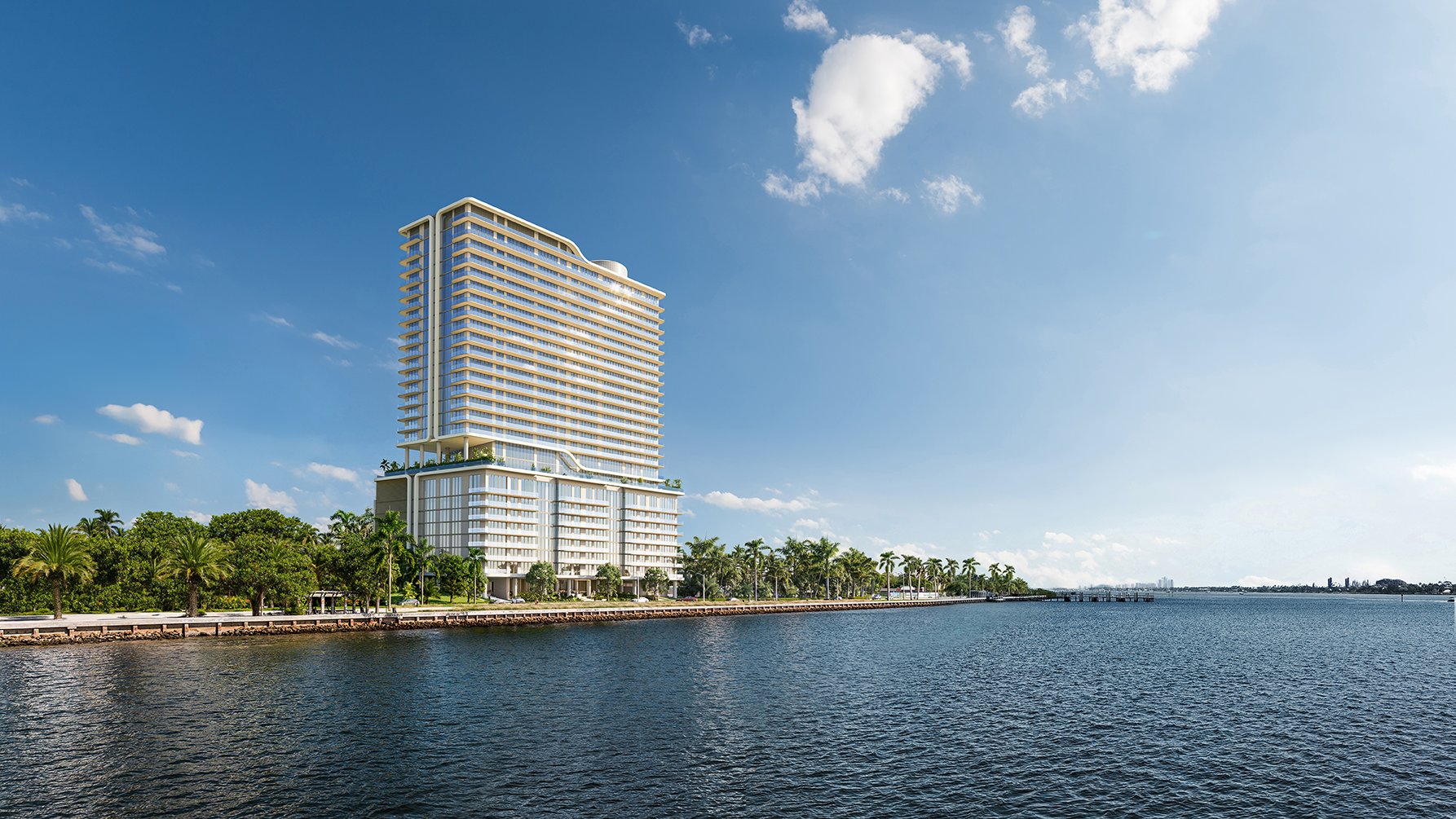
In ultra-prime South Florida, beach access is rarely binary. Buyers often use “private beach access” as shorthand for an entire lifestyle promise: the ability to arrive with ease, feel buffered from crowds, and count on a consistent experience with minimal friction. In reality, viability hinges on how access is structured, how it operates day to day, and how resilient that arrangement remains over time.
That distinction is central when comparing The Berkeley Palm Beach with The Ritz-Carlton Residences® West Palm Beach. The names signal different urban contexts: Palm Beach’s ocean-facing prestige and West Palm Beach’s expanding waterfront core. The question isn’t which is “better,” but whether the beach-access proposition holds up for your actual usage pattern and long-horizon expectations.
For MILLION Luxury clients, viability can be stress-tested with three practical measures.
First is the legal and structural test: is access deeded or owned, contractual through a club or partner, or simply an amenity described in marketing language? Durability typically increases as you move from a “privilege” to a true property interest, though the right structure ultimately depends on your tolerance for change.
Second is the operational test: how many steps separate your front door from a chair on the sand? The more transfers involved, the more variability you’ll feel during season, in inclement weather, and at peak weekend hours.
Third is the lifestyle test: does the experience match how you actually live? Some buyers want spontaneous sunrise walks and a quick dip. Others want a managed environment with towels, attendants, and a defined sense of arrival. Those are different use cases, and a mismatch tends to reveal itself once the novelty wears off.
The appeal of a Palm Beach address isn’t only the ocean itself, but the ecosystem around it: tradition, discretion, and a predictability of tone. For residents anchored on the Intracoastal side or just off the barrier island, “beach access” often functions as a curated extension of daily life rather than a constant, walk-out-the-door routine.
When evaluating viability at The Berkeley Palm Beach, focus on how the building translates Palm Beach’s ocean lifestyle into a repeatable routine. Get clarity on whether access is delivered through an affiliated beach-club-style arrangement, dedicated staff support, or another mechanism that can endure board cycles and management changes. The most important question isn’t what the access is called-it’s what happens on a typical Saturday in February when demand peaks.
Also account for the subtle economics of time. Even a short drive across the bridge introduces planning: parking, drop-off, and the ongoing “do I bring everything?” decision. In a true primary-residence rhythm, that friction can reduce frequency-turning a beach program into a special occasion rather than a daily ritual. For some buyers, that’s ideal. For others, it’s a mismatch.
West Palm Beach is increasingly defined by its waterfront energy: walkable dining, cultural programming, and a broader range of day-to-day conveniences within minutes. In that environment, the beach often plays a different role. It’s less about stepping directly onto sand and more about having a reliable, well-managed pathway to the ocean when you want it.
When considering The Ritz-Carlton Residences® West Palm Beach, examine how service expectations translate off-site. The most viable version of “private beach access” in a West Palm setting is typically one where the resident experience is consistent: clear reservations or capacity rules, defined transportation logistics, and an operating cadence that doesn’t depend on improvisation.
Buyers who travel frequently-or who treat their residence as a lock-and-leave base-often prefer this model because it prioritizes predictability over proximity. The lifestyle equation can be compelling: a polished home base, a waterfront city rhythm, and an ocean experience that’s activated on demand rather than requiring constant preparation.
Because “private beach access” can mean very different things, verification should be precise and unemotional.
Start with the governance documents and offering materials: does access reflect an ownership interest, an easement, a membership, or an amenity that can be modified? Then request the operating details in plain terms: hours, seasonal adjustments, guest rules, and any blackout periods. Finally, ask the uncomfortable but essential question: what happens if the partner relationship ends or terms change? A viable program has contractual protections or a replacement plan that preserves the resident experience.
This is also where regional comparables can calibrate expectations. Oceanfront towers such as 57 Ocean Miami Beach naturally establish a different baseline: the beach isn’t an excursion-it’s the front yard. That doesn’t automatically make them “better,” but it clarifies the difference between proximity-based access and service-based access.
Affluent buyers are rarely constrained by cost; they’re constrained by friction. Beach access becomes truly valuable when it’s used often-and frequency is driven by how effortless the routine feels.
Consider:
Transfer count: elevator to car, car to drop-off, drop-off to beach setup. Each step introduces variability.
Seasonality: peak months compress availability and make operational excellence non-negotiable.
Weather resilience: wind, storms, and rough surf don’t just change the beach; they change the willingness to engage with logistics.
If your ideal is an unplanned, frequent beach touchpoint, you may prioritize a building where the ocean is physically adjacent. If your ideal is curated leisure with staff support, you may accept more distance in exchange for service and simplicity.
In Palm Beach County, “private” is often less about literal privatization of coastline and more about a controlled experience. A viable beach program creates separation through setup placement, service standards, and a consistent resident-first approach.
The truth comes out in practical questions: Is there a defined area? Are chairs guaranteed or first-come? Can a resident bring guests without creating an administrative burden? What’s the policy when capacity is reached?
For buyers who prioritize a rarefied environment, it can be useful to benchmark the idea against high-privacy, service-forward properties elsewhere in the region-even if you have no intention of buying there. For instance, the resort-residential model at The Surf Club Four Seasons Surfside shows how operational discipline can make a shared beachfront feel genuinely controlled and elevated.
Even when buyers don’t plan to use the beach daily, beach access can influence resale demand because it compresses decision-making into an easy narrative.
That said, the market tends to price clarity more than poetry. A buyer who understands exactly what they’re getting can underwrite value with more confidence than a buyer left to interpret. That’s why the language around access-and its durability-matters.
If you’re comparing Palm Beach to West-palm-beach options, consider the buyer pool you may eventually sell to. Some buyers purchase for Palm-beach cachet and social adjacency. Others buy for West-palm-beach convenience and momentum. Beach access can be a differentiator in either case, but only when it’s well-defined and consistently delivered.
To choose between The Berkeley Palm Beach and The Ritz-Carlton Residences® West Palm Beach, use a simple framework.
If you want the beach to function as an elegant extension of Palm-beach life-with the island’s tone as the core value proposition-evaluate access as an add-on that must be contractually sound and operationally dependable.
If you want an urban waterfront base where the beach is activated intentionally, with a service profile that aims for consistency, evaluate access as a managed experience that can hold up through seasonality.
And if you want the beach to be your default daily environment, calibrate against true oceanfront product elsewhere in South Florida to ensure you’re not asking an off-beach residence to perform like a beachfront tower.
For additional context on West Palm’s newer luxury inventory and how buyers are weighing lifestyle amenities beyond the ocean, it is worth also watching projects such as Alba West Palm Beach as the city’s residential offerings mature.
Is “private beach access” the same as owning beachfront? Not necessarily. Many programs are managed access arrangements rather than deeded oceanfront ownership.
What makes beach access truly viable for frequent use? Low friction matters most: minimal transfers, clear rules, and consistent operations in peak season.
Should I prioritize Palm Beach or West Palm Beach for a beach-centered lifestyle? Palm Beach often feels more tradition-driven, while West Palm often optimizes convenience and flexibility.
How can I verify what kind of beach access a building provides? Review offering documents and ask for written operating details, including capacity and seasonal policies.
Does brand affiliation guarantee a better beach experience? It can signal service intent, but the real determinant is how the program is contractually structured and run.
What questions should I ask about guests and family use? Ask about guest limits, reservation needs, holiday rules, and how the property handles peak demand.
Can beach access terms change over time? Yes. If access is amenity-based or contractual, terms may evolve with management or partnership changes.
Is a managed beach setup better than walking to the sand? It depends. Managed setups favor convenience and service, while walkability favors spontaneity.
Does beach access materially affect resale value? It often improves marketability, especially when the access is clearly defined and easy to explain.
What is the cleanest way to compare two buildings’ beach access promises? Compare structure (ownership vs privilege), logistics (time and transfers), and operational rules in writing.
For a confidential assessment and a building-by-building shortlist, connect with MILLION Luxury.
If branded residences are on your mind — as a home or as an allocation — we would be glad to share what we are seeing, privately.
Begin a quiet conversation